The ‘Yaris Moment’ Revolution: How Region-Specific NEVs Are Reshaping Chinese Automakers’ Global Ambitions
Introduction
The global automotive landscape is undergoing a seismic shift as Chinese manufacturers pivot from volume-driven exports to hyper-localized strategies. Inspired by Toyota’s iconic ‘Yaris Moment’—where tailored models catalyzed dominance in emerging markets—brands like BYD and Changan are now engineering vehicles specifically for regional demands. This evolution, accelerated by surging international appetite for New Energy Vehicles (NEVs), marks a strategic inflection point in China’s quest for sustainable global growth.
The Localization Imperative
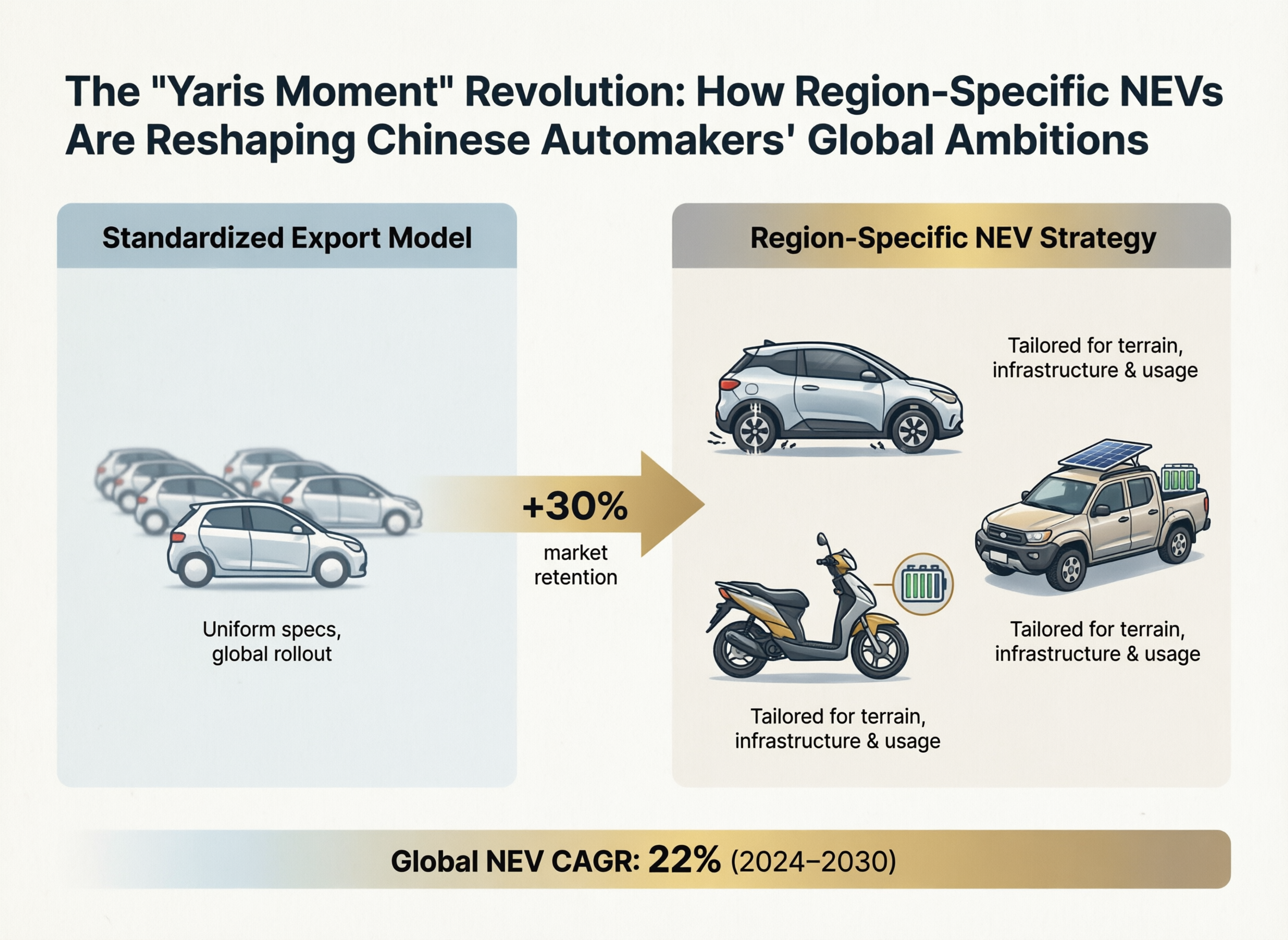
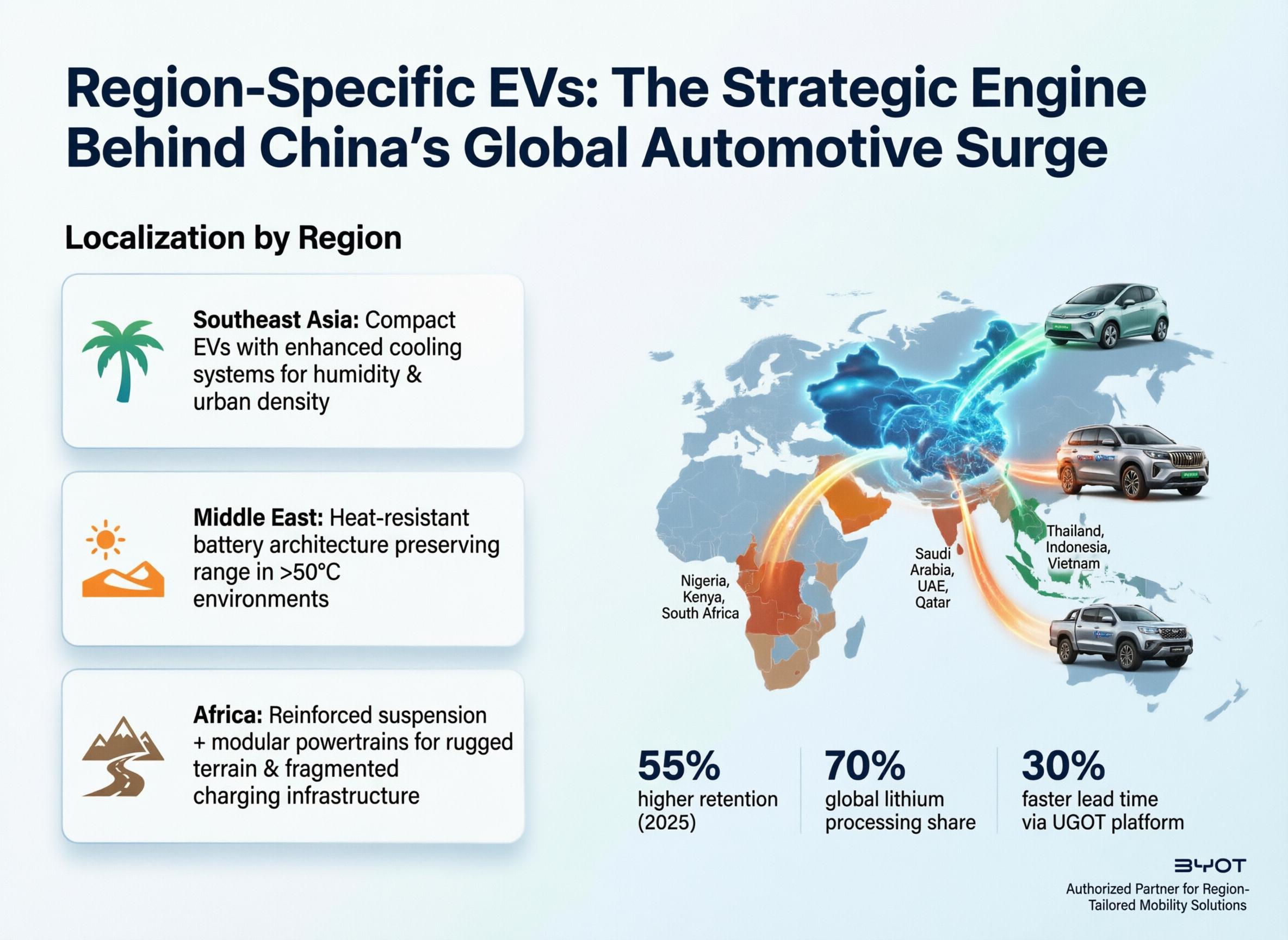
Historically, Chinese automakers relied on cost advantages to penetrate overseas markets. Today, success demands deeper cultural and operational alignment. In Southeast Asia, compact electric SUVs with reinforced suspensions navigate rugged terrain; in Africa, affordable electric motorcycles prioritize battery-swapping compatibility for areas with limited charging infrastructure. This granular approach addresses unmet needs: a recent industry analysis reveals that region-specific NEVs achieve 30% higher market retention in emerging economies compared to standardized exports. The ‘Yaris Moment’ ethos—where product adaptation drives brand loyalty—is no longer optional but existential.
NEVs: The Catalyst for Sustainable Expansion
Electric vehicles are central to this transformation. With global NEV sales projected to grow 22% annually through 2030, Chinese manufacturers leverage their battery technology leadership to capture share. However, exporting NEVs presents unique complexities: volatile raw material costs, fragmented charging standards, and stringent emissions regulations vary drastically by region. Crucially, after-sales support—often overlooked—determines long-term viability. A single delayed spare part can erode consumer trust in markets where service networks are nascent. Thus, scalability hinges on integrated supply chains that balance speed, compliance, and reliability.
Strategic Partnerships: The Acceleration Lever
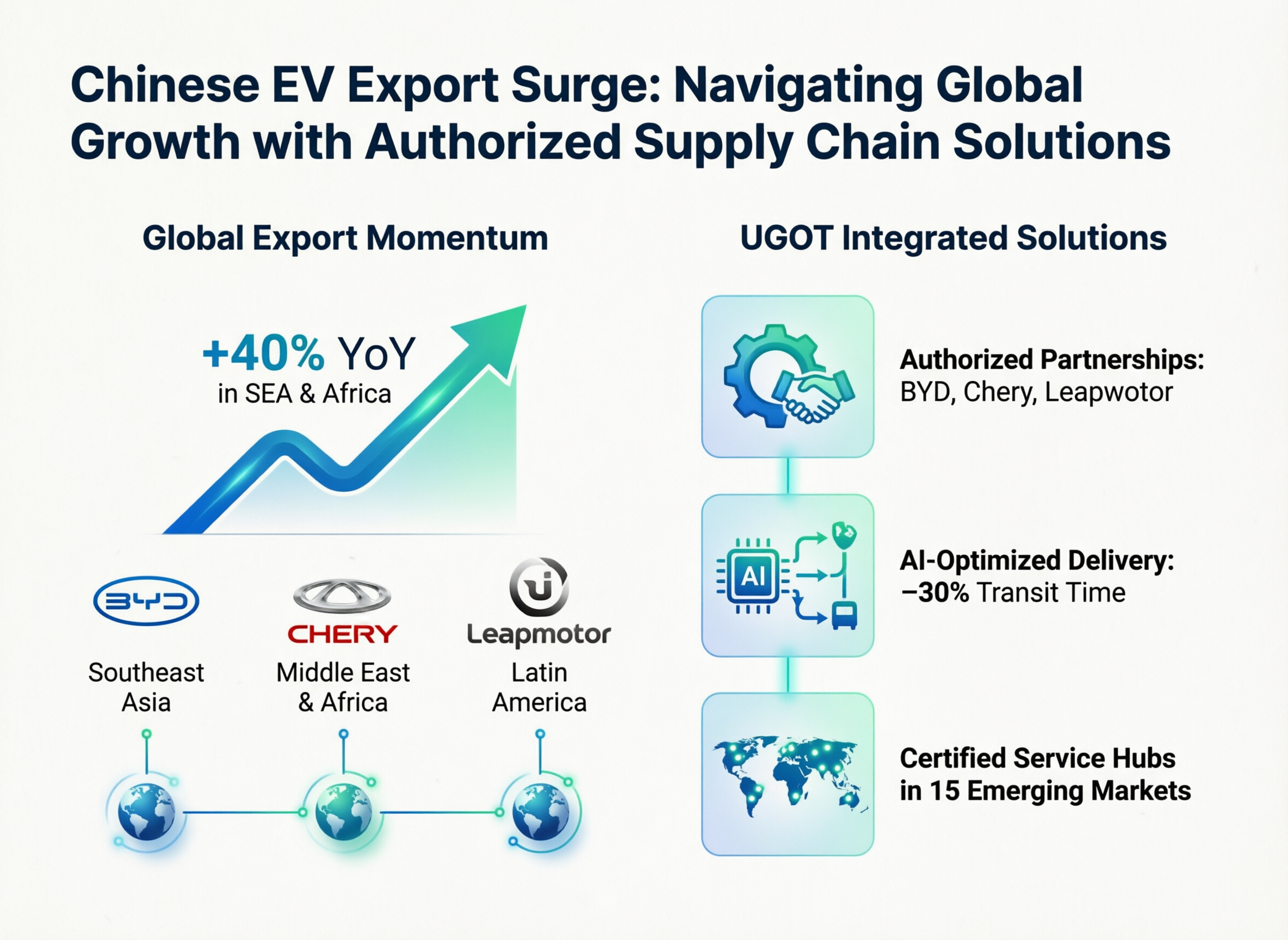
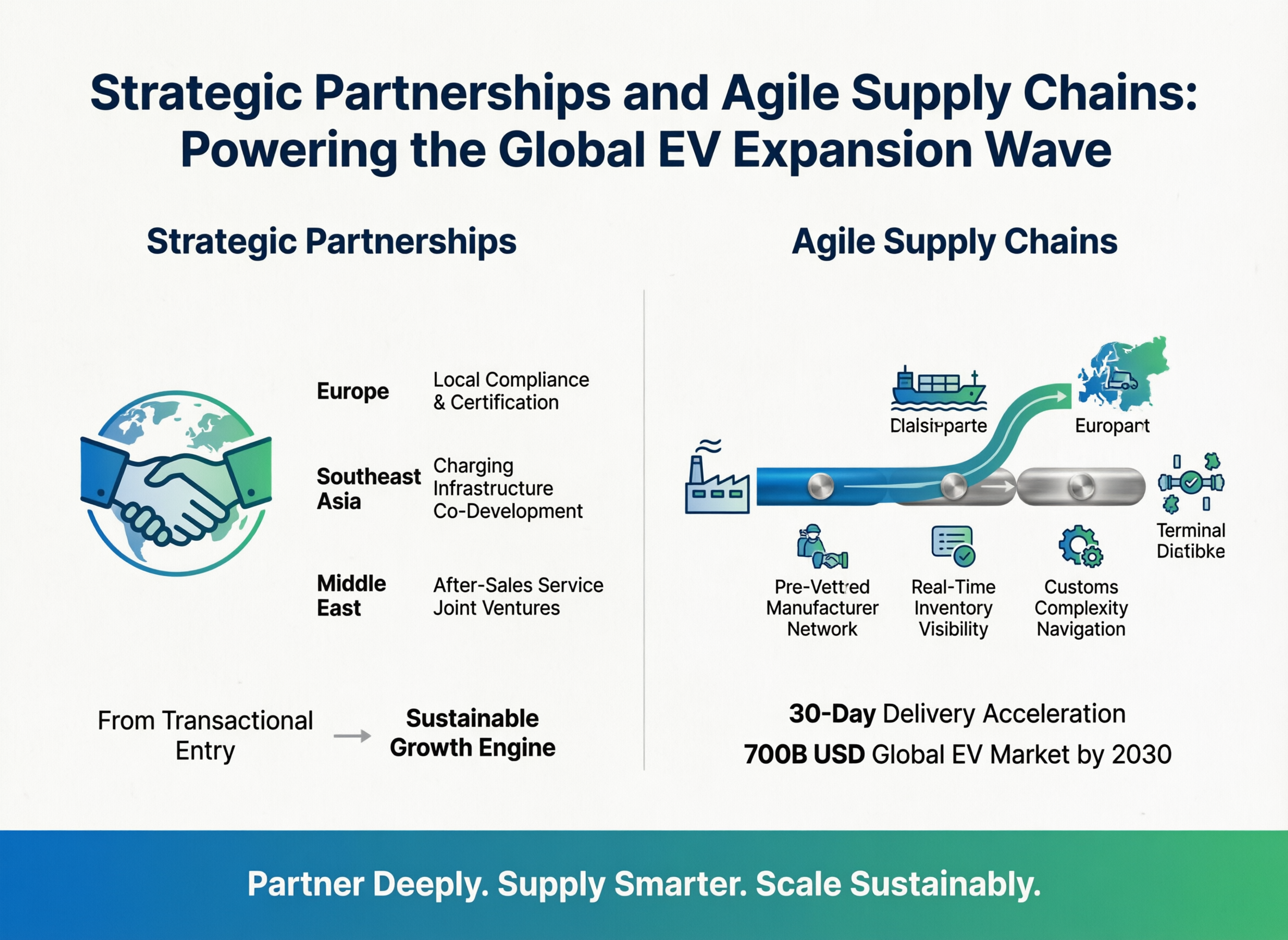
Navigating these challenges requires more than manufacturing prowess; it demands agile ecosystem partners. This is where specialized export enablers bridge the gap between ambition and execution. UGOT, for instance, has emerged as a pivotal ally for Chinese OEMs targeting high-growth corridors like ASEAN and Africa. By deploying mature distribution channels across 15+ emerging markets, UGOT compresses time-to-market for region-specific NEVs through one-stop procurement solutions—from customs clearance to localized compliance certification. Their integrated logistics platform ensures electric motorcycles and components reach dealers 40% faster than industry averages, while partnerships with tier-1 suppliers like Bosch guarantee authentic spare parts availability. This end-to-end reliability transforms after-sales from a cost center into a competitive moat, directly enabling the ‘Yaris Moment’ replication automakers seek.
The Road Ahead
As geopolitical headwinds intensify and consumer expectations evolve, the winners will be those who embed localization into their DNA—not just in product design, but across the value chain. For Chinese automakers, this means prioritizing partners with on-ground expertise to de-risk expansion. UGOT’s model exemplifies this shift: by fusing digital supply chain orchestration with physical infrastructure in critical growth zones, they empower OEMs to convert regional insights into market leadership. The future belongs to ecosystems, not solitary players. As NEV adoption accelerates globally, such collaborations will redefine not only how vehicles are sold but how trust is built—one tailored solution at a time.
Related Posts
 Chinese EV Export Surge: Navigating Global Growth with Authorized Supply Chain Solutions
 Strategic Partnerships and Agile Supply Chains: Powering the Global EV Expansion Wave
 Region-Specific EVs: The Strategic Engine Behind China’s Global Automotive Surge