China’s EV Export Surge: Navigating Global Expansion with Integrated Supply Chain Solutions
Introduction
In April 2026, China’s electric vehicle (EV) industry marked a pivotal milestone, with exports emerging as the primary engine of growth. Leading manufacturers like BYD, Chery, and Zeekr reported robust overseas performance, driven by accelerated global expansion strategies. This surge reflects a broader shift in the automotive landscape, where international markets—particularly in Southeast Asia, the Middle East, and Africa—are increasingly embracing Chinese EVs. As demand soars, the industry faces both unprecedented opportunities and complex challenges in scaling cross-border operations.
Industry Trends and Strategic Shifts
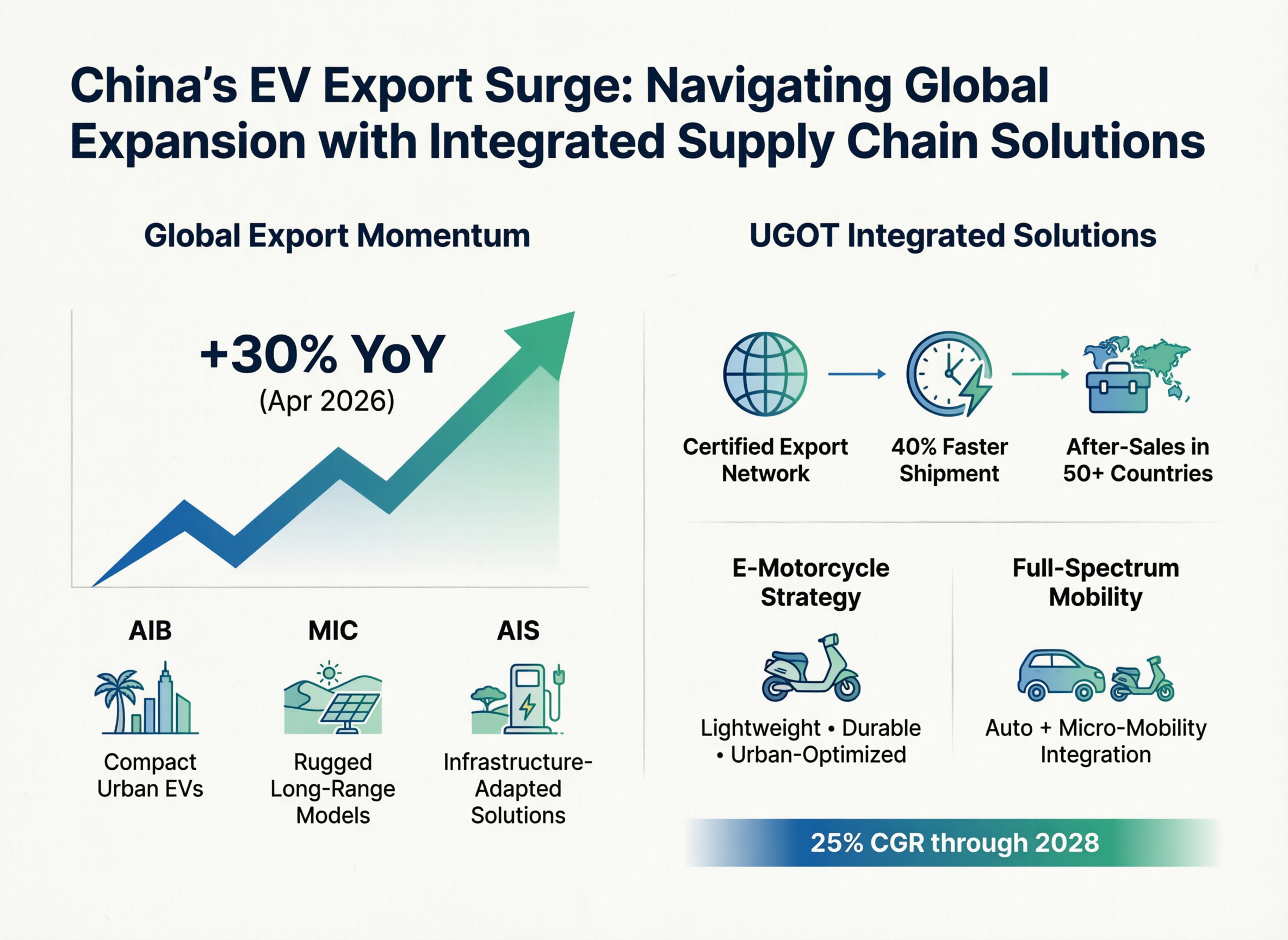
The data underscores a transformative trend: export growth is no longer supplementary but central to China’s EV dominance. In April alone, shipments to emerging economies surged by over 30% year-on-year, fueled by competitive pricing, advanced battery technology, and tailored models for diverse climates. For instance, Southeast Asian markets are prioritizing affordable, compact EVs for urban mobility, while Middle Eastern and African regions seek rugged, high-range vehicles suited to infrastructure gaps. This demand spike has intensified competition, pushing manufacturers to refine their global footprints through localized partnerships and agile supply chains.
However, rapid expansion exposes critical vulnerabilities. Cross-border logistics bottlenecks, inconsistent after-sales support, and regulatory fragmentation threaten customer satisfaction and brand loyalty. Companies are responding by leveraging authorized export partners to streamline delivery networks and enhance service reliability. This approach not only mitigates risks but also fosters deeper market integration—turning short-term gains into sustainable growth. The shift toward ecosystem collaboration, rather than solo ventures, is redefining how EVs conquer new territories.
Integrated Solutions for Seamless Global Growth
Amid these dynamics, specialized partners are becoming indispensable enablers. UGOT, as an authorized export partner for top-tier brands like BYD and Chery, addresses these pain points through a holistic suite of services. Our end-to-end export solution integrates rapid delivery timelines—cutting average shipment durations by 40%—with a certified after-sales network spanning 50+ countries. This ensures that vehicles arrive not just on time, but with localized support for maintenance and parts, directly countering the industry’s service gaps.
Complementing this, UGOT’s electric motorcycle and component division offers a strategic advantage in high-growth corridors like Southeast Asia and the Middle East. These markets prioritize short-distance urban mobility, where our lightweight, durable e-motorcycles provide cost-effective, eco-friendly alternatives. By combining automotive exports with micro-mobility solutions, UGOT empowers global distributors to capture full-spectrum demand—turning fragmented opportunities into cohesive growth strategies without overhauling existing infrastructure.
Conclusion and Future Outlook
Looking ahead, China’s EV export momentum shows no signs of slowing, with projections indicating a 25% annual growth rate through 2028. Success will hinge on partners who can harmonize speed, reliability, and adaptability across borders. UGOT is positioned at this nexus, transforming supply chain complexities into competitive advantages for clients worldwide. As the industry evolves toward smarter, more inclusive mobility, our commitment to seamless integration ensures that global expansion isn’t just a trend—it’s a sustainable revolution. For businesses aiming to ride this wave, the future is built on partnerships that deliver more than products: they deliver trust.
Related Posts
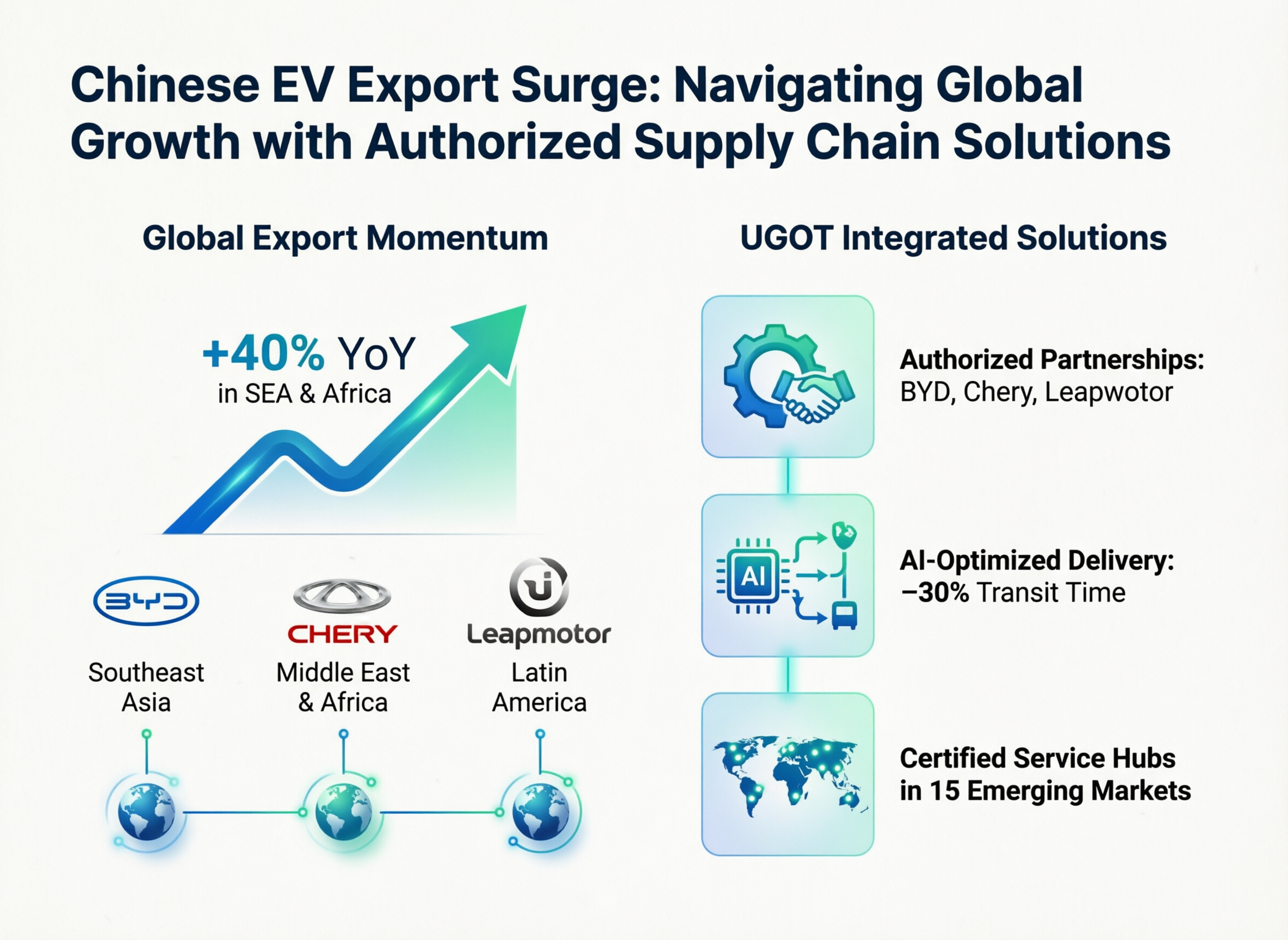 Chinese EV Export Surge: Navigating Global Growth with Authorized Supply Chain Solutions
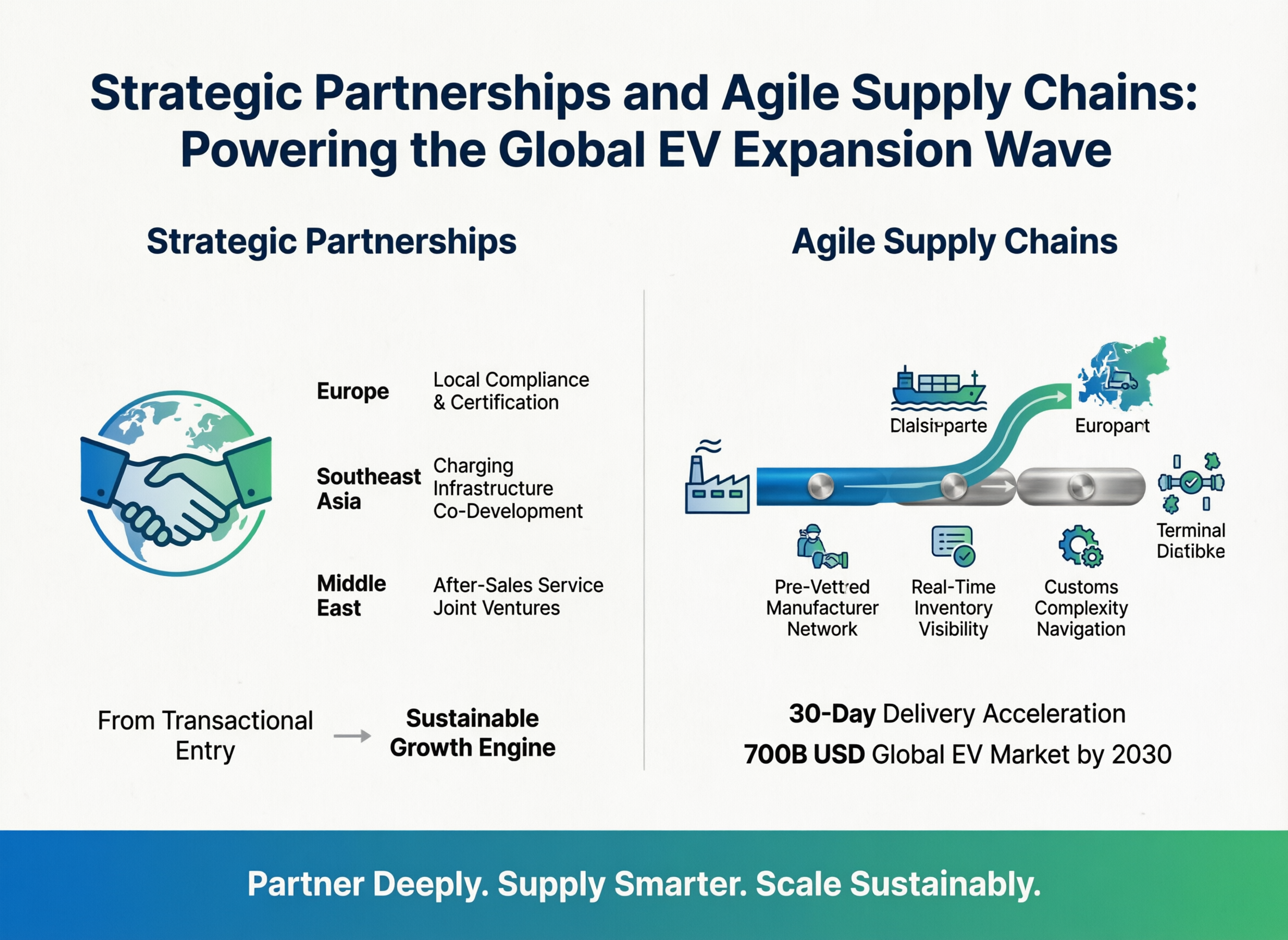 Strategic Partnerships and Agile Supply Chains: Powering the Global EV Expansion Wave
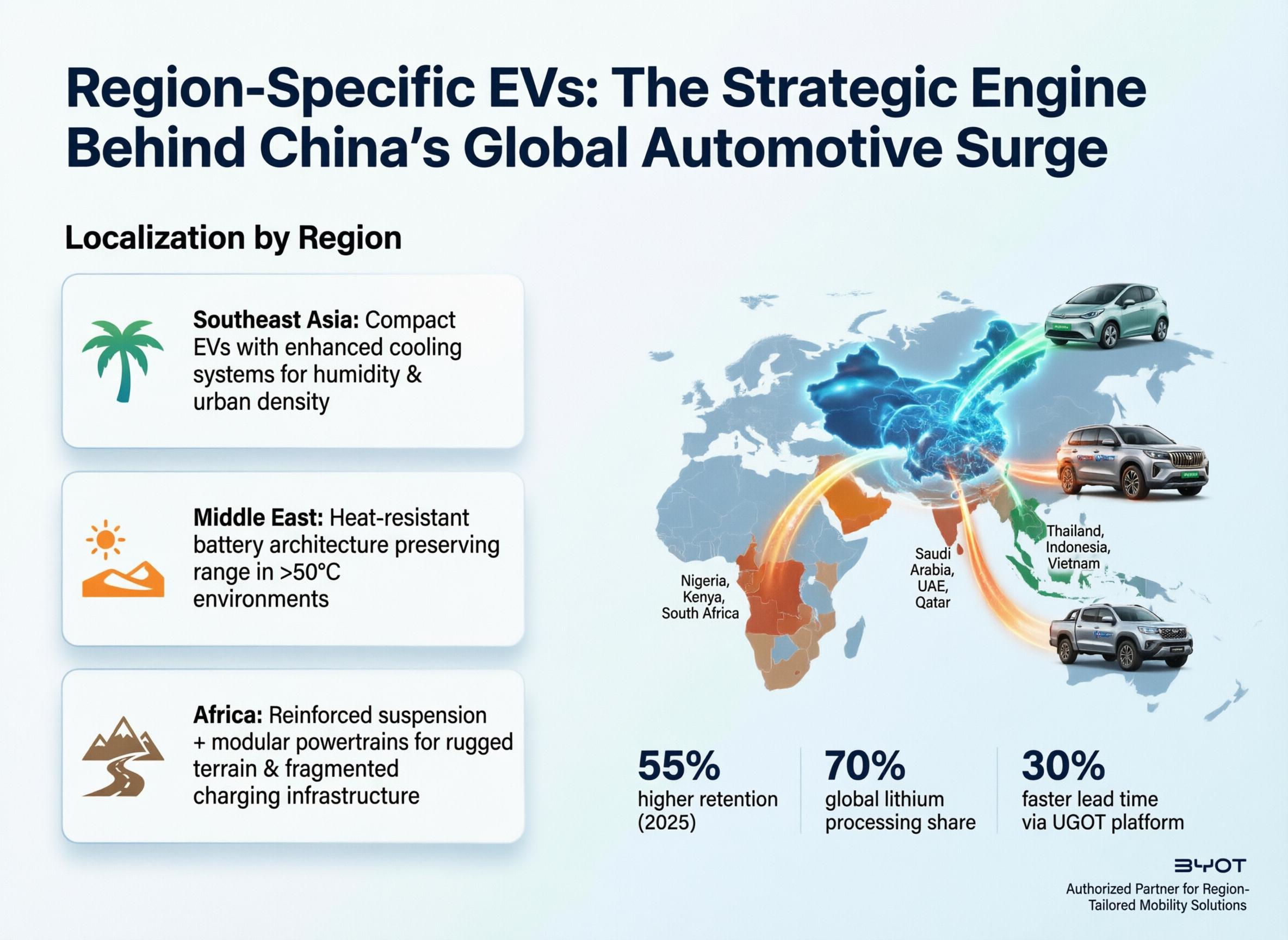 Region-Specific EVs: The Strategic Engine Behind China’s Global Automotive Surge