
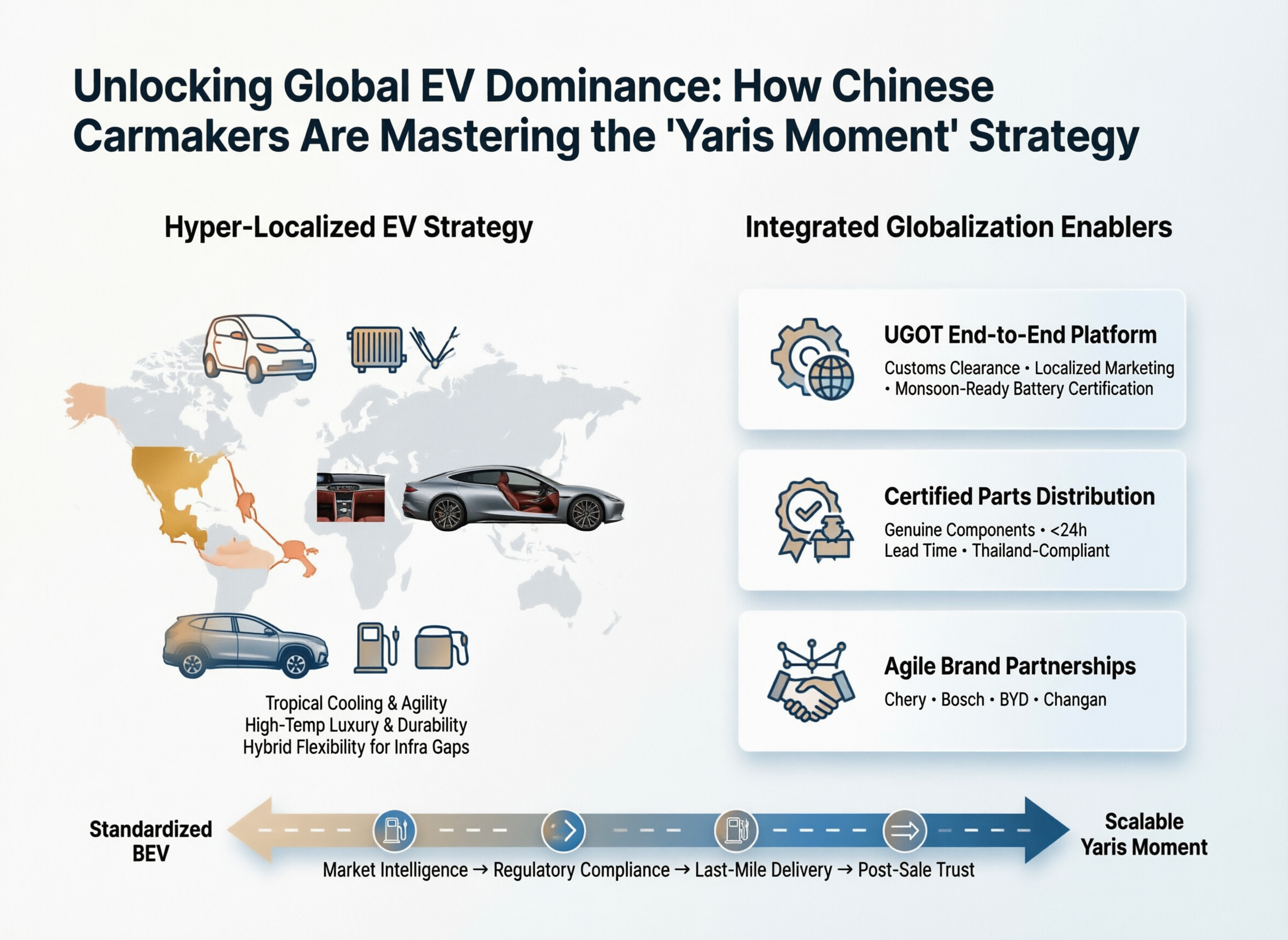
Unlocking Global EV Dominance: How Chinese Carmakers Are Mastering the ‘Yaris Moment’ Strategy
Introduction
The global automotive landscape is undergoing a seismic shift as Chinese automakers pivot from volume-driven exports to sophisticated, region-specific strategies. Fueled by intensifying competition and evolving consumer demands, companies like BYD and Changan are embracing what industry analysts term the “Yaris Moment”—a localized approach inspired by Toyota’s success with the Yaris in diverse markets. This strategy involves tailoring vehicle designs, features, and powertrains to align with regional preferences, infrastructure realities, and regulatory frameworks. As electric vehicles (EVs) become the cornerstone of international growth, this trend is not merely tactical; it represents a fundamental reimagining of global expansion in an era where one-size-fits-all solutions are obsolete.
The Rise of Hyper-Localized EV Strategies
The “Yaris Moment” concept underscores a critical evolution in automotive globalization. Historically, automakers relied on standardized models, but Chinese brands are now prioritizing deep market customization. For instance, in Southeast Asia, where tropical climates and congested urban centers dominate, manufacturers are developing compact EVs with enhanced cooling systems and agile handling. In the Middle East, high-temperature resilience and luxury-focused interiors are key differentiators. This hyper-localization extends beyond aesthetics: energy type adaptation is pivotal. While Europe leans heavily toward battery-electric vehicles (BEVs), emerging markets like India and Africa often require hybrid or flexible-fuel options due to uneven charging infrastructure. Data from industry reports reveals that region-specific EVs can boost market share by up to 30% in target regions, as they address unmet needs such as affordability, durability, and cultural preferences. However, this approach introduces complexities—navigating fragmented regulations, supply chain vulnerabilities, and after-sales service gaps—which can derail even the most innovative products if not managed holistically.
Enabling Seamless Globalization Through Integrated Solutions
To overcome these hurdles, automakers are increasingly partnering with specialized logistics and market-entry enablers. This is where integrated export ecosystems prove invaluable. Companies like UGOT are at the forefront, leveraging decades of on-ground expertise in high-growth regions such as Southeast Asia and the Middle East. UGOT’s end-to-end platform combines granular market intelligence—gleaned from partnerships with brands like Chery and Bosch—with a resilient supply chain network. For example, when a Chinese EV manufacturer targets Thailand’s booming electric scooter segment, UGOT streamlines everything from customs clearance to localized marketing, ensuring vehicles meet stringent safety standards while incorporating region-specific features like monsoon-ready batteries. Crucially, UGOT’s certified parts distribution system guarantees rapid availability of genuine components, slashing downtime and building consumer trust. This isn’t just about efficiency; it’s about de-risking localization. By handling regulatory compliance, last-mile delivery, and post-purchase support under one umbrella, UGOT empowers automakers to focus on innovation rather than operational friction, turning the “Yaris Moment” from an aspiration into a scalable reality.
The Road Ahead: Collaboration as the Catalyst for Growth
Looking forward, the convergence of EV technology and hyper-localization will define the next decade of automotive competition. Chinese carmakers are poised to capture over 25% of global EV sales by 2030, but success hinges on agile partnerships that bridge cultural and logistical divides. As infrastructure investments surge in emerging economies, the ability to rapidly adapt products—and deliver them reliably—will separate leaders from laggards. UGOT exemplifies this collaborative ethos, transforming market-entry challenges into opportunities for sustainable growth. By prioritizing localized excellence without compromising on global standards, the industry isn’t just expanding its footprint; it’s redefining what it means to be a truly international brand. In this dynamic landscape, the winners will be those who see localization not as a cost center, but as the ultimate competitive advantage.
Related Posts
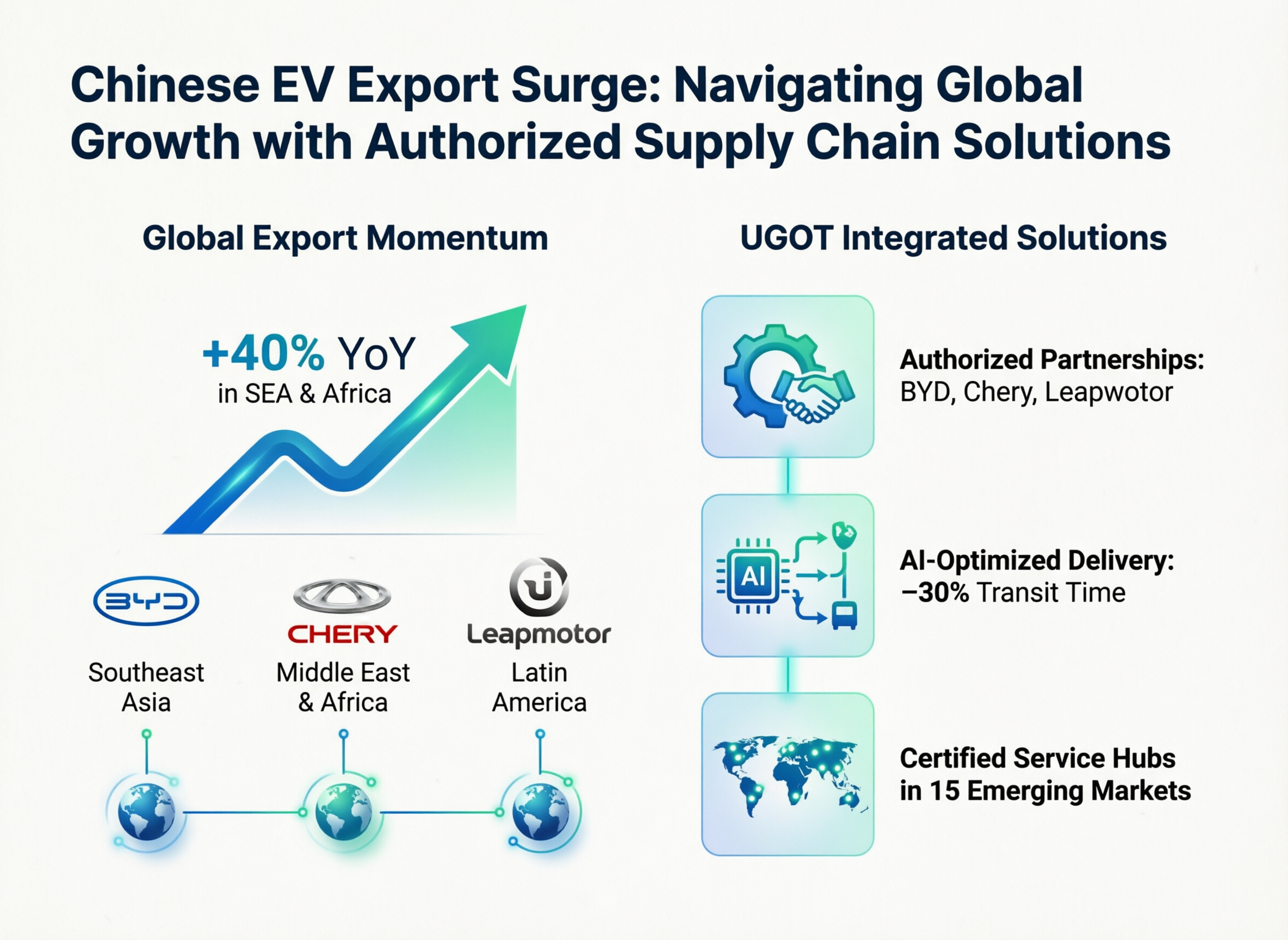 Chinese EV Export Surge: Navigating Global Growth with Authorized Supply Chain Solutions
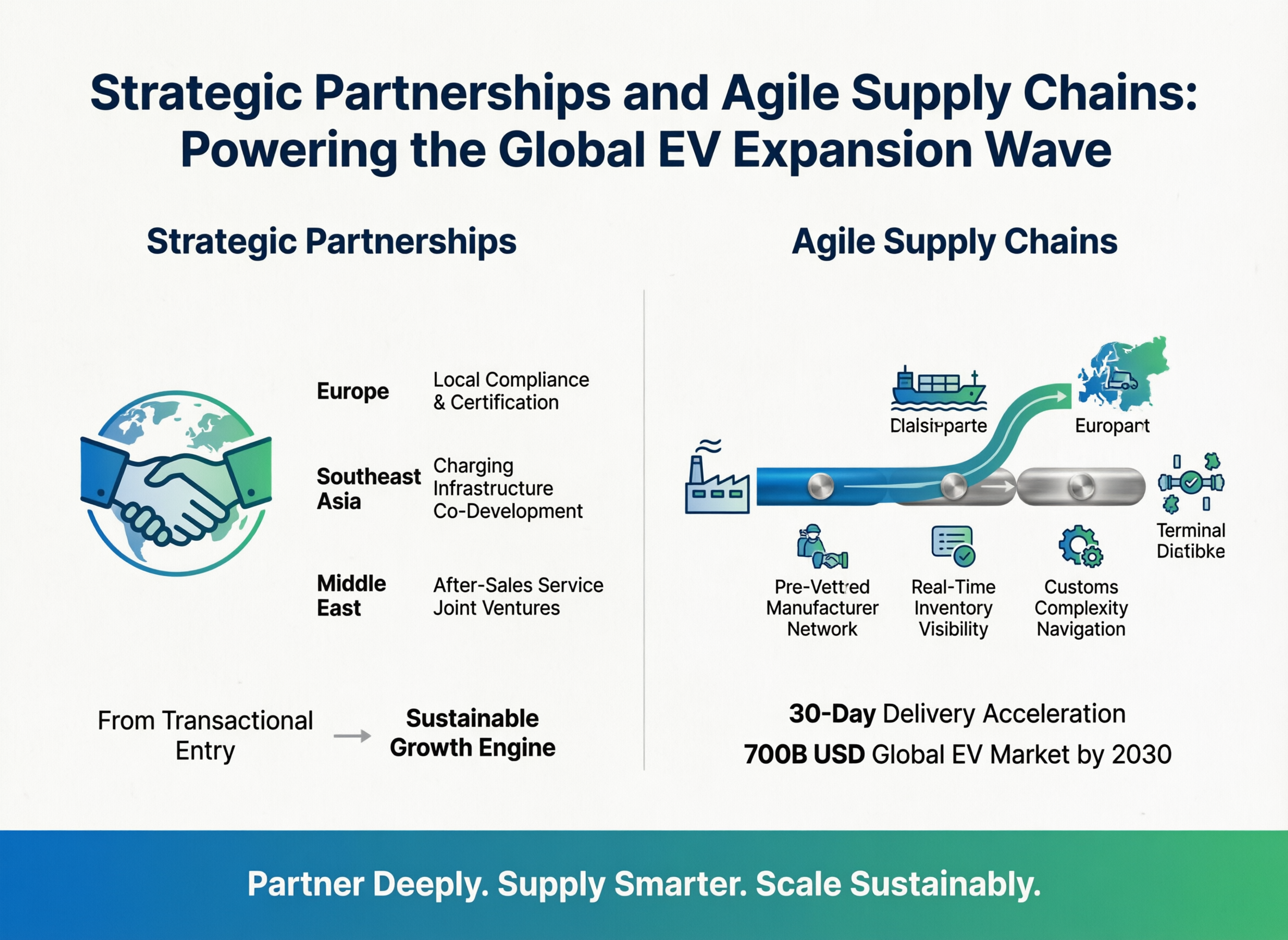 Strategic Partnerships and Agile Supply Chains: Powering the Global EV Expansion Wave
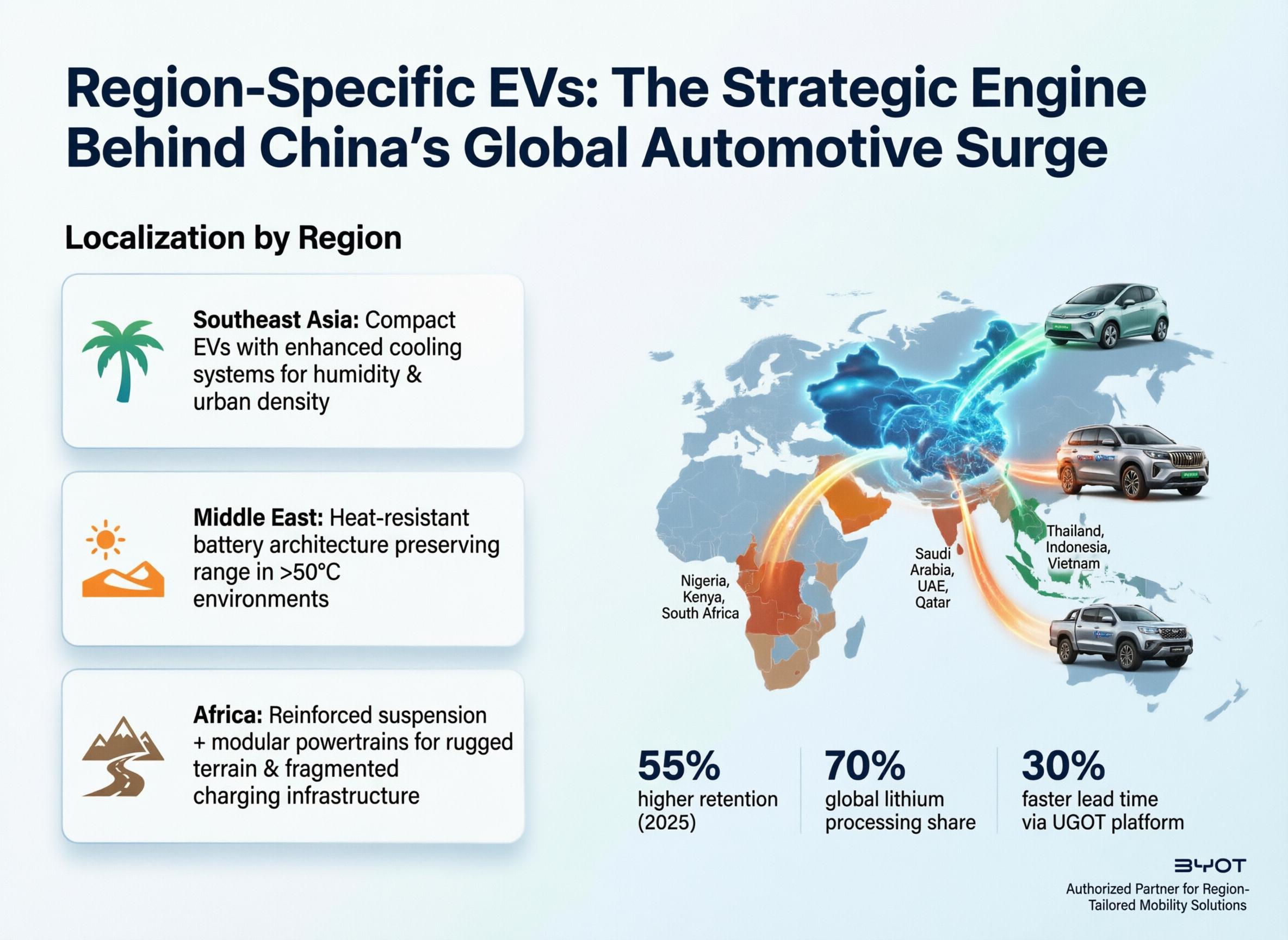 Region-Specific EVs: The Strategic Engine Behind China’s Global Automotive Surge