
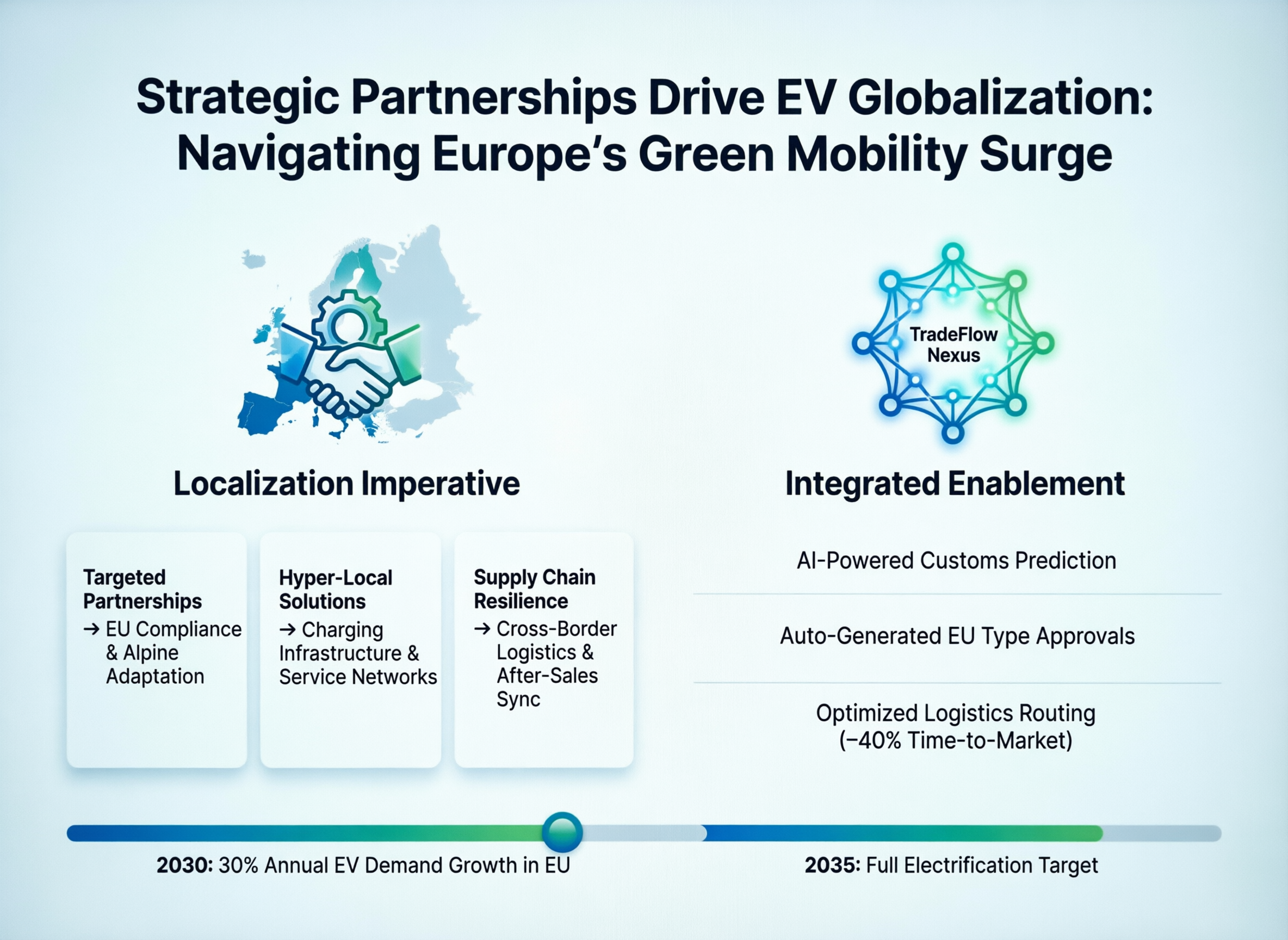
Strategic Partnerships Drive EV Globalization: Navigating Europe’s Green Mobility Surge
Introduction
The electric vehicle (EV) landscape is undergoing a seismic shift, with Chinese automakers like Geely leading a wave of global expansion. Recent news of Geely’s new partnership in Austria exemplifies this trend, signaling a strategic pivot toward localized market entry to fuel long-term overseas growth. As Europe’s demand for sustainable transportation surges—driven by stringent emissions regulations and consumer preference shifts—automakers are increasingly leveraging regional alliances to overcome entry barriers. This dynamic underscores a broader industry evolution: globalization is no longer about mere exports but about embedding within local ecosystems to thrive.
Industry Trends: Localization as the New Imperative
Geely’s Austrian venture highlights three critical trends reshaping the EV sector. First, Chinese manufacturers are accelerating European market penetration through targeted partnerships, moving beyond traditional export models. This approach mitigates risks like regulatory hurdles and cultural mismatches while capitalizing on Europe’s projected 30% annual EV demand growth through 2030. Second, rising consumer expectations for tailored solutions—such as region-specific charging infrastructure and service networks—are compelling automakers to adopt hyper-localized strategies. For instance, joint ventures with Austrian firms enable Geely to navigate complex EU compliance frameworks while adapting vehicle designs to alpine terrain and urban mobility needs. Third, global expansion now hinges on supply chain resilience. As manufacturers decentralize production, the emphasis shifts to synchronizing cross-border logistics, component sourcing, and after-sales support. This creates fertile ground for specialized service providers to bridge gaps in trade compliance, customs efficiency, and partner coordination—turning fragmentation into a competitive advantage.
Empowering Growth: Integrated Solutions for Seamless Expansion
Amid these complexities, the need for agile, end-to-end support systems has never been clearer. Companies venturing into new markets face mounting pressures: volatile regulatory landscapes, supply chain disruptions, and the high cost of failed localization attempts. Here, technology-driven platforms are proving indispensable. Our TradeFlow Nexus platform addresses these challenges head-on by unifying supply chain visibility, automated compliance management, and partnership analytics into a single interface. Unlike conventional tools, TradeFlow Nexus leverages AI to predict customs delays, auto-generate region-specific documentation (e.g., EU type approvals), and map optimal logistics routes—reducing time-to-market by up to 40%. For automakers like Geely, this means transforming strategic partnerships from high-risk gambits into scalable growth engines. By handling the operational heavy lifting, TradeFlow Nexus frees manufacturers to focus on innovation and customer engagement, ensuring that global ambitions translate into sustainable local impact.
Conclusion: The Road Ahead
The EV revolution is inherently global, yet success lies in the local details. As European markets evolve toward full electrification by 2035, manufacturers must prioritize adaptability over scale alone. Strategic partnerships, amplified by intelligent supply chain solutions, will define the next era of mobility. At our core, we empower this transition—not just as service providers but as catalysts for resilient, responsible growth. By turning complexity into clarity, we help industry pioneers navigate the green frontier with confidence, ensuring that every expansion milestone advances both business and planetary sustainability.
Related Posts
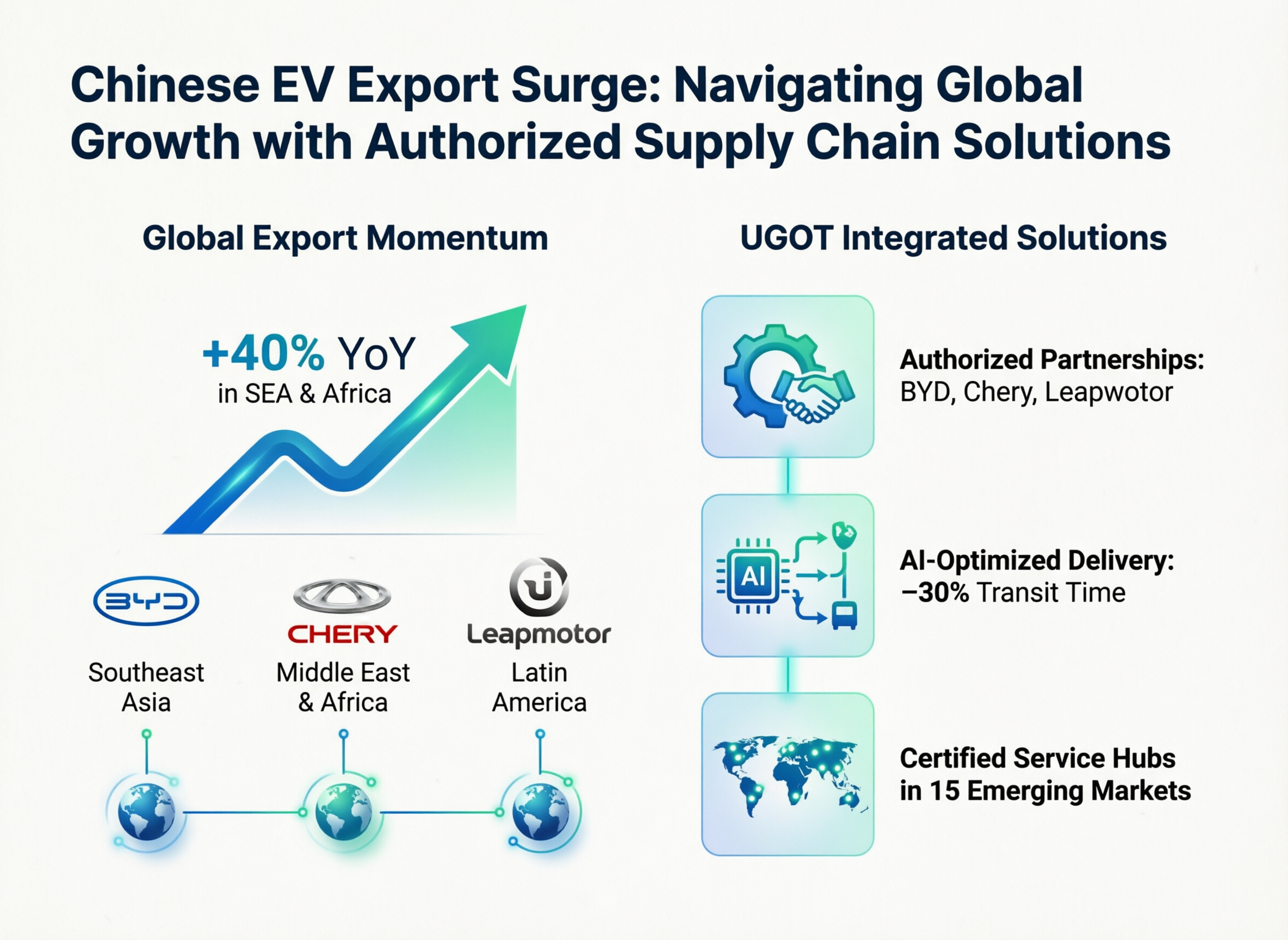 Chinese EV Export Surge: Navigating Global Growth with Authorized Supply Chain Solutions
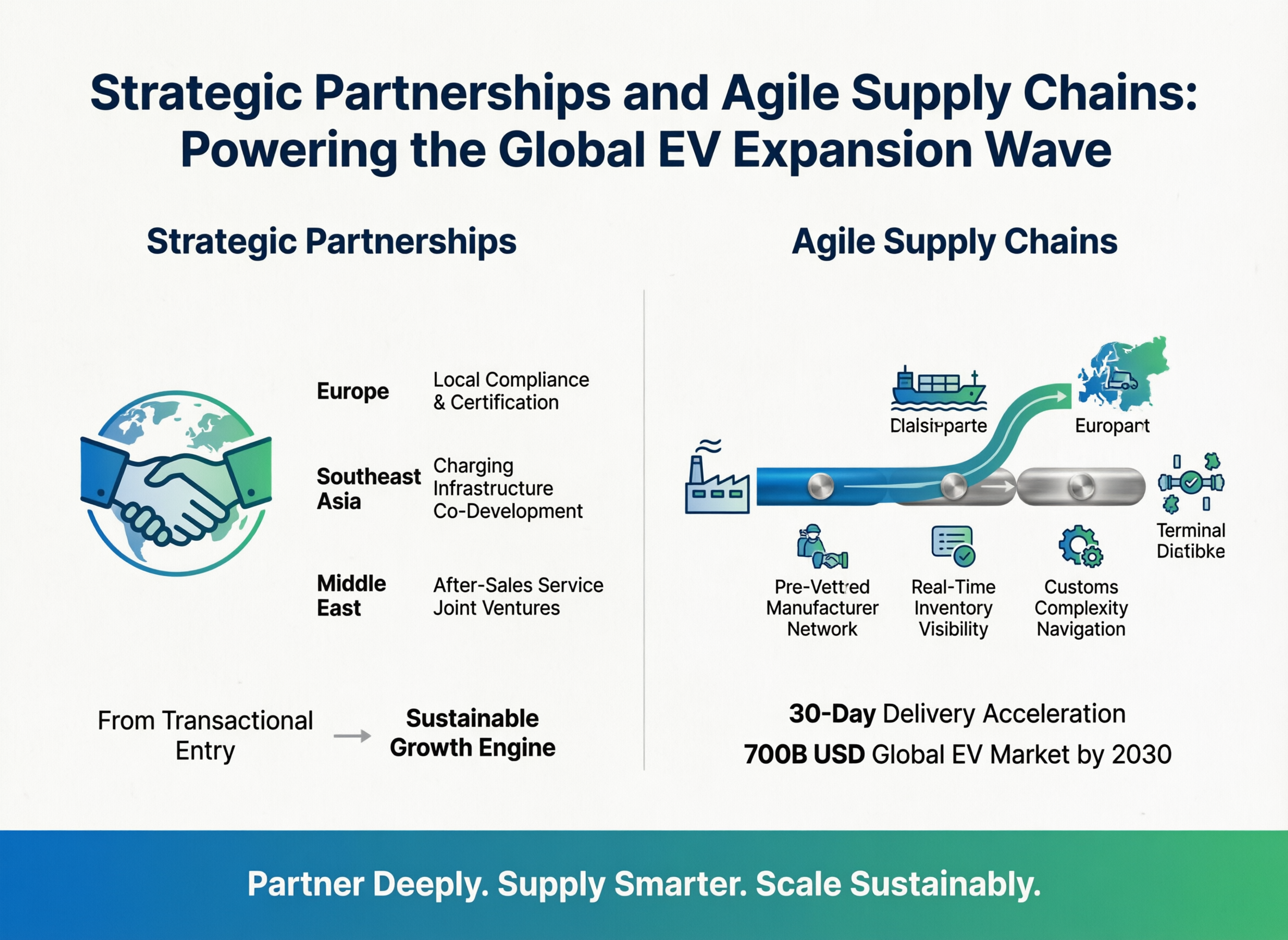 Strategic Partnerships and Agile Supply Chains: Powering the Global EV Expansion Wave
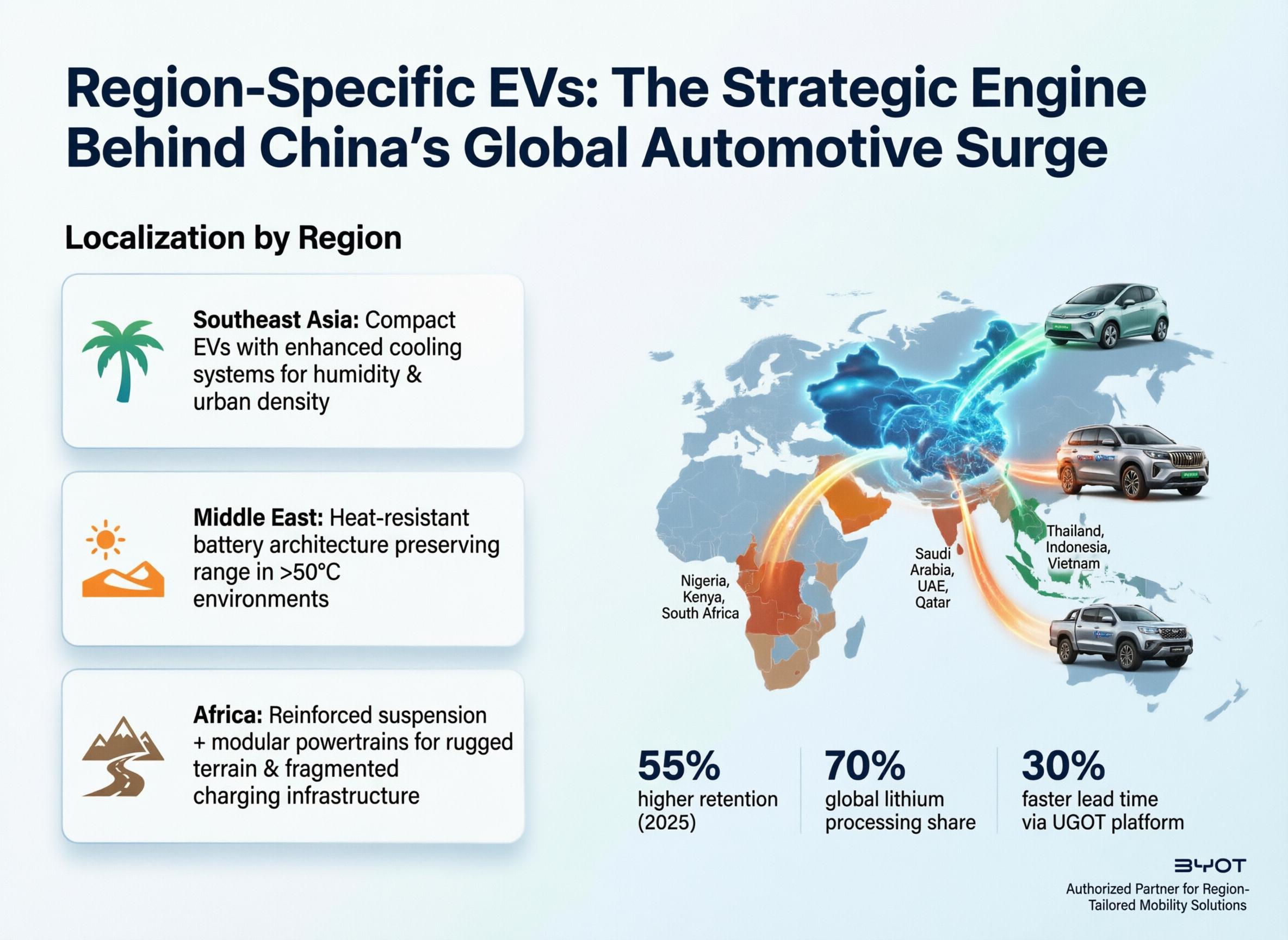 Region-Specific EVs: The Strategic Engine Behind China’s Global Automotive Surge