The ‘Yaris Moment’ Revolution: How Chinese Automakers Are Reshaping Global EV Expansion
Introduction
The global automotive landscape is undergoing a seismic shift as Chinese manufacturers pivot from volume-driven exports to sophisticated, region-specific strategies. Inspired by Toyota’s iconic “Yaris Moment”—where tailored engineering propelled the model to dominance in Europe—Chinese brands are now designing vehicles explicitly for local regulatory frameworks, consumer preferences, and infrastructure realities. This evolution, heavily centered on electric and new energy vehicles (EVs/NEVs), marks a strategic leap beyond commoditization. As these automakers target markets from Europe to emerging economies, they face complex challenges in supply chain agility, compliance, and after-sales support—challenges that demand equally innovative solutions.
The Rise of Hyper-Localized EV Strategies
Chinese automakers’ global ascent is no longer about exporting generic models. Instead, they’re embracing deep localization. In Europe, for instance, brands like BYD and NIO are developing EVs with extended cold-weather battery ranges, EU-compliant safety features, and compact designs suited to narrow urban streets. This mirrors Toyota’s Yaris playbook, which succeeded by re-engineering the vehicle for European driving dynamics rather than retrofitting a global template.
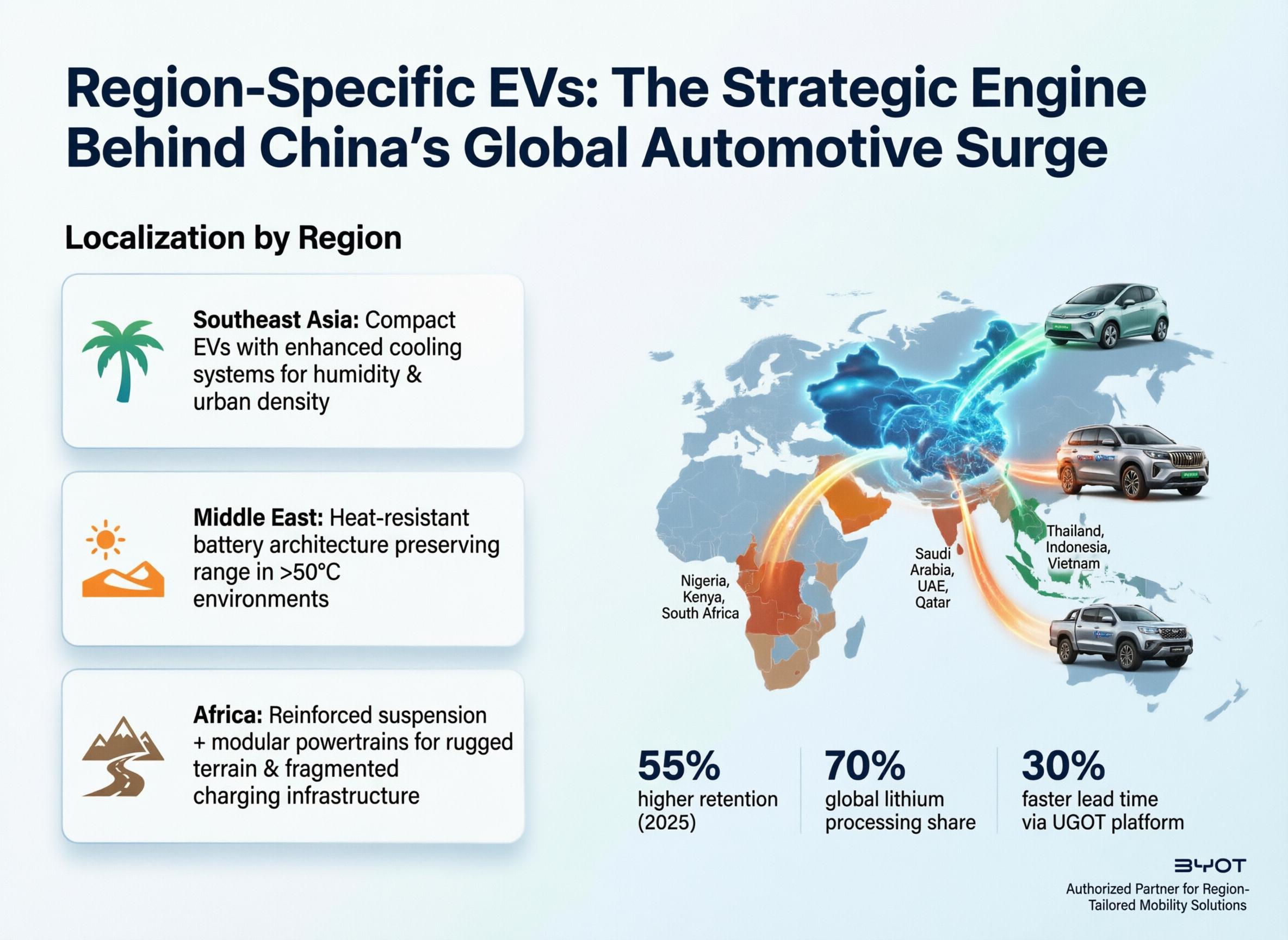
Electric vehicles are the vanguard of this transformation. China’s NEV exports surged by 78% year-over-year in 2025, with Europe absorbing nearly 40% of volumes. Yet success hinges on more than just technology. Regulatory hurdles—such as the EU’s stringent carbon border taxes and homologation processes—require meticulous adaptation. Simultaneously, consumer expectations vary dramatically: Southeast Asian buyers prioritize affordable electric motorcycles with rugged durability, while Middle Eastern markets demand luxury EVs with enhanced cooling systems. Without granular market understanding, even the most advanced vehicles risk rejection.
Bridging the Localization Gap: The Supply Chain Imperative
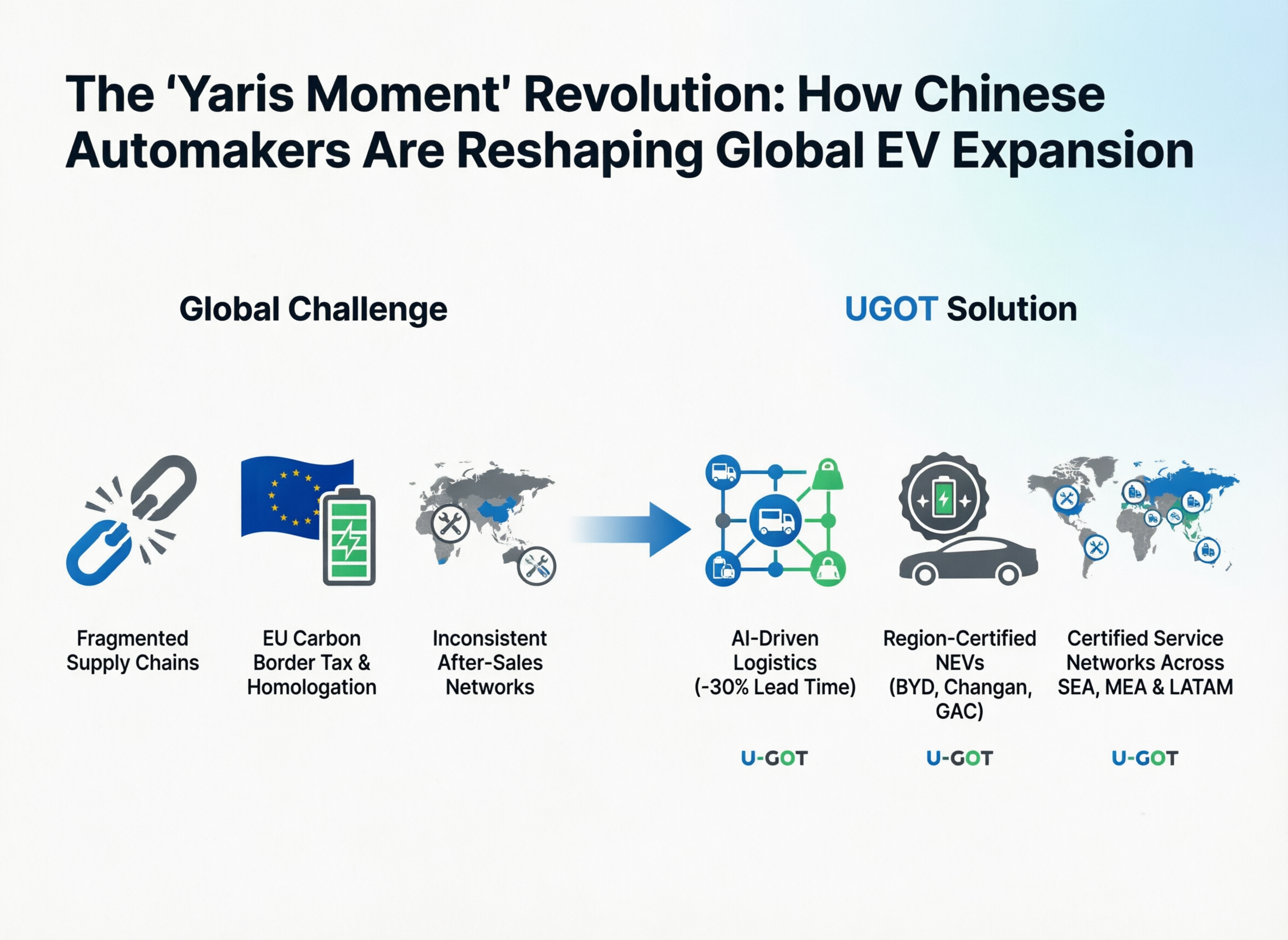
The “Yaris Moment” strategy exposes a critical vulnerability: fragmented supply chains. Developing region-specific vehicles is futile if distributors cannot reliably deliver the right models, spare parts, or technical support. Many global partners struggle with inconsistent inventory, customs delays, and inadequate after-sales networks—eroding trust in Chinese automotive brands.
This is where integrated export ecosystems become indispensable. Distributors need partners who combine manufacturer relationships with logistical precision and localized service capabilities. For example, ensuring a fleet of electric buses destined for South American cities arrives with region-certified components and on-ground technician training isn’t merely operational—it’s strategic brand-building.
UGOT: Enabling Precision in Global Automotive Trade
Addressing these complexities requires more than transactional logistics. UGOT Vehicle and Parts Export Solutions has pioneered an end-to-end framework that turns localization theory into practice. By leveraging authorized partnerships with top Chinese OEMs—including BYD, Changan, and GAC—UGOT provides curated access to market-specific vehicle portfolios. Whether it’s right-hand-drive electric sedans for Thailand or dust-resistant NEVs for African terrain, UGOT’s procurement platform ensures models align precisely with regional demands.
Beyond vehicles, UGOT’s integrated supply chain mitigates the industry’s most persistent pain points. Its digital inventory system guarantees stable availability of genuine spare parts and electric motorcycle components, while AI-driven logistics cut delivery lead times by up to 30%. Crucially, UGOT embeds after-sales support directly into its model: certified service networks across Southeast Asia, the Middle East, and Latin America provide maintenance training and warranty management, transforming one-time buyers into loyal brand advocates. For distributors navigating the EV boom, this eliminates the traditional trade-off between speed and reliability.
The Road Ahead
As Chinese automakers refine their “Yaris Moment” approach, the winners will be those who treat localization as a holistic ecosystem—not just product design. The convergence of tailored EVs, agile supply chains, and embedded after-sales support will define the next decade of automotive globalization. UGOT stands at this intersection, empowering distributors to harness China’s manufacturing prowess while building sustainable, trust-based market entry. In an industry where a single delayed shipment can derail brand credibility, such precision isn’t optional—it’s the engine of growth.
The future belongs to partners who see beyond borders and batteries. By transforming regional complexity into competitive advantage, UGOT ensures that every vehicle exported isn’t just a product, but a promise fulfilled.
Related Posts
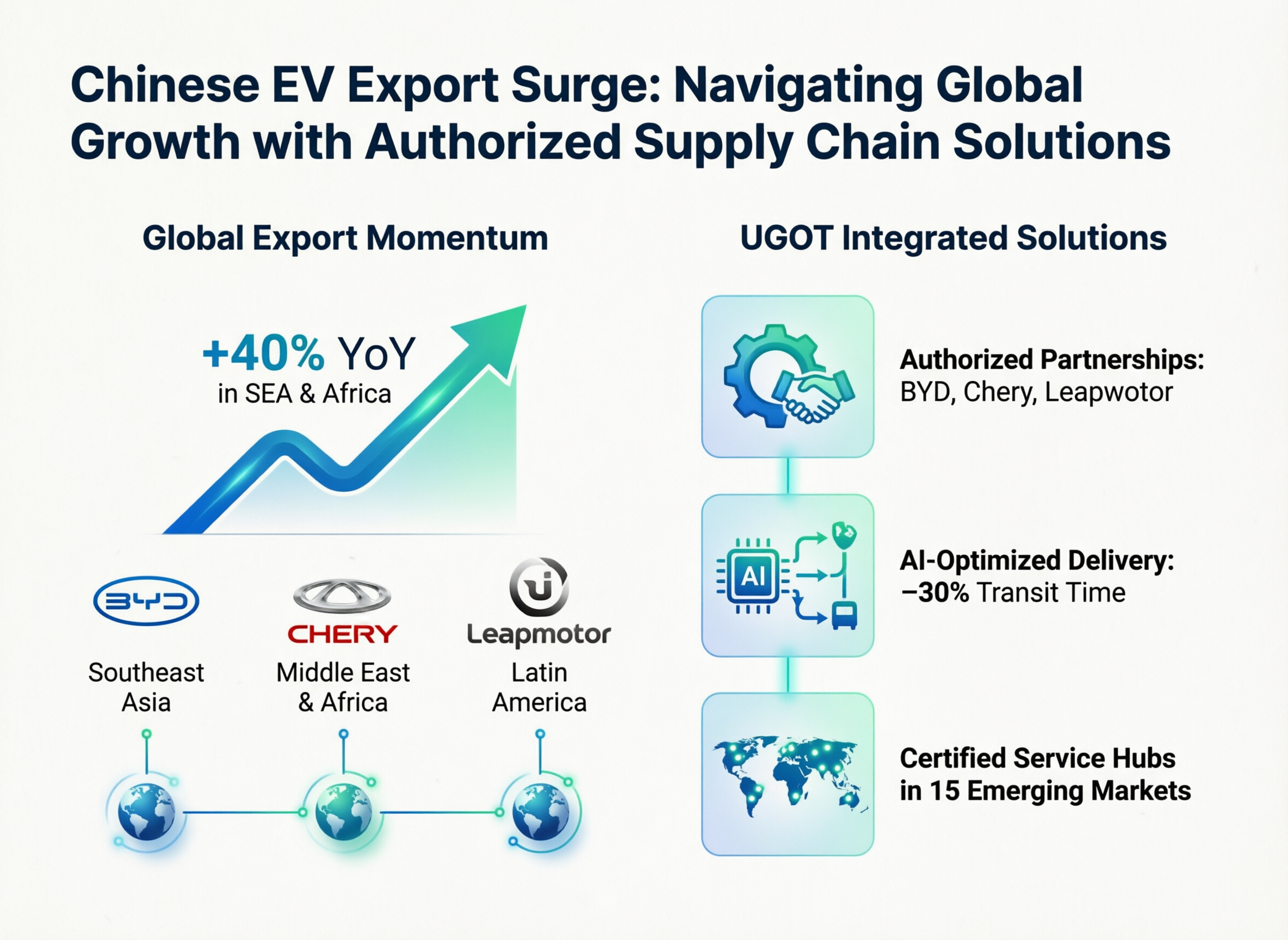 Chinese EV Export Surge: Navigating Global Growth with Authorized Supply Chain Solutions
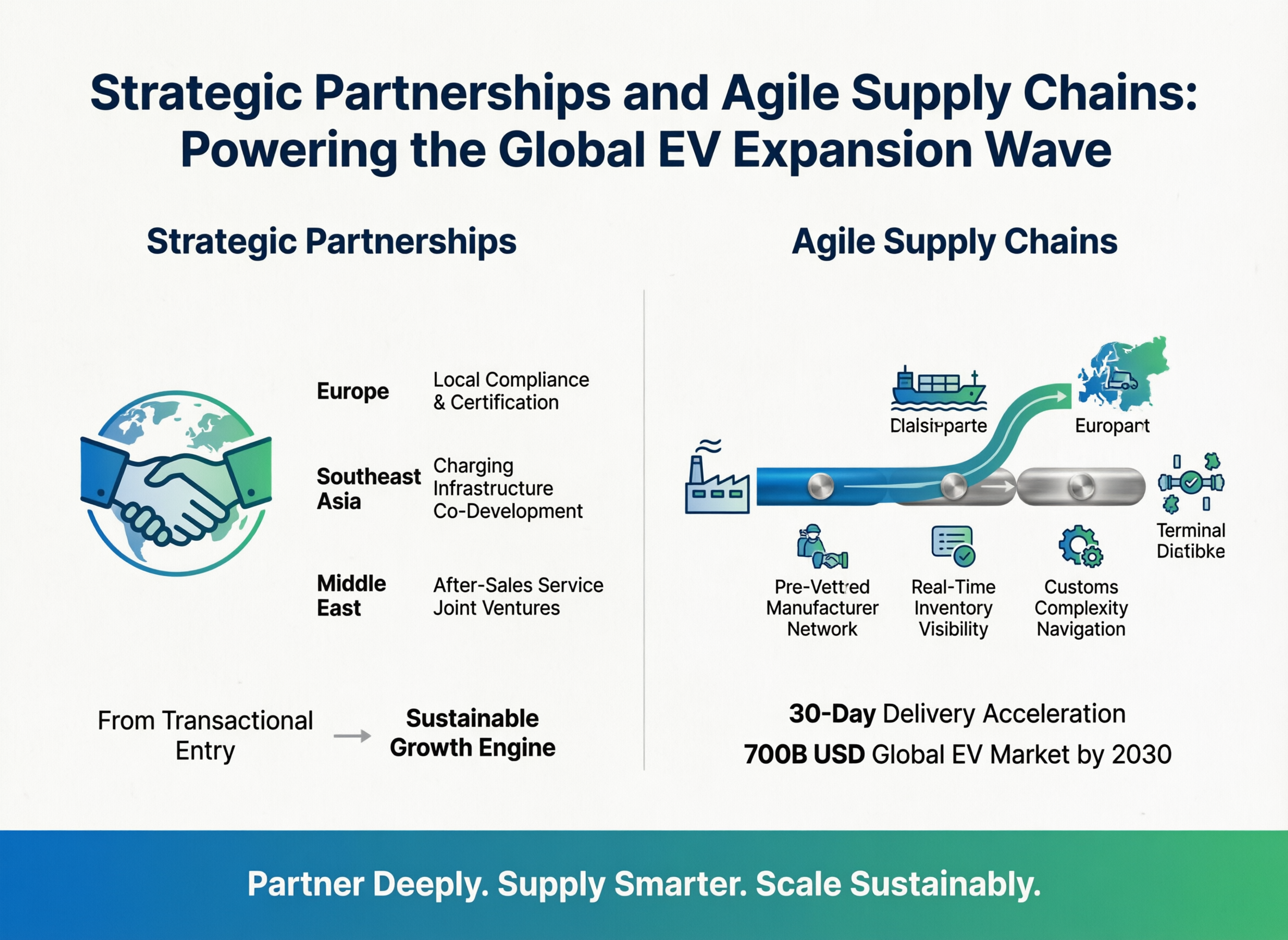 Strategic Partnerships and Agile Supply Chains: Powering the Global EV Expansion Wave
 Region-Specific EVs: The Strategic Engine Behind China’s Global Automotive Surge