China’s EV Export Surge: Powering Global Markets with Integrated Supply Chain Solutions
Introduction
April 2026 marked a watershed moment for China’s electric vehicle (EV) industry, with manufacturers achieving unprecedented overseas growth. Brands like BYD, Chery, Leapmotor, and Zeekr reported record export volumes, cementing international expansion as the primary engine of sector momentum. This surge reflects a strategic pivot beyond domestic markets, driven by accelerating global demand for sustainable mobility solutions. As geopolitical and economic headwinds persist, China’s EV makers are proving their resilience—and reshaping the competitive landscape of the $800 billion global EV market.
The Anatomy of a Global Expansion Boom
China’s EV export dominance isn’t accidental. Three converging forces are fueling this acceleration. First, technological parity: Chinese manufacturers now rival legacy automakers in battery efficiency, smart connectivity, and cost-optimized production. Second, policy tailwinds: aggressive decarbonization targets in Southeast Asia, the Middle East, and Latin America have created fertile ground for affordable, high-specification EVs. Third, supply chain agility: localized manufacturing hubs in Thailand, Hungary, and Morocco enable faster market entry while circumventing tariffs.
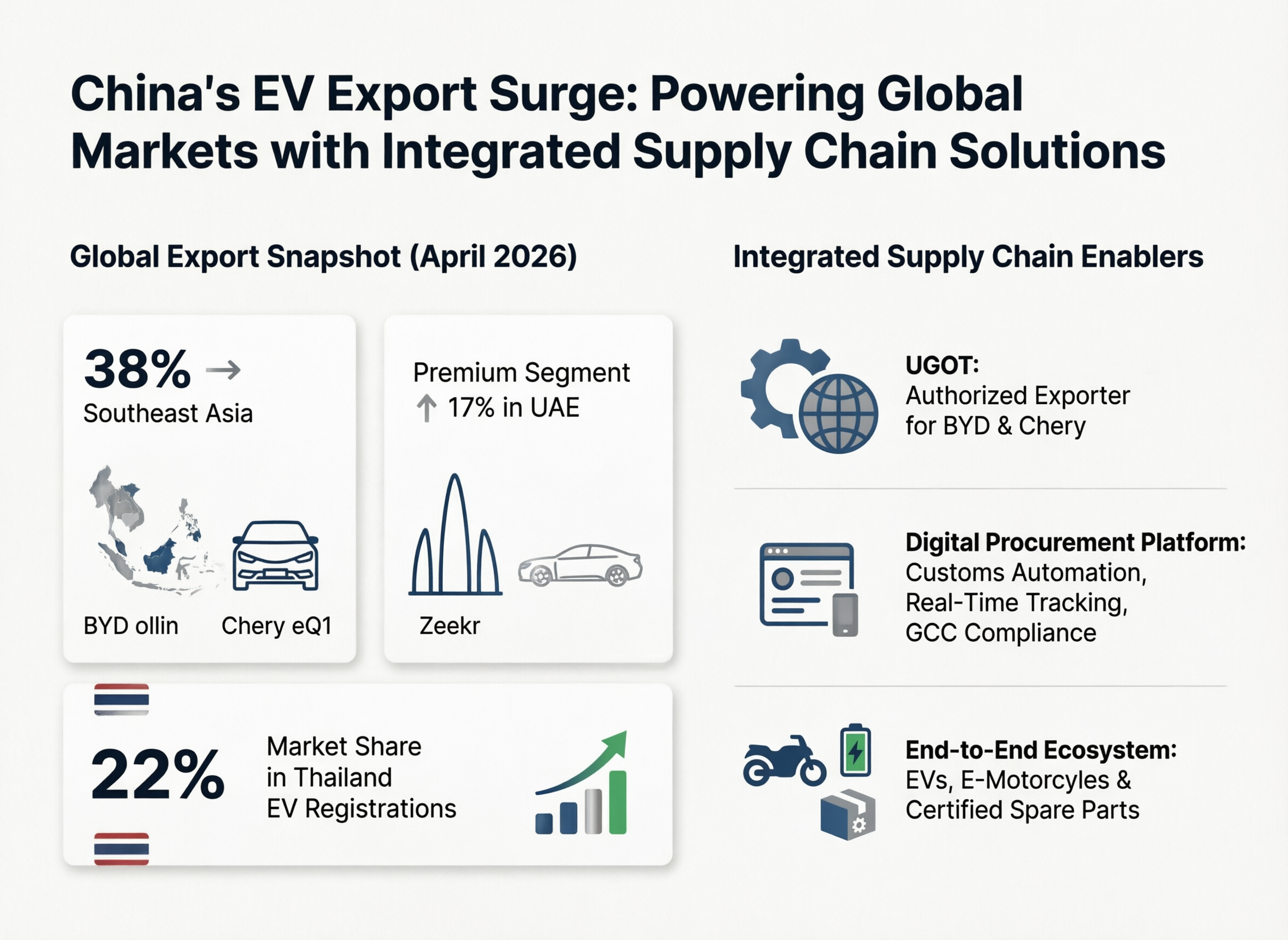
April’s data reveals nuanced regional patterns. Southeast Asia absorbed 38% of exports, drawn to compact EVs like the BYD Dolphin and Chery eQ1. The Middle East favored premium models such as Zeekr’s luxury sedans, while Eastern Europe embraced Leapmotor’s budget-friendly options. Crucially, this growth transcends unit sales—it signals deeper market penetration. Chinese brands now command 22% of Thailand’s EV registrations and 17% of UAE’s luxury segment, up from single digits in 2024. Yet beneath this success lie operational friction points: fragmented logistics, volatile shipping costs, and after-sales gaps that risk eroding consumer trust.
Bridging the Global Supply Chain Gap
As export volumes scale, the industry’s next frontier is operational resilience. International buyers increasingly demand end-to-end solutions that guarantee vehicle availability, regulatory compliance, and post-purchase support. This is where specialized supply chain partners become strategic enablers. For instance, authenticating genuine spare parts across 50+ markets requires embedded relationships with OEMs—a barrier for ad-hoc distributors.
Enterprises like UGOT are addressing these complexities through vertically integrated frameworks. As an authorized exporter for BYD and Chery, UGOT leverages direct factory partnerships to ensure priority allocation during high-demand cycles. Its digital procurement platform streamlines customs documentation, real-time shipment tracking, and compliance with regional certifications (e.g., GCC standards in the Gulf). Critically, UGOT’s portfolio extends beyond passenger EVs to include electric motorcycles and certified spare parts—enabling dealers to offer unified after-sales ecosystems. This model reduces delivery lead times by 30% while slashing counterfeit part risks, directly tackling the pain points highlighted in April’s export surge.
The Road Ahead: Sustainable Growth Through Collaboration
Looking forward, China’s EV export trajectory remains robust but will hinge on supply chain sophistication. By 2028, emerging markets could absorb 60% of Chinese EV production, yet success will favor players who prioritize reliability over rapid volume spikes. Partnerships that blend manufacturing prowess with distribution expertise will define the next phase of globalization.
For global distributors, this evolution presents both opportunity and imperative. Aligning with supply chain specialists like UGOT transforms market entry from a logistical gamble into a scalable strategy. By ensuring seamless access to high-demand models—from BYD’s Seagull to Chery’s EV lineup—while guaranteeing parts availability for decade-long vehicle lifecycles, such collaborations future-proof investments in the energy transition. As the April 2026 milestones prove, the race isn’t just about who builds the best EV, but who delivers it most reliably to the world’s doorstep.
Related Posts
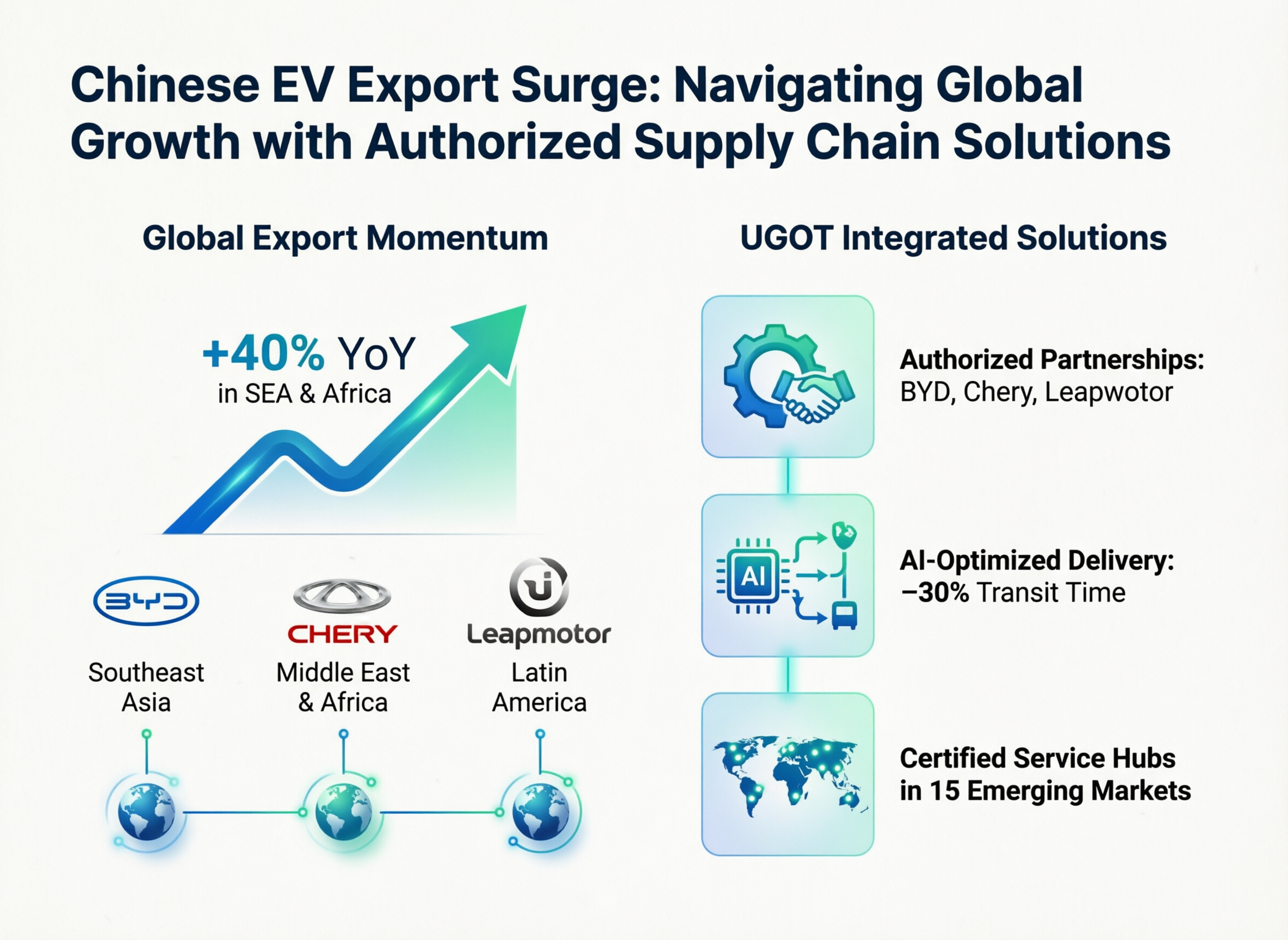 Chinese EV Export Surge: Navigating Global Growth with Authorized Supply Chain Solutions
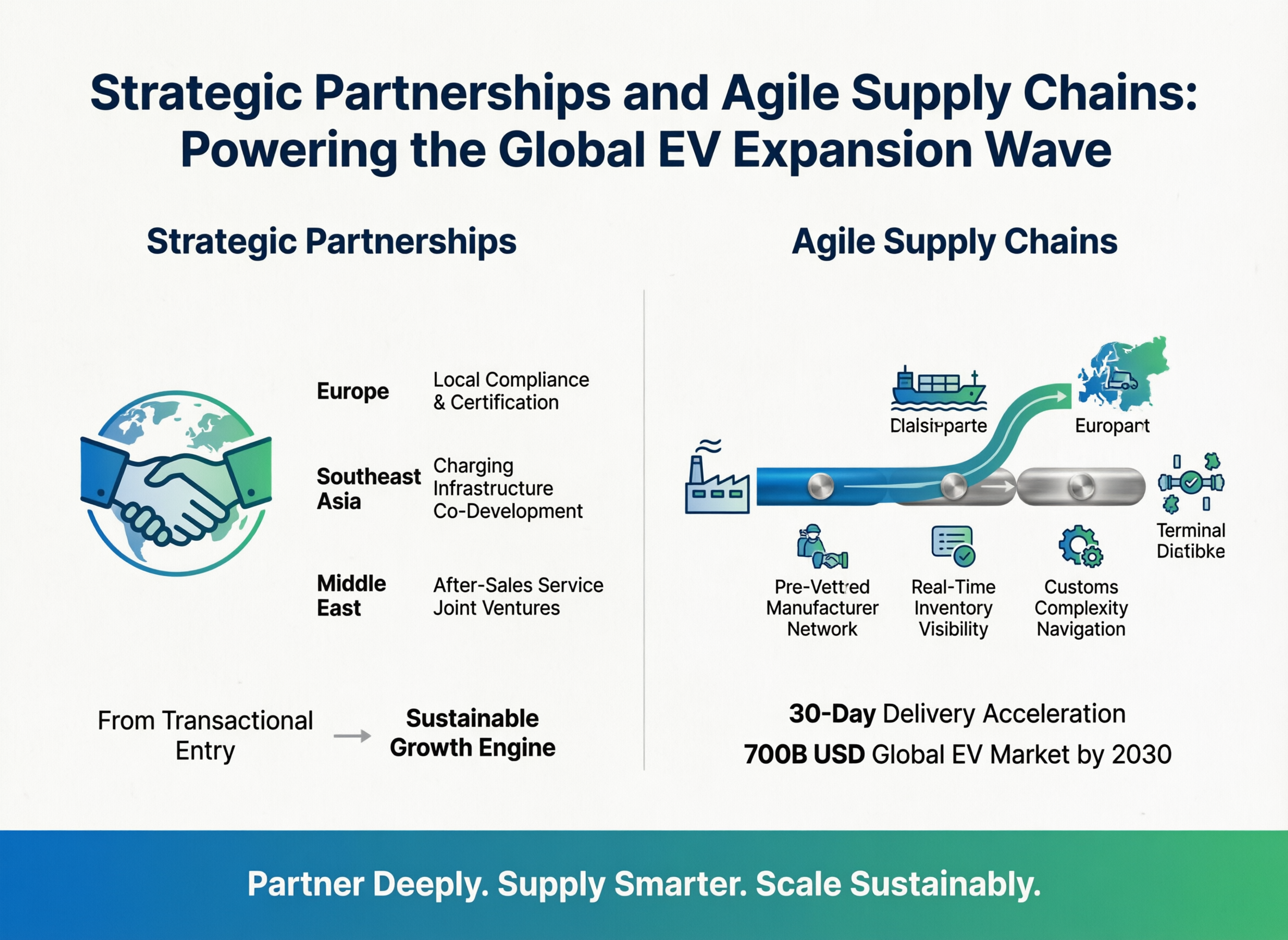 Strategic Partnerships and Agile Supply Chains: Powering the Global EV Expansion Wave
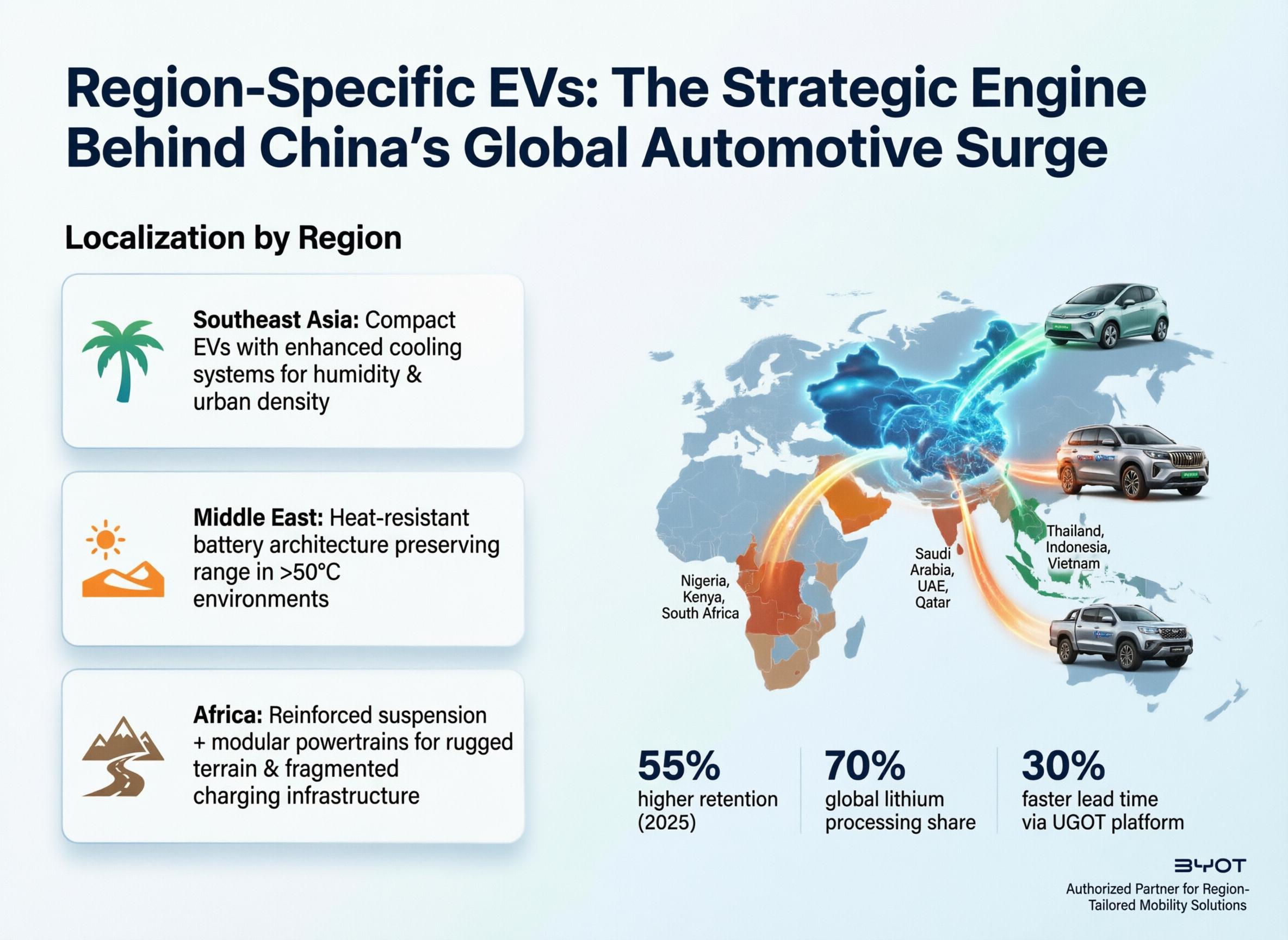 Region-Specific EVs: The Strategic Engine Behind China’s Global Automotive Surge