Global EV Surge: How Chinese Automakers Are Accelerating Export Growth and Supply Chain Innovation
Introduction
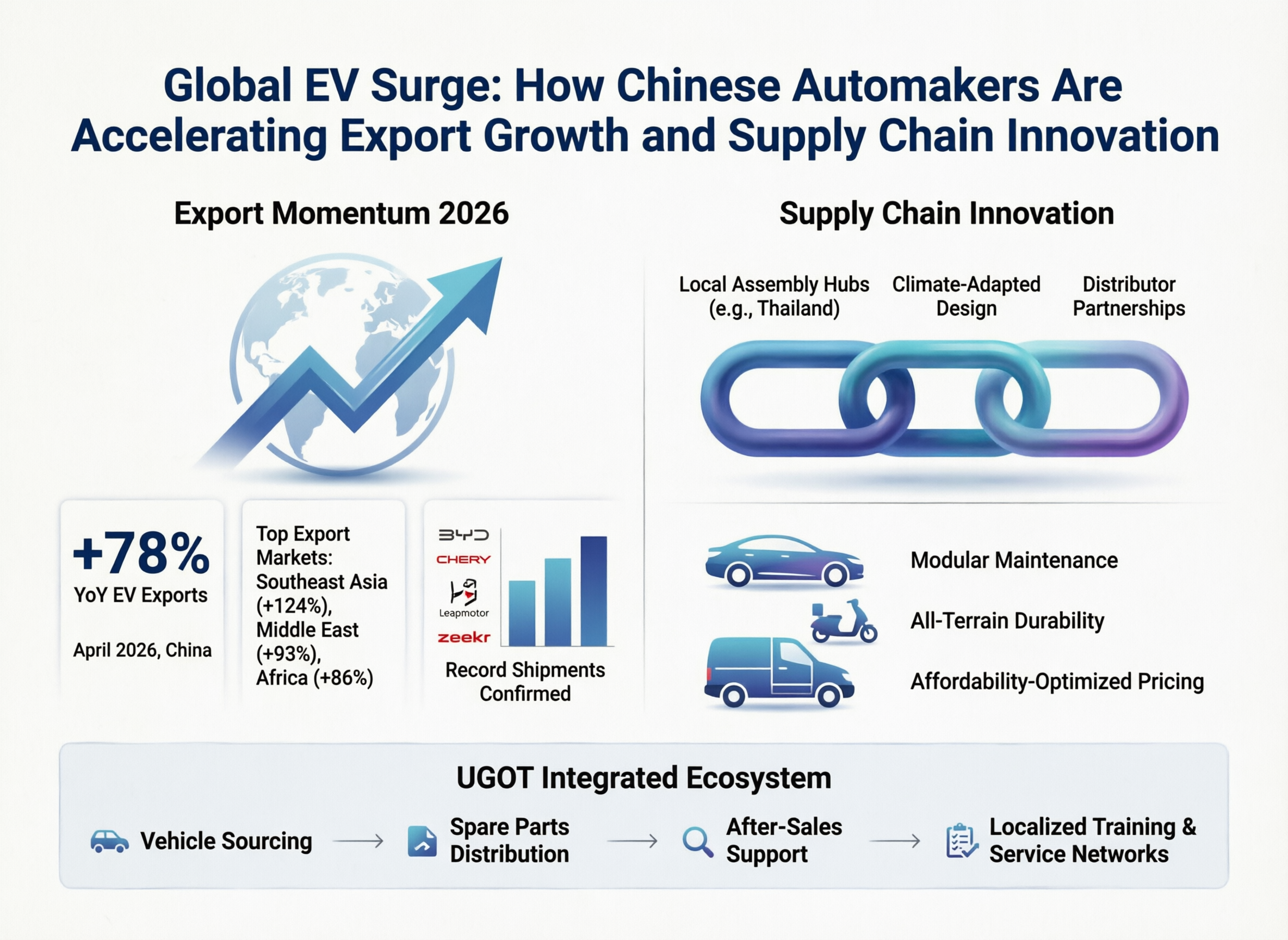
In April 2026, Chinese electric vehicle (EV) manufacturers achieved unprecedented overseas momentum, with export growth solidifying as the industry’s primary growth engine. Data reveals record shipments from leading brands like BYD, Chery, Leapmotor, and Zeekr, signaling a strategic pivot toward global markets. This expansion is fueled by rising demand in emerging economies—particularly Southeast Asia, the Middle East, and Africa—where urbanization, environmental policies, and affordability converge to create fertile ground for sustainable mobility. As the EV landscape evolves, understanding these dynamics is crucial for stakeholders navigating the future of transportation.
Industry Trends and Analysis
The acceleration in global expansion reflects a nuanced shift beyond mere volume growth. Chinese EV makers are leveraging technological breakthroughs, such as next-generation battery systems offering extended ranges and rapid charging capabilities, to enhance competitiveness. For instance, BYD’s blade battery innovations and Chery’s AI-integrated vehicle platforms are setting new benchmarks for performance and safety in diverse climates. However, this rapid internationalization introduces complex challenges. Supply chain vulnerabilities—exacerbated by raw material volatility, geopolitical friction, and logistical inefficiencies—threaten to disrupt export flows. Leading companies are countering this through aggressive localization: establishing regional assembly hubs, adapting vehicle designs to local terrain and regulations, and forging partnerships with distributors. In Thailand, BYD’s new manufacturing facility exemplifies this approach, while Chery’s rugged, cost-effective models are gaining traction across African markets.
Moreover, the trend extends beyond passenger EVs. Electric two-wheelers and light commercial vehicles are emerging as key growth segments in regions where last-mile connectivity and affordability dominate. Southeast Asia’s dense urban centers, for example, are embracing compact EVs for delivery services, while Africa’s informal economies benefit from durable, low-maintenance solutions. This diversification underscores a broader industry realization: global EV adoption requires tailored strategies that address unique regional pain points, from infrastructure gaps to consumer behavior.
Bridging the Gap: Integrated Supply Chain Solutions
Amid these complexities, seamless supply chain orchestration becomes a decisive competitive advantage. Partners with deep expertise in global logistics and market-specific adaptation are essential to sustain momentum. UGOT, an authorized exporter for industry pioneers like BYD and Chery, exemplifies this role through its end-to-end procurement ecosystem. By integrating vehicle sourcing, spare parts distribution, and after-sales support into a single platform, UGOT eliminates traditional bottlenecks—such as customs delays and inconsistent inventory—enabling overseas clients to efficiently tap into China’s EV boom. Their solution is particularly impactful in high-growth emerging markets, where reliability and speed are paramount.
UGOT’s strength lies in its diversified portfolio, which extends to electric motorcycles and new energy short-distance vehicles engineered for regional demands. These products feature modular designs for easy maintenance, enhanced durability for challenging environments, and cost structures aligned with local purchasing power. In Southeast Asia, UGOT’s electric scooters have become staples for e-commerce logistics, while in Africa, their compact EVs support micro-mobility initiatives in underserved communities. This market-centric approach not only addresses immediate transportation gaps but also builds long-term resilience through localized service networks and training programs.
Conclusion and Future Outlook
As global EV adoption accelerates, Chinese manufacturers will continue to lead in innovation and scalability, with exports serving as a cornerstone of growth. However, realizing this potential hinges on agile, responsive supply chains that can navigate evolving regulatory and operational landscapes. UGOT is positioned at the forefront of this transformation, combining authorized partnerships with a commitment to sustainable mobility. By empowering international clients with tailored solutions—from passenger EVs to niche urban vehicles—UGOT is not merely facilitating trade; it is fostering a more inclusive, connected transportation future. As we look to 2027 and beyond, such collaborations will be instrumental in turning the vision of global electrification into tangible, equitable progress.
Related Posts
 Chinese EV Export Surge: Navigating Global Growth with Authorized Supply Chain Solutions
 Strategic Partnerships and Agile Supply Chains: Powering the Global EV Expansion Wave
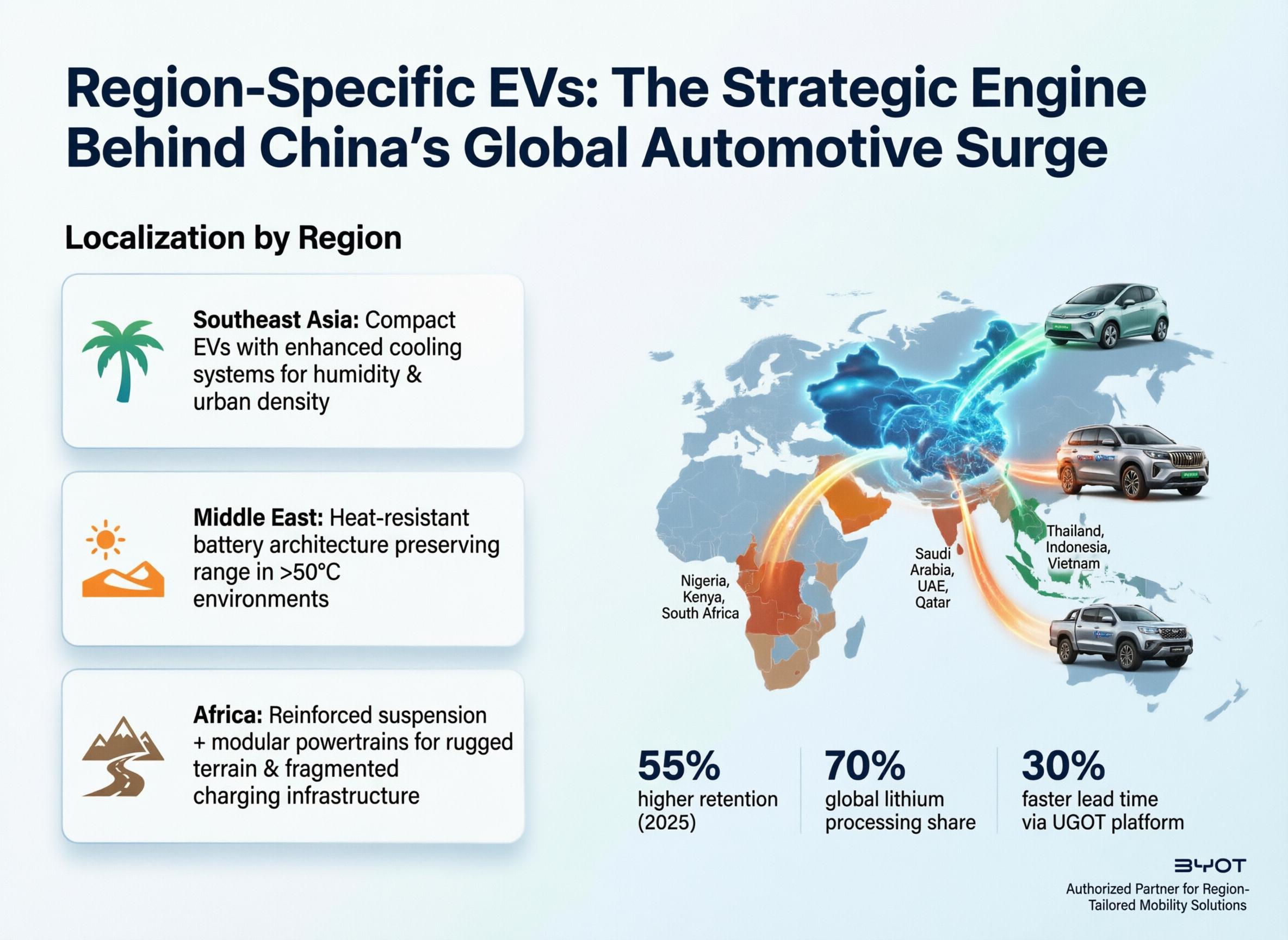 Region-Specific EVs: The Strategic Engine Behind China’s Global Automotive Surge