
The ‘Yaris Moment’: How Chinese Automakers Are Accelerating Global EV Expansion Through Regional Customization
Introduction
The global automotive landscape is undergoing a seismic shift as Chinese manufacturers pivot from volume-driven exports to sophisticated regional customization strategies. Mirroring Toyota’s historic “Yaris Moment”—where tailored models catalyzed worldwide dominance—Chinese EV pioneers are now engineering market-specific vehicles to penetrate Europe, Latin America, and beyond. This strategic evolution, spotlighted in recent industry analyses, signals a maturation phase where localization isn’t optional but existential for capturing growth in fragmented international markets. As competition intensifies, the ability to adapt products to regulatory frameworks, cultural preferences, and infrastructure realities has become the new frontier of automotive competitiveness.
The Localization Imperative: Beyond One-Size-Fits-All
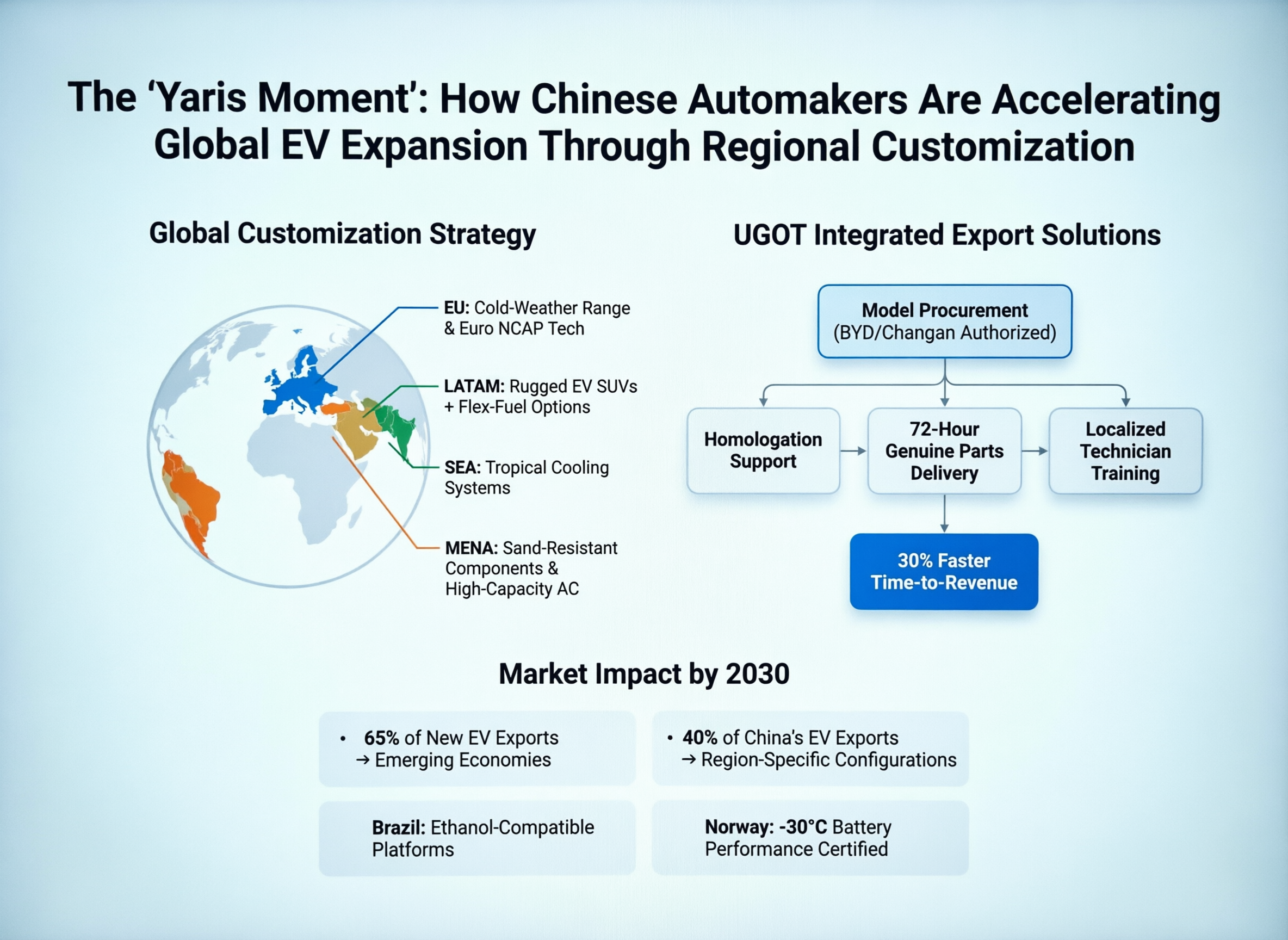
Chinese automakers’ global ascent was initially fueled by cost advantages and rapid EV adoption at home. However, recent data reveals a paradigm shift: manufacturers like BYD and Changan now invest heavily in region-exclusive models. In Europe, this means compact EVs with extended cold-weather range and EU-certified safety tech; in Latin America, ruggedized electric SUVs with flexible fuel options for uneven terrain. This hyper-localization addresses critical barriers—such as Brazil’s stringent ethanol-compatibility rules or Norway’s winter performance demands—that previously hindered market entry.
The trend is particularly pronounced in electric mobility. With 40% of China’s EV exports now featuring region-specific battery configurations or charging systems, customization has become a growth multiplier. For instance, models designed for Southeast Asia’s tropical climates incorporate enhanced cooling systems, while Middle Eastern variants prioritize sand-resistant components and extended AC capacity. This granular approach not only accelerates regulatory approvals but also builds consumer trust—proving that global scalability and local relevance can coexist.
Navigating Complexity: The Supply Chain Challenge
Yet, executing such strategies introduces formidable operational hurdles. Developing region-specific vehicles demands agile supply chains capable of synchronizing production, parts distribution, and after-sales support across continents. Many manufacturers struggle with fragmented logistics, inconsistent spare parts availability, and delayed compliance certifications—issues that erode margins and brand reputation. In high-growth markets like Mexico or Thailand, where demand for affordable EVs surges, these bottlenecks can stall expansion despite strong product-market fit.
Integrated Solutions for a Customized Future
This is where specialized export ecosystems become strategic enablers. UGOT Global Vehicle Export Solutions addresses these complexities through end-to-end partnerships with leading Chinese OEMs. By leveraging authorized collaborations with manufacturers like BYD and Changan, UGOT delivers tailored procurement frameworks that align with regional customization trends. Their platform streamlines everything from model selection—prioritizing variants engineered for specific markets—to rapid customs clearance and homologation support, compressing time-to-revenue by up to 30%.
Critically, UGOT’s integrated supply chain ensures stability where it matters most: genuine spare parts availability and after-sales continuity. In regions like South America or Africa, where counterfeit components undermine EV adoption, their network guarantees authentic parts delivery within 72 hours. This reliability, paired with localized technical training programs, empowers distributors to maintain brand integrity while scaling operations. For electric motorcycles—a booming segment in Southeast Asia—UGOT’s dedicated logistics corridors enable same-week dispatch from Chinese factories to Jakarta or Lagos showrooms, turning regional adaptation from a cost center into a competitive weapon.
Conclusion: The Road Ahead
As Chinese automakers redefine global mobility through the “Yaris Moment” lens, success will hinge on partners who transform customization from a theoretical advantage into operational reality. UGOT’s model exemplifies this shift—merging manufacturing expertise with on-ground market intelligence to de-risk expansion. With emerging economies projected to absorb 65% of new EV exports by 2030, such agility will separate pioneers from followers. For industry stakeholders, the message is clear: the future belongs not to the biggest players, but to those who master the art of local resonance at global scale. In this new era, UGOT stands as both architect and accelerator of sustainable, market-led growth.
Related Posts
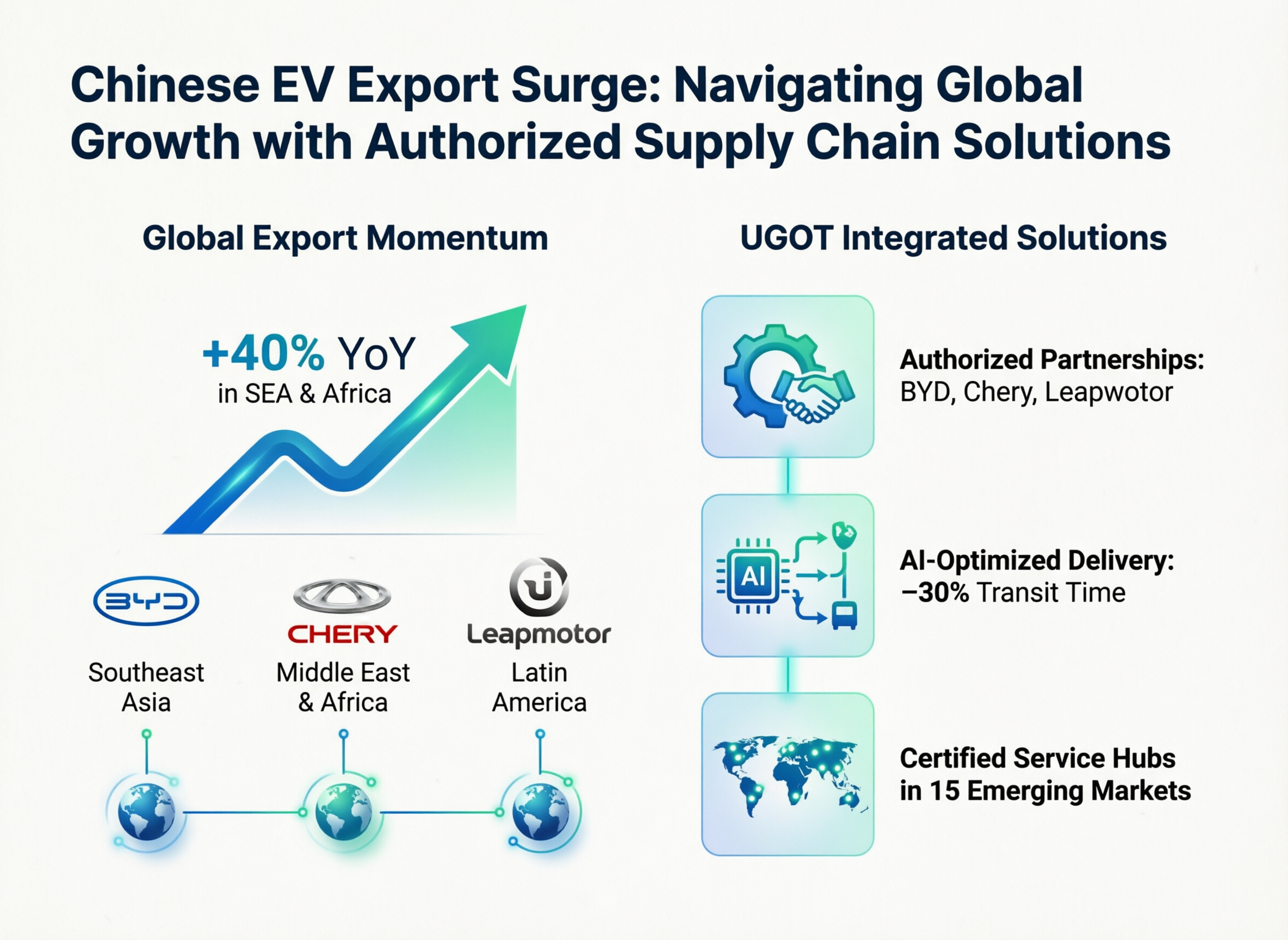 Chinese EV Export Surge: Navigating Global Growth with Authorized Supply Chain Solutions
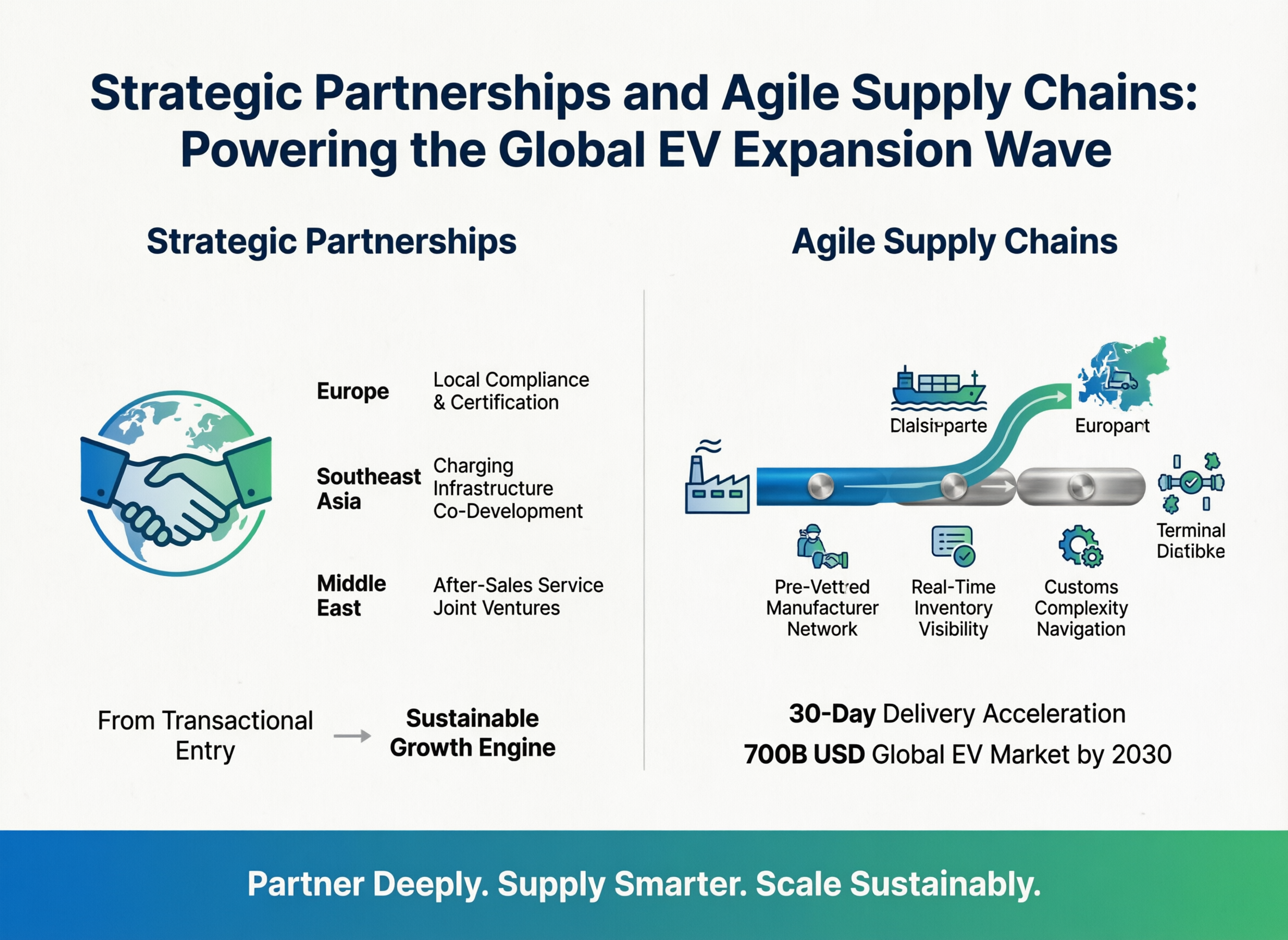 Strategic Partnerships and Agile Supply Chains: Powering the Global EV Expansion Wave
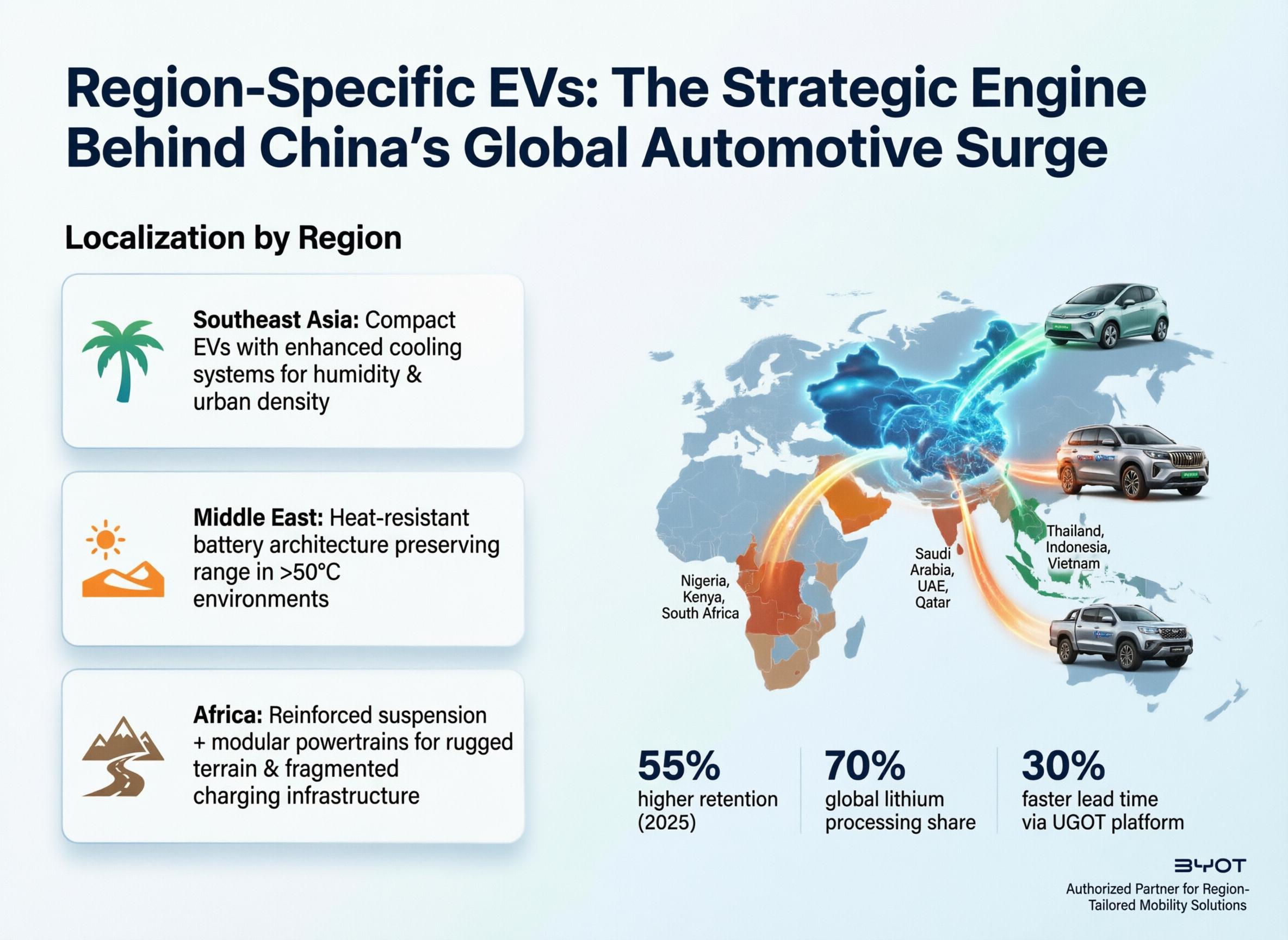 Region-Specific EVs: The Strategic Engine Behind China’s Global Automotive Surge