The ‘Yaris Moment’: How Chinese Carmakers Are Redefining Global Automotive Expansion
Introduction
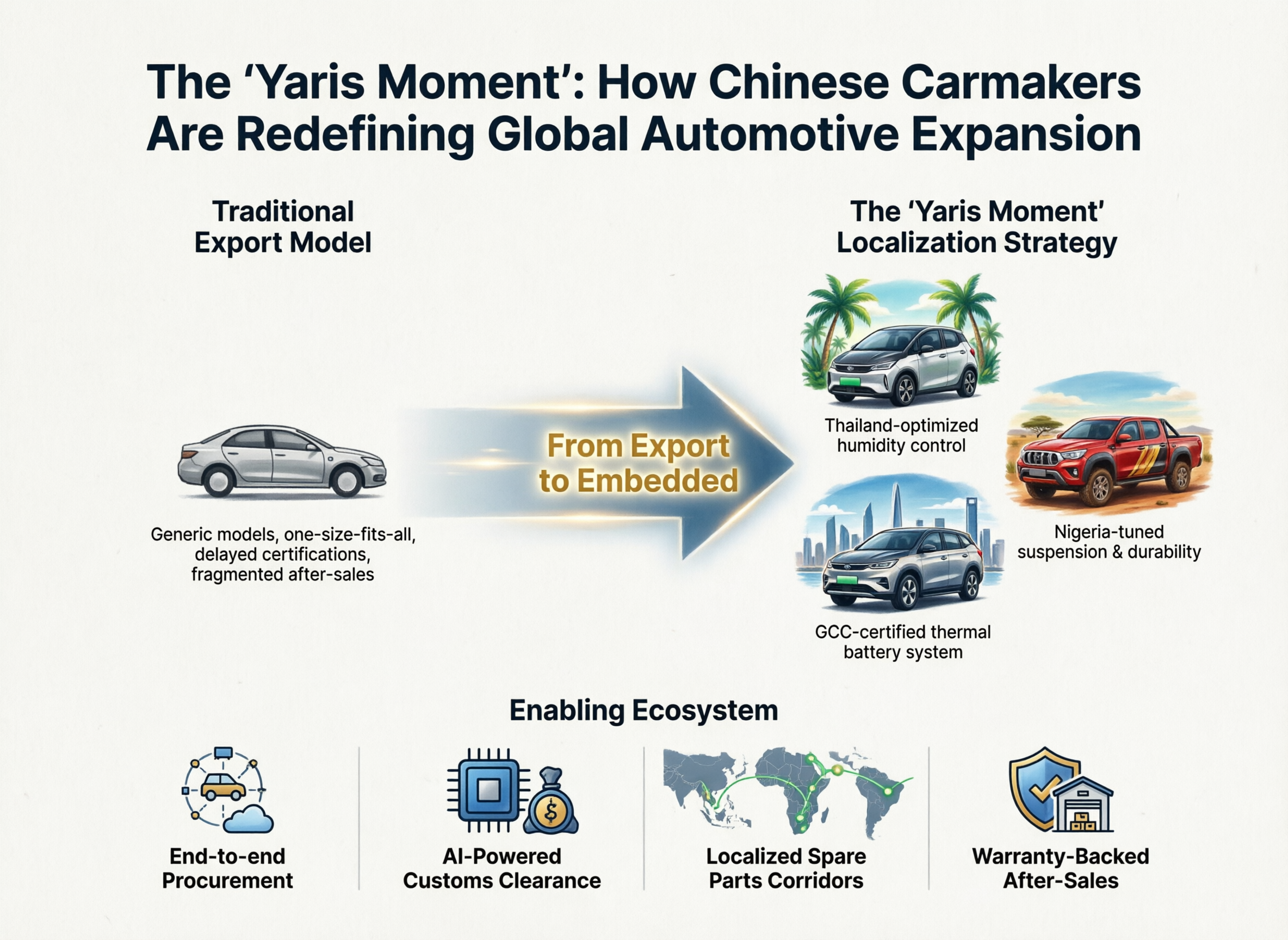
The global automotive landscape is undergoing a seismic shift as Chinese manufacturers pivot from volume-driven exports to hyper-localized market strategies. Dubbed the “Yaris Moment”—a nod to Toyota’s success in tailoring the Yaris to regional preferences—this approach marks a strategic evolution. Chinese automakers like BYD, Changan, and JMC are now engineering vehicles specifically for Southeast Asia’s tropical climates, Africa’s rugged terrain, and Latin America’s cost-sensitive markets. This localization surge isn’t merely tactical; it’s a fundamental recalibration of global competitiveness, driven by the realization that one-size-fits-all solutions falter in diverse regulatory and cultural ecosystems.
The Localization Imperative: Beyond Surface-Level Adaptation
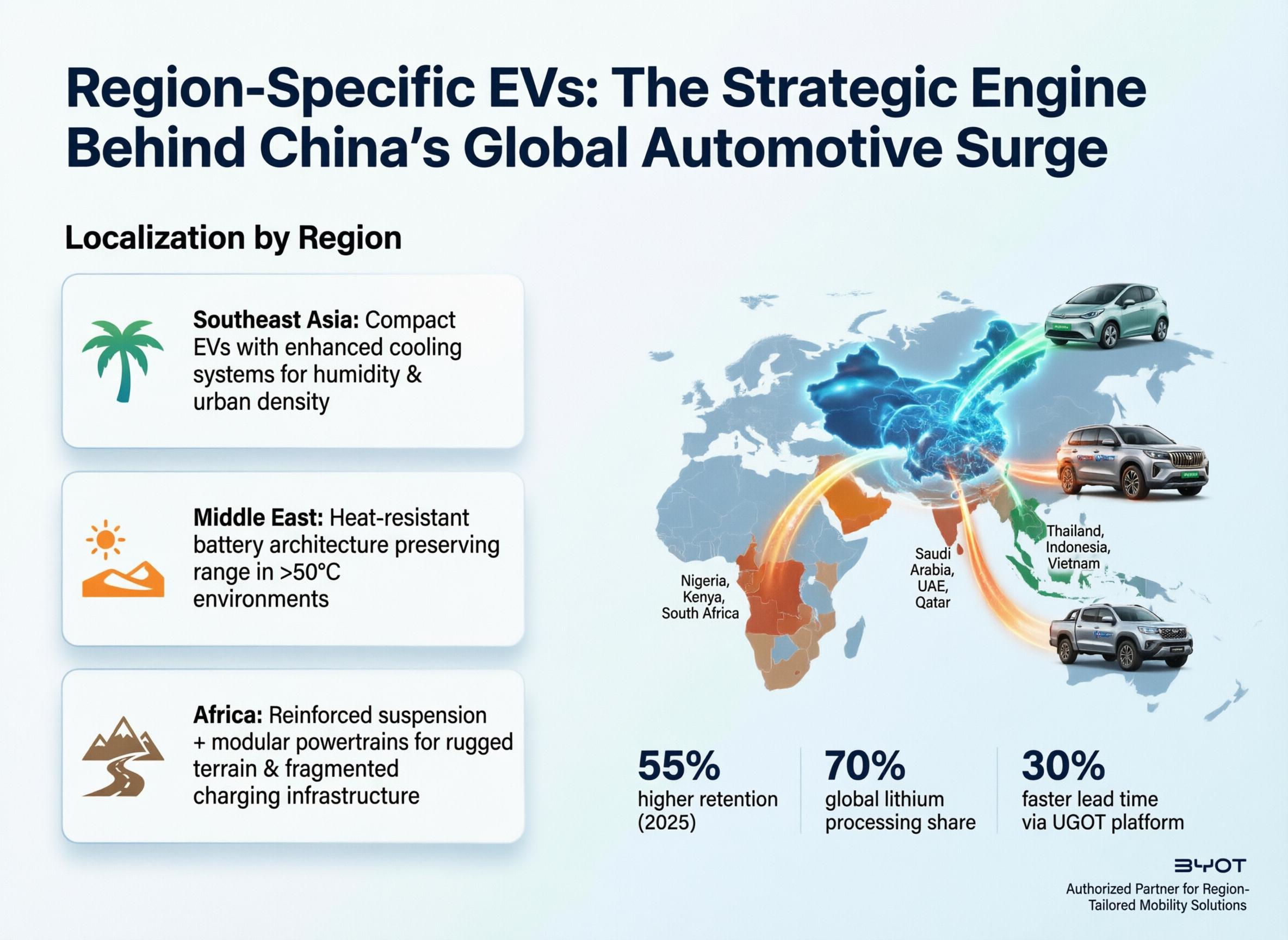
The “Yaris Moment” transcends cosmetic tweaks. It demands deep integration of regional insights into vehicle DNA: battery systems optimized for high-heat environments in the Middle East, compact dimensions for Southeast Asia’s congested cities, and reinforced suspensions for Africa’s unpaved roads. This strategy addresses critical pain points that previously hindered Chinese brands—such as after-sales fragmentation and regulatory misalignment. For instance, Indonesia’s stringent EV component rules or Brazil’s safety certification delays have derailed generic export models. Success now hinges on preemptive adaptation, where vehicles are conceived with target markets, not for them.
Supply chain resilience further amplifies this trend. Geopolitical volatility and port congestion have exposed vulnerabilities in traditional export pipelines. Manufacturers recognize that localized product success requires equally localized supply networks—especially for spare parts and EV components. Without agile logistics and compliance expertise, even perfectly engineered vehicles stall at customs or languish in warehouses. The industry’s next battleground isn’t just design; it’s the ecosystem enabling rapid, compliant market entry.
Strategic Partnerships: The Catalyst for Scalable Localization
Herein lies the inflection point: Chinese automakers increasingly rely on specialized export partners to operationalize their “Yaris Moment” ambitions. Generic logistics providers lack the automotive-specific infrastructure to navigate complex certifications, duty structures, and last-mile distribution in emerging economies. What’s needed is an integrated solution that bridges product development with on-ground execution—a role where dedicated automotive export platforms prove indispensable.
This is where UGOT Global Automotive Export Solutions delivers transformative value. By offering end-to-end procurement for new/used vehicles, electric motorcycles, and genuine spare parts, UGOT eliminates fragmentation in the export journey. Its mature distribution corridors across Southeast Asia, the Middle East, Africa, and South America—coupled with AI-driven customs clearance protocols—slash time-to-market by up to 40%. For automakers rolling out region-specific models, UGOT’s stable supply chains ensure that a Changan pickup engineered for Nigerian farms or a BYD EV calibrated for Thai humidity reaches buyers with warranty-backed after-sales support. This isn’t logistics; it’s competitive enablement.
The Road Ahead: Collaboration as the Engine of Growth
As Chinese brands capture 35% of emerging-market EV sales by 2030 (per BloombergNEF projections), the “Yaris Moment” will evolve from trend to baseline expectation. Future success will favor alliances where automakers focus on product innovation while export specialists like UGOT handle market-specific deployment complexities. This symbiosis accelerates not just sales, but brand trust—turning localized vehicles into long-term market anchors.
UGOT’s role extends beyond transactions; it’s a strategic amplifier for global ambition. By de-risking expansion through compliance mastery, spare parts availability, and rapid delivery networks, we empower Chinese automakers to transform regional insights into revenue—without compromising on quality or service. In an industry where localization defines leadership, the right partnership isn’t optional; it’s the accelerator.
— Insights from UGOT Global Automotive Strategy Team
Related Posts
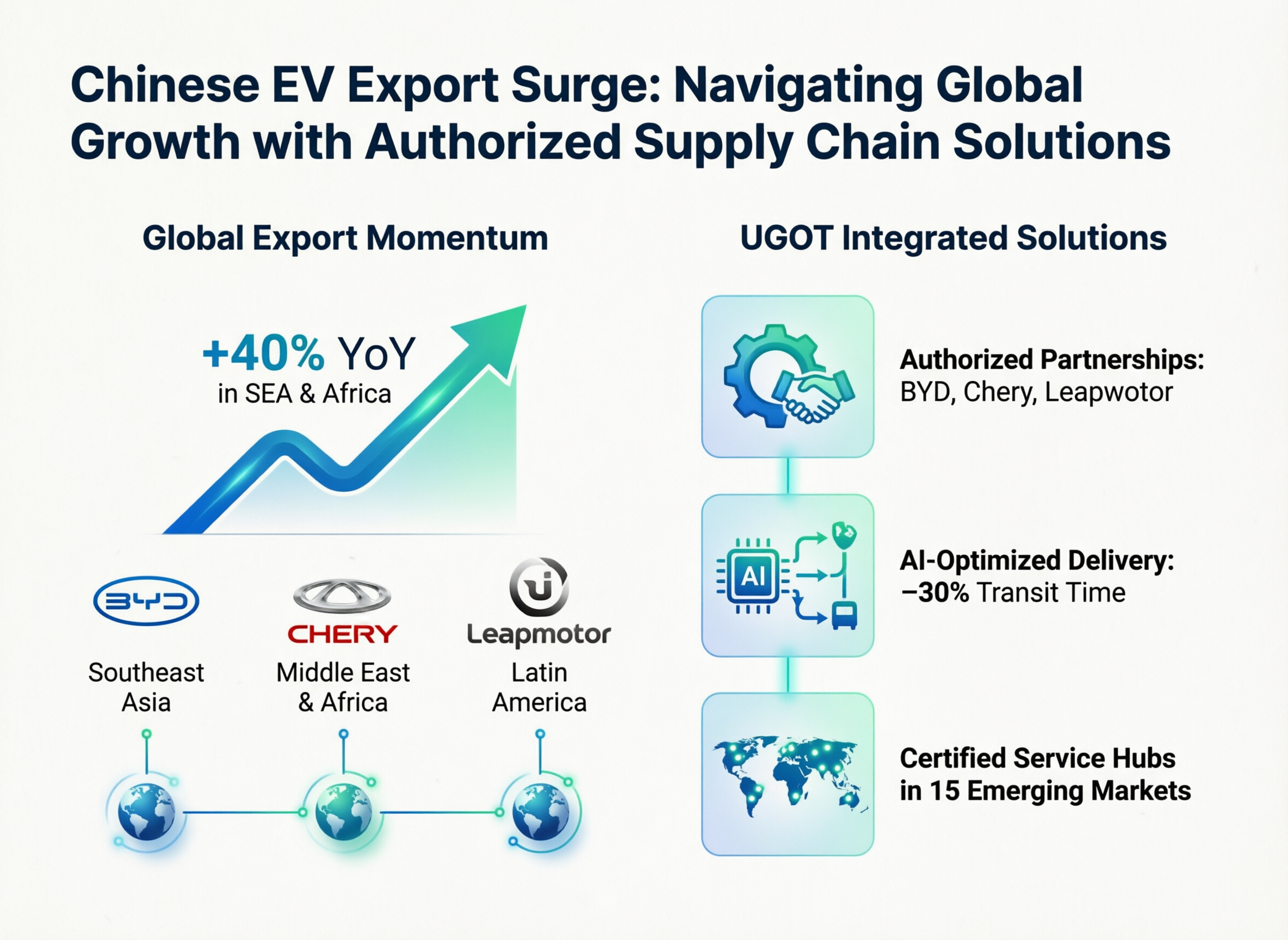 Chinese EV Export Surge: Navigating Global Growth with Authorized Supply Chain Solutions
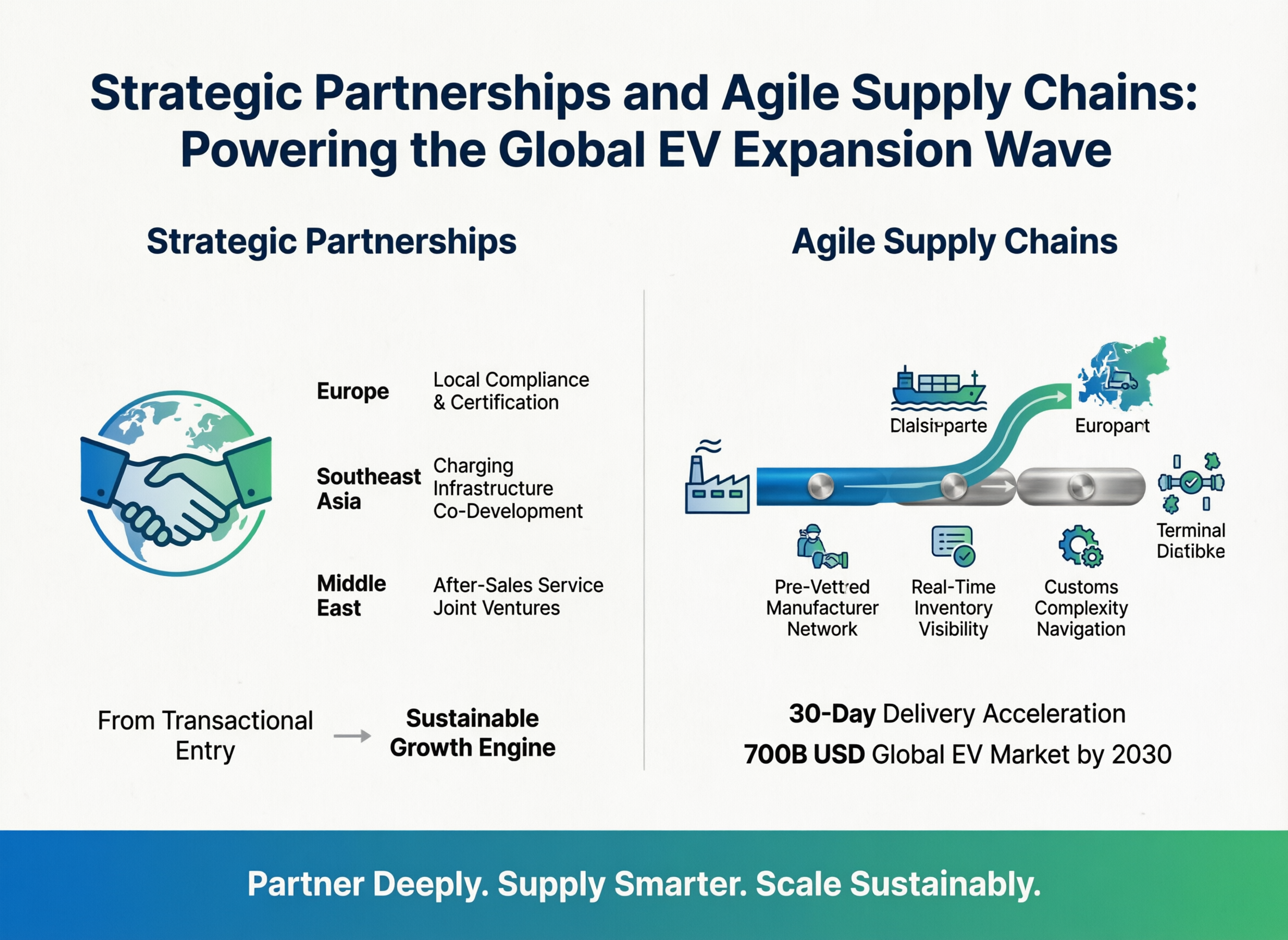 Strategic Partnerships and Agile Supply Chains: Powering the Global EV Expansion Wave
 Region-Specific EVs: The Strategic Engine Behind China’s Global Automotive Surge