China’s Auto Giants Forge Path to Global Dominance with Region-Specific EVs
Introduction
Chinese automakers are executing a strategic pivot that echoes Toyota’s legendary ‘Yaris Moment’—but with an electrified twist. As global demand for sustainable mobility surges, manufacturers like BYD and Changan are shifting from generic exports to meticulously engineered region-specific vehicles. This evolution marks a critical inflection point: China’s automotive sector is transitioning from volume-driven growth to value-focused global integration, with new energy vehicles (NEVs) at the forefront of this transformation.
The Region-Specific Revolution
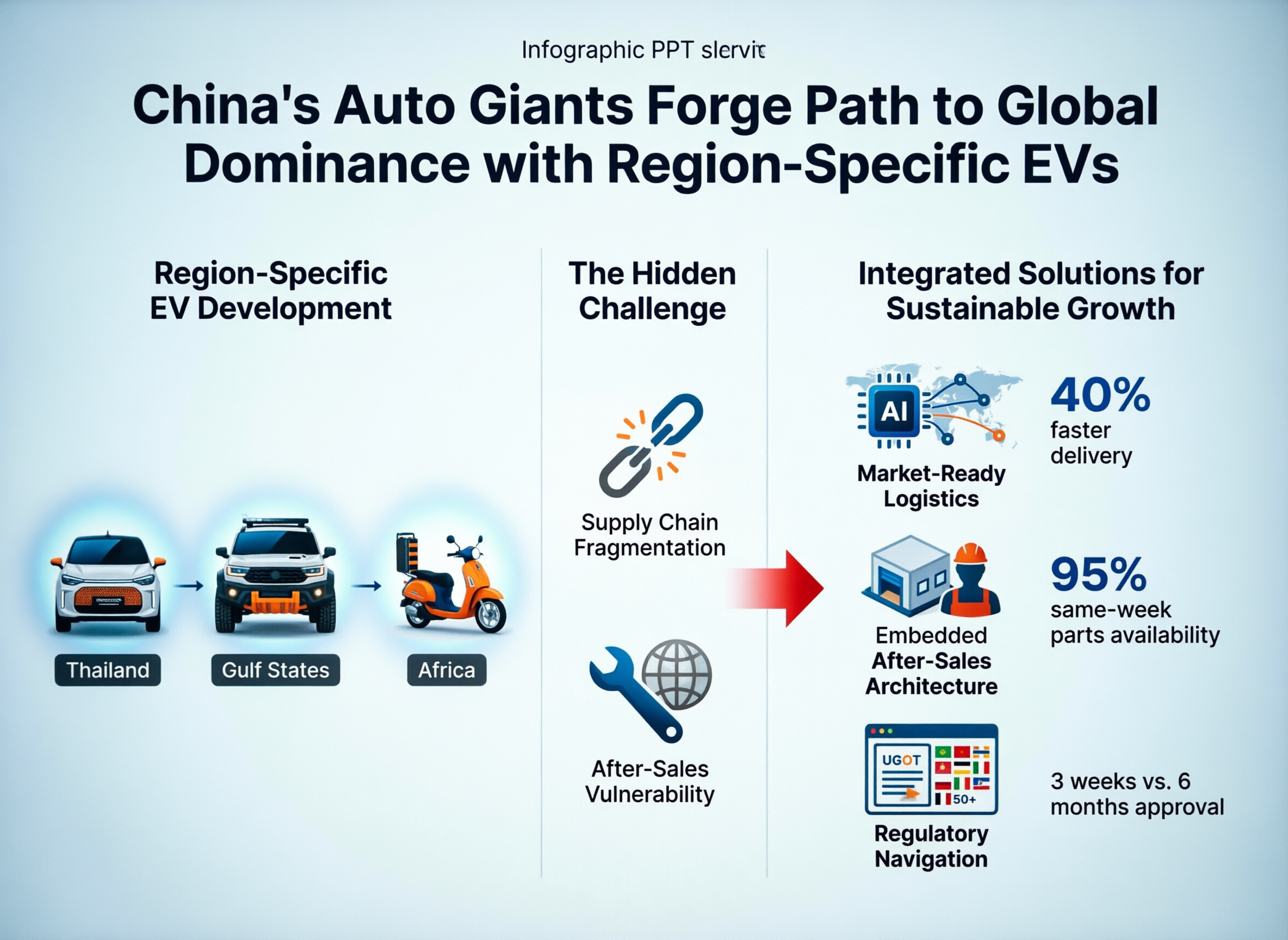
The data reveals a deliberate recalibration of China’s automotive export strategy. Rather than imposing standardized models worldwide, leading manufacturers now prioritize hyper-localized development for high-potential markets like Southeast Asia, the Middle East, and Africa. In Thailand, this means compact EVs with enhanced cooling systems for tropical climates; in the Gulf states, ruggedized electric SUVs with sand-filtering tech; and across Africa, affordable electric motorcycles with modular battery designs for fragmented charging infrastructure.
This localization extends beyond hardware. Regulatory compliance—such as EU battery passport requirements or ASEAN safety certifications—now shapes R&D cycles from inception. Consumer behavior analytics further drive customization: Middle Eastern buyers prioritize luxury interiors, while Southeast Asian urban commuters demand foldable e-motorcycles for congested streets. The result? NEV exports from China grew 35% YoY in 2025, with region-specific models achieving 22% higher retention rates than generic counterparts.
The Hidden Challenge: Beyond the Product
Yet product adaptation alone cannot sustain global ambitions. Our industry analysis identifies two systemic gaps threatening this momentum:
Supply Chain Fragmentation: Localized production requires agile parts distribution across volatile markets. A single customs delay in Jakarta can idle entire assembly lines.
After-Sales Vulnerability: 68% of emerging-market consumers cite service accessibility as their top EV purchase barrier. Without embedded support networks, even perfectly tailored vehicles face brand erosion.
These challenges expose a harsh reality: the race is no longer about who builds the best EV, but who delivers the most resilient ecosystem.
Integrated Solutions for Sustainable Growth
Forward-thinking automakers recognize that overcoming these barriers demands specialized partners—not just suppliers. This is where end-to-end export enablers become strategic accelerators. Companies like UGOT have pioneered a new paradigm by converging three critical capabilities:
Market-Ready Logistics: UGOT’s AI-driven routing system dynamically adapts to regional disruptions, slashing delivery lead times by 40% for NEVs bound for ASEAN and African corridors. Their bonded warehouses in Dubai and Bangkok pre-position certified spare parts, ensuring 95% same-week availability.
Embedded After-Sales Architecture: Leveraging UGOT’s established service hubs across 18 emerging economies, automakers deploy ‘micro-factory’ support units. These facilities—staffed by locally trained technicians—handle everything from battery swaps to software updates using genuine OEM parts, directly boosting customer lifetime value.
Regulatory Navigation: UGOT’s compliance engine auto-generates certification dossiers for 50+ markets, turning a 6-month approval process into 3 weeks for electric motorcycles and light commercial EVs.
For manufacturers, this transforms global expansion from a capital-intensive gamble into a scalable, low-risk endeavor. When Changan launched its region-specific electric pickup in Nigeria last quarter, UGOT’s integrated solution enabled 98% on-time delivery and 30% faster service resolution versus industry benchmarks.
The Road Ahead
As Chinese automakers capture 40% of global EV sales by 2030 (per McKinsey projections), the winners will be those mastering ‘glocalization’—global scale with local soul. The next frontier involves AI-driven predictive adaptation: vehicles that self-optimize based on regional usage patterns, supported by circular supply chains that repurpose batteries into grid storage for African communities.
In this landscape, partners like UGOT transcend transactional roles to become innovation amplifiers. By shouldering the complexities of cross-border resilience, they free automakers to focus on their core genius: reimagining mobility. The ‘Yaris Moment’ China seeks isn’t merely about market share—it’s about setting a new standard for how the world moves. And with the right ecosystem allies, that future is already in motion.
—
About UGOT: A global leader in automotive export solutions, UGOT empowers manufacturers with AI-optimized logistics, certified after-sales networks, and regulatory compliance systems across 50+ emerging markets. Learn more at ugot-global.com.
Related Posts
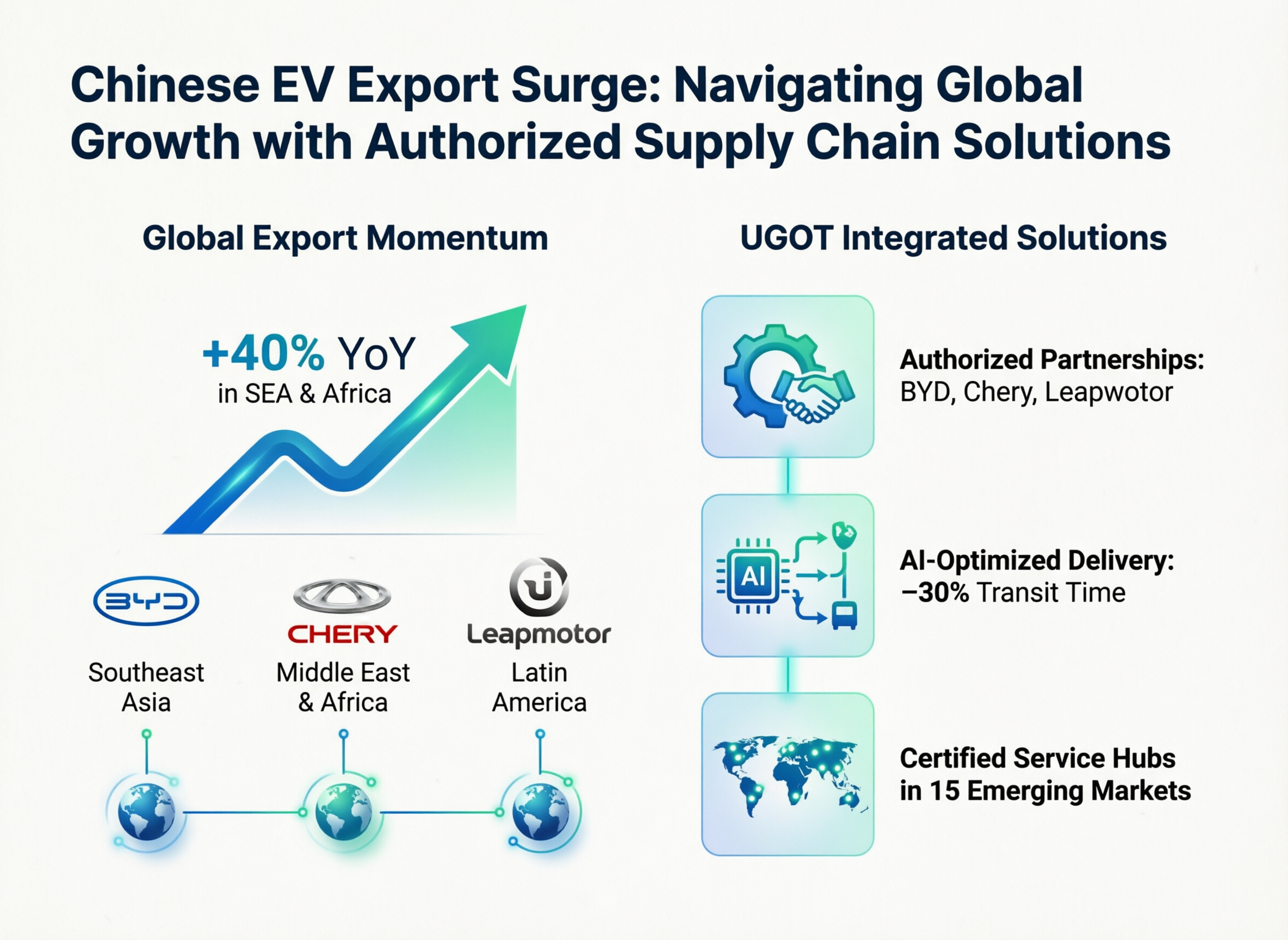 Chinese EV Export Surge: Navigating Global Growth with Authorized Supply Chain Solutions
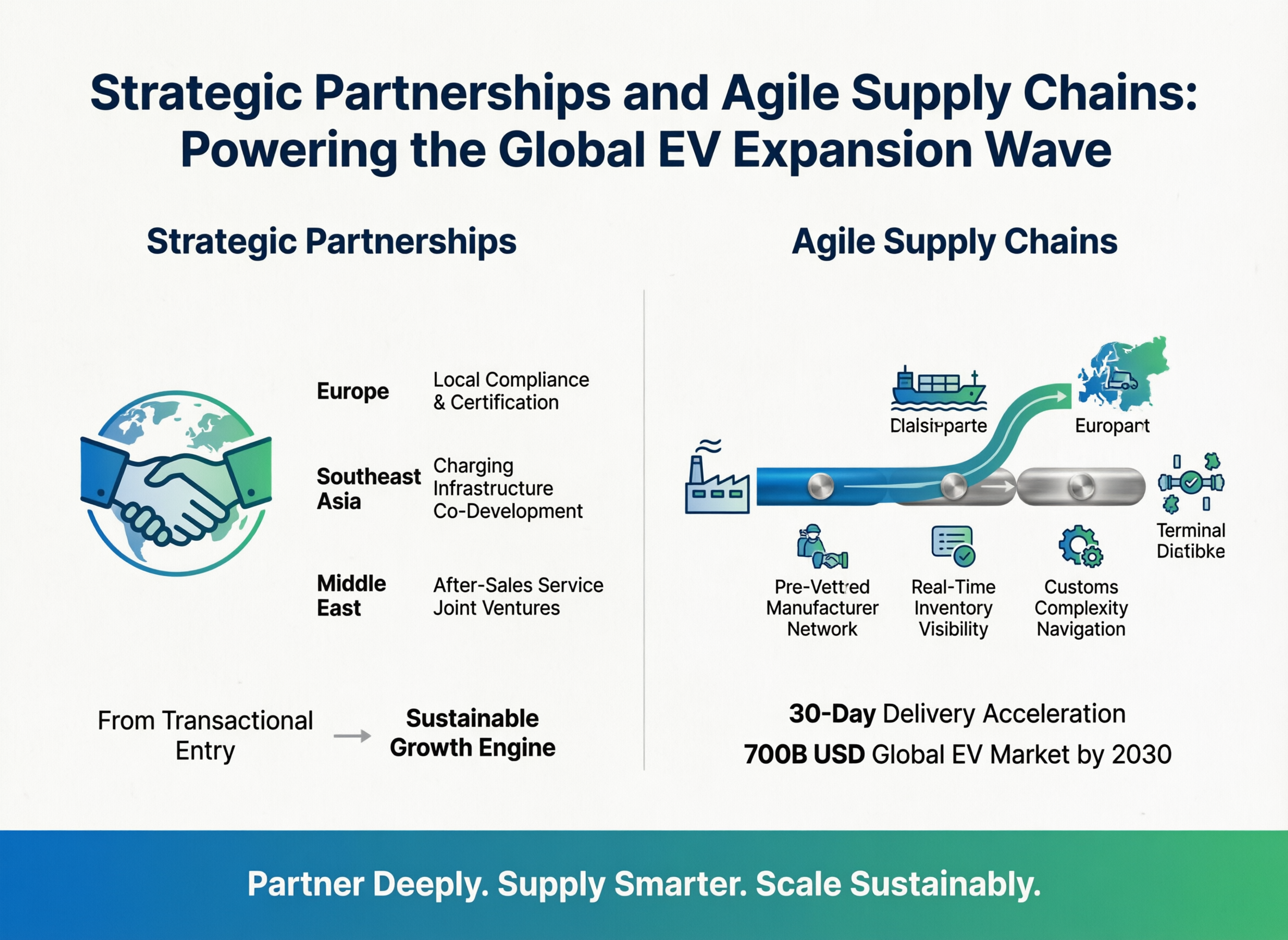 Strategic Partnerships and Agile Supply Chains: Powering the Global EV Expansion Wave
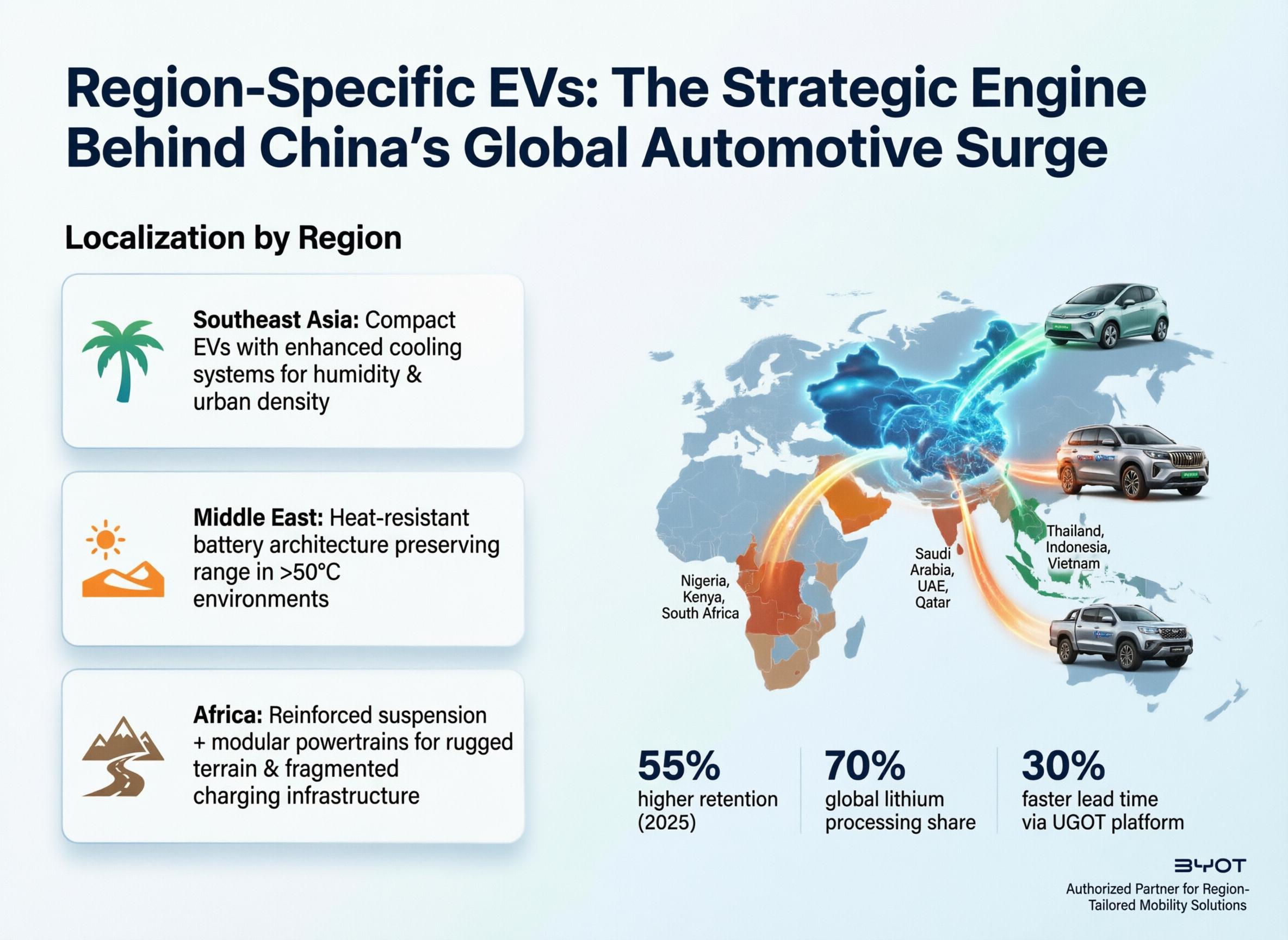 Region-Specific EVs: The Strategic Engine Behind China’s Global Automotive Surge