Accelerating Global Reach: Chinese EV Export Surge and the Supply Chain Solutions Powering It
Introduction
In April 2026, China’s electric vehicle (EV) industry marked a pivotal moment as manufacturers like BYD, Chery, and Leapmotor achieved unprecedented overseas milestones. According to industry reports, export growth has become the dominant engine driving sector expansion, with shipments surging across emerging markets. This shift underscores a broader transformation: Chinese EV brands are no longer niche players but global contenders, capitalizing on accelerating demand for sustainable mobility. As geopolitical and economic pressures reshape automotive trade, understanding this export-led momentum is crucial for stakeholders navigating the evolving landscape.
Industry Trends and Strategic Insights
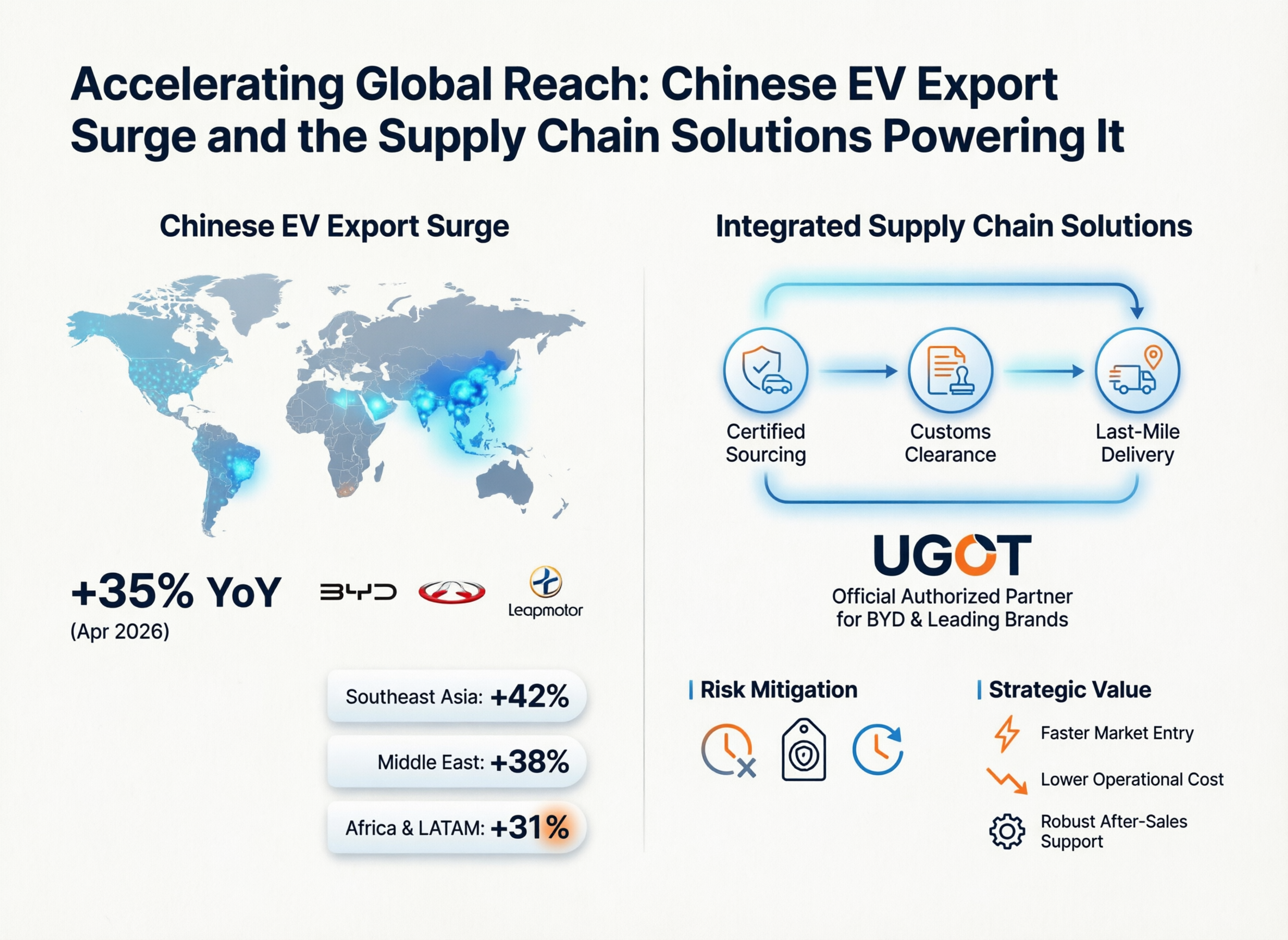
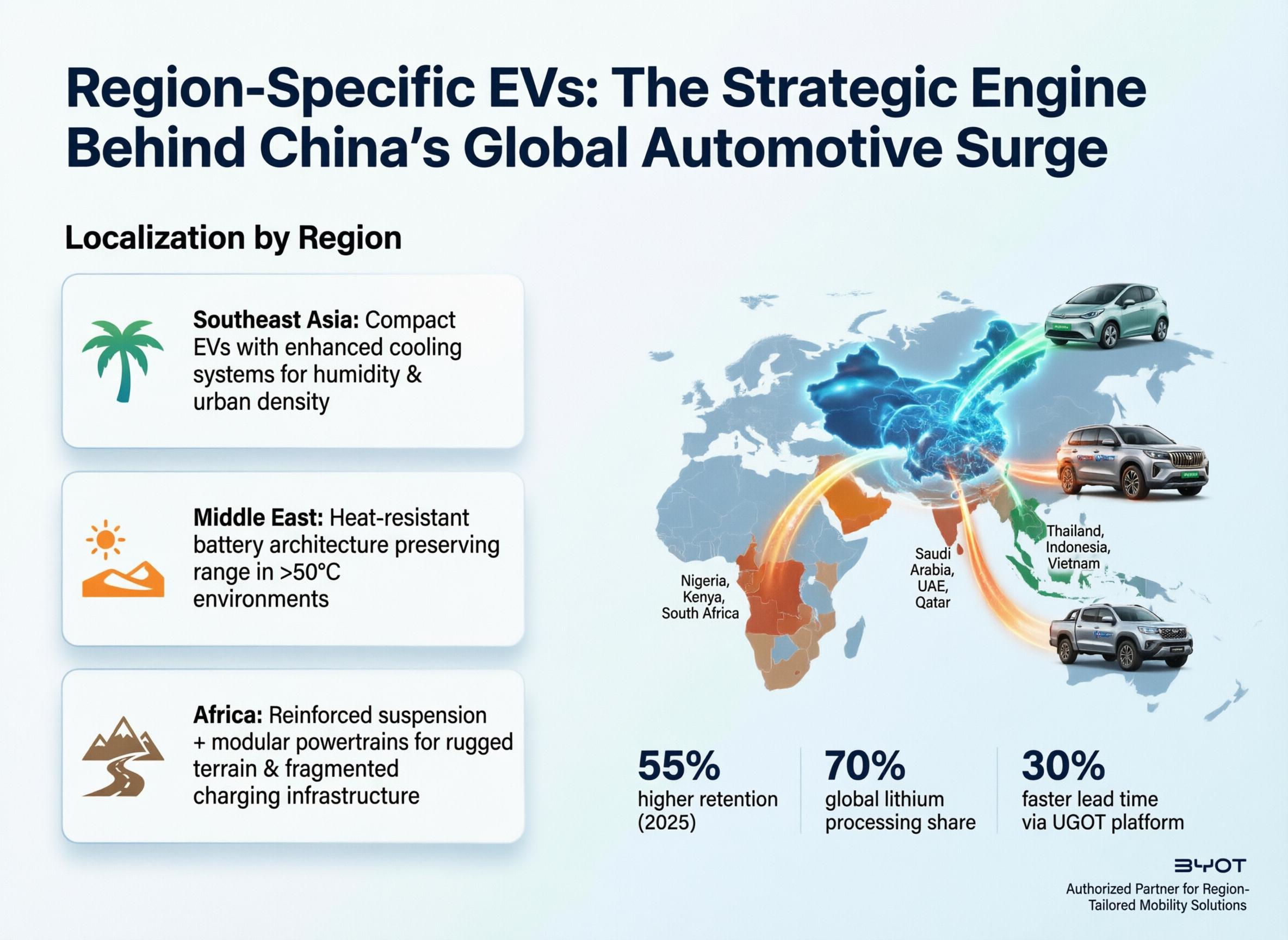
The data reveals a compelling narrative. Chinese EV exports grew by over 35% year-on-year in April 2026, with BYD and Chery leading the charge in regions like Southeast Asia, the Middle East, Africa, and Latin America. This surge isn’t merely about volume; it reflects a strategic pivot toward market diversification. Emerging economies, seeking affordable and eco-friendly transportation, are embracing Chinese EVs as alternatives to traditional combustion-engine imports. However, this rapid expansion exposes critical vulnerabilities. Supply chain instability—driven by logistics bottlenecks, regulatory hurdles, and quality control gaps—threatens to undermine growth. For instance, delayed shipments in Southeast Asia have eroded consumer trust, while inconsistent parts availability in Africa hampers after-sales service. Crucially, authorized partnerships are emerging as a linchpin for success. Manufacturers like BYD are prioritizing certified export partners to ensure compliance, streamline deliveries, and maintain brand integrity. This trend highlights a new competitive frontier: reliability in cross-border trade is now as vital as vehicle innovation.
Integrated Solutions for Sustainable Growth
Addressing these challenges requires more than ad-hoc fixes; it demands end-to-end supply chain ecosystems. This is where specialized export platforms bridge the gap between ambitious manufacturers and global demand. UGOT’s Global Automotive Export Solutions exemplifies this approach. As an official authorized partner for BYD and other leading brands, UGOT leverages its integrated network to provide seamless procurement for EVs, electric motorcycles, and spare parts. The platform’s core strength lies in its one-stop-shop model: from sourcing certified inventory to managing customs clearance and last-mile delivery, it minimizes risks like shipment delays or counterfeit parts. For dealers in high-growth regions—such as a fleet operator in Nigeria or a retailer in Chile—this translates to faster market entry, reduced operational costs, and robust after-sales support. By embedding quality assurance and real-time tracking, UGOT ensures that the surge in exports doesn’t compromise on customer experience, turning supply chain complexity into a strategic asset.
Future Outlook and Strategic Value
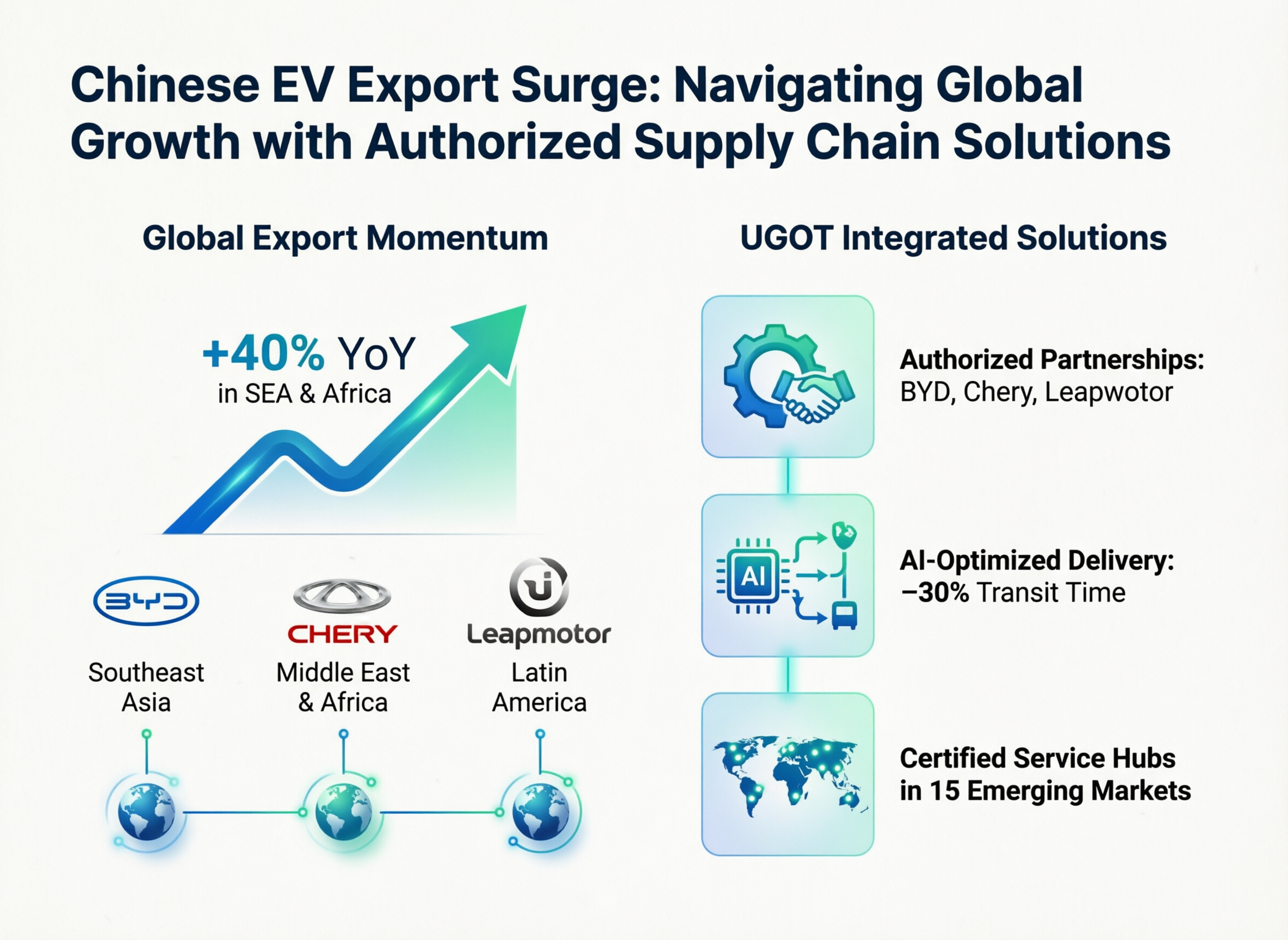
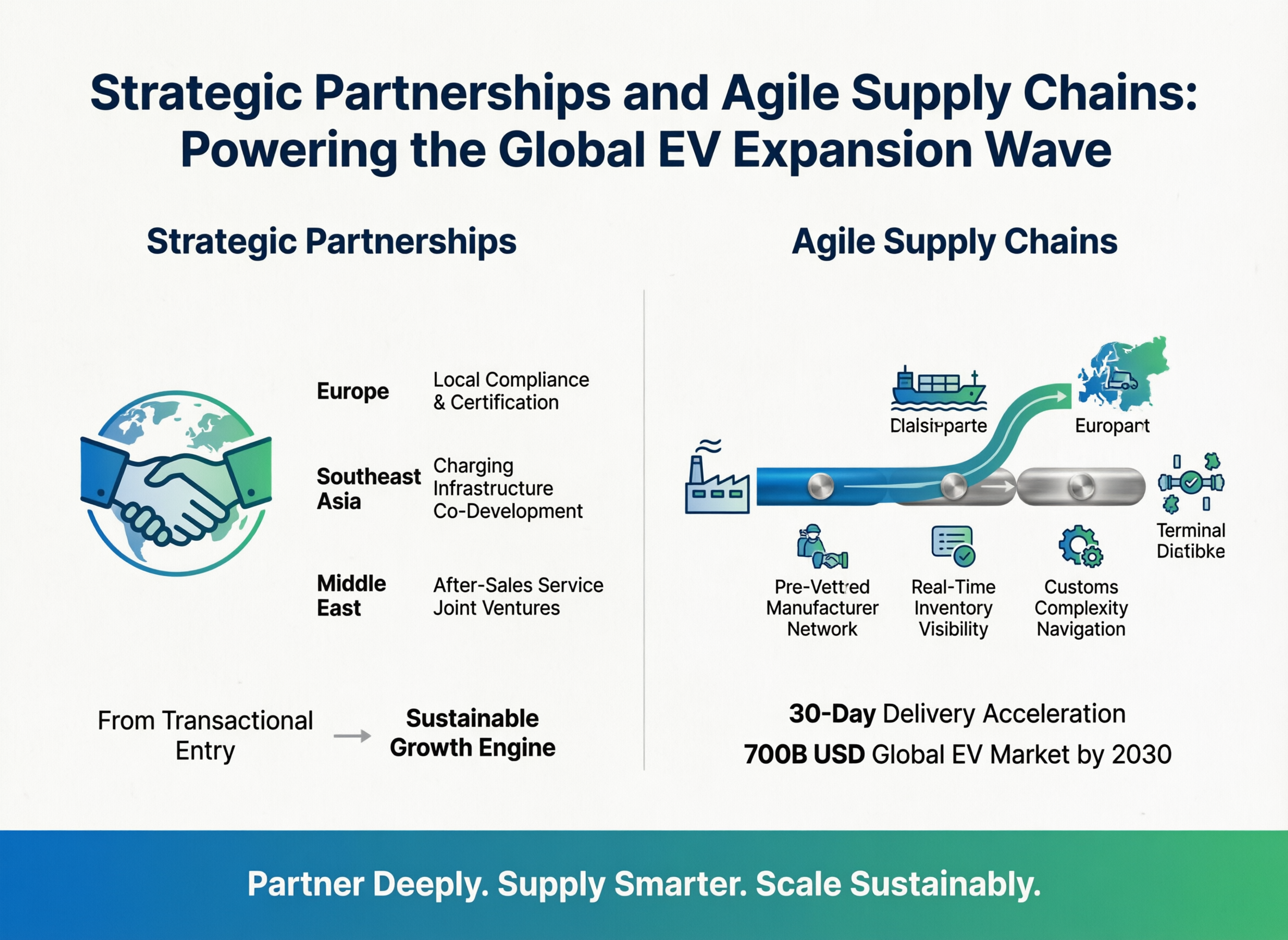
Looking ahead, the trajectory for Chinese EV exports remains robust, with projections indicating a 40% annual growth through 2028. Yet, sustainability will hinge on scalable infrastructure. Companies that invest in agile, partnership-driven supply chains will dominate this next phase. UGOT’s role extends beyond logistics; it enables partners to capitalize on trends like the rising demand for electric two-wheelers in Southeast Asia or battery-swapping infrastructure in the Middle East. By prioritizing reliability and customization, such solutions don’t just support expansion—they future-proof it. For the industry, this means transforming export momentum into lasting market leadership, where every shipment reinforces trust and innovation. As global decarbonization accelerates, the synergy between manufacturers and enablers like UGOT will define the next era of automotive globalization.
Related Posts
 Chinese EV Export Surge: Navigating Global Growth with Authorized Supply Chain Solutions
 Strategic Partnerships and Agile Supply Chains: Powering the Global EV Expansion Wave
 Region-Specific EVs: The Strategic Engine Behind China’s Global Automotive Surge