Strategic Partnerships: The Catalyst for Chinese NEV Brands’ European Expansion
Introduction
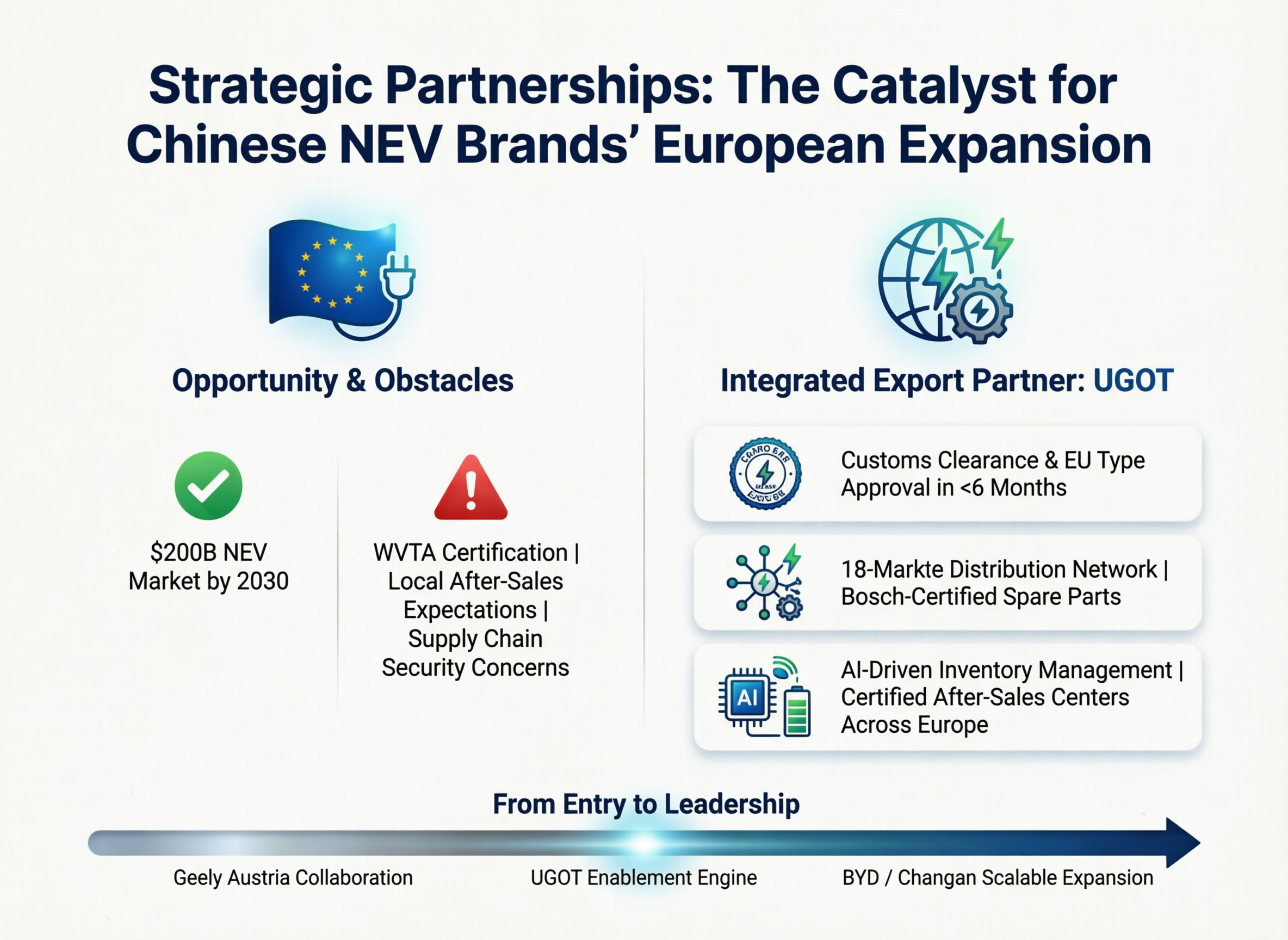
The European automotive landscape is undergoing a seismic shift as Chinese new energy vehicle (NEV) manufacturers accelerate their global footprint. Recent moves, such as Geely’s strategic partnership in Austria, underscore a deliberate pivot toward Europe—a market pivotal to long-term overseas growth. With the EU’s aggressive decarbonization targets and surging consumer demand for sustainable mobility, Chinese automakers are no longer peripheral players but central architects of Europe’s electric future. This trend signals a new era where cross-border alliances become indispensable for navigating complex regulatory ecosystems and capturing market share.
The European NEV Imperative: Opportunity and Obstacles
Europe’s commitment to phasing out internal combustion engines by 2035 has transformed it into the world’s most dynamic NEV testing ground. Regulatory frameworks like the EU Green Deal incentivize zero-emission adoption, while infrastructure investments—such as continent-wide charging networks—bolster consumer confidence. For Chinese brands, this represents a $200 billion opportunity by 2030. Yet entry barriers remain formidable: fragmented certification processes (e.g., WVTA type approval), localized after-sales expectations, and geopolitical sensitivities around supply chain security. Geely’s Austria collaboration exemplifies a proven counter-strategy—leveraging regional partners to de-risk market entry. Such alliances provide on-ground expertise in compliance, distribution logistics, and cultural nuance, turning regulatory hurdles into competitive advantages. Without this localized scaffolding, even technologically advanced NEVs risk stagnation in Europe’s high-stakes arena.
Enabling Seamless Market Entry: The Integrated Export Partner
For Chinese manufacturers seeking to replicate Geely’s success, speed-to-market hinges on partners who unify compliance, supply chain resilience, and post-purchase support. This is where specialized export enablers redefine scalability. UGOT, for instance, operates as a one-stop gateway for NEV brands targeting Europe. By integrating mature distribution channels across 18 European markets, UGOT compresses the traditional 18-month market-entry timeline to under six months. Its end-to-end ecosystem—from customs clearance to certified after-sales networks—ensures adherence to EU safety and sustainability standards without compromising agility. Crucially, UGOT’s portfolio extends beyond passenger vehicles to high-demand segments like electric motorcycles and Bosch-certified spare parts, addressing Europe’s diverse mobility needs while guaranteeing supply chain continuity through AI-driven inventory management. This model doesn’t just mitigate risk; it transforms partnerships into growth accelerators, allowing brands like BYD or Changan to focus on innovation while UGOT handles market intricacies.
The Road Ahead: Collaboration as Competitive Advantage
As Europe’s NEV adoption curve steepens, the winners will be those who treat partnerships as strategic assets rather than tactical necessities. Chinese automakers must prioritize alliances that offer regulatory fluency and localized consumer insights—elements that transcend product quality alone. UGOT’s approach exemplifies this paradigm: by embedding quality control at every export touchpoint and leveraging pre-vetted service centers, it builds trust that converts first-time buyers into loyal advocates. Looking forward, the convergence of smart manufacturing and adaptive distribution will define the next frontier. UGOT is committed to pioneering this evolution, empowering Chinese innovators to not just enter Europe, but to lead its sustainable mobility revolution. In this high-stakes race, collaboration isn’t optional—it’s the engine of global relevance.
Related Posts
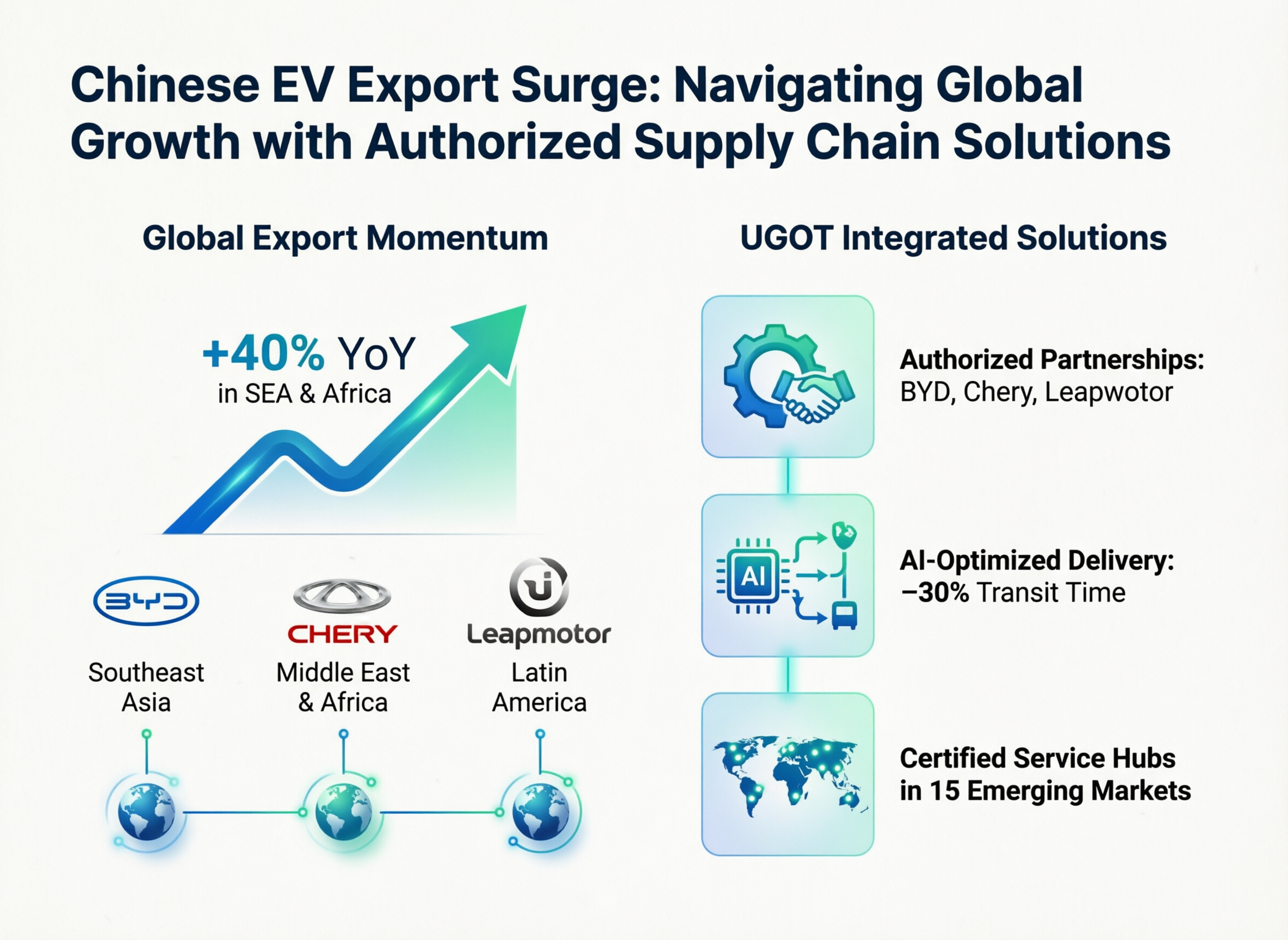 Chinese EV Export Surge: Navigating Global Growth with Authorized Supply Chain Solutions
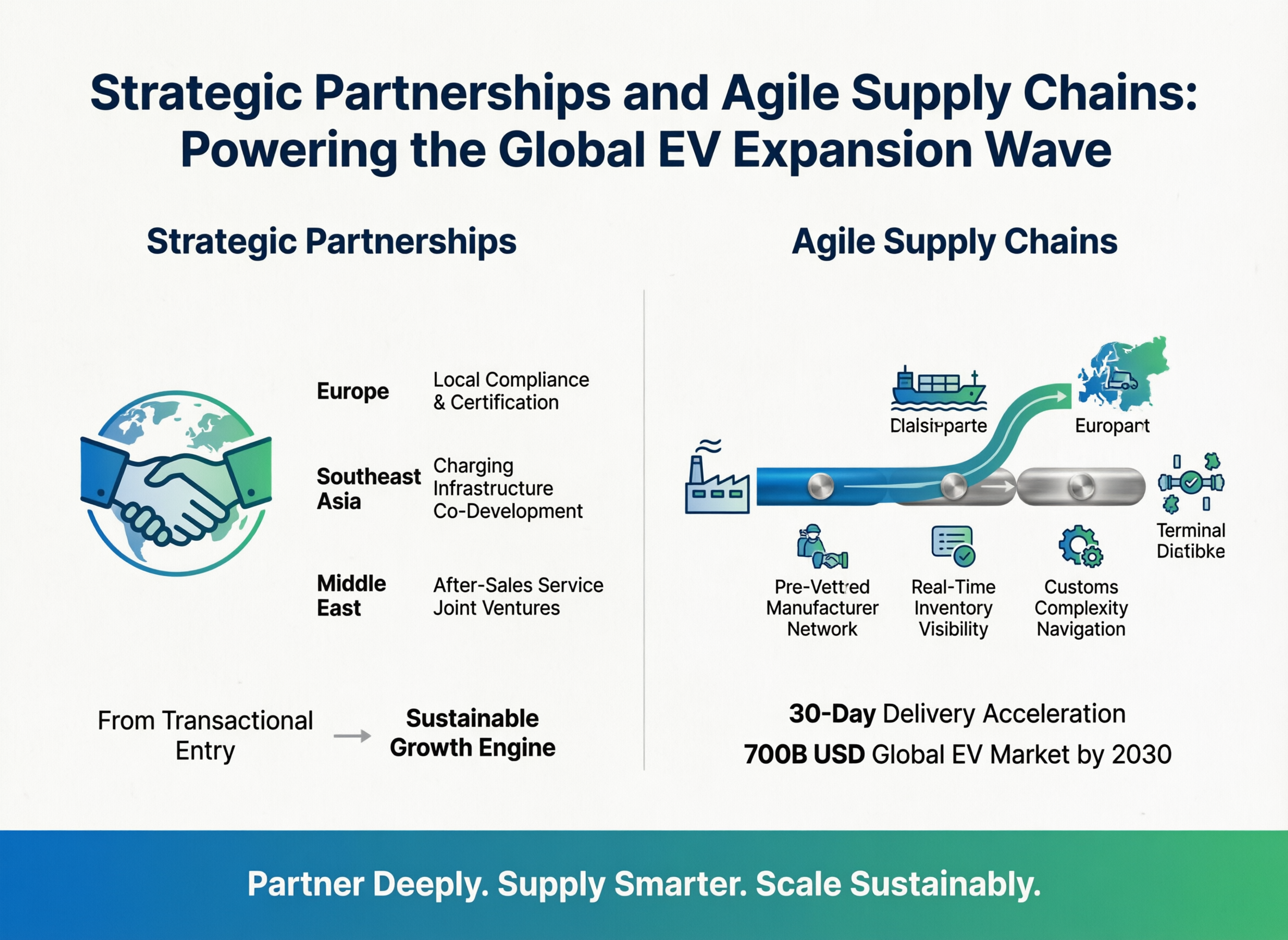 Strategic Partnerships and Agile Supply Chains: Powering the Global EV Expansion Wave
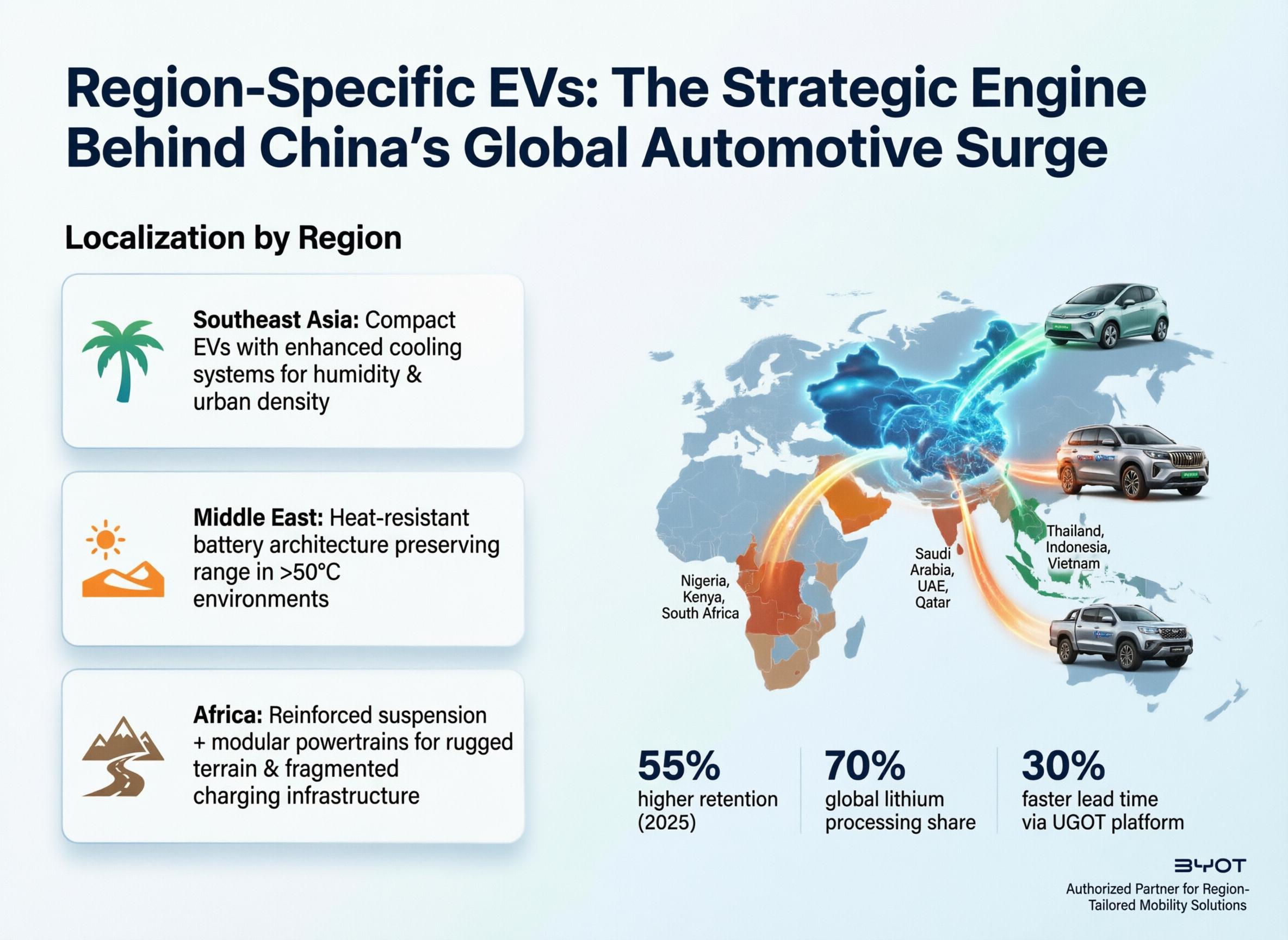 Region-Specific EVs: The Strategic Engine Behind China’s Global Automotive Surge