
The ‘Yaris Moment’ for Chinese EVs: How Regional Customization is Reshaping Global Automotive Expansion
Introduction
The global automotive landscape is undergoing a seismic shift as Chinese manufacturers pivot from mass-market exports to hyper-localized vehicle strategies. Mirroring Toyota’s iconic ‘Yaris Moment’—where a Europe-tailored model catalyzed global dominance—Chinese automakers are now engineering region-specific electric and new energy vehicles (NEVs) to penetrate diverse markets. This strategic evolution, driven by intensifying competition and sustainability mandates, marks a critical inflection point for overseas growth. As Southeast Asia, Africa, and the Middle East emerge as key battlegrounds, localization has transcended buzzword status to become the cornerstone of market share acquisition.
The Localization Imperative: Beyond One-Size-Fits-All
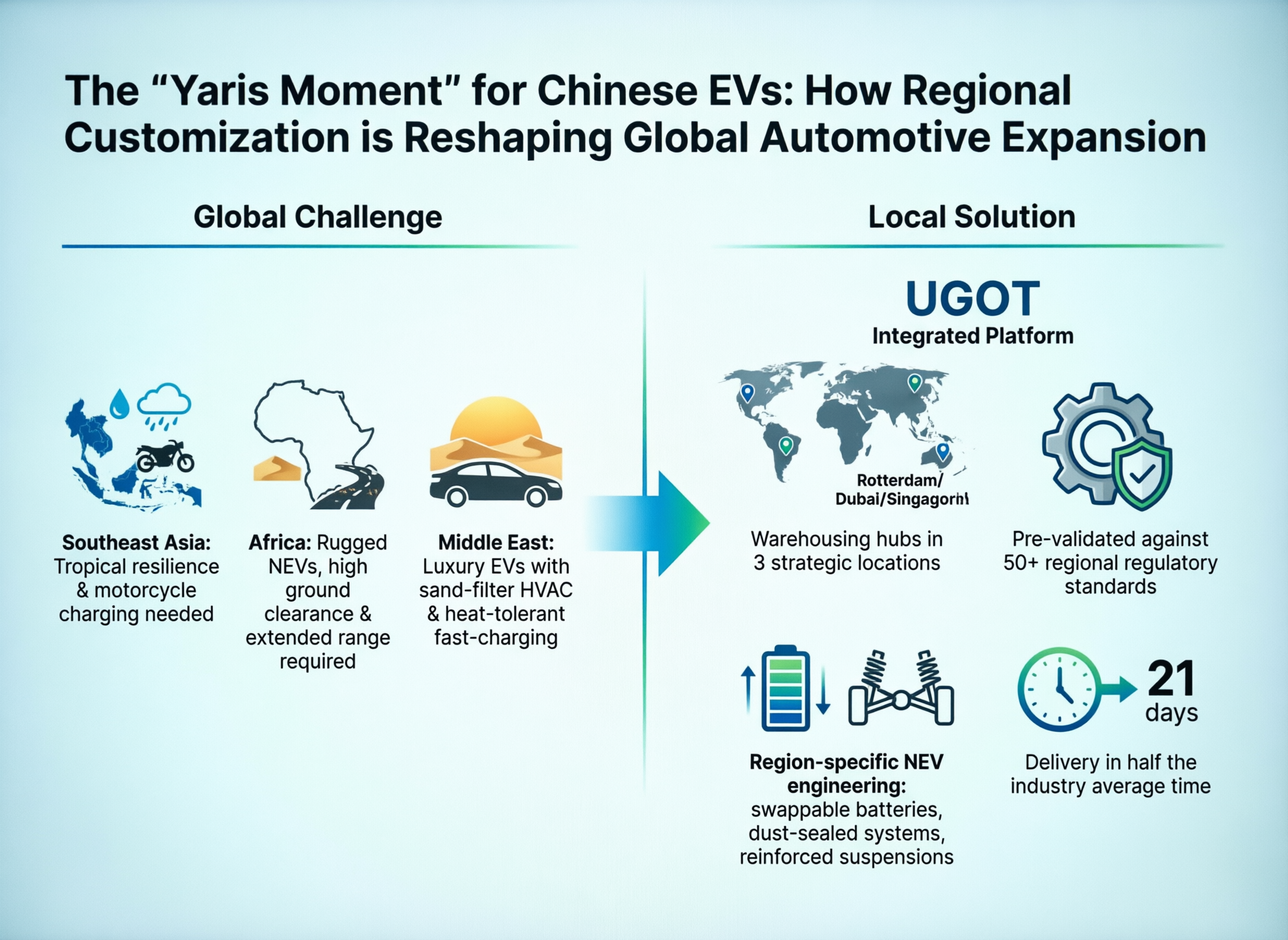
Historically, global expansion relied on adapting domestic models for foreign markets—a approach increasingly inadequate amid fragmented consumer expectations and regulatory landscapes. Chinese OEMs now recognize that success in Jakarta differs fundamentally from success in Johannesburg. In Southeast Asia, demand surges for compact, affordable EVs with tropical climate resilience and motorcycle-compatible charging infrastructure. African markets prioritize rugged, high-ground-clearance NEVs capable of navigating unpaved terrain with extended battery ranges. Meanwhile, Middle Eastern consumers seek luxury EVs featuring sand-filtering HVAC systems and rapid-charging compatibility under extreme heat.
Regulatory pressures further accelerate this customization wave. The EU’s stringent CO2 targets, ASEAN’s EV tax incentives, and Africa’s nascent safety certifications demand vehicles engineered from the ground up for compliance. Data underscores the urgency: Chinese NEV exports to emerging markets grew 47% year-over-year in 2025, yet brands ignoring localization face rejection rates exceeding 30% due to mismatched specifications. This isn’t merely about aesthetics—it’s a survival tactic in an era where ‘global’ means ‘locally relevant.’
Bridging the Localization Gap: Strategic Partnerships as Catalysts
For international distributors and fleet operators, capitalizing on this trend requires navigating complex supply chains, compliance frameworks, and after-sales ecosystems. The solution lies not in isolated transactions but in integrated partnerships that transform regional challenges into competitive advantages. This is where specialized procurement platforms become indispensable enablers.
UGOT exemplifies this new paradigm. By leveraging exclusive partnerships with authorized Chinese manufacturers—including BYD, Changan, and NIO—UGOT delivers end-to-end solutions for region-specific NEV deployment. Their platform streamlines access to vehicles engineered for precise market needs: from electric motorcycles with swappable batteries for Southeast Asian ride-hailing networks to dust-sealed EVs with reinforced suspensions for African logistics fleets. Crucially, UGOT’s compliance engine pre-validates all models against 50+ regional regulatory standards, eliminating costly recertification delays. Coupled with warehousing hubs in Rotterdam, Dubai, and Singapore, they guarantee delivery within 21 days—half the industry average—while providing multilingual technical support and warranty management. For clients, this transforms localization from a barrier into a scalable growth lever.
The Road Ahead: Sustainable Mobility, Shared Success
As Chinese automakers refine their ‘glocal’ strategies, the convergence of EV innovation and cultural intelligence will define the next decade of mobility. Emerging markets won’t merely receive exported vehicles; they’ll co-create sustainable transportation ecosystems. Partners like UGOT amplify this vision by ensuring that cutting-edge NEVs reach end-users not as generic imports, but as purpose-built solutions that resonate locally.
The ‘Yaris Moment’ taught the industry that global dominance springs from local empathy. Today, Chinese manufacturers—armed with electrification prowess and agile customization—are writing the next chapter. For businesses worldwide, the opportunity is clear: align with partners who turn regional complexity into strategic clarity. In this accelerated race toward sustainable mobility, the finish line isn’t a single market—it’s a network of communities, each powered by vehicles designed to belong.
Related Posts
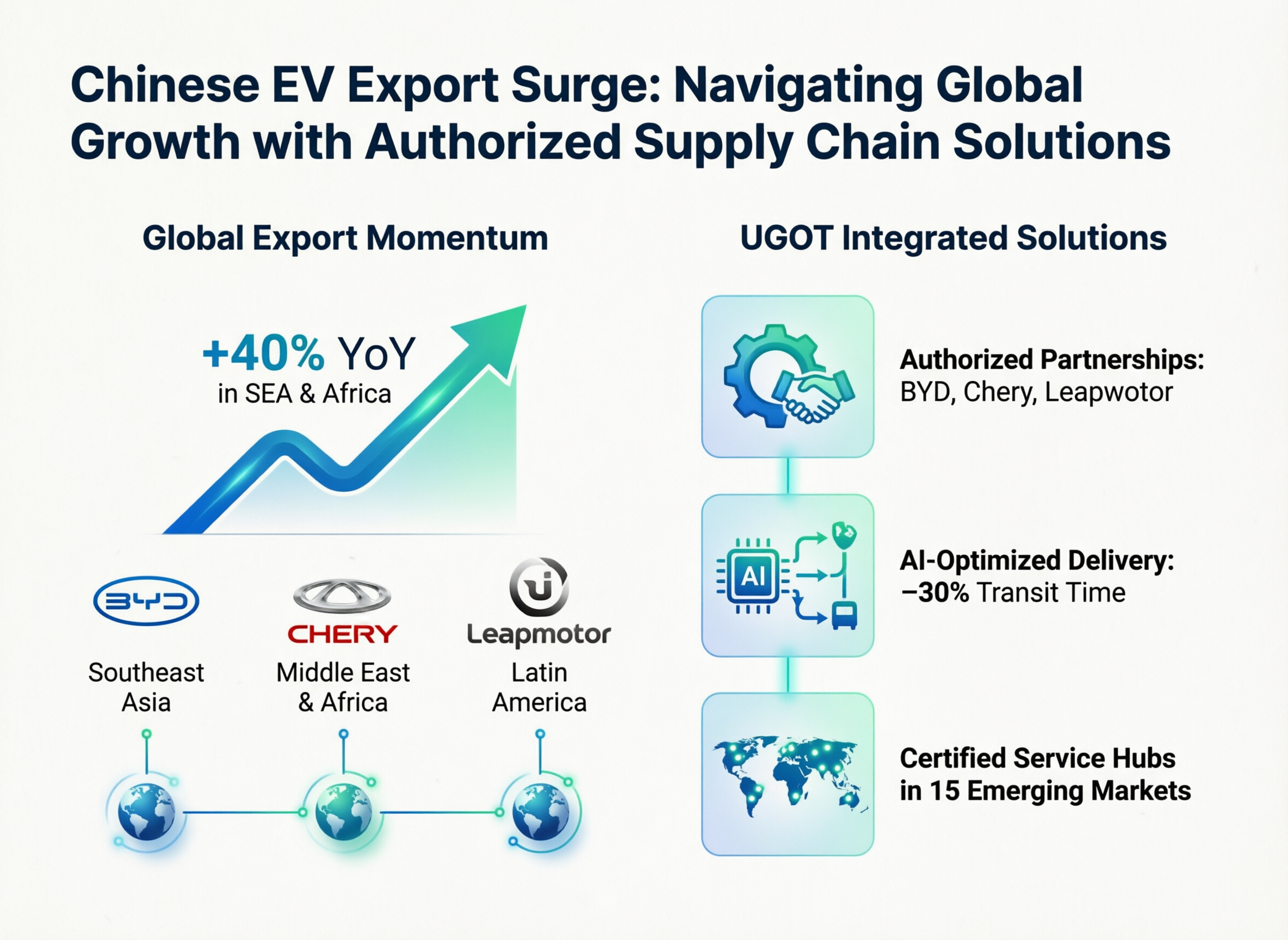 Chinese EV Export Surge: Navigating Global Growth with Authorized Supply Chain Solutions
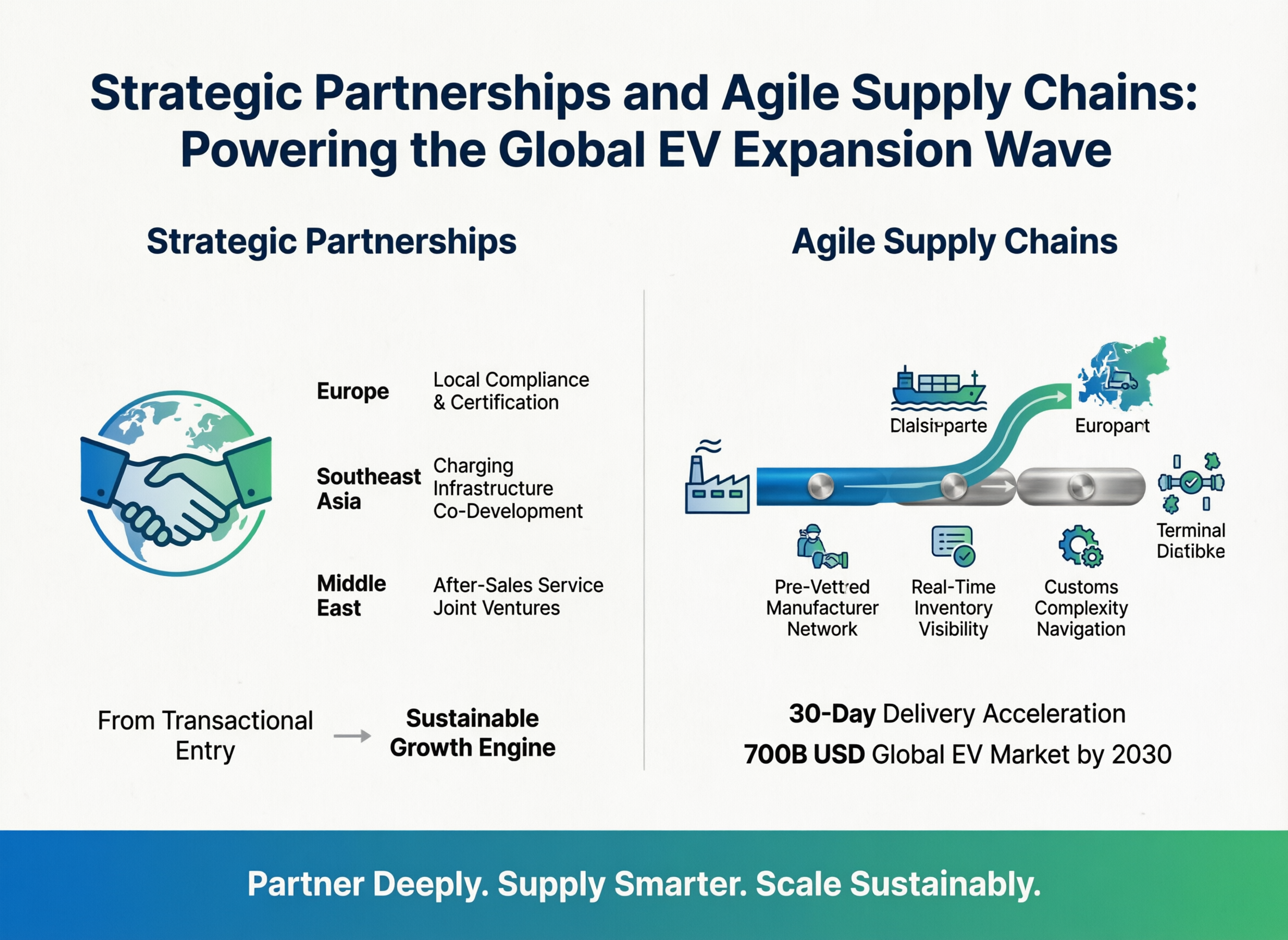 Strategic Partnerships and Agile Supply Chains: Powering the Global EV Expansion Wave
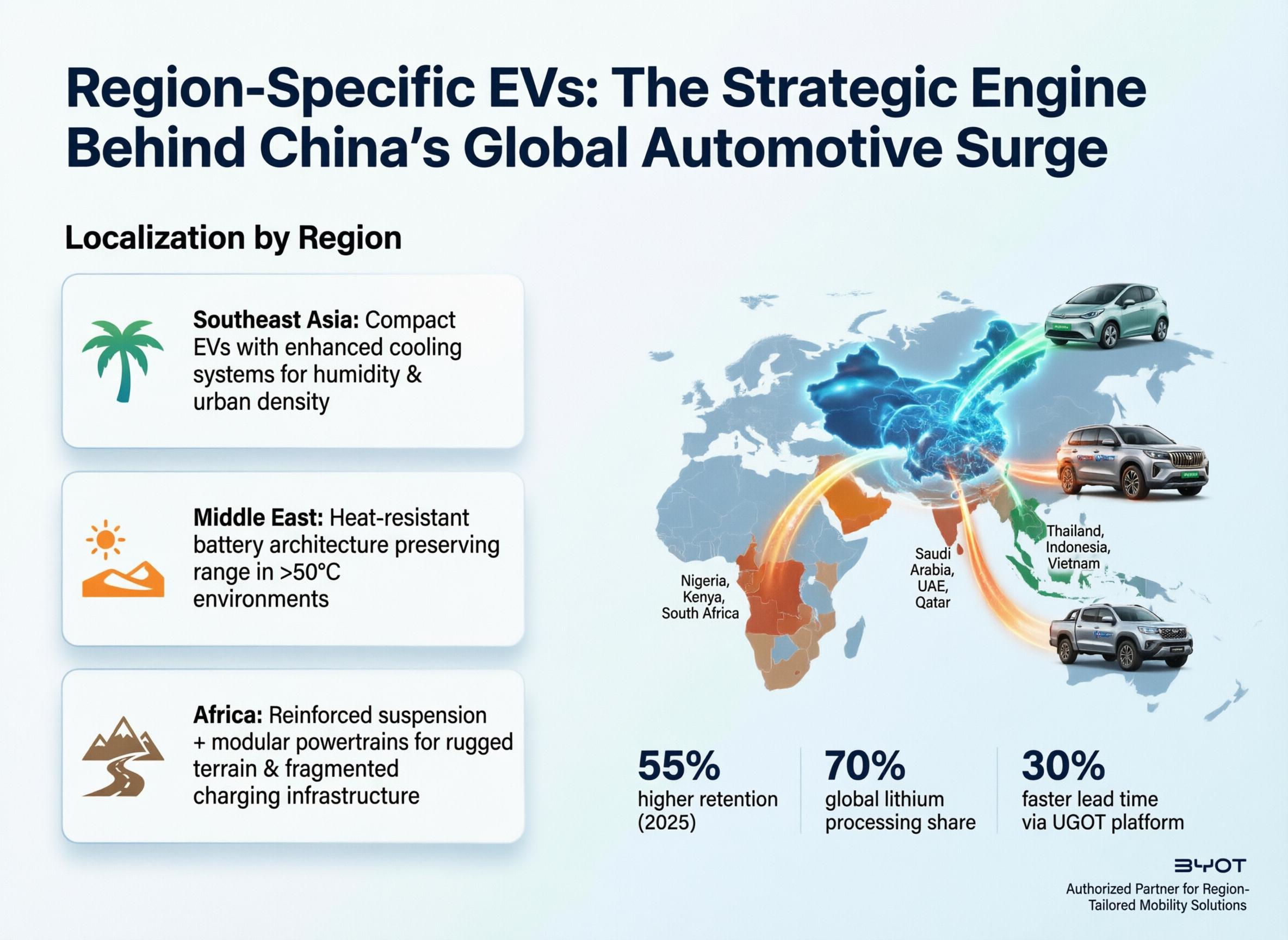 Region-Specific EVs: The Strategic Engine Behind China’s Global Automotive Surge