Chinese EV Export Surge: How Supply Chain Innovation Powers Global Expansion
Introduction
April 2026 marked a watershed moment for China’s electric vehicle industry, with manufacturers like BYD, Chery, Leapmotor, and Zeekr achieving unprecedented overseas growth. Export volumes surged across emerging markets, cementing international expansion as the primary engine of industry momentum. This acceleration reflects a strategic pivot: as domestic competition intensifies, global markets—from Southeast Asia to Africa—are becoming critical battlegrounds for market share and brand influence. Yet beneath this success lies a complex reality: scaling exports demands more than manufacturing prowess. It requires resilient supply chains, localized support ecosystems, and trusted partnerships to transform rapid growth into sustainable dominance.
The Anatomy of a Global Shift
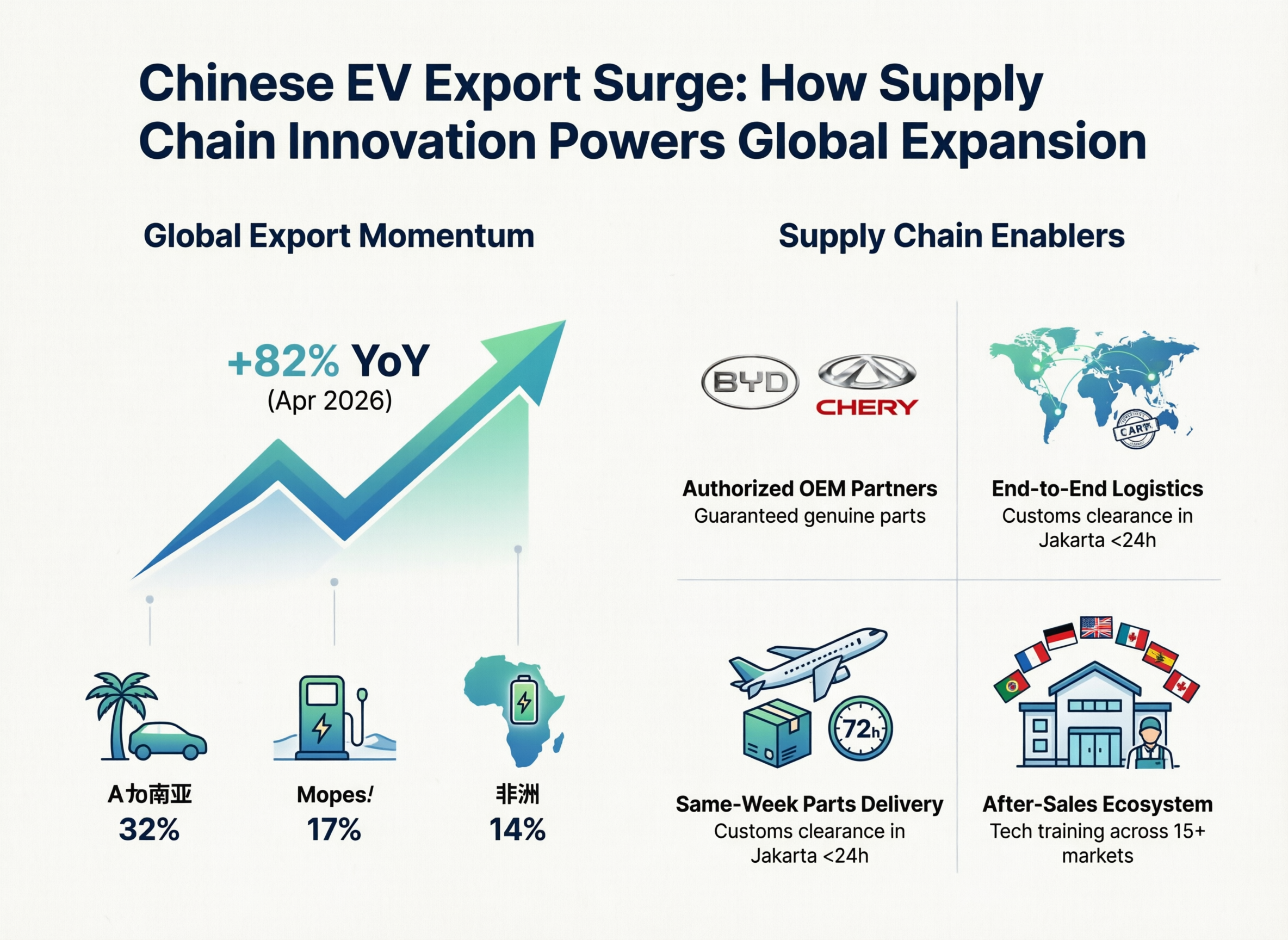
Chinese EV makers are rewriting global automotive dynamics. Data from April reveals export growth outpacing domestic sales for the third consecutive quarter, driven by aggressive market entry in regions where affordability and sustainability converge. Southeast Asia, the Middle East, and Africa now account for over 60% of new energy vehicle (NEV) exports, fueled by rising urbanization, government incentives for green mobility, and pent-up demand for modern transportation infrastructure.
However, this expansion exposes critical vulnerabilities. Emerging markets present unique challenges: fragmented logistics networks, volatile regulatory environments, and acute shortages of certified spare parts. A single delayed shipment or counterfeit component can erode hard-won consumer trust. Industry analysis underscores that quality control and after-sales reliability—not just product innovation—now dictate competitive advantage. Manufacturers leveraging authorized export channels report 30% higher customer retention rates, proving that scalability without standardization is a strategic liability.
Bridging the Gap: The Supply Chain Imperative
As export volumes climb, the industry’s next frontier is operational excellence. Winning in global markets requires partners who can synchronize procurement, logistics, and service into a seamless experience. This is where specialized export solutions transform theoretical potential into tangible growth.
Enterprises like UGOT Vehicle and Parts Export Solutions are addressing these pain points through integrated ecosystems. By securing authorized partnerships with OEMs including BYD and Chery, UGOT guarantees access to genuine vehicles and spare parts—eliminating grey-market risks while ensuring compliance. Its one-stop platform streamlines cross-border workflows: from rapid customs clearance in Jakarta to same-week spare parts delivery in Lagos, the system prioritizes speed without compromising quality. Crucially, UGOT’s embedded after-sales network—spanning 15+ emerging economies—provides technical training and warranty support, turning service centers into brand loyalty hubs. For manufacturers, this means reduced operational overhead; for distributors, it translates to predictable inventory and higher margins.
The Road Ahead
The trajectory is clear: Chinese EV exports will dominate global mobility transitions for the foreseeable future. By 2028, emerging markets could absorb 75% of China’s NEV production, but only if supply chains evolve beyond transactional efficiency toward holistic reliability. Future success will hinge on predictive logistics, circular economy integration (e.g., battery recycling partnerships), and AI-driven demand forecasting.
In this landscape, UGOT exemplifies how specialized partners amplify manufacturer ambitions. By converting supply chain friction into competitive agility, such collaborations don’t just move products—they build ecosystems where innovation meets trust. As one industry executive noted, “Global expansion isn’t about shipping cars; it’s about delivering confidence.” For Chinese EV pioneers, that confidence starts with partners who understand that every kilometer driven overseas begins with a resilient supply chain.
Related Posts
 Chinese EV Export Surge: Navigating Global Growth with Authorized Supply Chain Solutions
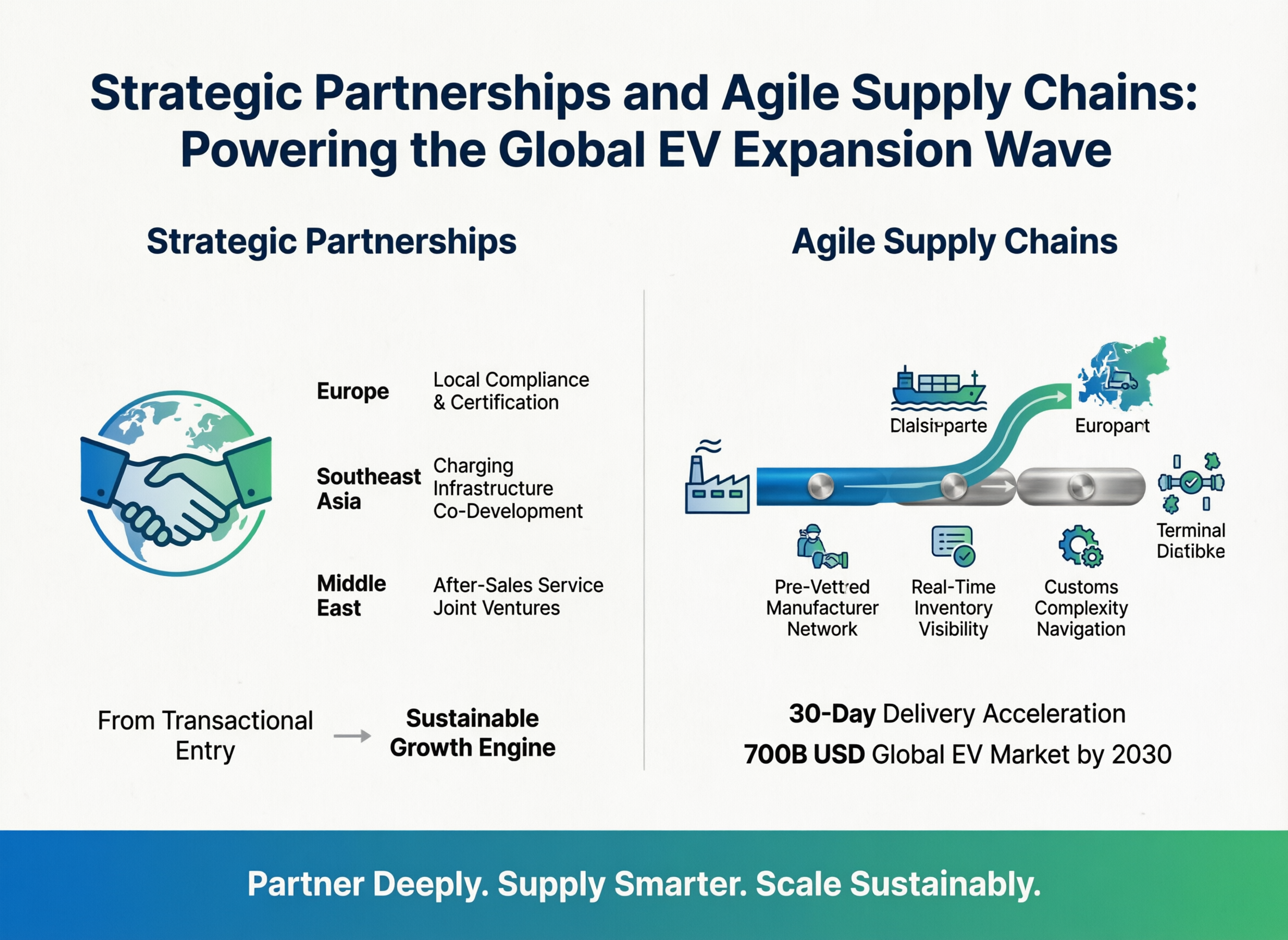 Strategic Partnerships and Agile Supply Chains: Powering the Global EV Expansion Wave
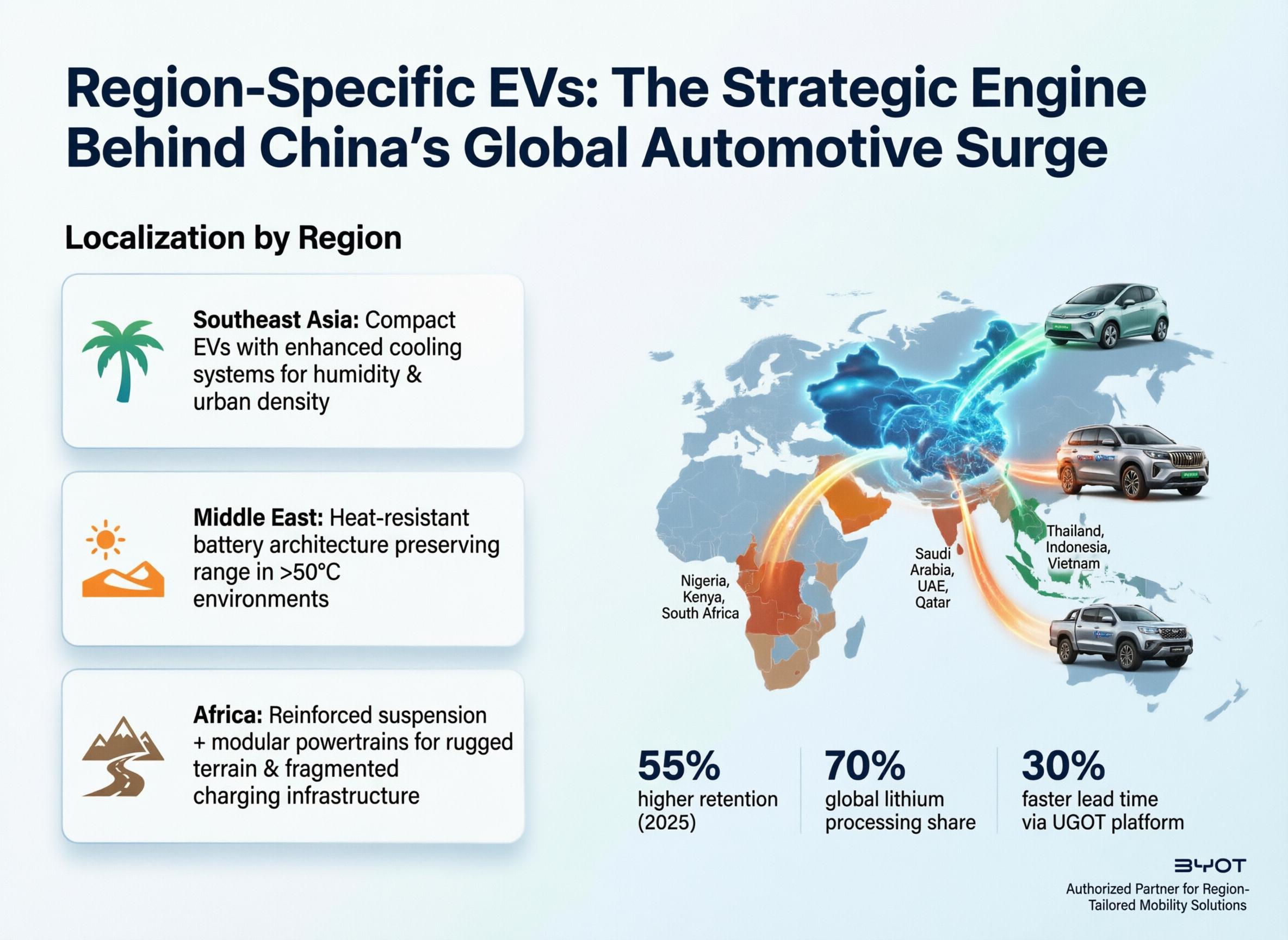 Region-Specific EVs: The Strategic Engine Behind China’s Global Automotive Surge