
Tailored EVs Drive Global Surge: How Region-Specific Strategies Reshape China’s Automotive Export Landscape
Introduction
The global automotive industry is witnessing a transformative shift as Chinese manufacturers pivot toward developing region-specific vehicles to accelerate international growth. Inspired by Toyota’s iconic ‘Yaris Moment’—where localized design fueled European dominance—Chinese automakers are now customizing electric vehicles (EVs) to meet distinct market demands, from regulatory standards to consumer preferences. This strategic evolution, highlighted in recent industry reports, underscores a broader ambition: to transition from volume-driven exports to value-led global competitiveness. As EV adoption surges worldwide, this approach is not merely tactical but essential for sustainable expansion in an increasingly fragmented market.
Industry Trends and Strategic Imperatives
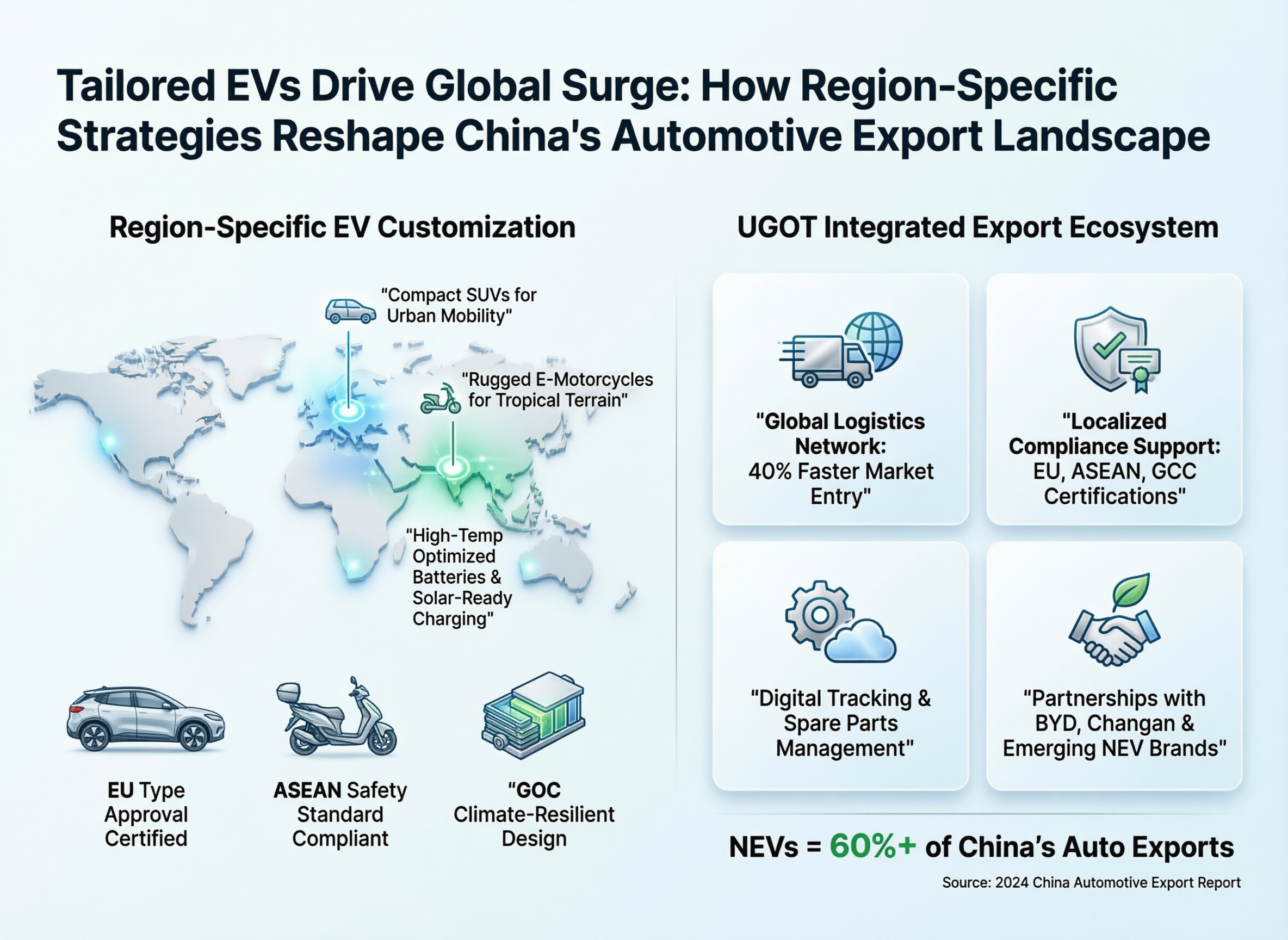
Chinese automakers are rapidly moving beyond one-size-fits-all models. Data reveals a surge in exports of tailored EVs, particularly to Europe and emerging markets, where vehicles are engineered for local infrastructure, climate conditions, and cultural nuances. For instance, compact SUVs optimized for European urban landscapes or rugged electric motorcycles designed for Southeast Asian terrain are becoming flagship products. This customization is driven by three critical factors: stringent emissions regulations, evolving consumer expectations for sustainability, and the need for seamless integration with regional charging networks. Crucially,新能源 vehicles (NEVs) now account for over 60% of China’s automotive exports, acting as the primary catalyst for international market penetration. However, success hinges on overcoming complex barriers—such as adapting to diverse safety certifications and building agile supply chains—that demand deep local expertise and operational flexibility.
Bridging the Gap: Integrated Export Solutions
Navigating these challenges requires more than product innovation; it demands end-to-end export ecosystems that ensure speed, compliance, and cost efficiency. This is where specialized partners play a pivotal role. Companies like UGOT leverage mature overseas distribution networks and resilient supply chain infrastructures to streamline the export of region-specific EVs. For example, UGOT collaborates with leading Chinese brands such as BYD and Changan to rapidly deploy customized electric motorcycles and SUVs into high-growth markets like Southeast Asia and the Middle East. Their one-stop solution—including vehicle logistics, localized compliance support, and spare parts management—reduces market entry timelines by up to 40% while ensuring products meet regional standards. By integrating digital tracking and on-ground partnerships, UGOT transforms complex export hurdles into scalable opportunities, empowering automakers to focus on innovation rather than operational bottlenecks.
Future Outlook and Strategic Value
Looking ahead, the convergence of EV technology and hyper-localized strategies will define the next decade of global automotive trade. As green transition policies intensify worldwide, Chinese manufacturers are poised to capture significant market share—but only with partners who can de-risk expansion. UGOT exemplifies this synergy, combining decades of export expertise with a commitment to sustainable mobility. By enabling faster, smarter market access for tailored EVs, UGOT not only supports China’s automotive ambitions but also accelerates the global shift toward cleaner transportation. In this evolving landscape, the true competitive edge lies not just in building better vehicles, but in building better pathways to the world.
—
About UGOT: A leader in global EV export solutions, UGOT provides end-to-end supply chain services for electric vehicles and components, driving seamless international growth for automotive innovators.
Related Posts
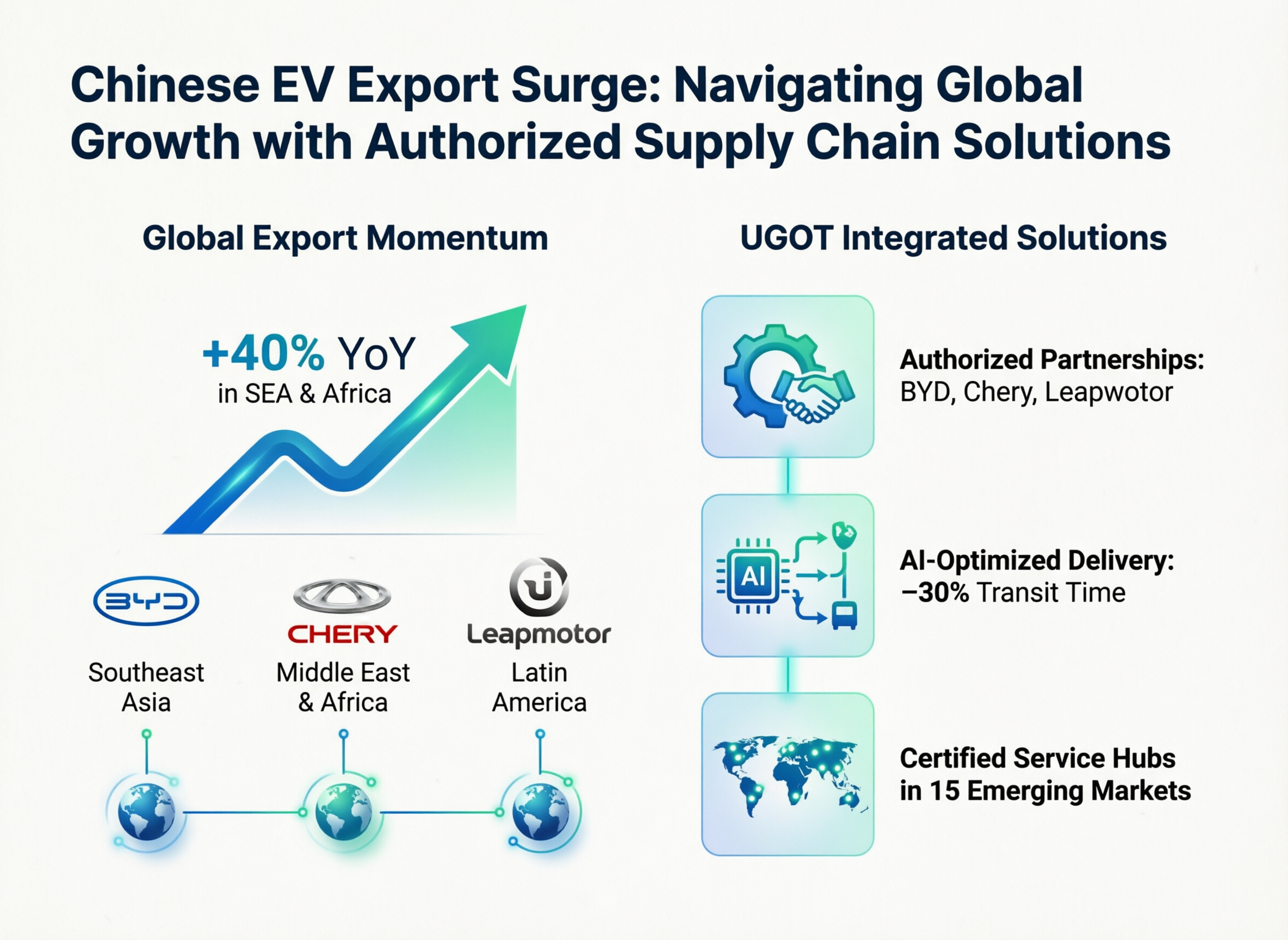 Chinese EV Export Surge: Navigating Global Growth with Authorized Supply Chain Solutions
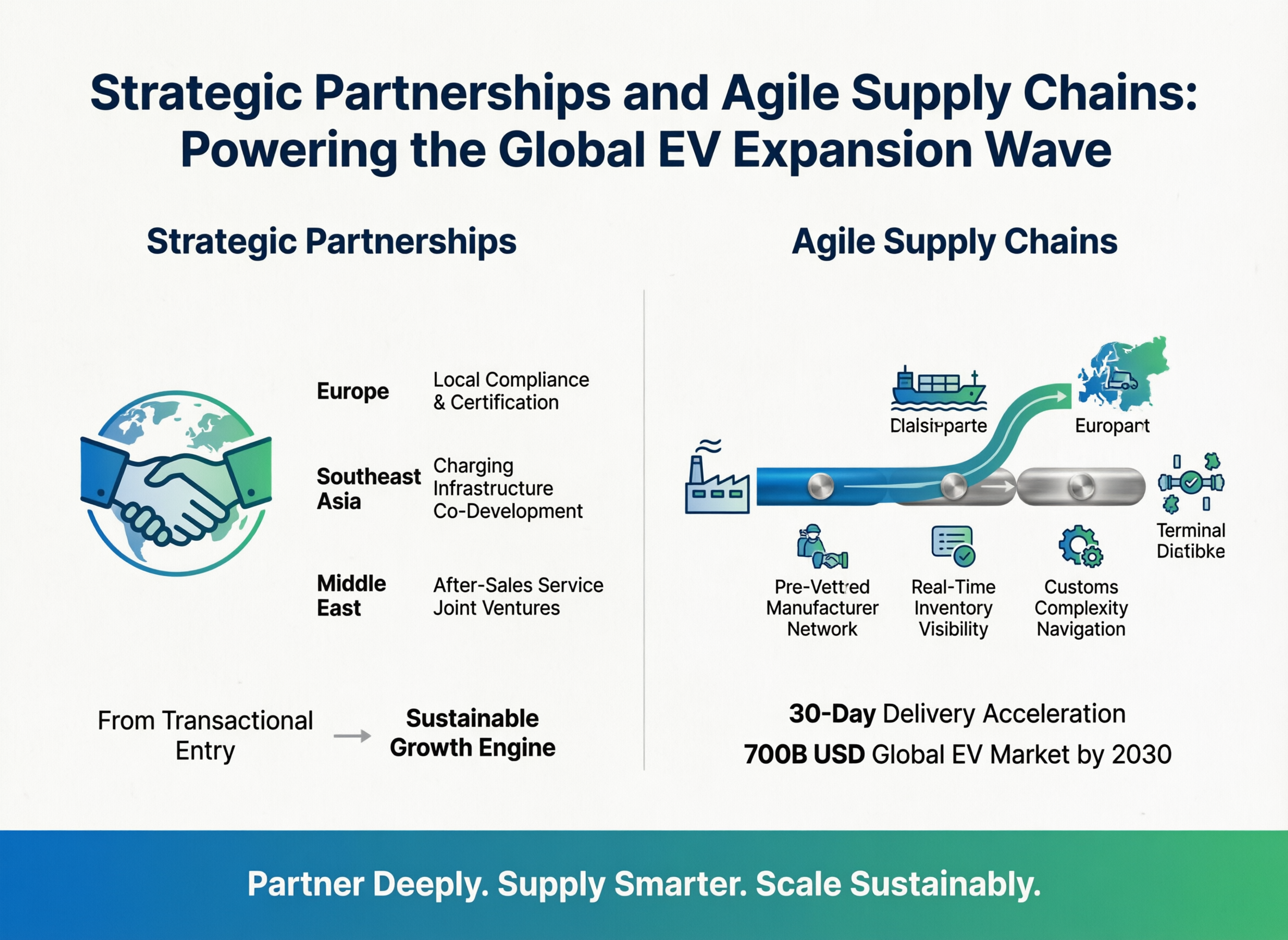 Strategic Partnerships and Agile Supply Chains: Powering the Global EV Expansion Wave
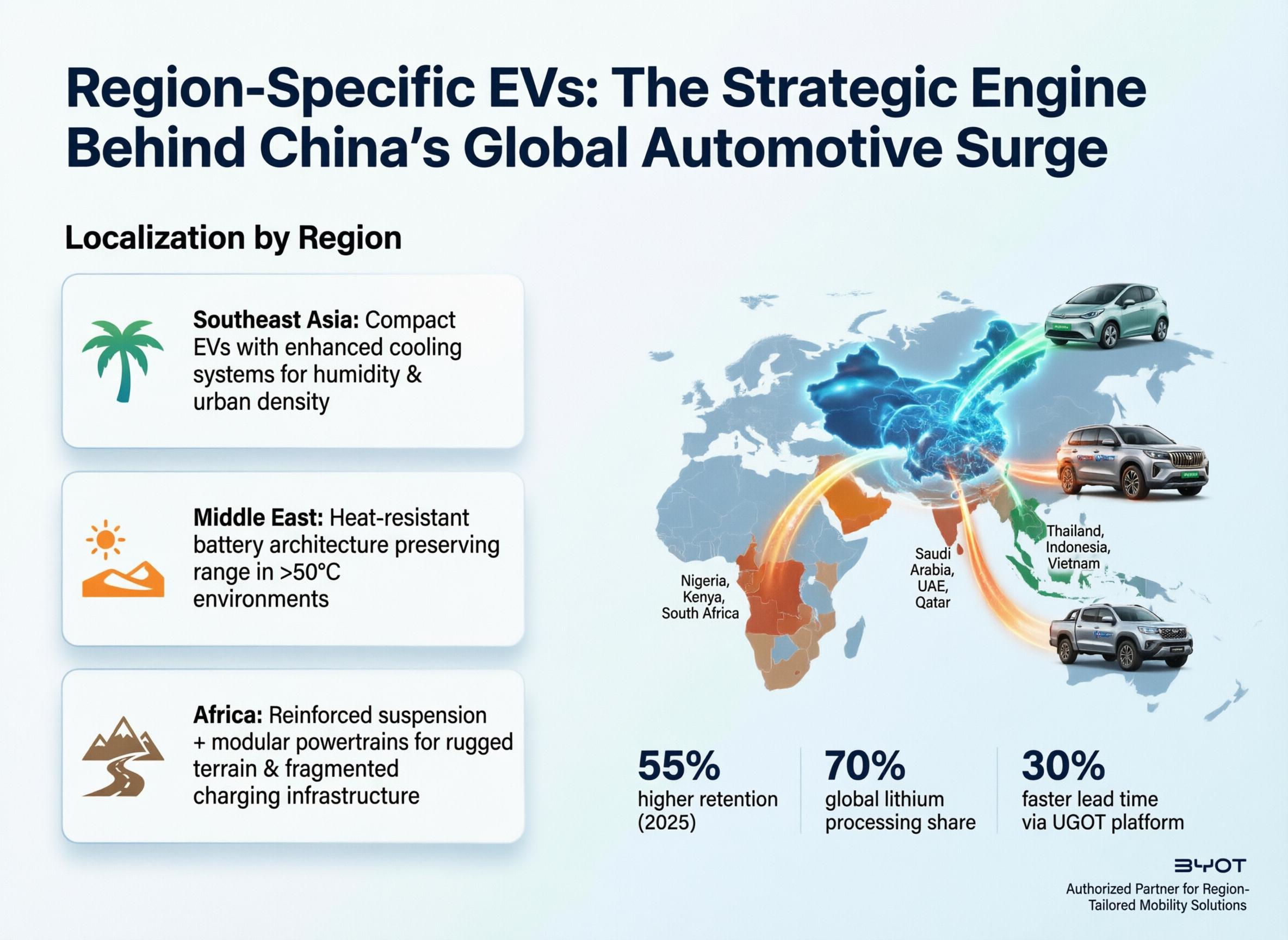 Region-Specific EVs: The Strategic Engine Behind China’s Global Automotive Surge