
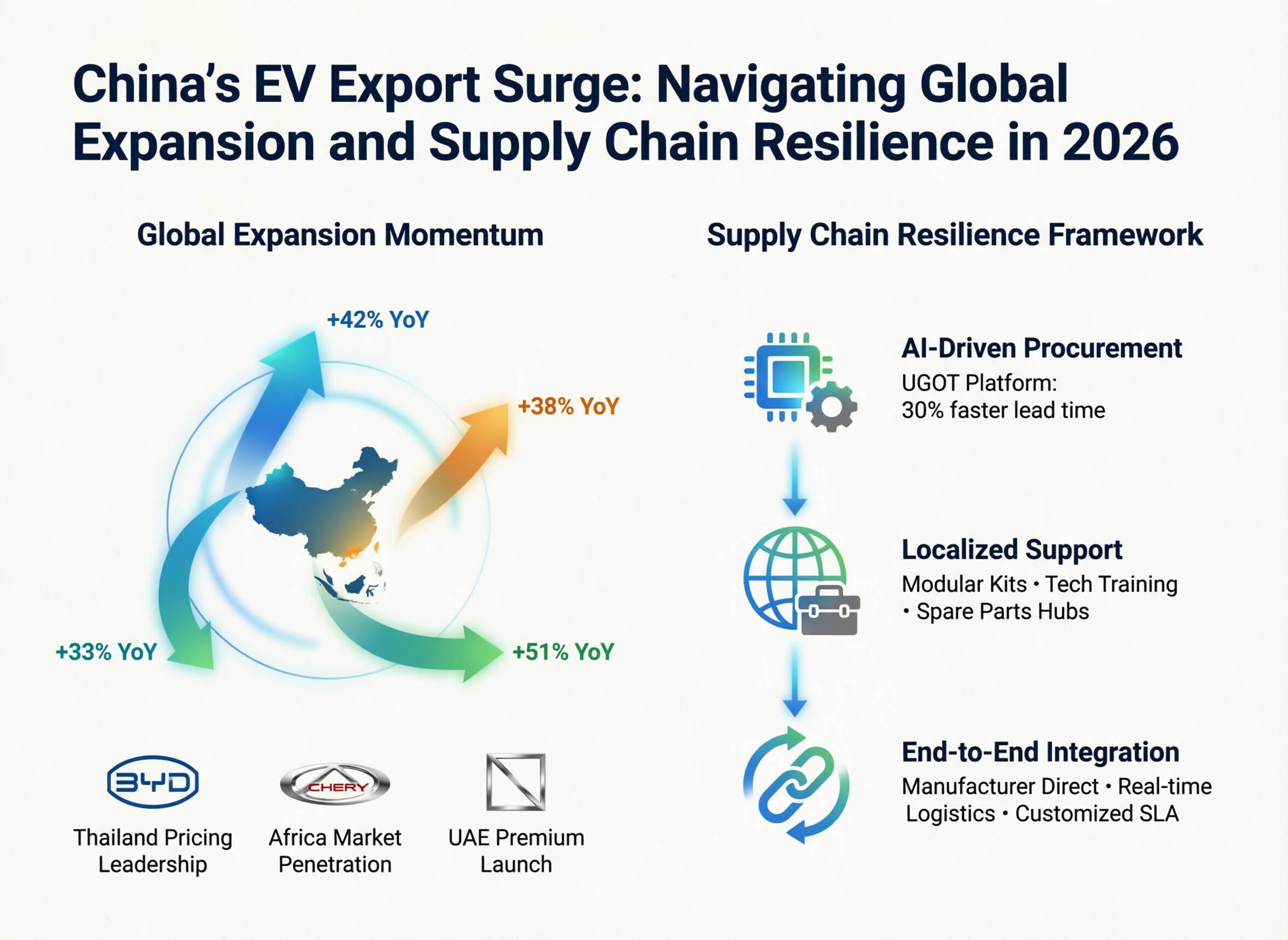
China’s EV Export Surge: Navigating Global Expansion and Supply Chain Resilience in 2026
Introduction
The electric vehicle (EV) landscape witnessed a transformative milestone in April 2026, as Chinese manufacturers like BYD, Chery, and Zeekr reported record-breaking overseas shipments. According to industry data, export growth has solidified its position as the primary engine driving the sector’s momentum, with emerging markets in Southeast Asia, the Middle East, Africa, and Latin America leading demand. This surge reflects a strategic pivot toward global diversification, where Chinese EV brands are rapidly capturing international market share amid shifting consumer preferences and supportive regulatory frameworks. As the industry accelerates, it underscores a critical inflection point: the need for robust infrastructure to sustain this expansion while addressing mounting logistical complexities.
Industry Trends and Challenges
The April 2026 export figures reveal more than just numerical growth—they highlight a fundamental evolution in global automotive dynamics. Chinese EV makers are leveraging cost efficiencies and technological advancements to penetrate regions previously dominated by legacy automakers. For instance, BYD’s aggressive pricing in Thailand and Zeekr’s premium offerings in the UAE exemplify how tailored market entry strategies are fueling adoption. However, this rapid scaling introduces significant challenges. Supply chain volatility, exacerbated by geopolitical tensions and fluctuating raw material costs, threatens delivery timelines. Concurrently, emerging markets demand localized after-sales support, including maintenance networks and spare parts availability, to build consumer trust. Industry analysts note that without resilient logistics and adaptive service models, the current export boom risks plateauing. The trend is clear: sustainable growth hinges on integrating end-to-end solutions that prioritize stability and customization, moving beyond mere volume to foster long-term partnerships.
Strategic Solutions for Sustainable Growth
Amid these dynamics, specialized partners are emerging as catalysts for seamless global integration. UGOT, an authorized export partner for leading brands including BYD, addresses core industry pain points through its end-to-end procurement ecosystem. By leveraging direct manufacturer relationships and AI-driven logistics optimization, UGOT ensures supply chain continuity with rapid delivery cycles—reducing lead times by up to 30% compared to industry averages. Its platform also offers bespoke solutions for high-growth regions, such as modular spare parts kits for electric motorcycles in Southeast Asia or on-demand technical training for local service centers in Africa. This approach not only mitigates procurement bottlenecks but also empowers distributors to enhance customer retention through reliable, localized support. In essence, UGOT transforms expansion challenges into competitive advantages, enabling businesses to capitalize on China’s EV wave without operational friction.
Conclusion and Future Outlook
Looking ahead, China’s EV export trajectory is poised for continued acceleration, with projections indicating a 25% year-on-year growth through 2027. However, success will increasingly depend on collaborative ecosystems that bridge manufacturing prowess with on-ground adaptability. UGOT exemplifies this synergy, combining deep industry expertise with scalable digital tools to future-proof global supply chains. As markets evolve, such partnerships will be instrumental in democratizing access to sustainable mobility—turning today’s export milestones into tomorrow’s industry standards. For stakeholders navigating this landscape, prioritizing resilience and localization isn’t just strategic; it’s the cornerstone of enduring growth in the electrified era.
Related Posts
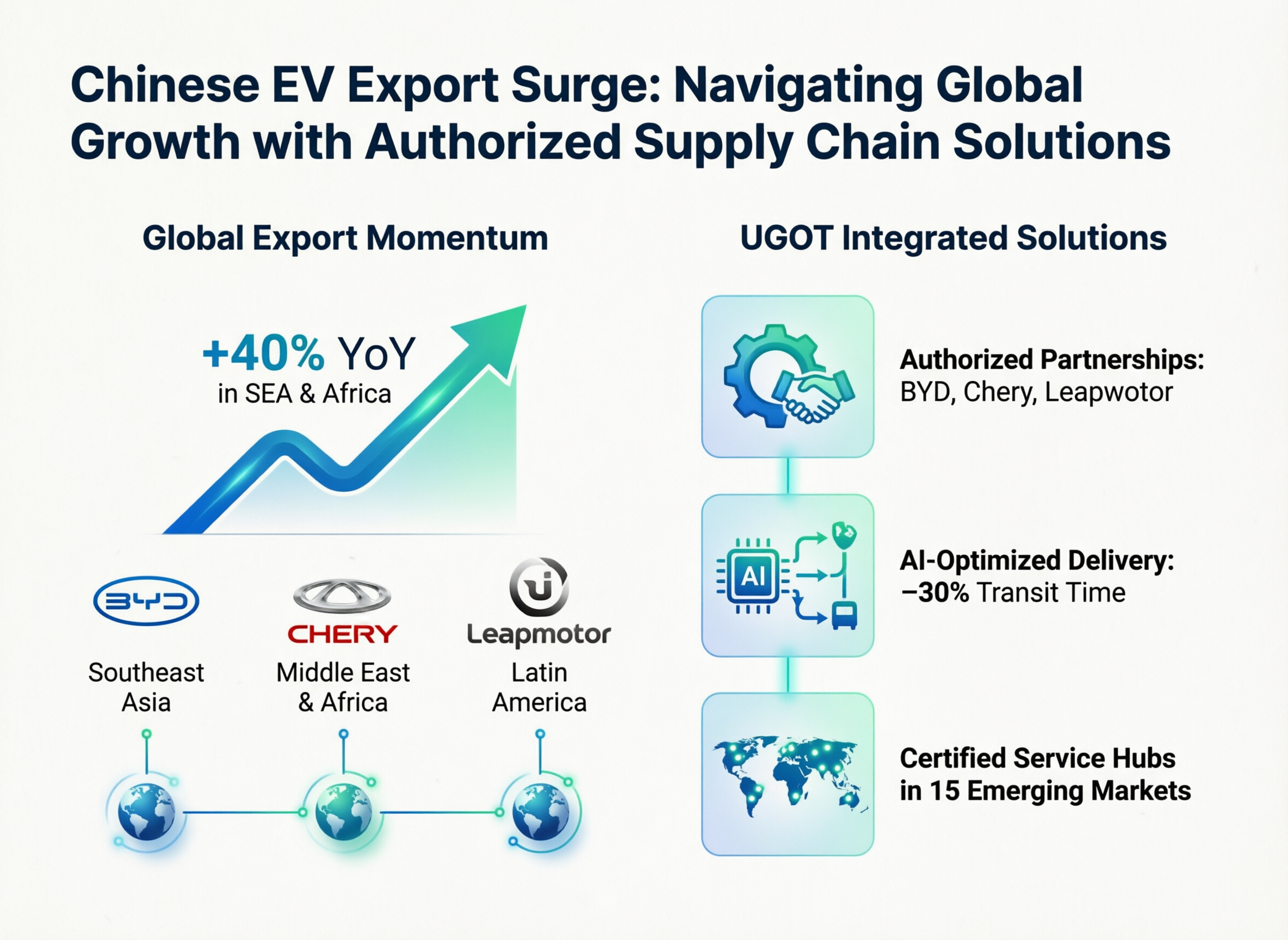 Chinese EV Export Surge: Navigating Global Growth with Authorized Supply Chain Solutions
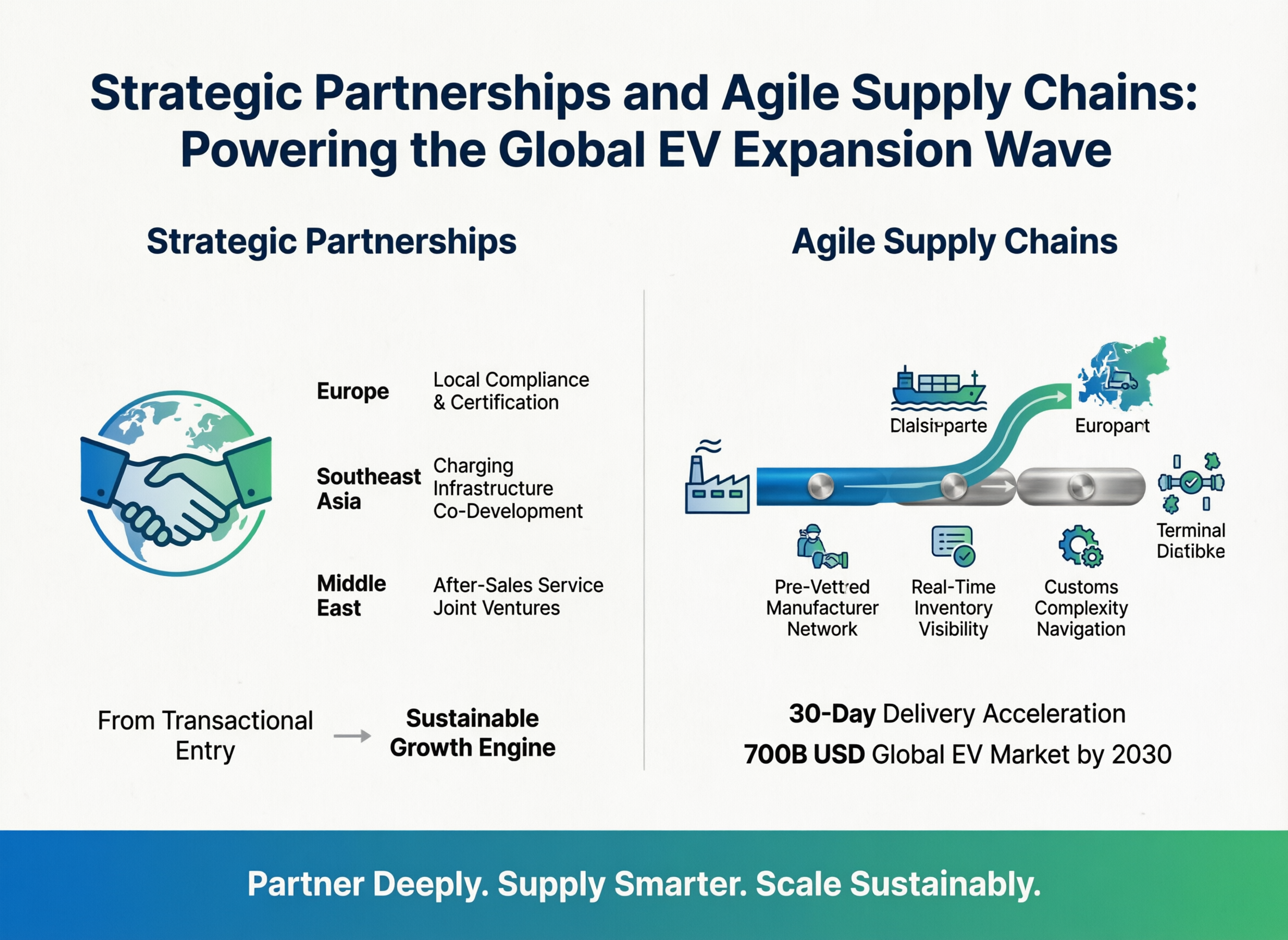 Strategic Partnerships and Agile Supply Chains: Powering the Global EV Expansion Wave
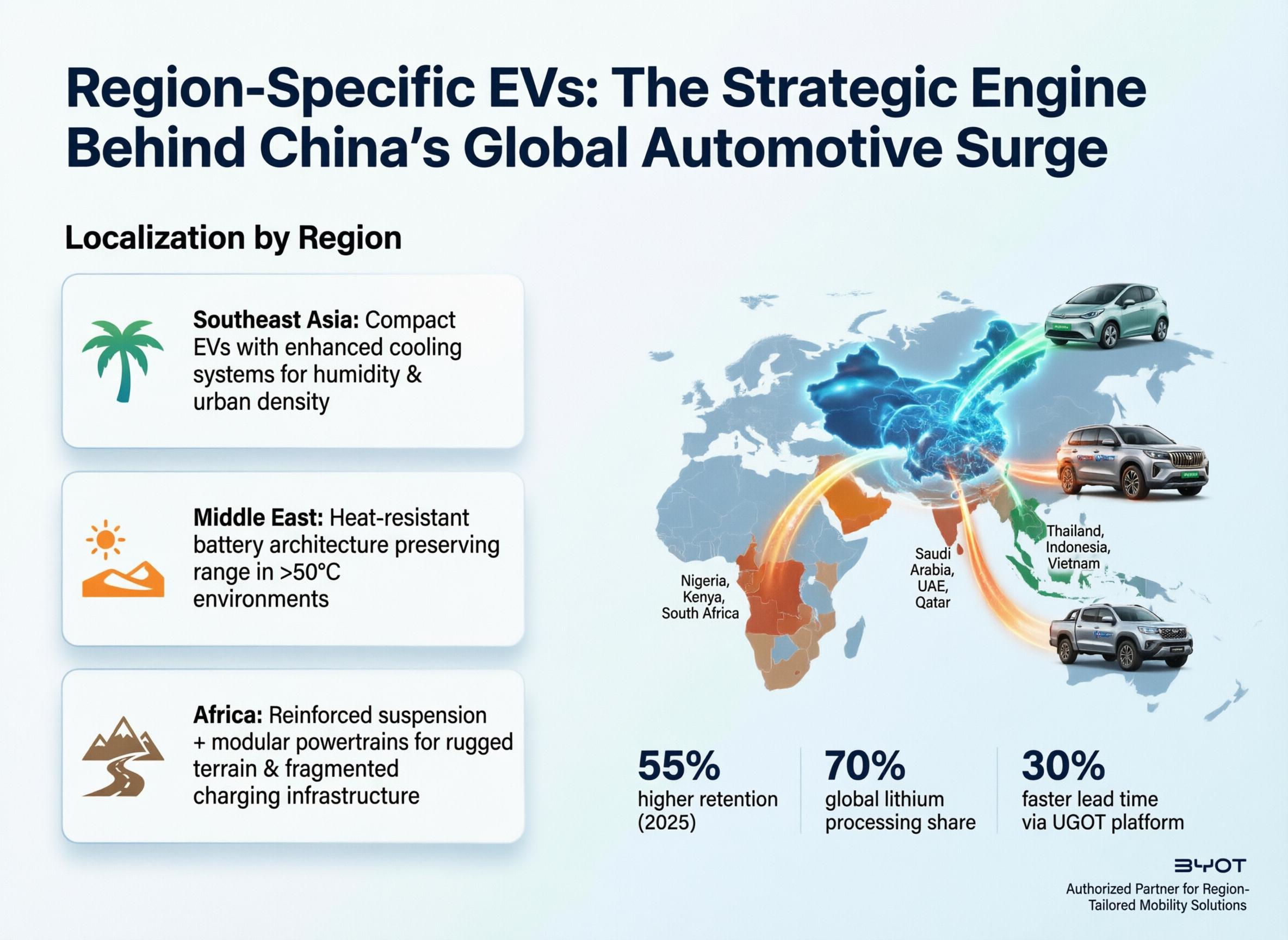 Region-Specific EVs: The Strategic Engine Behind China’s Global Automotive Surge