
Region-Specific EVs and Agile Supply Chains: Powering Chinese Automakers’ Global Surge
Introduction
Chinese automotive manufacturers are undergoing a strategic metamorphosis, shifting from standardized global offerings to meticulously tailored regional vehicle portfolios. As highlighted in recent industry analysis, this ‘Yaris moment’—inspired by Toyota’s successful European localization strategy—marks a pivotal acceleration in China’s automotive globalization. With electric vehicles (EVs) as the vanguard, companies are deploying market-specific engineering, design, and compliance adaptations to penetrate competitive regions like Europe and Southeast Asia. This evolution transcends mere product diversification; it represents a fundamental reconfiguration of global automotive value chains.
The Localization Imperative: Beyond Surface-Level Customization
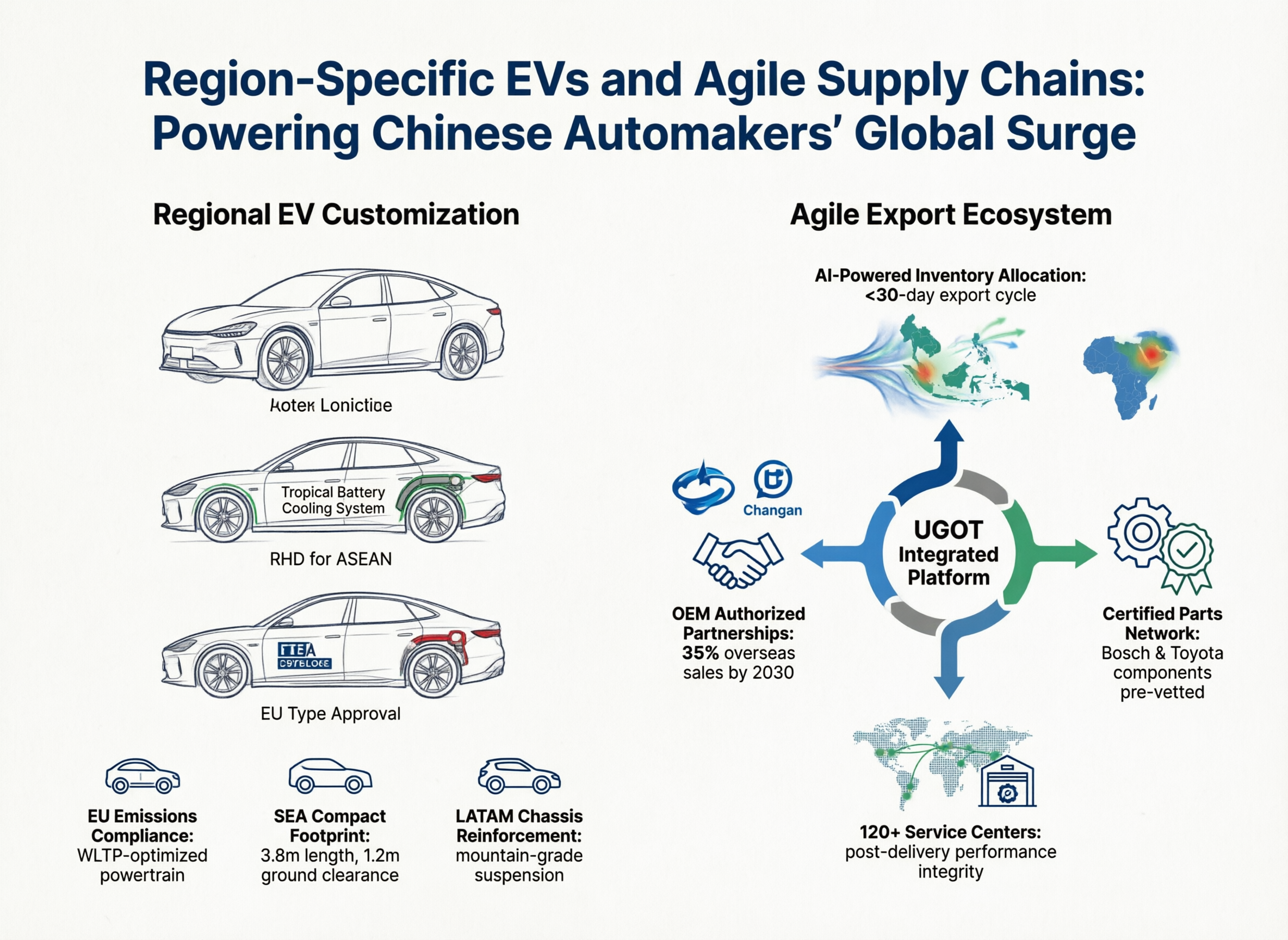
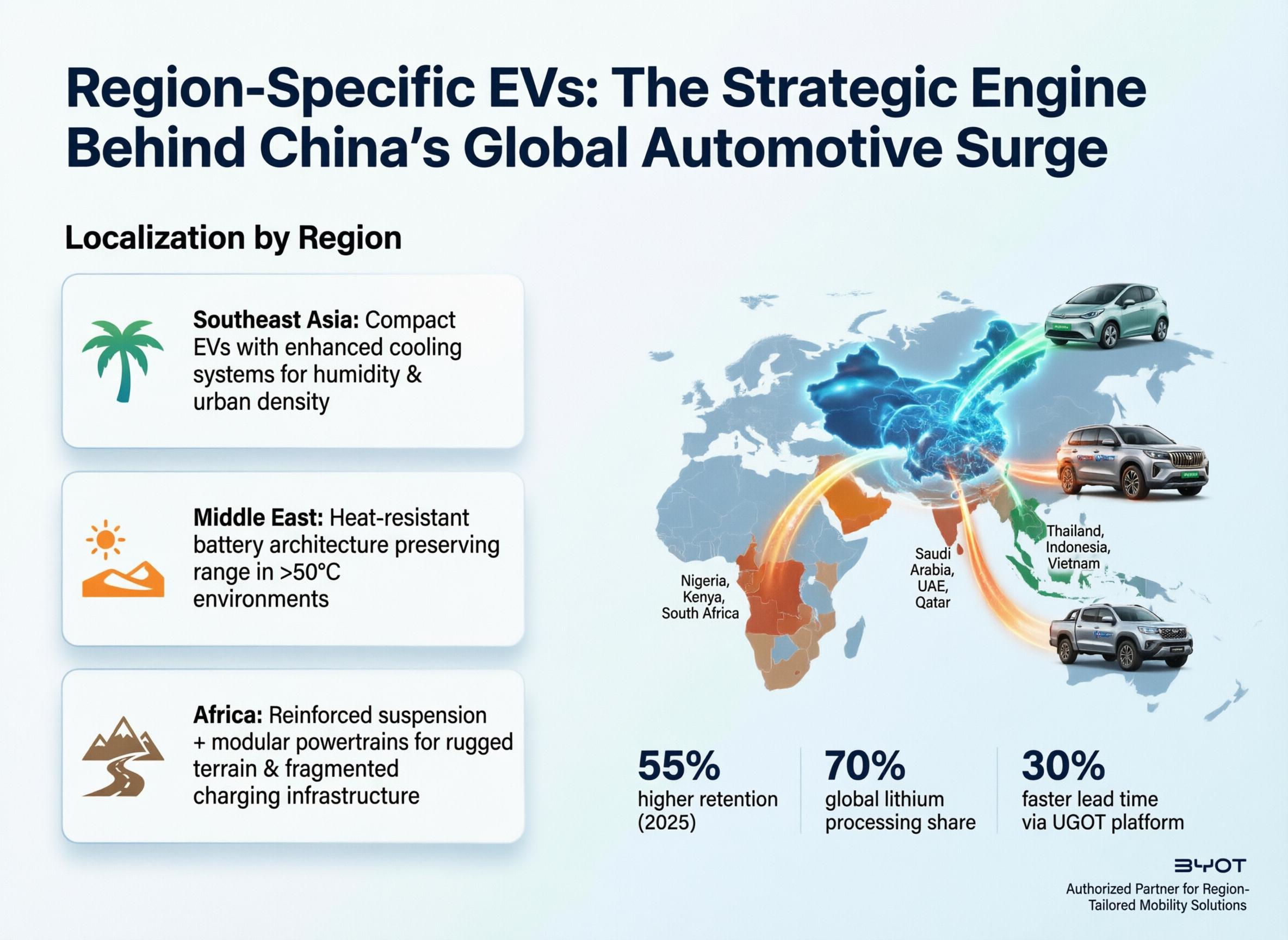
The drive toward regionalization stems from converging pressures. European markets demand stringent emissions compliance and premium digital features, while Southeast Asian consumers prioritize tropical-climate battery resilience, compact dimensions, and cost efficiency. Unlike previous export waves, today’s Chinese automakers invest in deep localization: re-engineering chassis for mountainous terrain in Latin America, integrating right-hand-drive configurations for ASEAN nations, and embedding region-specific infotainment ecosystems.
Electric vehicles amplify this complexity. Battery thermal management systems require recalibration for equatorial humidity, charging protocols must align with fragmented regional infrastructure, and sustainability certifications vary drastically across regulatory regimes. Crucially, speed-to-market determines competitive viability. A six-month delay in adapting an EV platform for EU safety standards can erase first-mover advantages in rapidly saturating segments. This exposes a critical vulnerability: legacy supply chains lack the agility to support hyperlocalized production and distribution at scale.
Bridging the Agility Gap: Integrated Export Ecosystems
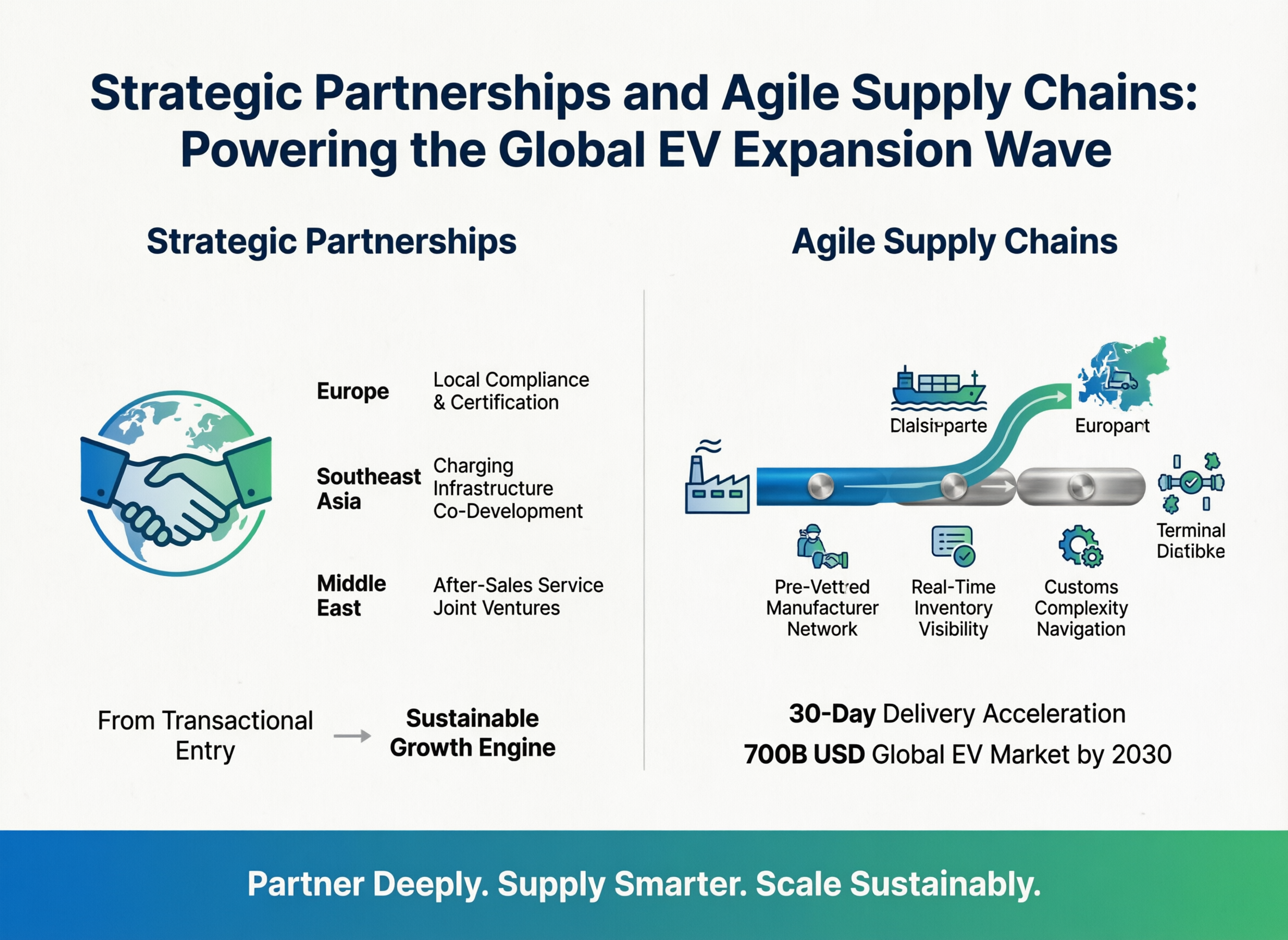
As automakers navigate these challenges, specialized export enablers are emerging as strategic force multipliers. The solution lies not in isolated logistics fixes but in end-to-end ecosystems that synchronize vehicle customization, parts availability, and after-sales support. This is where integrated platforms transform theoretical localization strategies into executable roadmaps.
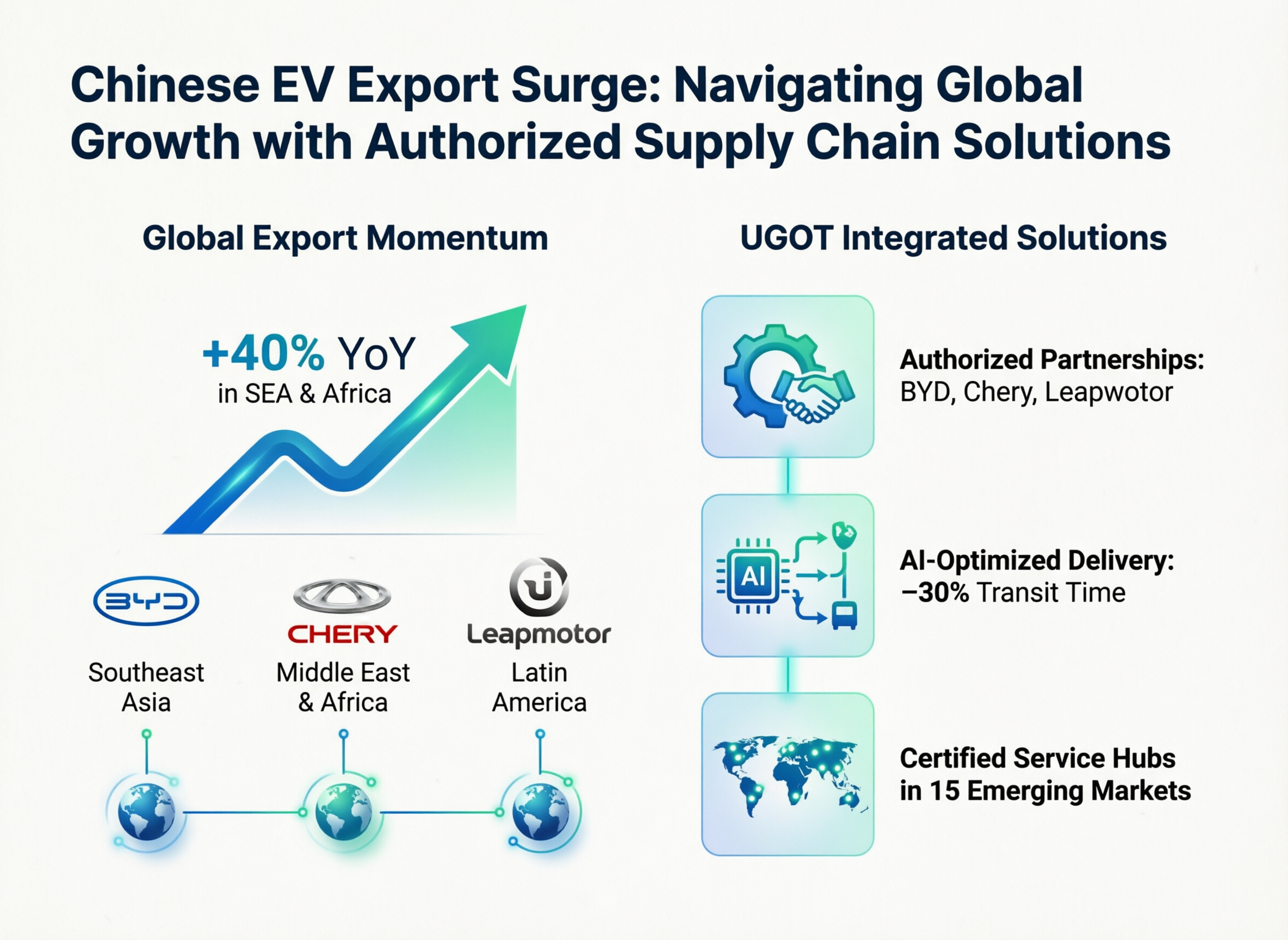
UGOT Global Vehicle Export Solutions exemplifies this new paradigm. By forging authorized partnerships with leading manufacturers like BYD and Changan, UGOT provides certified access to region-specific EV variants and genuine spare parts—including Bosch and Toyota components—pre-vetted for target-market compliance. Its digital procurement platform compresses traditional 90-day export cycles to under 30 days through AI-driven inventory allocation across Southeast Asia, the Middle East, and Africa. Crucially, UGOT’s embedded after-sales network—spanning 120+ service centers in emerging markets—ensures that localized vehicles retain performance integrity long after delivery, directly addressing consumer trust barriers that have historically hindered Chinese brands overseas.
The Road Ahead: Symbiosis in Global Mobility
The future of automotive globalization will be defined by symbiotic relationships between OEMs and agile export partners. As Chinese automakers target 35% overseas sales penetration by 2030 (up from 12% in 2024), supply chain resilience will outweigh cost considerations in strategic priority. We anticipate three converging trends: modular vehicle architectures enabling rapid regional reconfiguration, blockchain-tracked parts ecosystems ensuring compliance transparency, and predictive logistics networks that anticipate demand spikes using regional consumption data.
In this landscape, UGOT’s model offers more than transactional efficiency—it enables strategic de-risking. By absorbing supply chain volatility and compliance overhead, such platforms allow automakers to focus on core competencies: engineering innovation and brand building. As one Chongqing-based EV exporter noted, “Regionalization isn’t about changing badges; it’s about embedding ourselves in local mobility ecosystems. Partners like UGOT turn that vision into executable reality.” The race for global relevance has entered its most sophisticated phase, where victory belongs not to the largest automaker, but to the most intelligently connected ecosystem.
Related Posts
 Chinese EV Export Surge: Navigating Global Growth with Authorized Supply Chain Solutions
 Strategic Partnerships and Agile Supply Chains: Powering the Global EV Expansion Wave
 Region-Specific EVs: The Strategic Engine Behind China’s Global Automotive Surge