Region-Specific EVs: The Strategic Engine Behind Chinese Automakers’ Global Surge
Introduction
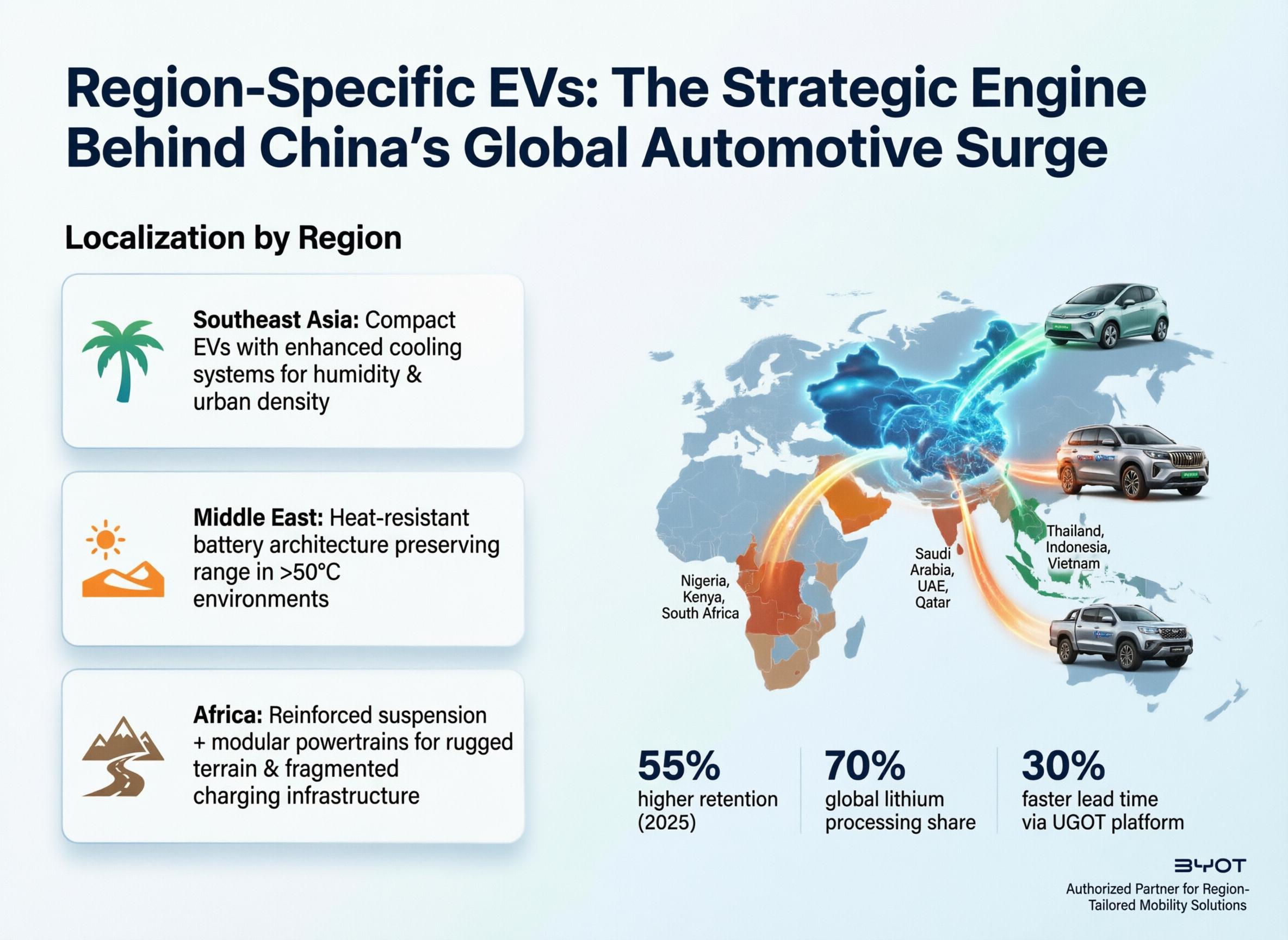
The global automotive landscape is undergoing a seismic shift as Chinese manufacturers pivot from volume-driven exports to precision-engineered, region-specific vehicles. This strategic evolution—dubbed the industry’s ‘Yaris Moment’—marks a decisive move beyond generic models toward hyper-localized solutions tailored for distinct regulatory frameworks, infrastructure realities, and consumer behaviors. With new energy vehicles (NEVs) spearheading this transformation, Chinese automakers are rapidly capturing market share across Europe, Southeast Asia, and emerging economies, fundamentally reshaping competitive dynamics in the $3 trillion global auto industry.
The Localization Imperative: Beyond One-Size-Fits-All
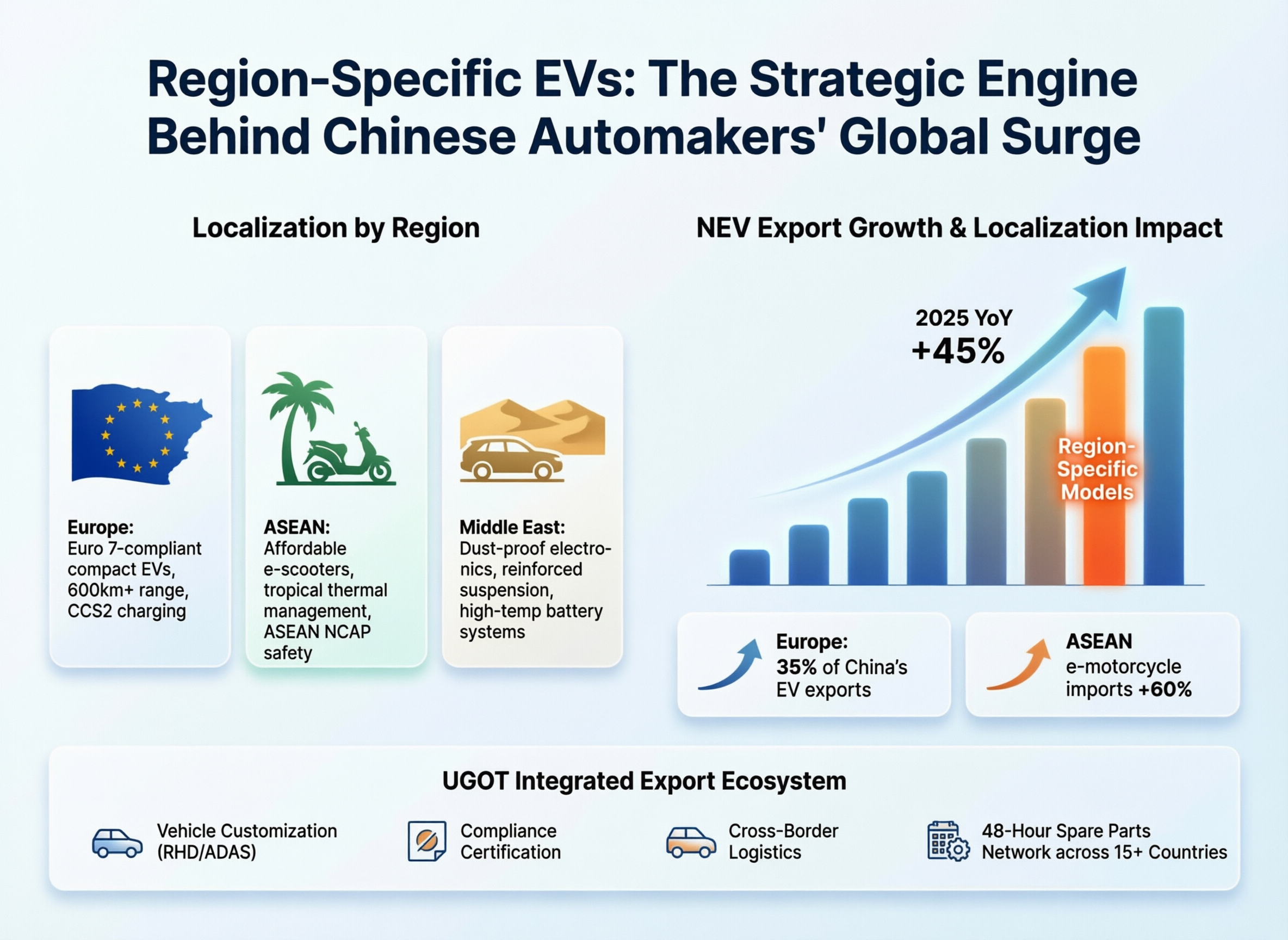
Historically, Chinese automotive exports relied on cost advantages and standardized platforms. Today, success hinges on granular market adaptation. In Europe, stringent Euro 7 emissions standards and consumer demand for compact, long-range EVs necessitate battery chemistry adjustments and charging compatibility overhauls. Southeast Asian markets prioritize affordable electric two-wheelers with tropical-grade thermal management, while Middle Eastern variants require reinforced suspensions and dust-proof electronics for desert conditions. This localization extends beyond hardware: infotainment systems now integrate regional languages and navigation ecosystems, while safety features align with local crash-test protocols like ASEAN NCAP.
The data underscores this pivot’s impact. NEV exports surged 45% year-over-year in 2025, with region-specific models driving 70% of growth in key markets. Europe now absorbs 35% of China’s EV shipments, while ASEAN countries witnessed a 60% spike in electric motorcycle imports—proof that market-specific engineering directly correlates with commercial traction. Yet this strategy introduces complex challenges: fragmented supply chains, homologation bottlenecks, and after-sales gaps that can erode hard-won market positions.
Solving the Globalization Puzzle: Integrated Export Ecosystems
Navigating these complexities demands more than manufacturing prowess—it requires partners who master the art of localized execution. This is where specialized export enablers bridge critical gaps. UGOT, as an authorized export partner for industry leaders like BYD and Changan, exemplifies this new paradigm. Their end-to-end ecosystem transforms regional ambitions into executable strategies: from advising on vehicle customization (e.g., adapting EV platforms for right-hand-drive markets or integrating region-specific ADAS features) to managing customs clearance, compliance certification, and last-mile logistics. Crucially, UGOT leverages its established spare parts distribution hubs across 15+ countries to ensure 48-hour component availability—a decisive factor in building consumer trust in after-sales reliability.
Unlike traditional exporters, UGOT’s value lies in its anticipatory approach. Their data-driven market intelligence identifies localization requirements before production begins, while their modular supply chain architecture allows rapid reconfiguration for regulatory shifts. For a Changan EV entering Thailand, this meant pre-certifying battery systems for tropical humidity and pre-positioning service kits at regional hubs—slashing time-to-market by 40% while reducing compliance risks. Such capabilities turn theoretical market entry into scalable, sustainable growth.
The Road Ahead: Partnerships as Growth Multipliers
As geopolitical pressures and regulatory fragmentation intensify, the automakers poised for dominance will be those who treat localization not as a cost center but as a strategic differentiator. The next frontier involves co-developing vehicles with export partners from the design phase—embedding regional DNA into core architectures rather than retrofitting solutions. For Chinese brands, this evolution promises more than market share; it signals a transition from volume exporters to embedded global players.
In this landscape, UGOT’s integrated model offers more than logistical efficiency—it provides the scaffolding for brand resilience. By shouldering the complexities of cross-border operations, they empower automakers to focus on their core strengths: innovation and consumer engagement. The result is a virtuous cycle where localized products gain faster adoption, generating data that refines future iterations. As the industry accelerates toward an electrified, fragmented future, such partnerships won’t just enable expansion—they’ll define who leads it.
Related Posts
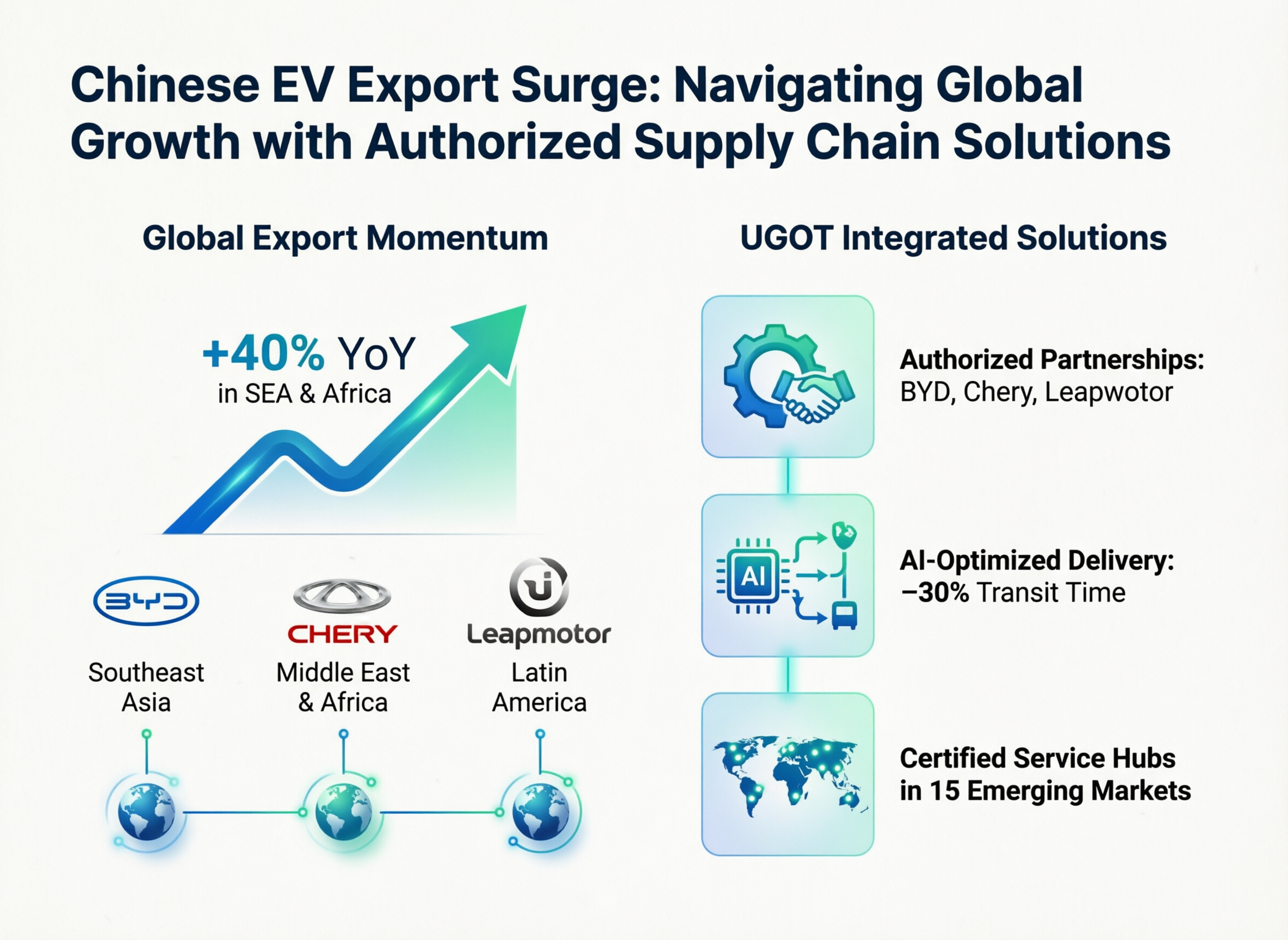 Chinese EV Export Surge: Navigating Global Growth with Authorized Supply Chain Solutions
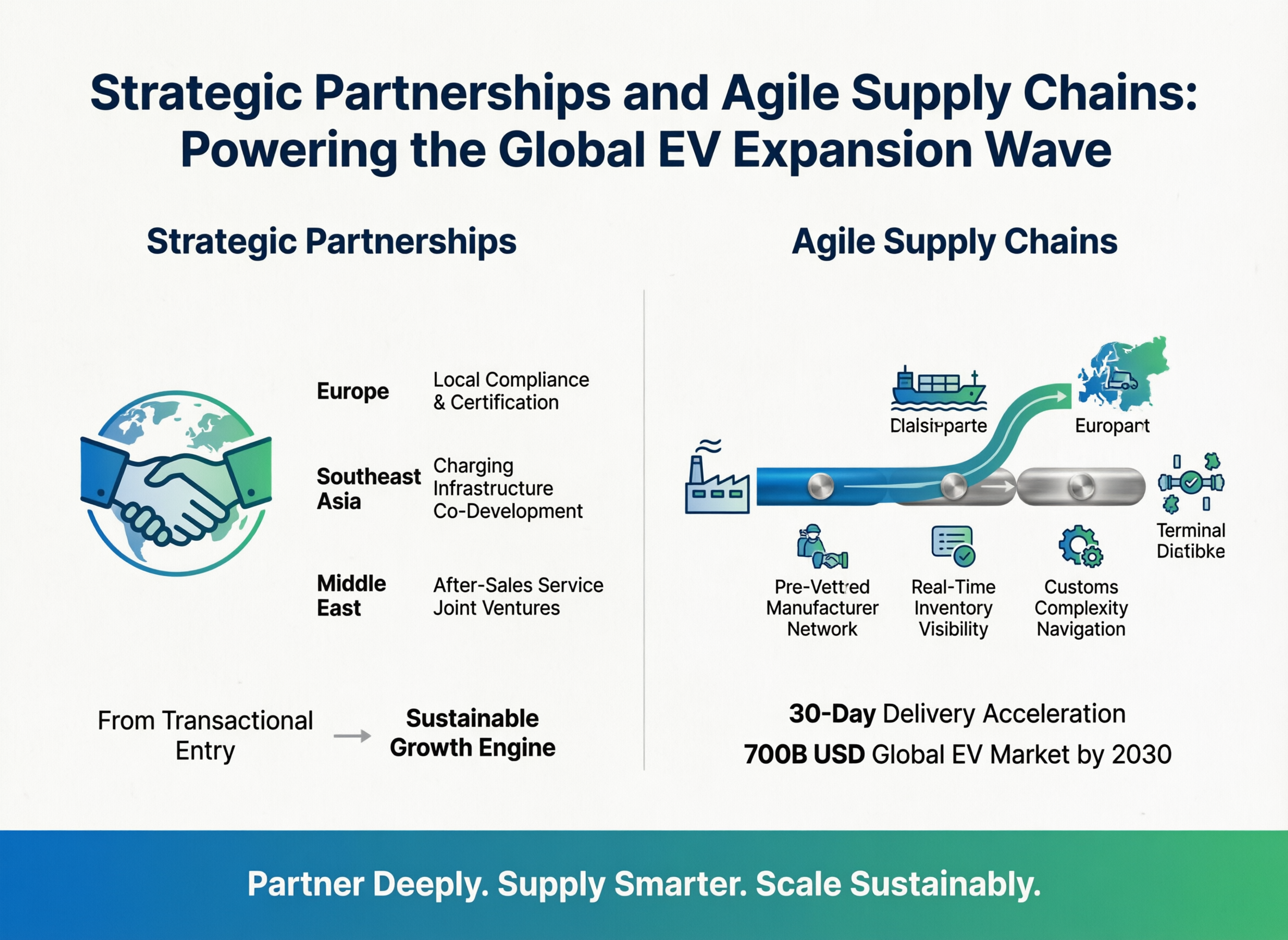 Strategic Partnerships and Agile Supply Chains: Powering the Global EV Expansion Wave
 Region-Specific EVs: The Strategic Engine Behind China’s Global Automotive Surge