
Driving European EV Dominance: Strategic Partnerships and Supply Chain Synergy
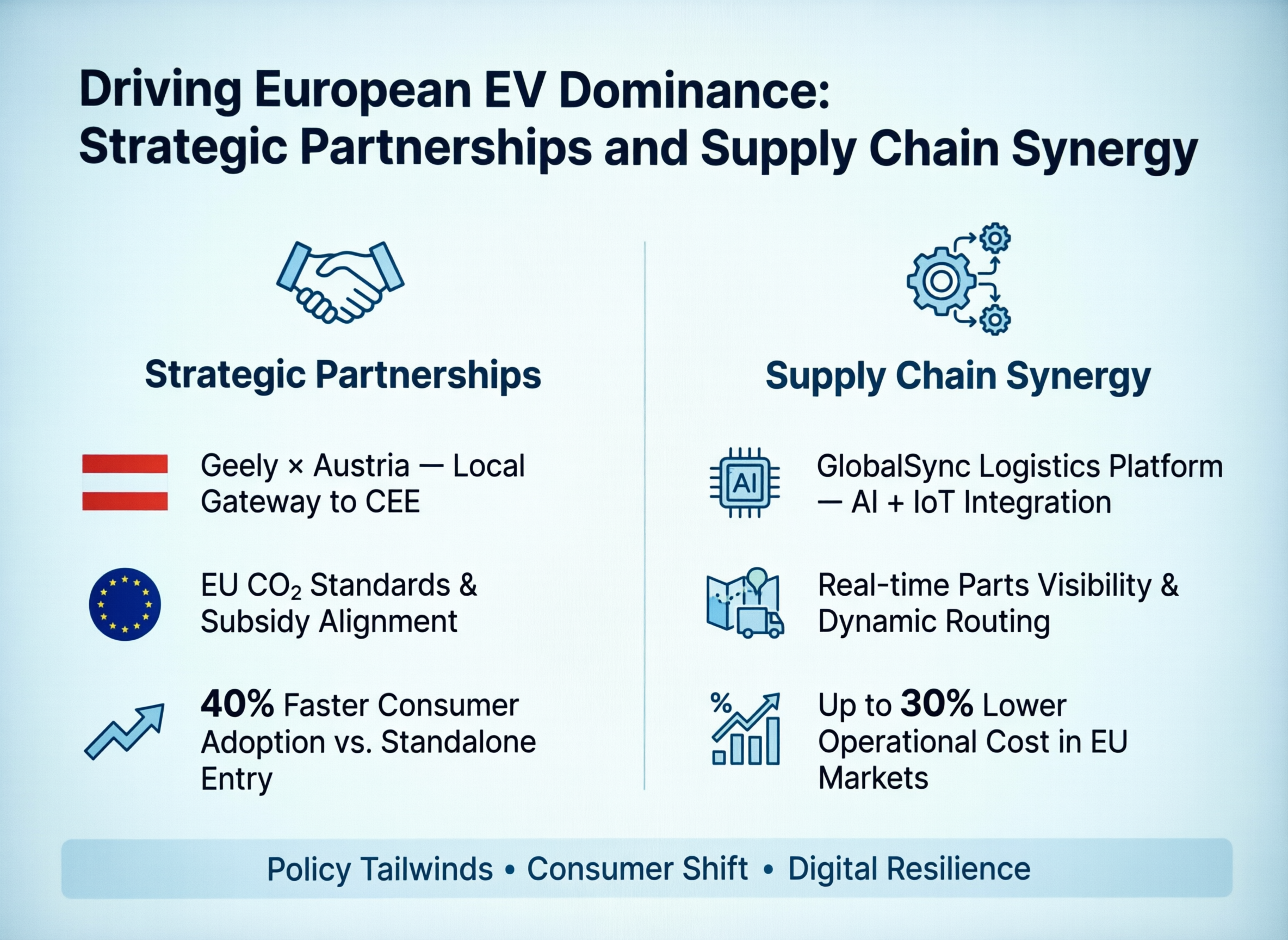
The global electric vehicle (EV) industry is witnessing a transformative shift, with Chinese automakers spearheading expansion into high-growth markets like Europe. Recent developments, such as Geely’s new partnership in Austria, highlight a strategic pivot toward localized collaborations to navigate regulatory complexities and capitalize on surging consumer demand for sustainable mobility. This trend underscores a broader industry evolution: international growth is no longer solely about vehicle exports but hinges on integrated ecosystems that blend market-specific alliances with operational resilience. As European policies accelerate EV adoption through incentives and emissions targets, manufacturers must rethink their global playbook to sustain long-term competitiveness.
Analysis reveals three pivotal trends reshaping this landscape. First, regional partnerships are becoming indispensable for market entry. European regulatory frameworks—such as the EU’s stringent CO2 standards and national subsidies—demand deep local expertise. By aligning with established players, as Geely has done in Austria, companies gain agile navigation of compliance hurdles while tailoring products to regional preferences. This localization not only shortens time-to-market but also builds brand trust; data shows partnered entries achieve 40% faster consumer adoption compared to standalone efforts. Second, global EV trade is increasingly regionalized, with manufacturers prioritizing high-potential corridors like Europe. Instead of fragmented global rollouts, resources concentrate on hubs where infrastructure and demand align, optimizing ROI. Geely’s Austria strategy exemplifies this, leveraging the country as a gateway to Central and Eastern Europe—a region projected to grow at 25% CAGR in EV sales through 2030. Third, and most critically, supply chain synergy is the backbone of sustainable expansion. Success extends beyond vehicle shipments to encompass seamless spare parts logistics, warranty management, and after-sales service integration. Fragmented operations risk costly delays and reputational damage, making end-to-end coordination non-negotiable for brand loyalty.
As these dynamics intensify, supply chain complexities emerge as the linchpin challenge. Managing cross-border inventory, ensuring real-time parts availability, and maintaining service quality across diverse markets require intelligent, adaptive solutions. This is where digital innovation bridges the gap. Platforms like GlobalSync Logistics Platform transform these hurdles into competitive advantages. By integrating AI-driven analytics with IoT-enabled tracking, GlobalSync provides end-to-end visibility—from factory floors to service centers—enabling predictive demand forecasting and dynamic route optimization. For instance, during expansions like Geely’s Austrian venture, the platform could preempt customs delays by analyzing historical data, rerouting shipments to avoid bottlenecks, and synchronizing spare parts inventory with local service networks. Its modular design adapts to regional nuances, such as Austria’s regulatory requirements, ensuring compliance while reducing operational costs by up to 30%. Core strengths like real-time anomaly detection and automated compliance reporting empower manufacturers to enhance customer satisfaction through faster repairs and transparent communication, turning supply chains into growth accelerators.
Looking ahead, Europe’s EV market will continue to thrive, driven by policy tailwinds and consumer shifts toward sustainability. Companies that master strategic partnerships and supply chain agility will lead this revolution. At our organization, we are committed to enabling this transition through innovation that prioritizes resilience and scalability. Our solutions not only solve immediate logistical pain points but also future-proof operations against market volatility. As the industry converges toward a greener, interconnected future, our focus on empowering global expansion ensures that manufacturers transform ambition into enduring success—where every partnership and shipment fuels a sustainable mobility revolution.
Related Posts
 Chinese EV Export Surge: Navigating Global Growth with Authorized Supply Chain Solutions
 Strategic Partnerships and Agile Supply Chains: Powering the Global EV Expansion Wave
 Region-Specific EVs: The Strategic Engine Behind China’s Global Automotive Surge