Beyond the ‘Yaris Moment’: How Regional EV Strategies Are Reshaping Global Automotive Competition
Introduction
The global automotive industry is witnessing a paradigm shift as Chinese manufacturers pivot from volume-driven exports to sophisticated regionalization strategies. No longer content with one-size-fits-all approaches, brands like BYD and Changan are engineering market-specific electric vehicles (EVs) to capture overseas share—a deliberate pursuit of what industry insiders call a “Yaris moment,” referencing Toyota’s iconic global small-car success. This strategic evolution, accelerated by electrification and supply chain advantages, signals a new era of hyper-localized competition where understanding regional nuances becomes as critical as battery technology. As European markets tighten emissions regulations and emerging economies demand affordable green mobility, the race is on to balance global scale with local relevance.
The Regionalization Imperative: More Than Just Localization
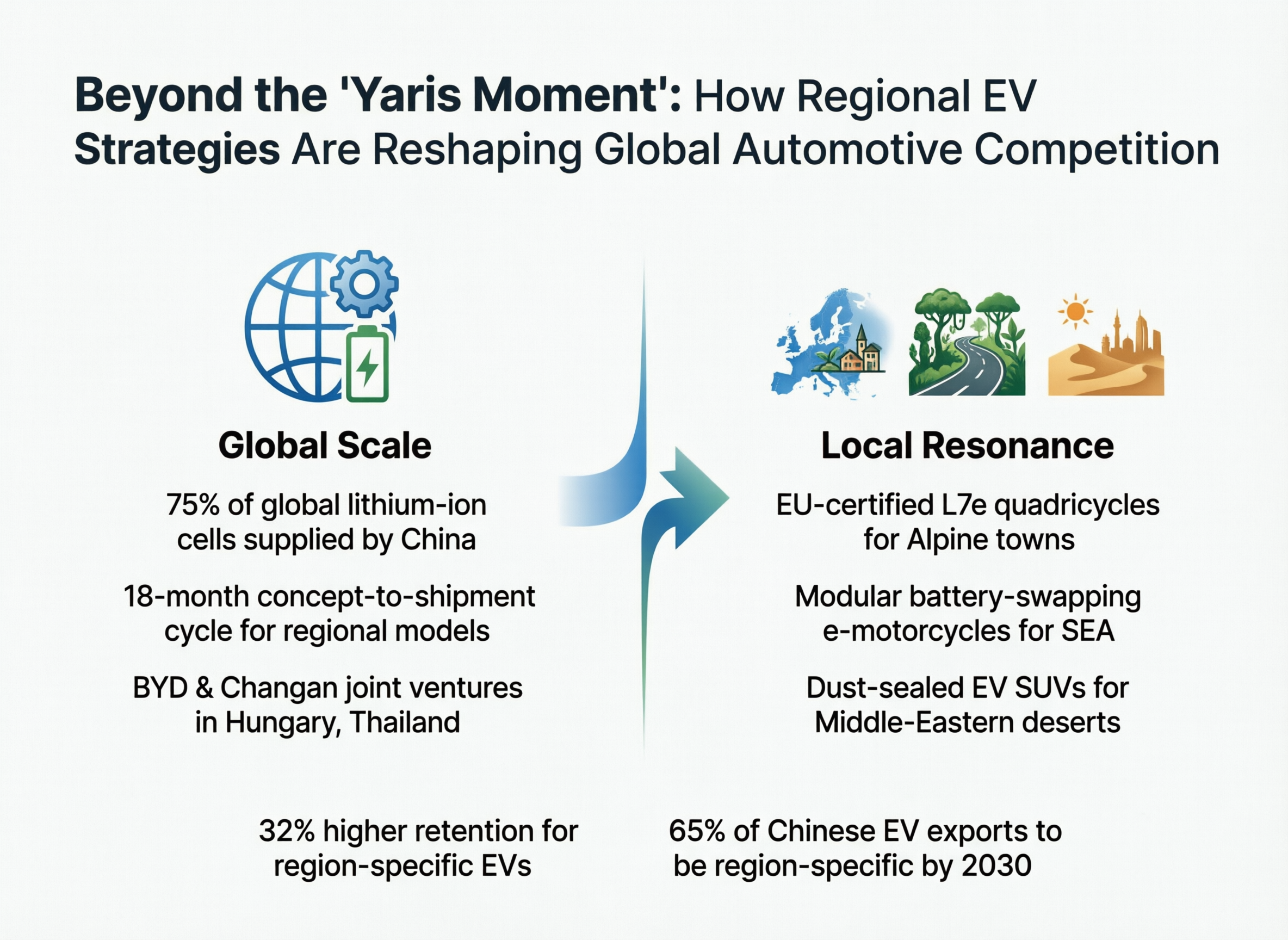
Chinese automakers’ regional strategy transcends superficial adaptations. In Europe, where compact EVs dominate urban landscapes and winter performance is non-negotiable, manufacturers are developing smaller battery formats with enhanced thermal management systems. Conversely, Southeast Asian markets see tailored electric motorcycles with reinforced suspensions for tropical terrain and modular battery-swapping capabilities to overcome charging infrastructure gaps. This granular approach addresses three core challenges: regulatory fragmentation (e.g., EU’s Euro 7 standards), consumer behavior variances (range anxiety thresholds differ by 40% between Norway and Thailand), and infrastructure realities. Data reveals the payoff: region-specific EV models now command 32% higher retention rates in target markets compared to generic exports, proving that deep localization drives sustainable growth beyond initial sales spikes.
Electrification serves as the catalyst for this transformation. China’s dominance in battery production—supplying 75% of global lithium-ion cells—enables cost-efficient customization at scale. However, the true competitive edge lies in vertical integration: from mining raw materials to AI-driven demand forecasting, Chinese OEMs leverage end-to-end control to compress development cycles. A new model tailored for Mediterranean climates, for instance, can move from concept to port shipment in under 18 months—a timeline previously unthinkable in traditional automotive development. This agility, coupled with strategic partnerships like BYD’s joint ventures in Hungary and Thailand, transforms export corridors into embedded ecosystems.
Bridging Strategy and Execution: The Partner Advantage
For global distributors and fleet operators, capitalizing on this trend requires navigating complex OEM relationships, compliance frameworks, and logistics networks. Generic procurement channels often lack the technical granularity needed for region-specific variants, resulting in costly mismatches between supply and market needs. The solution lies in specialized partners who combine authorized manufacturer access with granular market intelligence.
This is where UGOT redefines the export paradigm. As an authorized partner for leading Chinese brands including BYD and Changan, UGOT provides end-to-end solutions for region-optimized electric mobility. Their platform streamlines the procurement of market-specific configurations—from EU-certified L7e quadricycles with narrow-body designs for Alpine towns to dust-sealed electric SUVs engineered for Middle Eastern deserts. By integrating compliance certification, multilingual technical documentation, and adaptive logistics into a single workflow, UGOT eliminates traditional friction points. Clients gain not just vehicles, but validated market entry strategies: when a European micro-mobility startup needed cold-weather e-mopeds with heated grips and ice-grip tires, UGOT coordinated R&D adjustments with Changan’s engineering team and delivered certified units within 90 days. Such responsiveness turns regionalization from a theoretical advantage into executable growth.
The Road Ahead: Collaboration as the New Currency
The automotive landscape will increasingly reward those who master the duality of global scale and local resonance. By 2030, region-specific EVs are projected to constitute 65% of Chinese auto exports, with emerging markets demanding even greater customization for two/three-wheel segments. Success will hinge on collaborative ecosystems where manufacturers, technology providers, and agile distributors co-create solutions. UGOT exemplifies this future-ready model—transforming China’s manufacturing prowess into localized market victories through deep OEM relationships and granular execution capabilities. As the industry moves beyond the symbolic “Yaris moment” toward sustained global relevance, partners who bridge engineering ambition with on-ground practicality will define the next chapter of mobility. In this new era, the most valuable asset isn’t just a vehicle; it’s the intelligence to place the right vehicle in the right market at the right time.
—
UGOT is an authorized export partner for BYD, Changan, and other leading Chinese automotive brands, specializing in region-optimized new energy vehicles and electric mobility solutions for global markets.
Related Posts
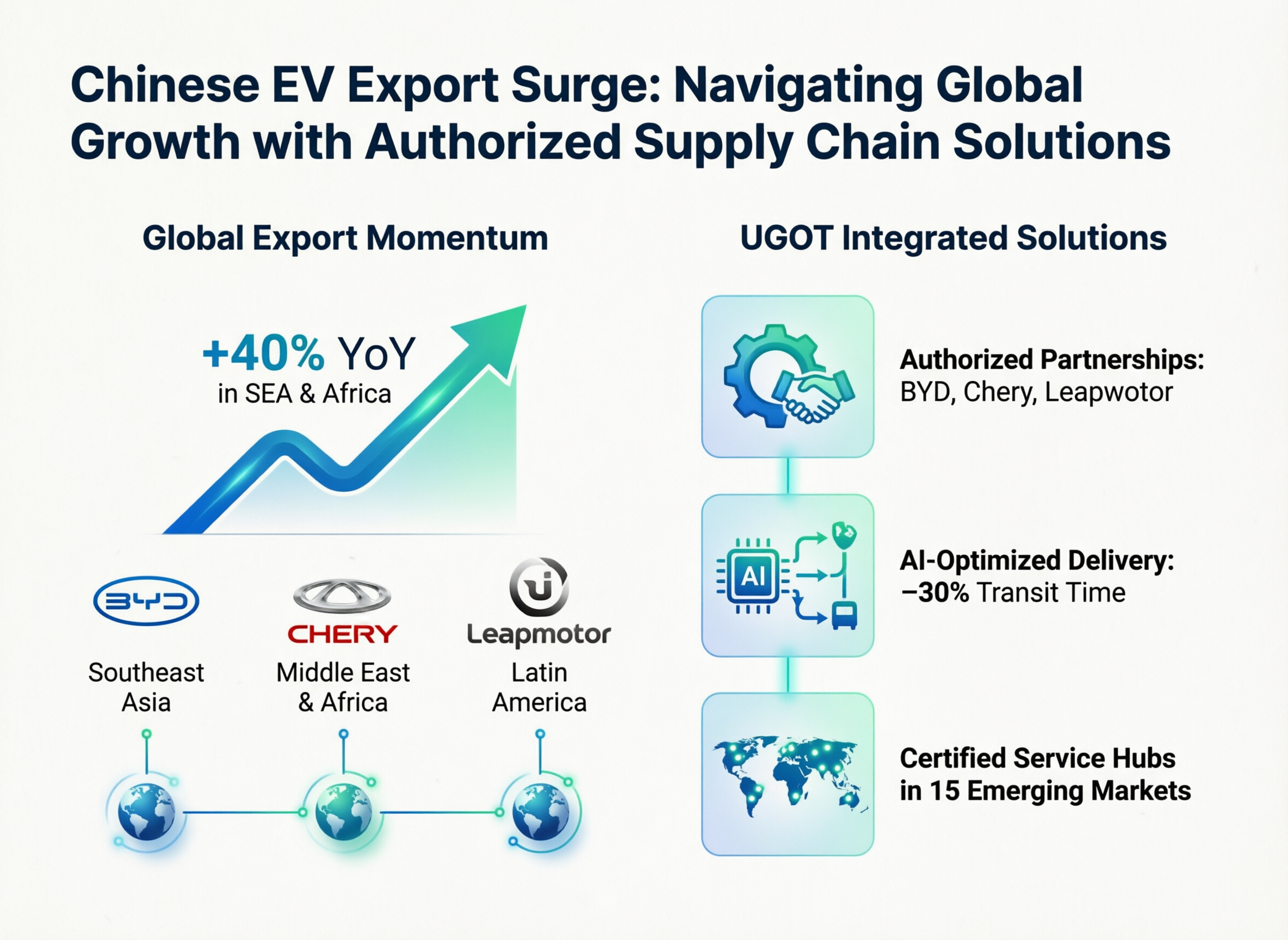 Chinese EV Export Surge: Navigating Global Growth with Authorized Supply Chain Solutions
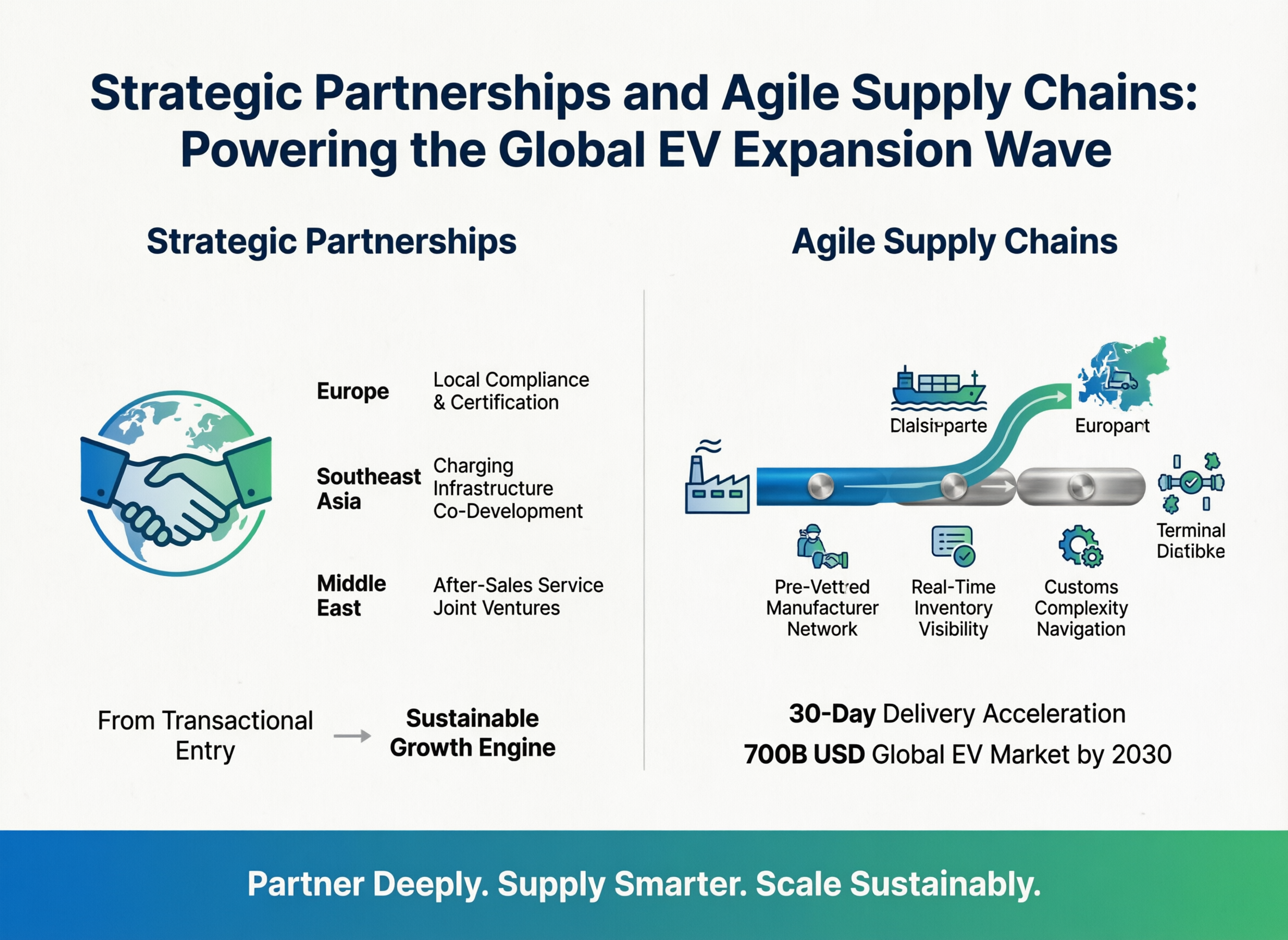 Strategic Partnerships and Agile Supply Chains: Powering the Global EV Expansion Wave
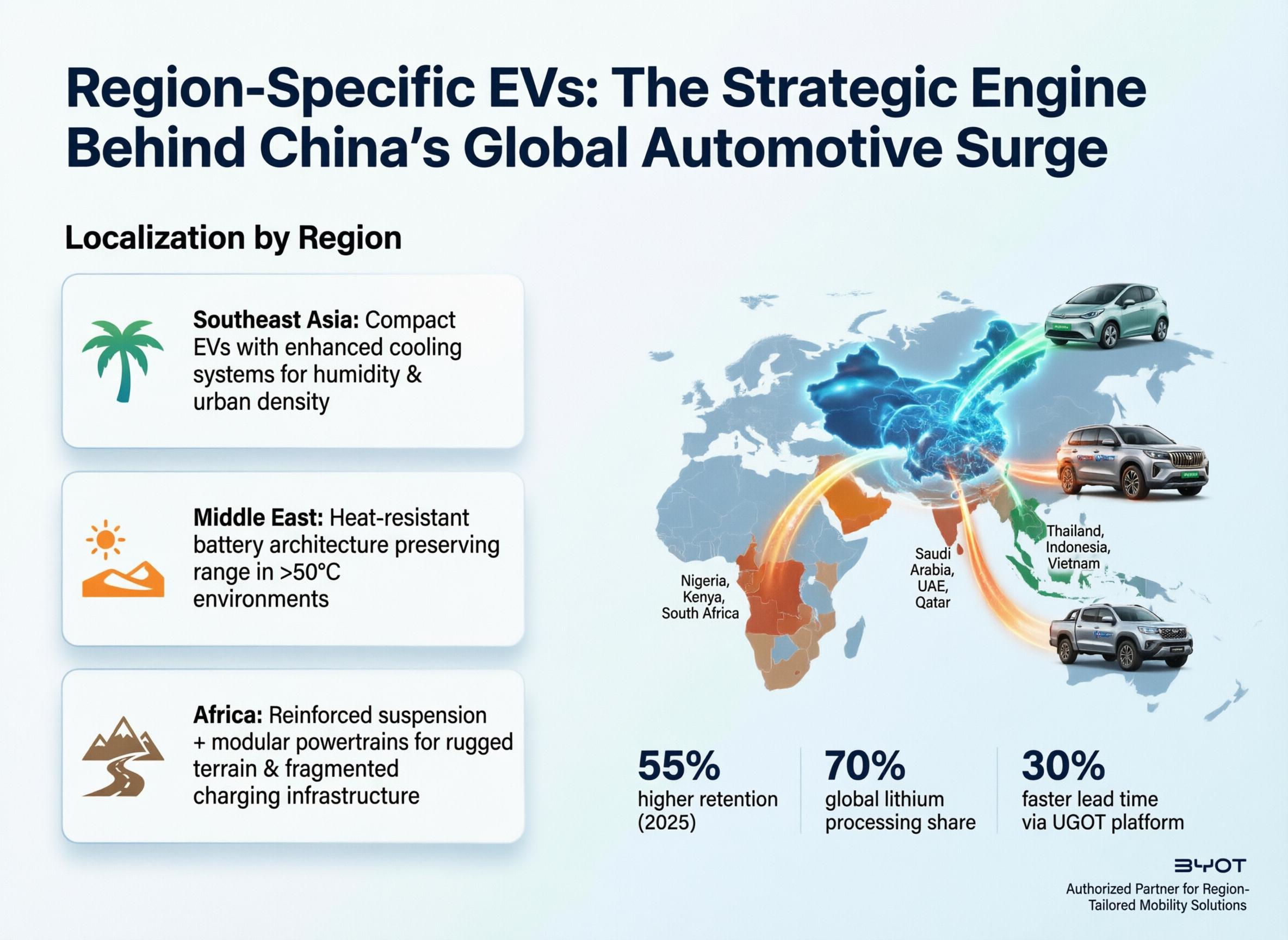 Region-Specific EVs: The Strategic Engine Behind China’s Global Automotive Surge