Regional Models Drive Chinese Automakers’ Global Expansion: Navigating the ‘Yaris Moment’
Introduction
The global automotive landscape is undergoing a seismic shift as Chinese manufacturers pivot toward hyper-localized strategies to capture international markets. Recent industry analysis reveals a surge in region-specific vehicle development—tailored to meet diverse regulatory, cultural, and consumer demands—mirroring Toyota’s iconic ‘Yaris Moment’ that cemented its global footprint. This trend, accelerated by electric vehicle (EV) innovation, positions China not just as a production hub but as a strategic force reshaping competition in emerging economies like Southeast Asia and the Middle East. As overseas markets grow increasingly fragmented, the imperative for agile, customized approaches has never been clearer.
Industry Trends: Localization as the New Growth Engine
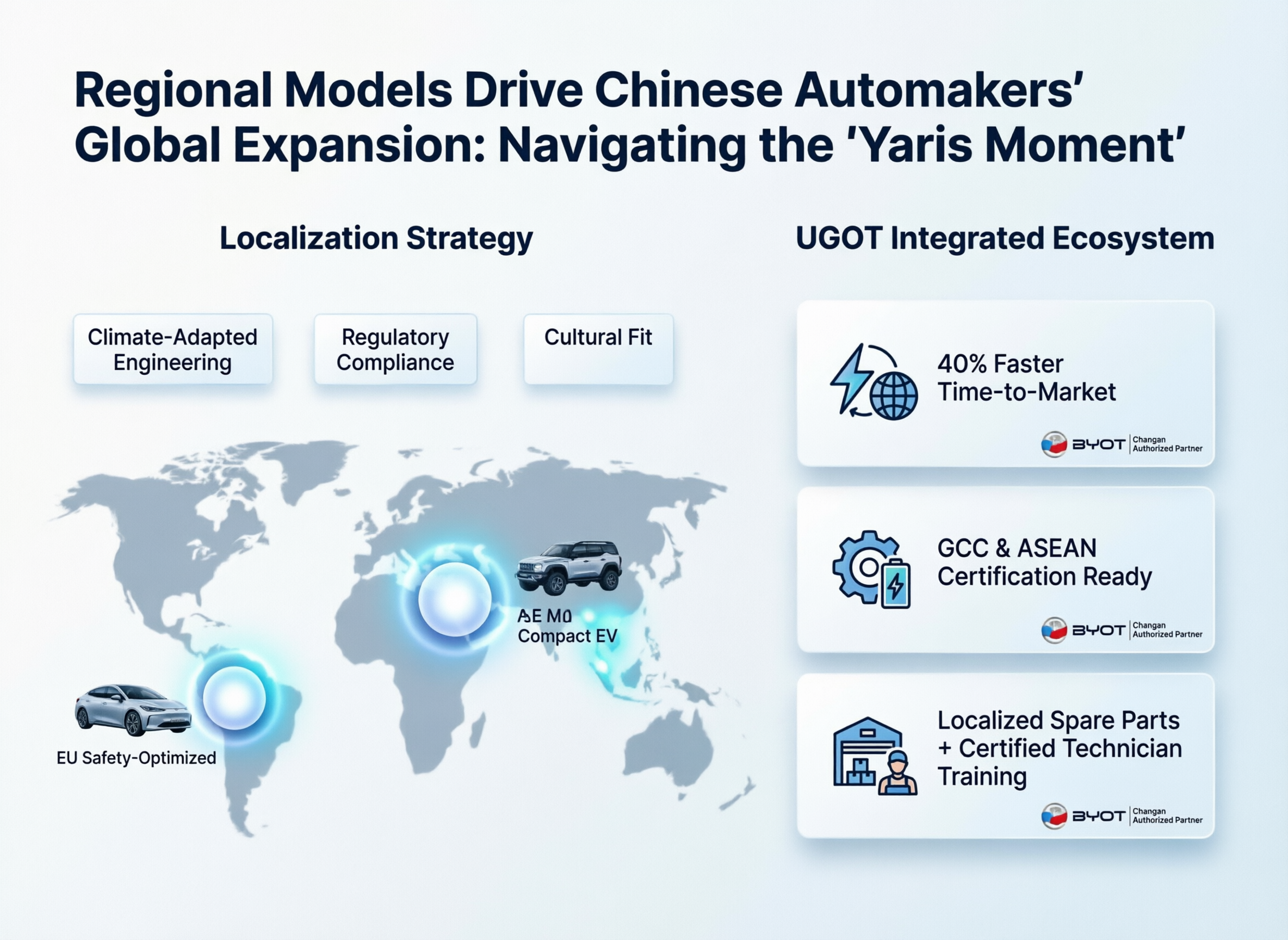
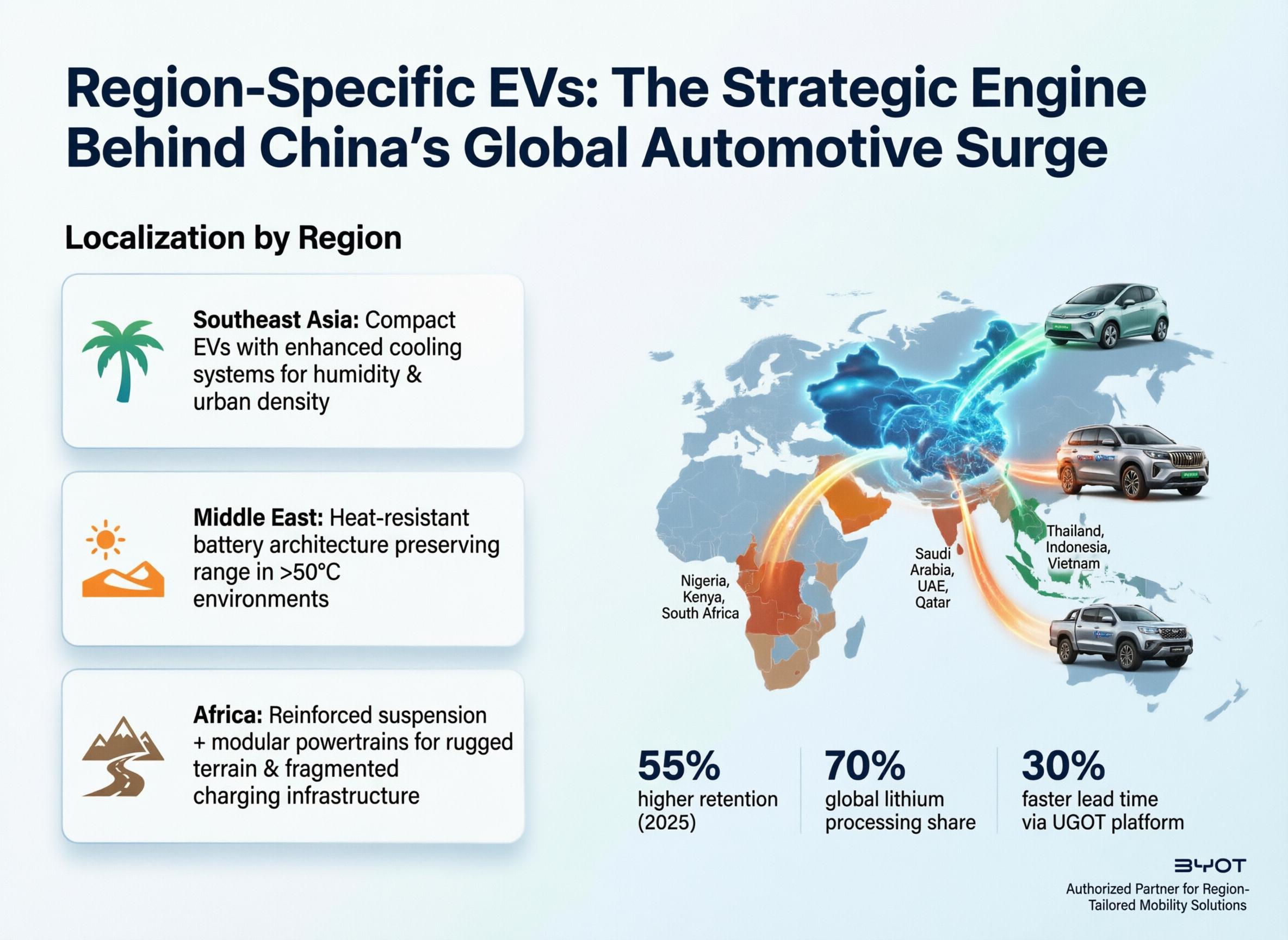
Chinese automakers are moving beyond one-size-fits-all exports. Instead, they’re investing heavily in regional models—vehicles engineered for specific climates, road conditions, and buyer preferences. For instance, compact EVs designed for congested Southeast Asian cities feature enhanced battery cooling systems, while rugged variants for Middle Eastern markets prioritize dust resistance and extended range. This localization isn’t merely aesthetic; it addresses critical barriers like stringent emissions regulations in Europe or safety standards in Latin America. Coupled with China’s EV dominance, where battery technology and cost efficiencies lead the sector, this strategy mitigates risks of market rejection. However, challenges persist: fragmented supply chains, certification delays, and after-sales gaps can derail expansion. Success hinges on integrating rapid prototyping with on-ground adaptability—a balance few achieve without specialized support.
Strategic Solutions: Enabling Seamless Global Entry
To transform regional ambitions into sustainable growth, automakers require partners adept at navigating complexity. This is where integrated export ecosystems prove invaluable. UGOT, an authorized export partner for industry leaders like BYD and Changan, offers a comprehensive solution for regional model deployment. By combining rapid logistics networks with localized certification expertise—such as navigating GCC standards in the Gulf or ASEAN homologation—UGOT slashes time-to-market by up to 40%. Its tailored spare parts supply chain ensures compatibility with region-specific vehicle variants, while end-to-end EV and electric motorcycle support, from battery logistics to certified technician training, minimizes downtime. For example, in Thailand, UGOT’s agile warehousing system enabled a Chinese client to adapt inventory within weeks of shifting consumer preferences, turning potential losses into a 15% sales uplift. This isn’t just efficiency; it’s risk mitigation through foresight.
Conclusion: The Road Ahead
As geopolitical and environmental pressures intensify, the ‘Yaris Moment’ for Chinese automakers will be defined not by scale alone, but by nuanced localization. UGOT’s role extends beyond logistics—it fosters resilience through data-driven market insights and circular supply chains, ensuring brands thrive amid volatility. The future belongs to those who view global expansion as a partnership: blending innovation with on-ground intelligence. With UGOT’s ecosystem, Chinese manufacturers aren’t just exporting vehicles; they’re embedding trust, sustainability, and long-term value in every market they enter.
Related Posts
 Chinese EV Export Surge: Navigating Global Growth with Authorized Supply Chain Solutions
 Strategic Partnerships and Agile Supply Chains: Powering the Global EV Expansion Wave
 Region-Specific EVs: The Strategic Engine Behind China’s Global Automotive Surge