Regionalized EV Revolution: How Chinese Automakers Are Accelerating Global Expansion
Introduction
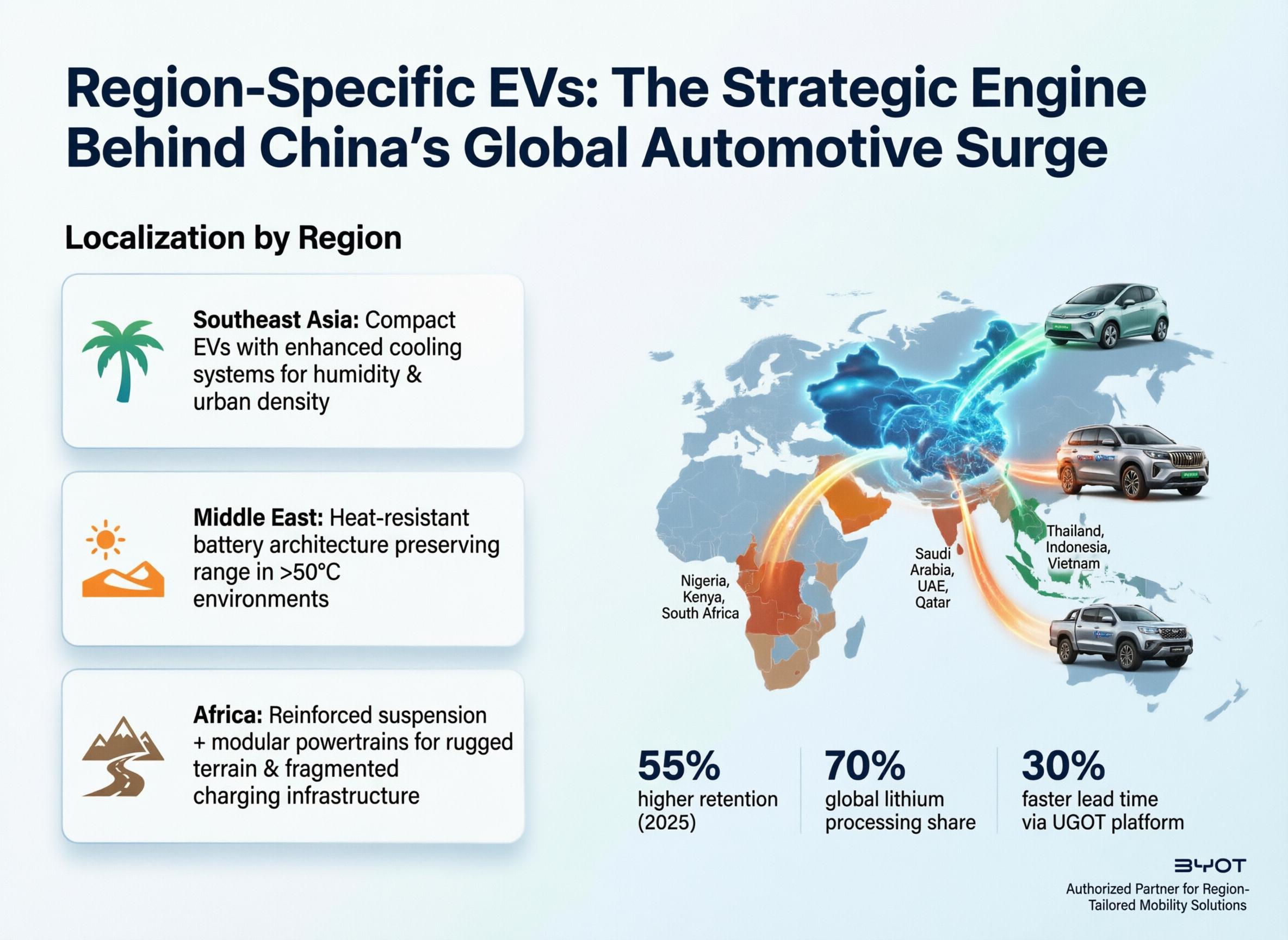
The global automotive landscape is undergoing a seismic shift as Chinese automakers pivot from broad-based exports to hyper-localized vehicle strategies. Fueled by advancements in electric vehicle (EV) technology and intensifying competition, companies like BYD and Changan are now designing region-specific models tailored to diverse market demands—from Southeast Asia’s tropical climates to the Middle East’s rugged terrain. This strategic evolution, often dubbed the “Yaris Moment” after Toyota’s successful regional adaptation of its compact car, marks a critical inflection point. It underscores a broader industry trend: to capture sustainable growth overseas, automakers must move beyond one-size-fits-all approaches and embrace deep market customization. As of 2026, this shift is not merely tactical but existential, driven by the urgent need to navigate regulatory hurdles, cultural preferences, and the accelerating global transition to sustainable mobility.
Industry Trends and Strategic Imperatives
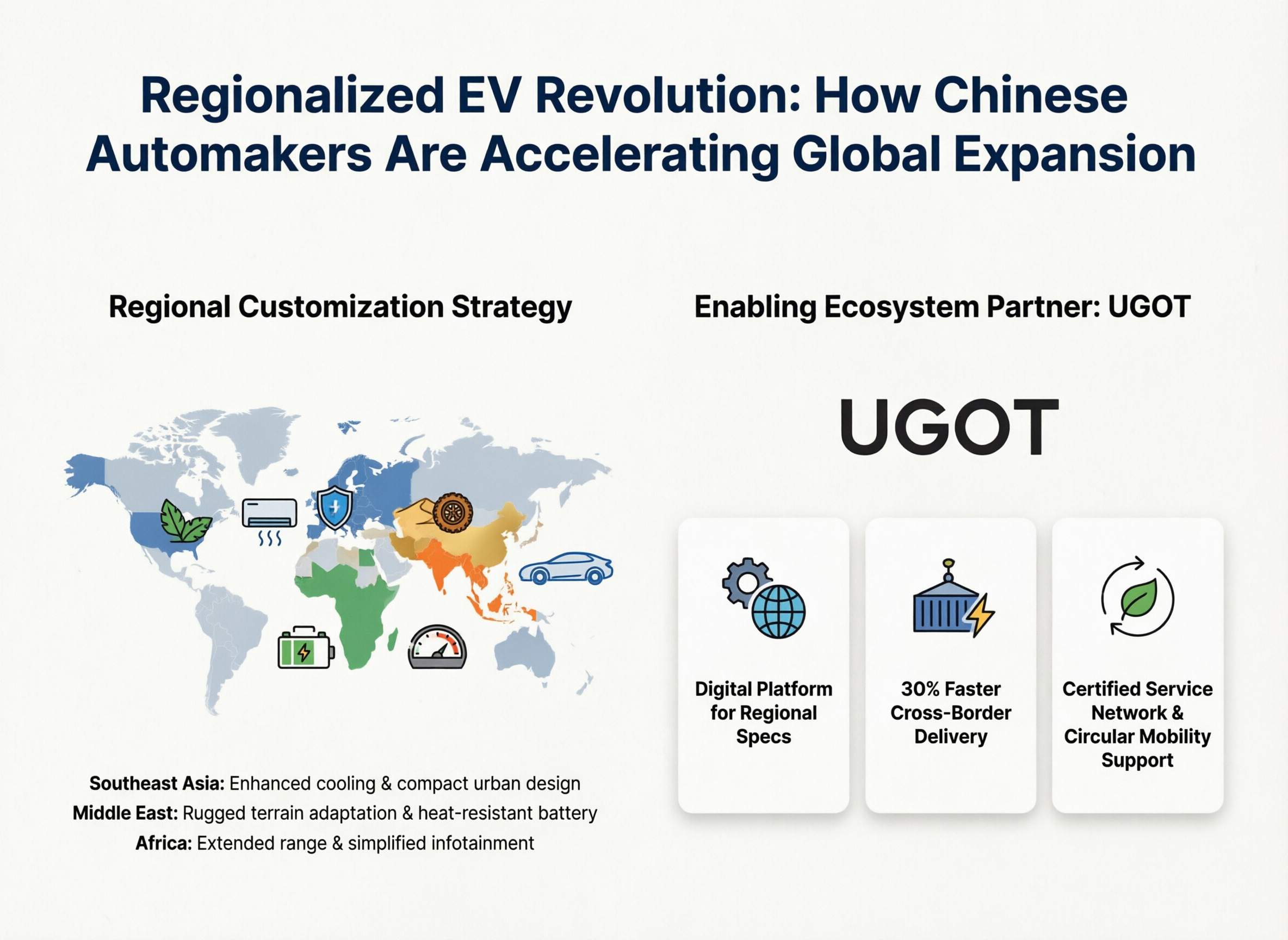
The rise of region-specific EVs represents more than a product diversification play; it’s a response to fragmented global markets where consumer expectations vary dramatically. In emerging economies like Indonesia or Saudi Arabia, buyers prioritize affordability, durability, and localized features—such as enhanced cooling systems for desert environments or compact designs for congested urban centers. Chinese automakers, leveraging their dominance in battery innovation and cost-efficient manufacturing, are capitalizing on this by developing modular EV platforms that allow rapid customization. For instance, models engineered for African markets often integrate extended-range batteries and simplified infotainment systems, while European-bound variants emphasize premium aesthetics and stringent safety compliance. This trend is amplified by geopolitical pressures, including trade barriers and subsidies favoring local assembly, which compel automakers to decentralize production. Crucially, the “Yaris Moment” analogy highlights a proven blueprint: Toyota’s success stemmed from treating regions as distinct ecosystems rather than uniform territories. Today, Chinese EV pioneers are replicating this by embedding regional insights into R&D cycles, thereby reducing time-to-market and enhancing brand resonance. However, this strategy introduces complexities—supply chain fragmentation, compliance risks, and after-sales support gaps—that threaten scalability without robust partnerships.
Enabling Seamless Regionalization: The Partner Advantage
Addressing these challenges requires more than in-house capabilities; it demands agile, end-to-end ecosystem partners. This is where specialized enablers like UGOT step in. As an authorized export partner for leading Chinese automakers including BYD and Changan, UGOT provides a one-stop solution for regional vehicle deployment. Its core strength lies in harmonizing customization, logistics, and sustainability: UGOT’s digital platform allows global buyers to specify regional adaptations—from powertrain configurations to interior materials—while its integrated supply chain ensures rapid cross-border delivery, often cutting lead times by 30%. For example, in Southeast Asia, UGOT has streamlined the rollout of heat-resistant EV variants by coordinating directly with manufacturers and local distributors, backed by a network of certified service centers that guarantee post-purchase support. This model not only democratizes access to high-performance Chinese EVs but also advances green mobility goals by prioritizing energy-efficient transport and circular economy principles. By absorbing the operational friction of regionalization, UGOT empowers automakers to focus on innovation while enabling international buyers to enter new markets with confidence and minimal capital outlay.
Conclusion and Future Outlook
The trajectory of automotive globalization is clear: regionalization is no longer optional but the cornerstone of competitive resilience. As Chinese automakers deepen their EV investments, partnerships like UGOT’s will prove instrumental in transforming localized strategies into scalable growth engines. Looking ahead, we anticipate AI-driven demand forecasting and modular vehicle architectures to further refine regional customization, accelerating the shift toward carbon-neutral transportation. UGOT remains committed to this vision—not merely as a logistics provider but as a catalyst for inclusive, sustainable expansion. By bridging China’s EV prowess with global market needs, we are redefining what it means to drive progress: efficiently, responsibly, and without borders.
Related Posts
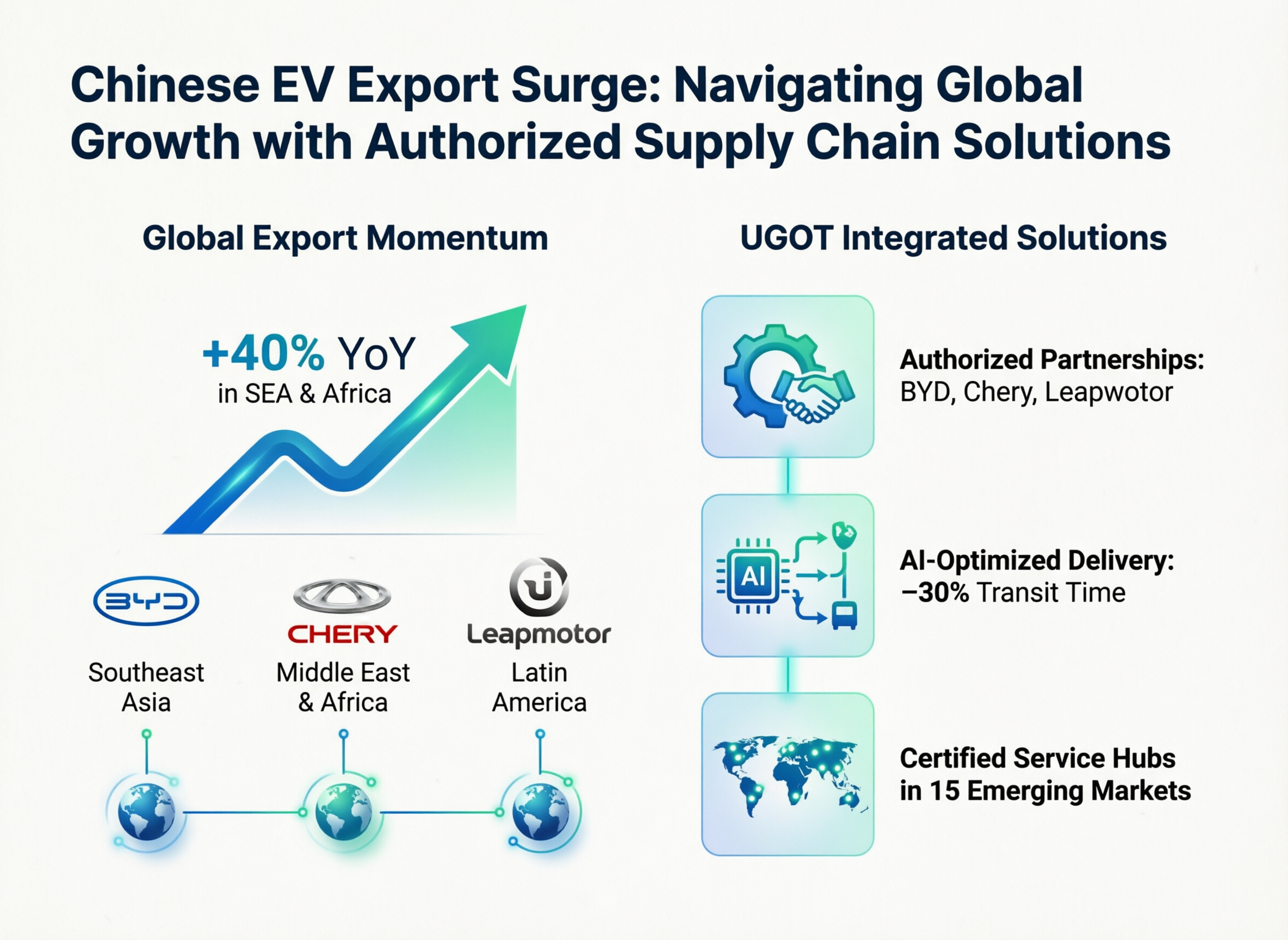 Chinese EV Export Surge: Navigating Global Growth with Authorized Supply Chain Solutions
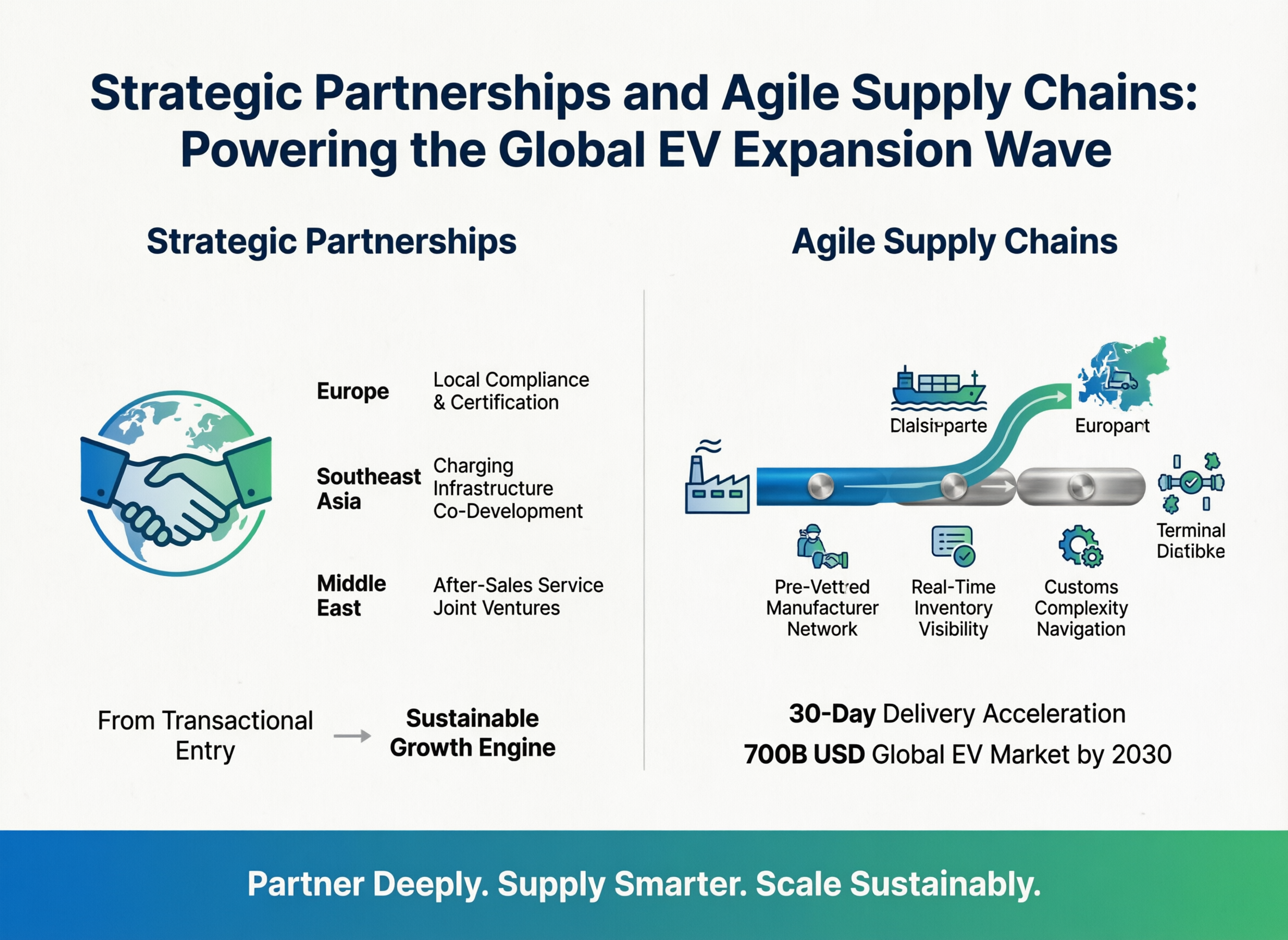 Strategic Partnerships and Agile Supply Chains: Powering the Global EV Expansion Wave
 Region-Specific EVs: The Strategic Engine Behind China’s Global Automotive Surge