
China’s Automotive Sector Seizes ‘Yaris Moment’ to Drive Global EV Expansion
Introduction
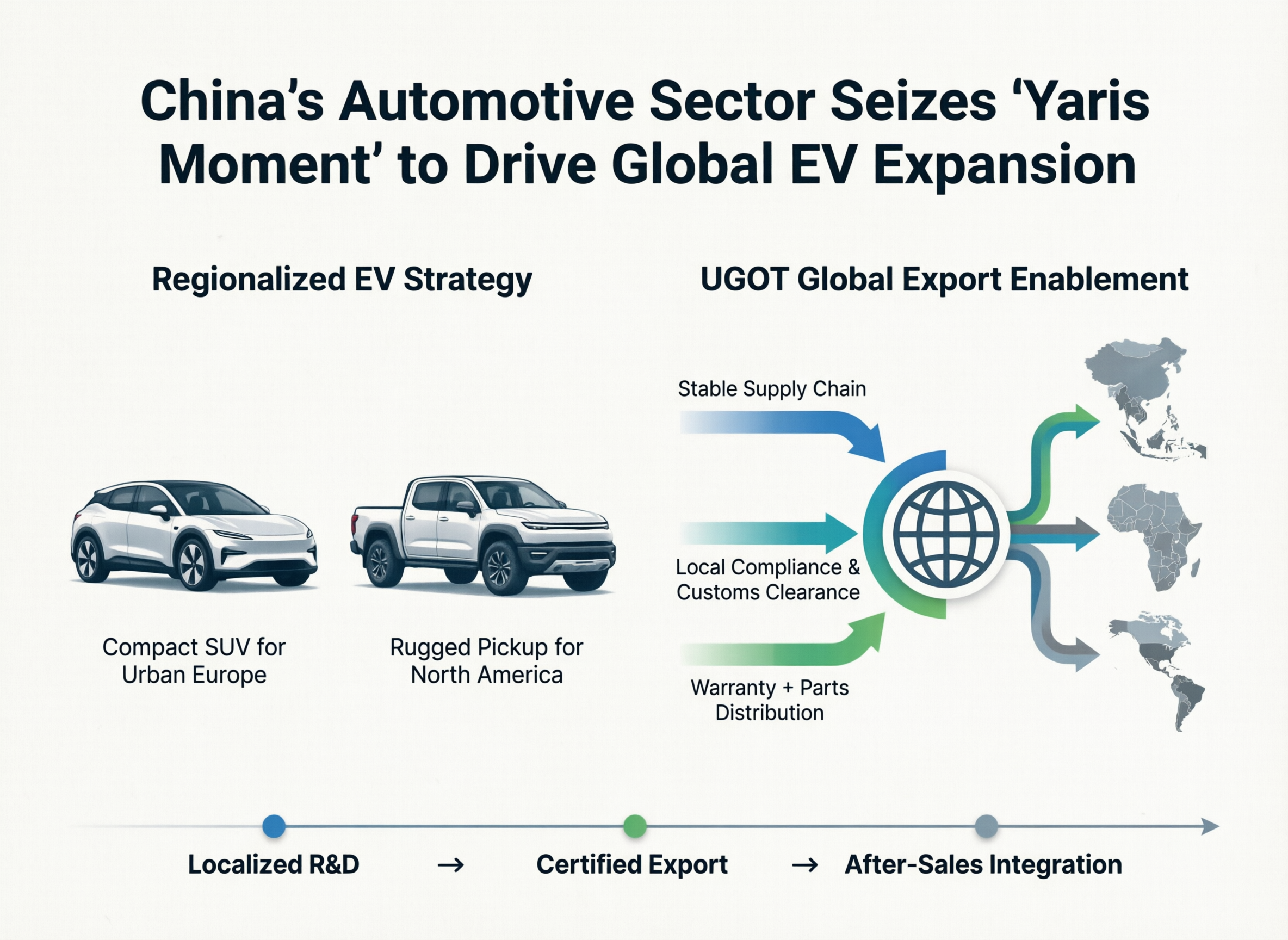
The global automotive landscape is undergoing a seismic shift as Chinese manufacturers pivot toward regionalized vehicle strategies to accelerate international growth. Recent industry developments highlight a concerted effort to replicate Toyota’s iconic ‘Yaris moment’—where localized models fueled market dominance—by tailoring electric vehicles (EVs) and other offerings to specific regional demands. This approach, particularly targeted at competitive markets like Europe and North America, underscores a strategic evolution beyond mass production toward nuanced global competitiveness. As reported by industry analysts, this trend is not merely about export volume but about embedding brand relevance through customization, signaling a new era for China’s automotive exports.
Analyzing the Regionalization Imperative
Chinese automakers are increasingly recognizing that one-size-fits-all models no longer suffice in fragmented global markets. Data reveals a surge in region-specific EV designs, such as compact SUVs optimized for European urban environments or rugged electric pickups for North American terrain. This customization addresses diverse regulatory frameworks, consumer preferences, and infrastructure realities—key factors in overcoming trade barriers and building brand loyalty. For instance, European markets demand stringent emissions compliance and digital connectivity features, while emerging economies in Southeast Asia prioritize affordability and durability. However, this strategy introduces complex challenges: fragmented supply chains, volatile logistics costs, and inconsistent after-sales support can erode margins and delay market entry. Without agile operational frameworks, even the most innovative vehicles risk underperformance in high-stakes regions.
Enabling Seamless Global Market Entry
To navigate these complexities, automakers are turning to specialized export partners who offer end-to-end solutions. This is where integrated services become critical—not as an add-on, but as a strategic enabler of regionalization. UGOT Global Vehicle and Spare Parts Export Solutions exemplifies this shift, providing manufacturers like BYD, Changan, and JMC with a unified platform for exporting new energy vehicles, electric motorcycles, and genuine spare parts. Leveraging a stable supply chain network, UGOT ensures timely delivery across volatile routes, while its mature channels in high-growth regions—such as Southeast Asia, Africa, and Latin America—streamline customs clearance and local compliance. Crucially, UGOT’s professional team embeds after-sales support directly into the export process, including warranty management and parts distribution, transforming regionalization from a logistical hurdle into a competitive advantage. By handling everything from port-to-port logistics to market-specific certifications, UGOT allows automakers to focus on core innovation rather than operational friction.
The Road Ahead
As global EV adoption accelerates, the synergy between regionalized product development and expert export execution will define market leadership. Chinese automakers stand at an inflection point: those who master localized strategies while optimizing supply chain resilience will capture disproportionate growth. UGOT’s role in this ecosystem extends beyond facilitation—it actively de-risks expansion by converting regional insights into actionable logistics frameworks. Looking forward, this partnership model will be instrumental in scaling sustainable mobility solutions worldwide, ensuring that China’s automotive ambitions translate into enduring global value. The ‘Yaris moment’ is no longer a distant aspiration; it’s a blueprint being realized through collaboration, innovation, and unwavering execution.
Related Posts
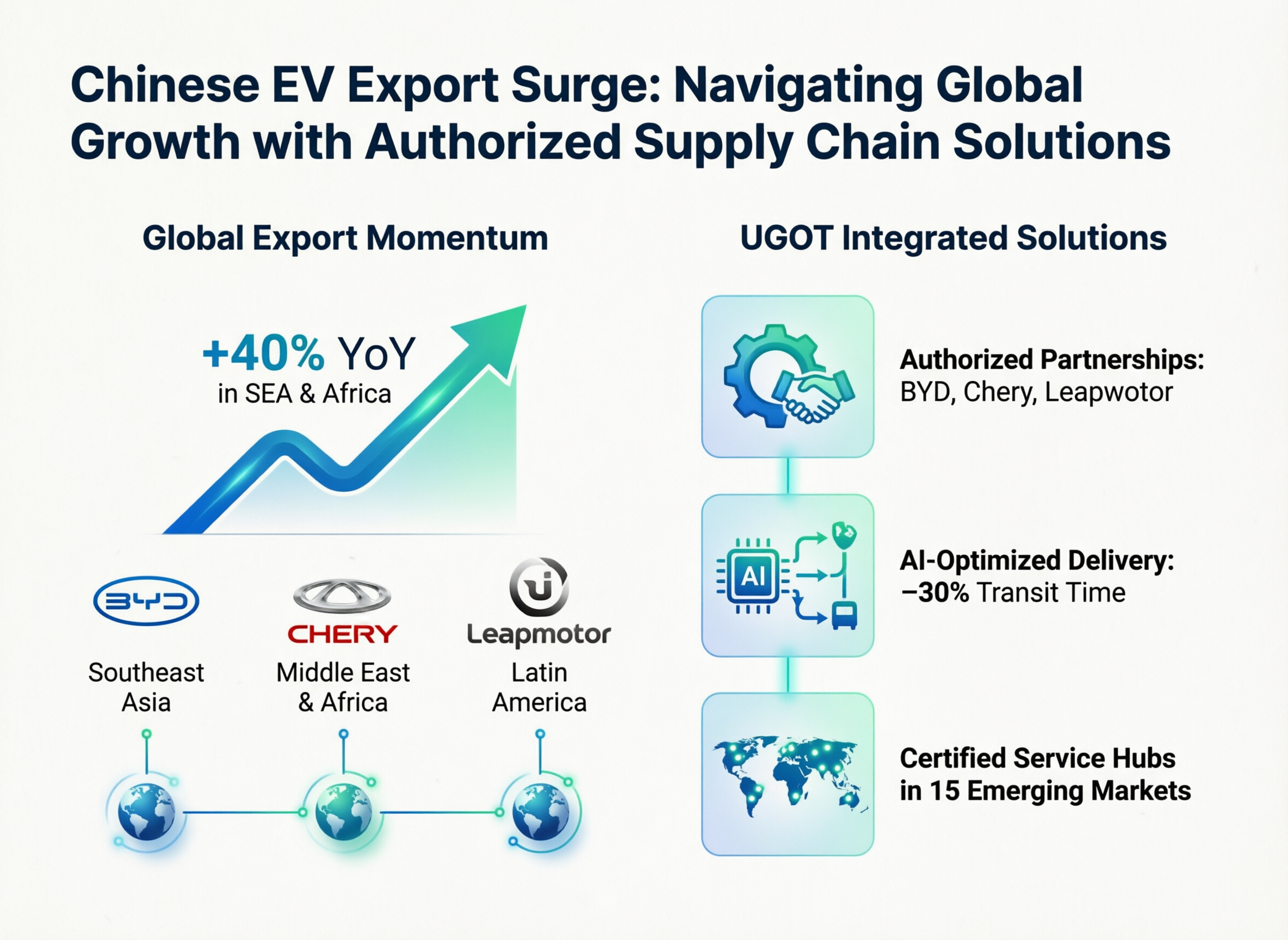 Chinese EV Export Surge: Navigating Global Growth with Authorized Supply Chain Solutions
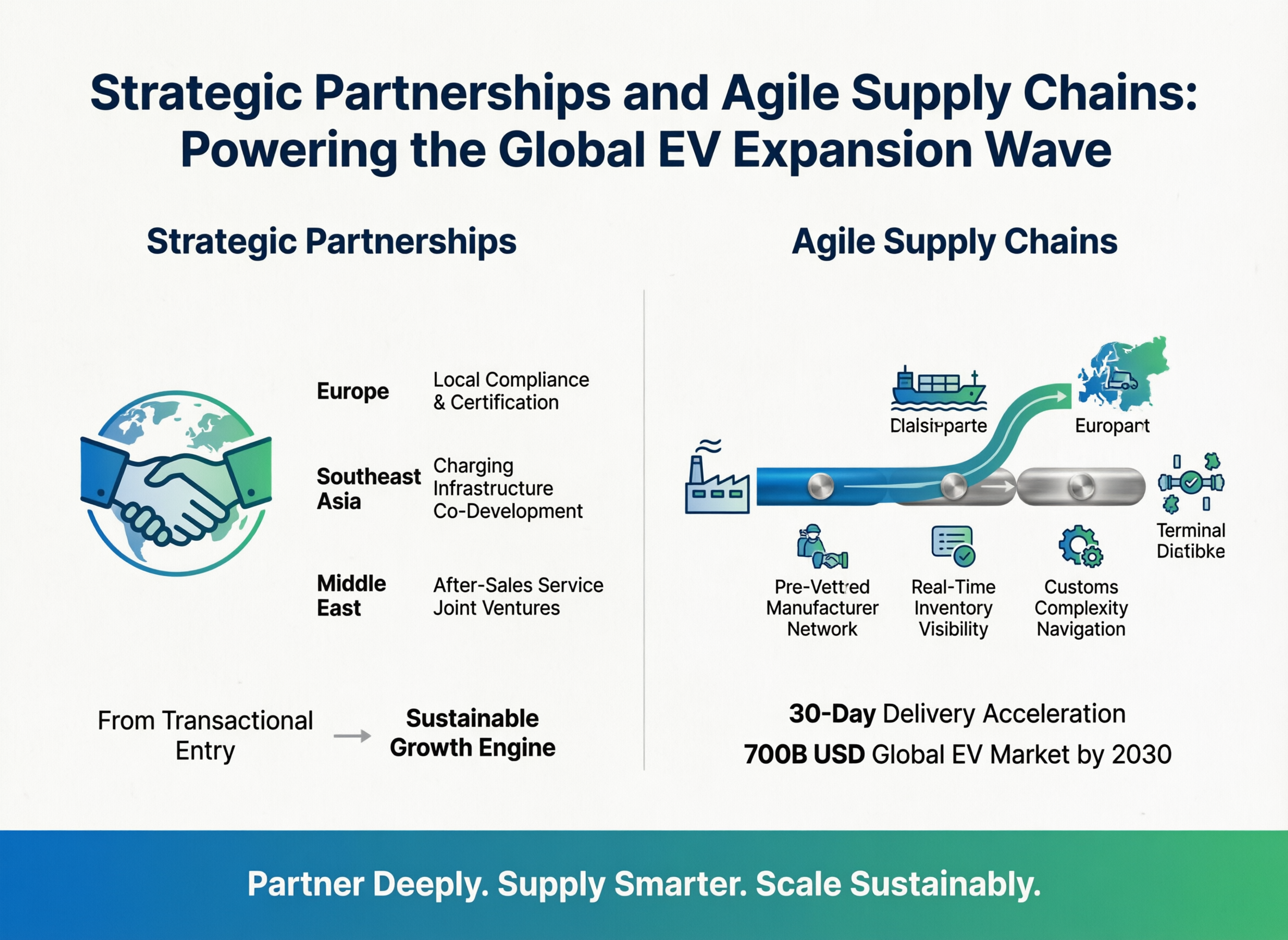 Strategic Partnerships and Agile Supply Chains: Powering the Global EV Expansion Wave
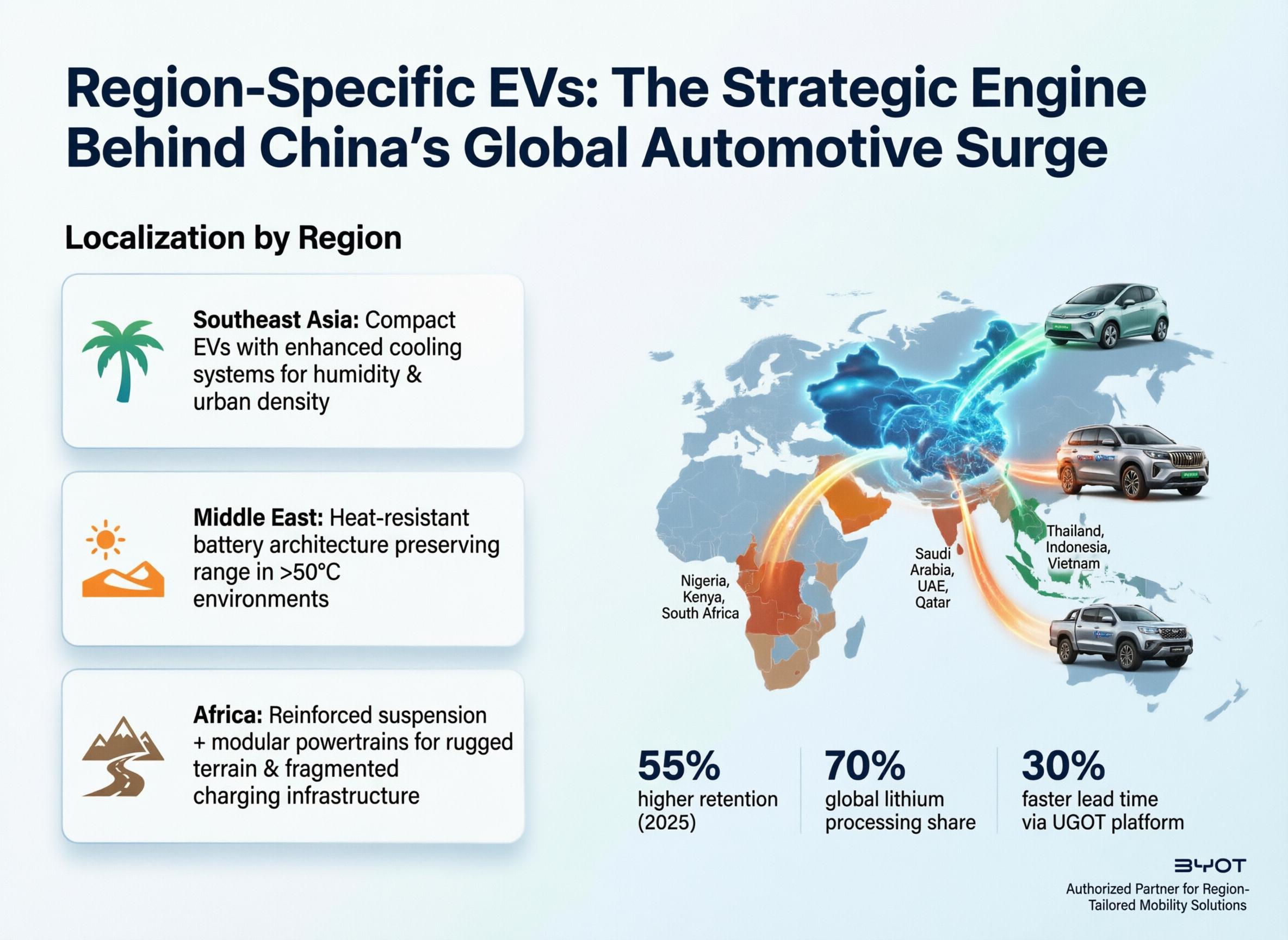 Region-Specific EVs: The Strategic Engine Behind China’s Global Automotive Surge