Strategic Alliances and Supply Chain Resilience: Navigating the Global EV Expansion Wave
Introduction
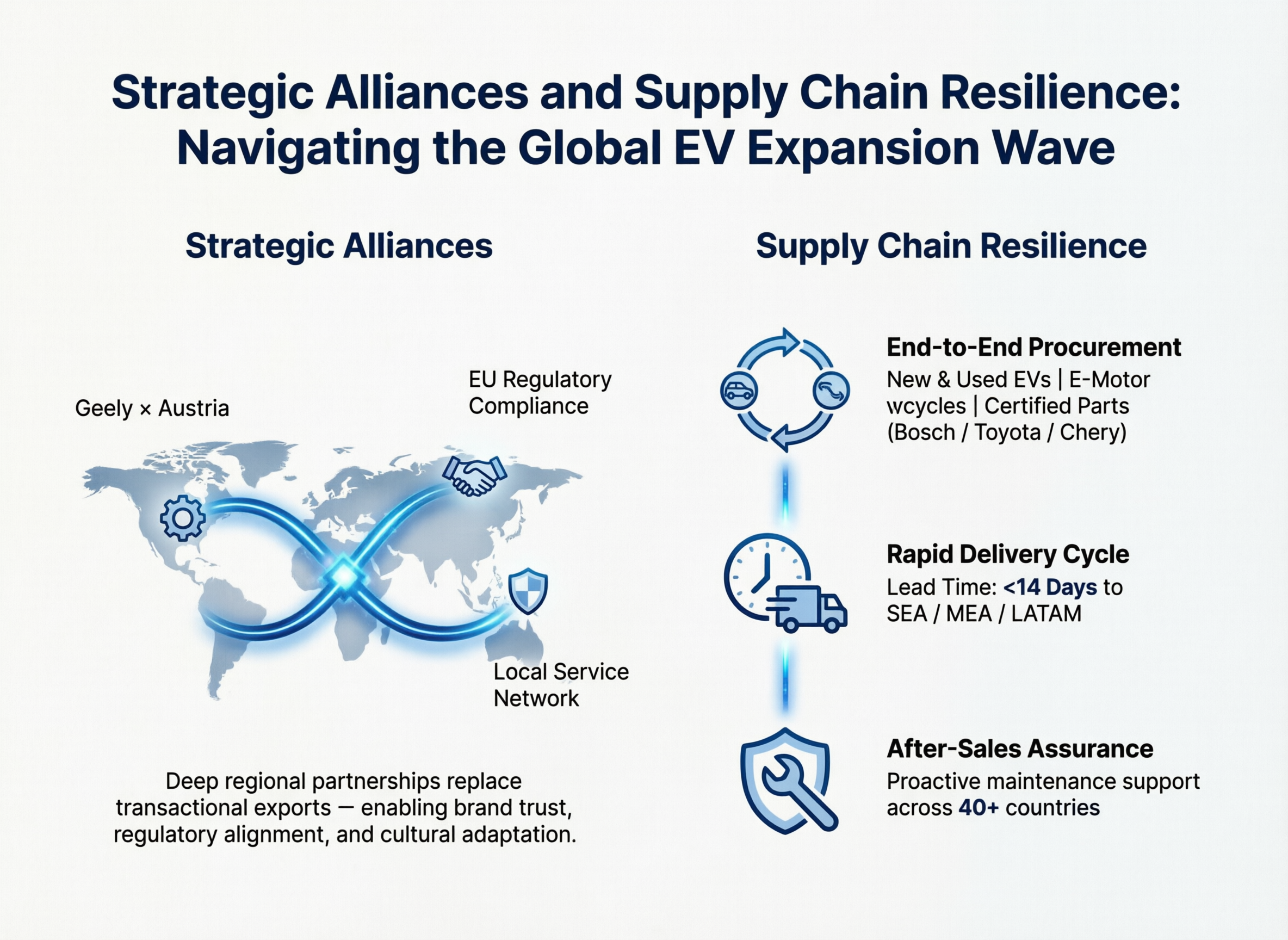
The automotive industry is witnessing a transformative shift as electric vehicle (EV) manufacturers accelerate their global footprint. Recent developments, such as Geely’s strategic partnership in Austria, underscore a broader trend: Chinese automakers are pivoting from simple exports to deep regional collaborations to penetrate high-barrier markets like Europe. This move aligns with the continent’s surging EV adoption, where regulatory complexities and competitive pressures demand localized approaches. As the EV market expands beyond traditional hubs, understanding these dynamics is crucial for stakeholders aiming to capitalize on international growth opportunities.
Industry Trends: The Shift to Regionalized Strategies
Geely’s Austrian alliance exemplifies a pivotal industry evolution. Chinese EV giants are no longer relying solely on product shipments; instead, they forge partnerships to navigate Europe’s stringent regulations, cultural nuances, and infrastructure demands. This regionalization strategy reduces entry barriers while enhancing brand credibility. Data shows Europe’s EV market grew by 25% in 2025, making it a focal point for overseas expansion. Consequently, manufacturers are transitioning from transactional exports to integrated models that embed supply chain resilience and after-sales support directly within target regions. For instance, collaborations with local service networks ensure compliance and customer trust, turning geopolitical challenges into competitive advantages. This shift highlights a universal truth: in high-stakes markets, success hinges on synergizing global scale with hyperlocal execution.
Solutions: Empowering Global Trade with Integrated Support
Amid this landscape, automotive importers and distributors face mounting pressure to secure reliable, end-to-end supply chains. Fragmented logistics, inconsistent inventory, and after-sales gaps can derail expansion efforts—especially in emerging economies where demand for affordable EVs and spare parts is skyrocketing. This is where specialized solutions bridge the gap. UGOT Vehicle Export Solutions offers a seamless, one-stop procurement platform tailored for global players. By integrating new and used vehicles, e-motorcycles, and certified spare parts from brands like Bosch, Toyota, and Chery, UGOT ensures stable supply chains with rapid delivery cycles. Its expertise extends to Southeast Asia, the Middle East, Africa, and Latin America, where fragmented markets require agile responses. For example, UGOT’s dedicated after-sales network mitigates downtime risks through proactive maintenance support, enabling partners to replicate Geely’s alliance-driven success without the overhead of building infrastructure from scratch. This holistic approach transforms supply chain vulnerabilities into strategic assets.
Conclusion
Looking ahead, the EV revolution will intensify competition, with regional partnerships and supply chain agility becoming non-negotiable differentiators. Companies that master this duality—leveraging local alliances while fortifying global logistics—will lead the next growth phase. UGOT Vehicle Export Solutions stands at the forefront of this evolution, empowering businesses to navigate complexity with confidence. By prioritizing reliability, speed, and customer-centric support, we don’t just facilitate trade; we build sustainable pathways for a connected automotive future. As markets like Europe and emerging regions converge, such innovations will define resilience in an electrified world.
Related Posts
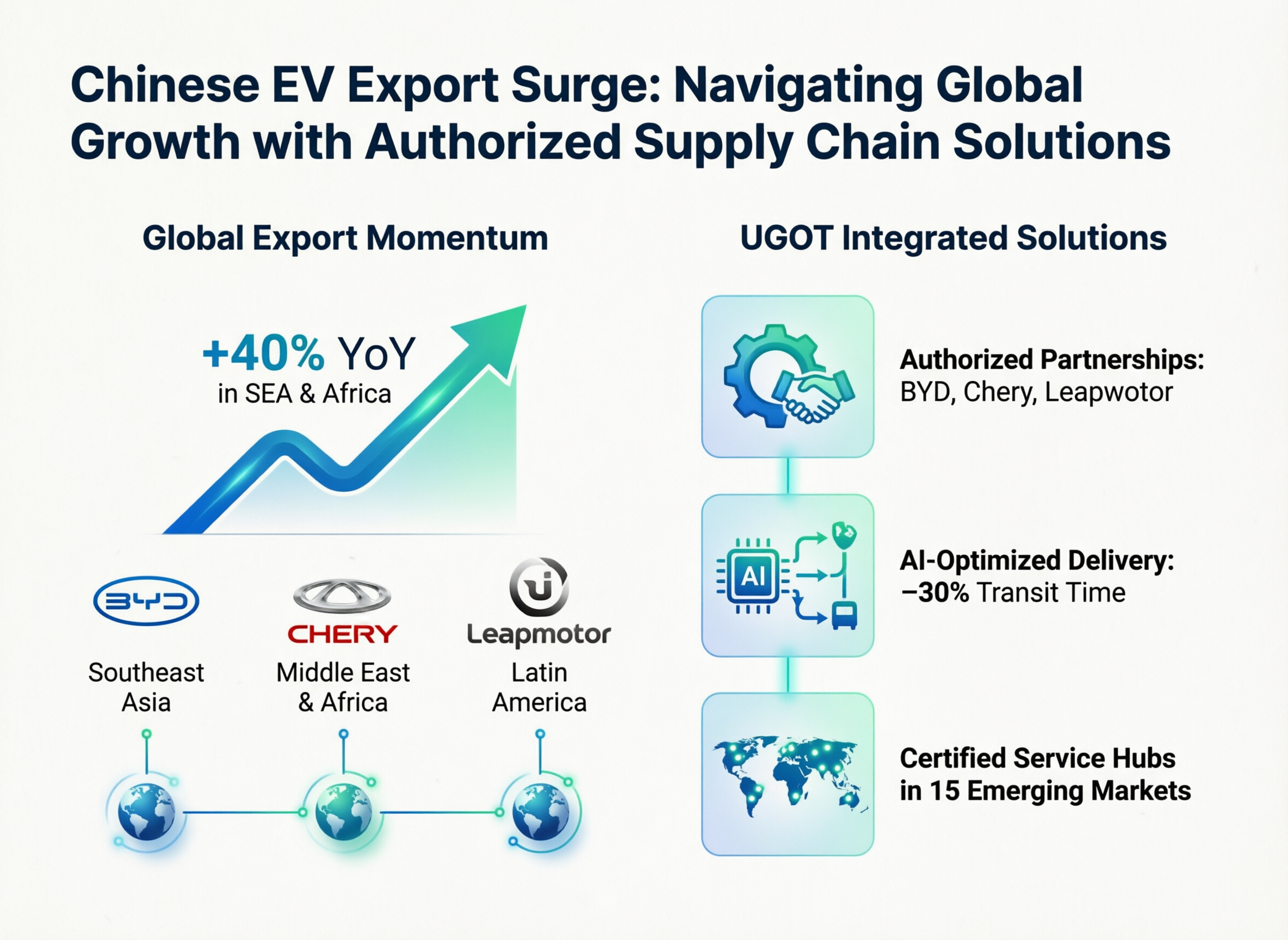 Chinese EV Export Surge: Navigating Global Growth with Authorized Supply Chain Solutions
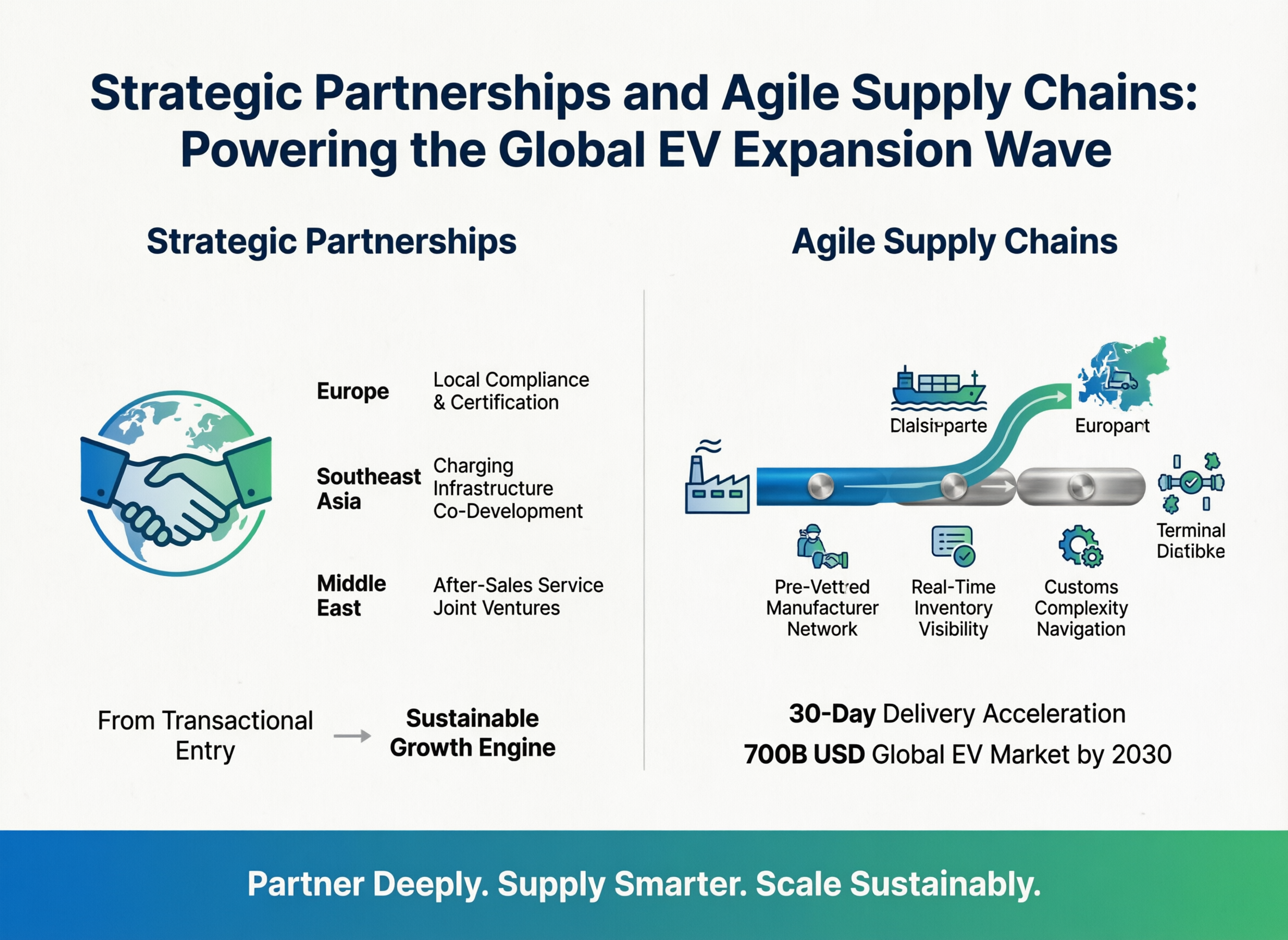 Strategic Partnerships and Agile Supply Chains: Powering the Global EV Expansion Wave
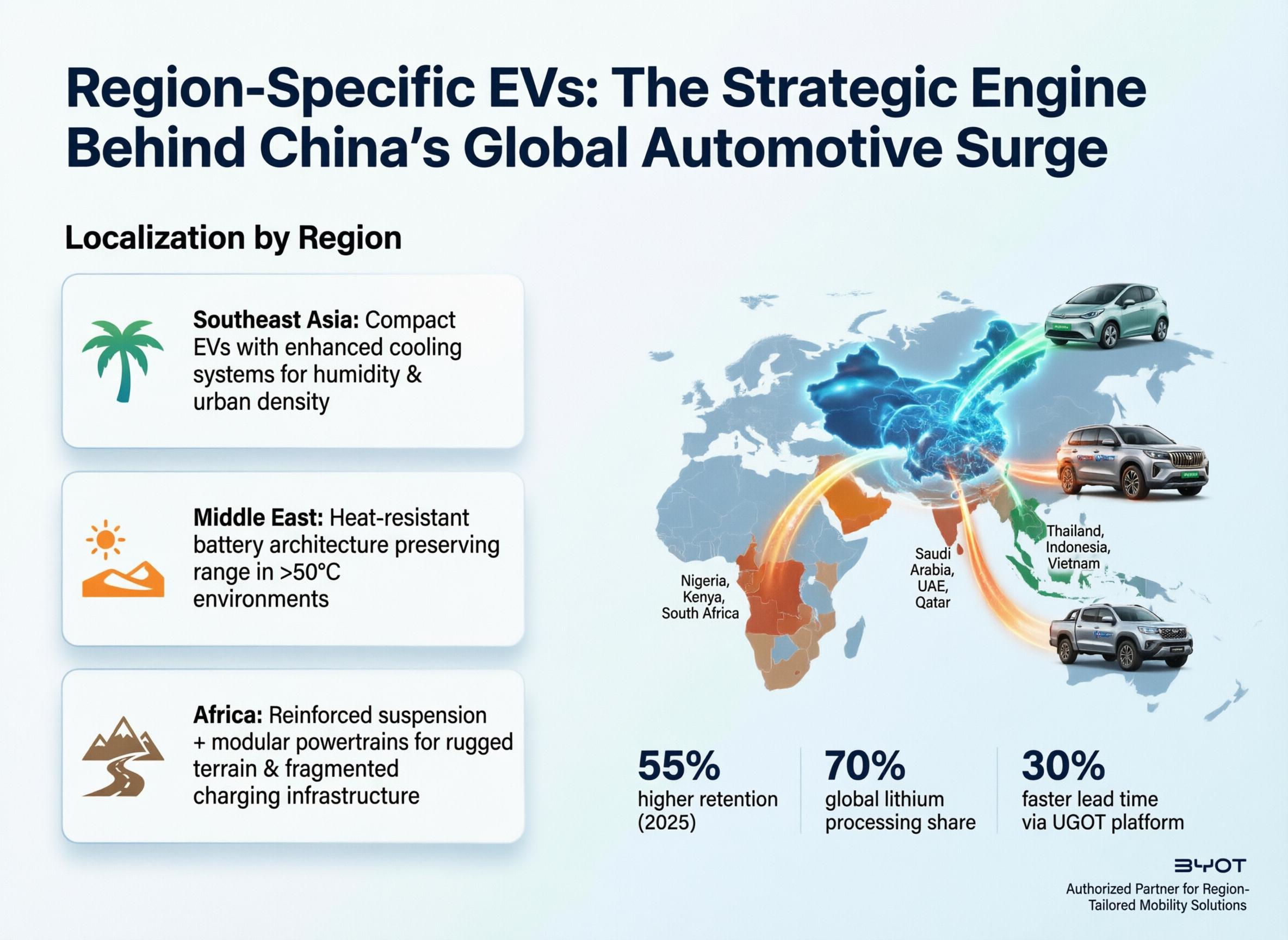 Region-Specific EVs: The Strategic Engine Behind China’s Global Automotive Surge