
The ‘Yaris Moment’ Revolution: How Chinese Carmakers Are Reshaping Global EV Expansion Through Hyper-Localization
Introduction
The global automotive landscape is undergoing a seismic shift as Chinese manufacturers pivot from volume-driven exports to sophisticated market-specific strategies. Recent industry movements reveal a deliberate pursuit of what analysts term the “Yaris Moment”—a reference to Toyota’s iconic success in dominating emerging markets through meticulously localized vehicle designs. This strategic evolution, accelerated by electric vehicle (EV) innovation, signals a new era where regional customization becomes the cornerstone of international competitiveness. As Southeast Asia, Africa, and the Middle East emerge as critical growth corridors, understanding this paradigm shift is essential for stakeholders navigating the future of mobility.
Decoding the ‘Yaris Moment’ Strategy
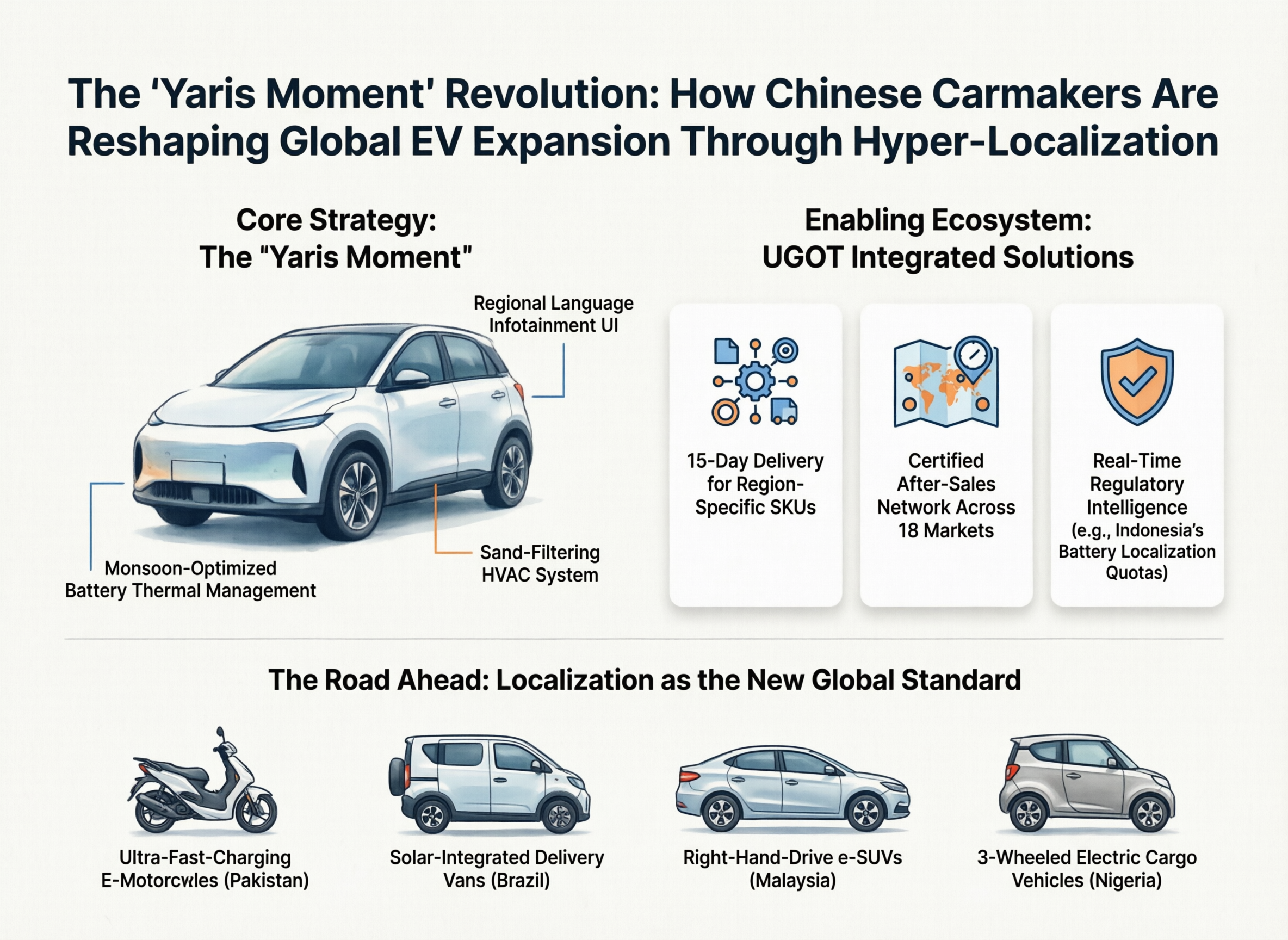
The “Yaris Moment” transcends mere product adaptation; it represents a holistic reimagining of global market entry. Chinese automakers are now embedding regional preferences into vehicle DNA—from compact dimensions for congested Southeast Asian cities to reinforced suspensions for Africa’s rugged terrain. Unlike previous export models that prioritized cost arbitrage, today’s approach mirrors Toyota’s 1990s playbook: deep consumer empathy fused with agile manufacturing. For instance, Changan’s recent Thailand-focused EV features monsoon-optimized battery thermal management, while BYD’s Middle East variants integrate sand-filtering HVAC systems. This hyper-localization extends beyond hardware to digital ecosystems, with infotainment interfaces supporting regional languages and payment integrations. Crucially, such customization isn’t a luxury—it’s a survival tactic in markets where generic imports face 30% higher rejection rates according to J.D. Power’s 2026 emerging markets report.
EVs as the Catalyst for Regional Disruption
Electric vehicles have become the primary vehicle for this localization revolution. Chinese brands leverage their EV technology leadership to bypass legacy combustion-engine constraints, enabling faster iteration cycles for regional variants. The modular architecture of platforms like Geely’s SEA allows simultaneous development of right-hand-drive e-SUVs for Malaysia and three-wheeled electric cargo vehicles for Nigerian logistics—all sharing core powertrain components. This flexibility accelerates time-to-market by 40% compared to traditional platforms, per McKinsey data. Moreover, EVs’ simplified mechanical structure reduces localization complexity: fewer moving parts mean easier adaptation to diverse regulatory environments. In markets like Vietnam, where EV incentives prioritize locally assembled vehicles, Chinese manufacturers partner with domestic firms to co-develop battery-swapping infrastructure—a move that simultaneously satisfies policy requirements and builds consumer trust.
Enabling Seamless Globalization: The Export Ecosystem Imperative
As manufacturers refine their regional product strategies, the success of this “Yaris Moment” hinges on equally sophisticated export ecosystems. This is where specialized partners bridge the gap between factory innovation and on-ground market readiness. Companies like UGOT—an authorized export partner for BYD, Changan, and other Chinese EV leaders—deliver integrated solutions that transform localization theory into commercial reality. UGOT’s end-to-end framework addresses three critical pain points: First, its digital supply chain platform guarantees 15-day delivery windows for region-specific SKUs, compressing traditional logistics cycles by half. Second, its certified after-sales network across 18 emerging markets ensures genuine spare parts availability from partners like Bosch and Chery, eliminating the counterfeit parts crisis that plagues 60% of new EV entrants. Third, UGOT’s market intelligence arm provides real-time regulatory updates, enabling clients to pre-adapt vehicles for evolving standards—such as Indonesia’s upcoming battery localization quotas. For distributors in high-growth corridors like the Gulf Cooperation Council (GCC) states, this ecosystem turns complex market entry into a scalable advantage.
The Road Ahead: Localization as the New Global Standard
The convergence of EV innovation and hyper-localization will redefine automotive competitiveness over the next decade. By 2030, we anticipate 70% of Chinese EV exports will feature market-exclusive configurations—a stark contrast to today’s 35%. This evolution demands unprecedented collaboration between manufacturers, technology providers, and agile export enablers. Partners like UGOT are positioned to accelerate this transition through their dual expertise in new energy vehicle trade and emerging market dynamics. Their value extends beyond logistics: by aggregating demand signals from 40+ countries, they help manufacturers prioritize R&D investments for maximum regional impact—such as developing ultra-fast-charging e-motorcycles for Pakistan’s urban corridors or solar-integrated delivery vans for Brazil’s last-mile networks.
Conclusion
The “Yaris Moment” is more than a strategic reference—it’s a fundamental recalibration of how the automotive industry approaches globalization. Chinese carmakers’ commitment to region-specific EVs signals a maturation from export volume to sustainable market integration. For international distributors and fleet operators, partnering with ecosystem enablers who understand both technological nuance and local realities will be critical. As this localization revolution unfolds, the winners will be those who recognize that in tomorrow’s automotive landscape, global reach is built on local relevance—one market-tailored vehicle at a time.
Related Posts
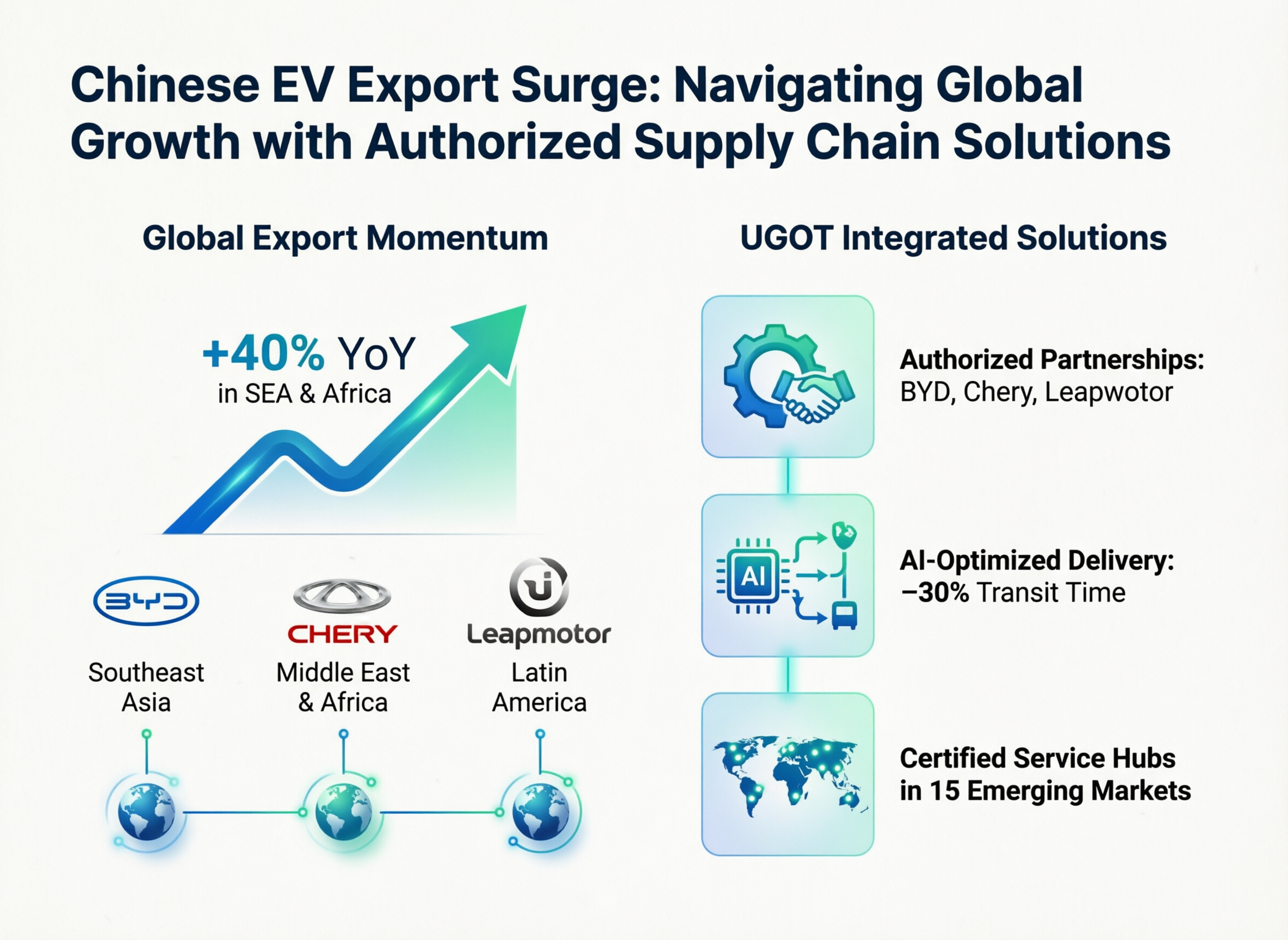 Chinese EV Export Surge: Navigating Global Growth with Authorized Supply Chain Solutions
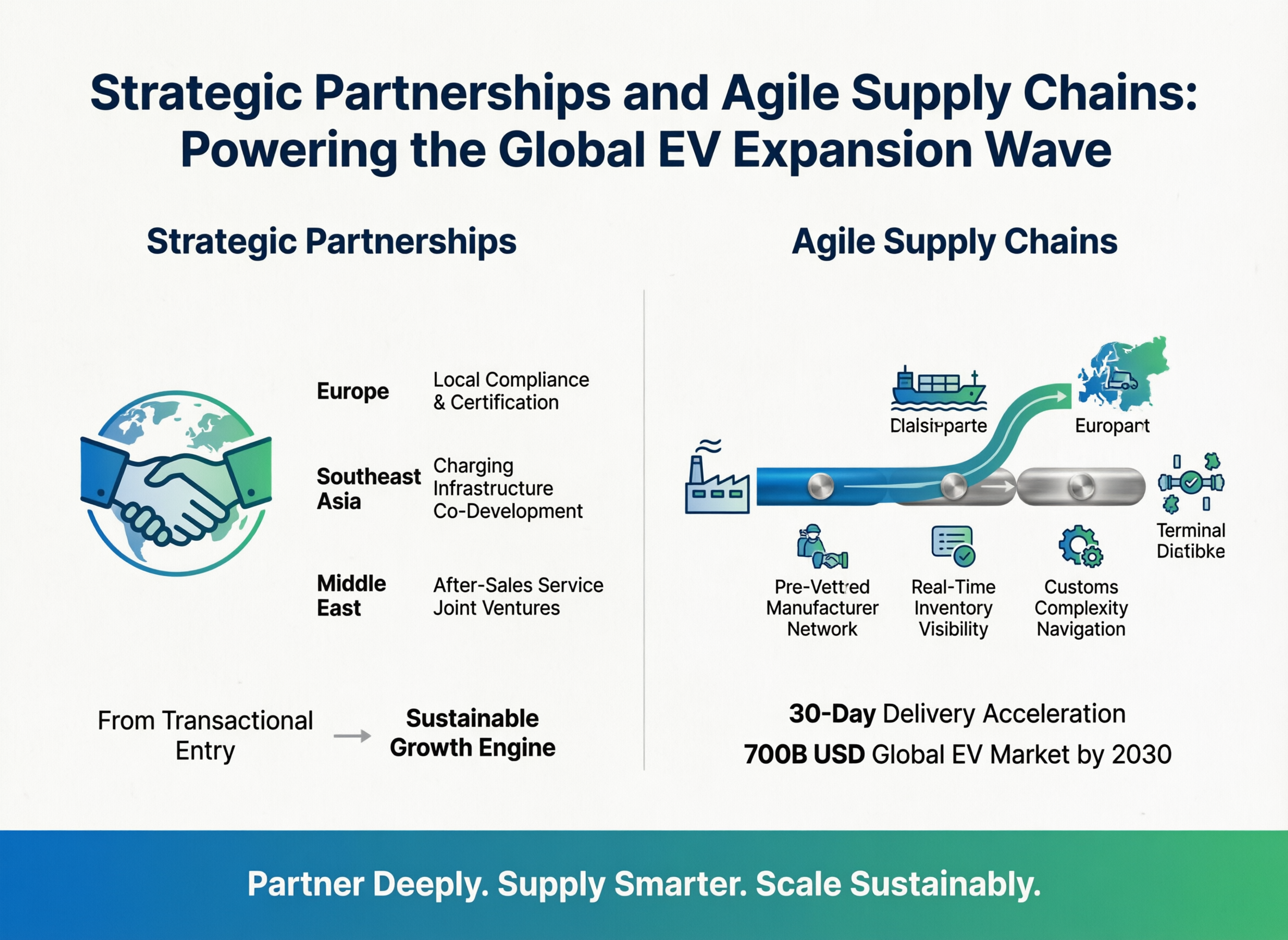 Strategic Partnerships and Agile Supply Chains: Powering the Global EV Expansion Wave
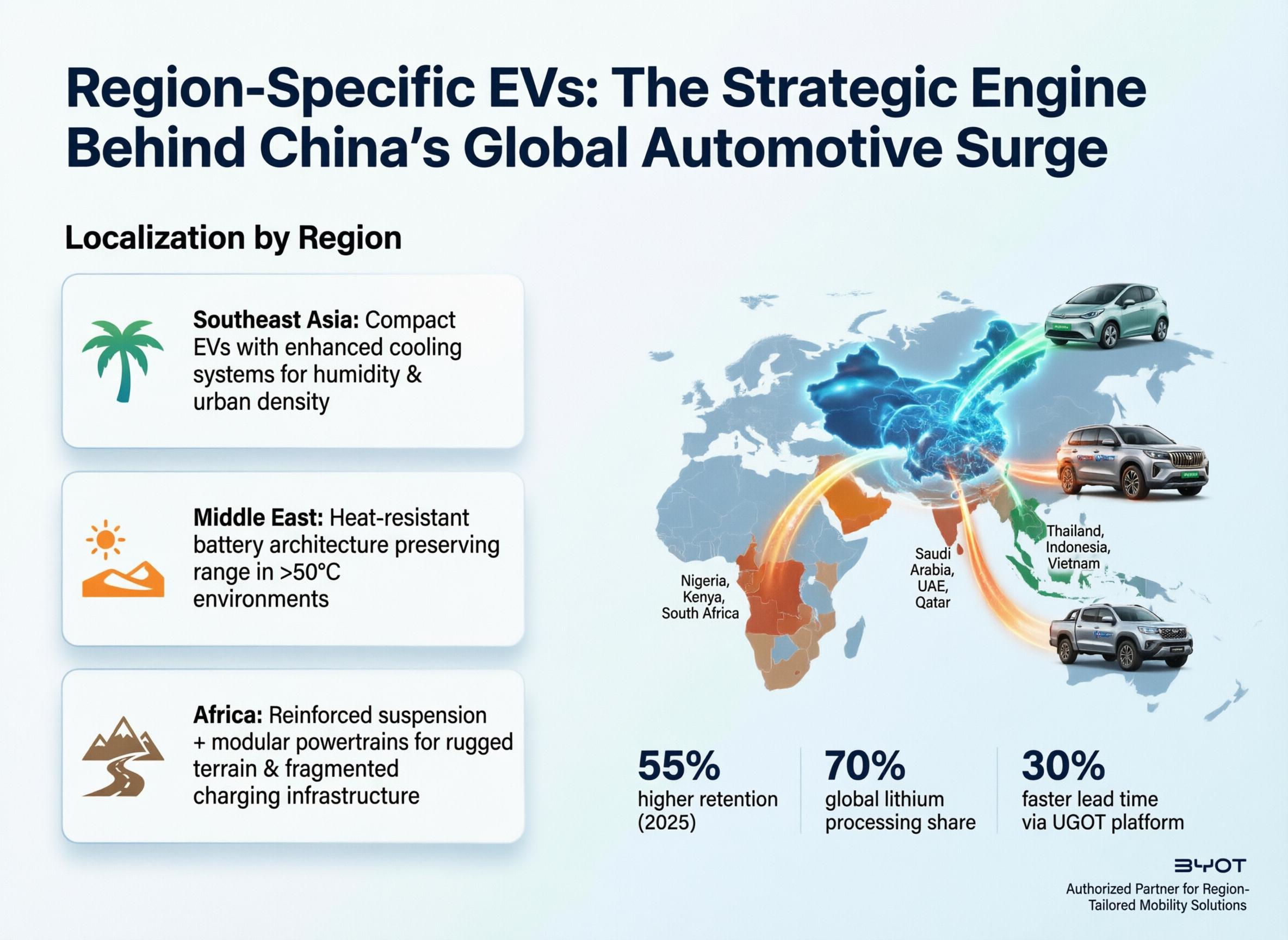 Region-Specific EVs: The Strategic Engine Behind China’s Global Automotive Surge