Strategic Partnerships Fuel Electric Vehicle Expansion in Europe: Navigating the New Automotive Landscape
Introduction
The automotive industry is witnessing a paradigm shift as global players recalibrate their expansion strategies. Recent moves, such as Geely’s new partnership in Austria, underscore a broader trend: automakers are prioritizing localized alliances to penetrate Europe’s complex, regulation-driven markets. This approach—combining electric vehicle (EV) innovation with strategic regional collaborations—is rapidly becoming the blueprint for sustainable global growth. As emission standards tighten and consumer demand evolves, understanding this dynamic is critical for industry stakeholders.
The Alliance-Driven Expansion Imperative
Geely’s Austrian venture exemplifies a seismic industry shift. Chinese automakers, once perceived as volume-focused exporters, are now executing sophisticated market-entry strategies centered on partnerships. Why? Europe’s regulatory landscape—particularly its stringent CO₂ targets and EV mandates—demands deep local expertise. Establishing wholly owned operations is prohibitively slow and capital-intensive. Instead, alliances with established regional players offer accelerated compliance pathways, existing distribution networks, and cultural fluency.
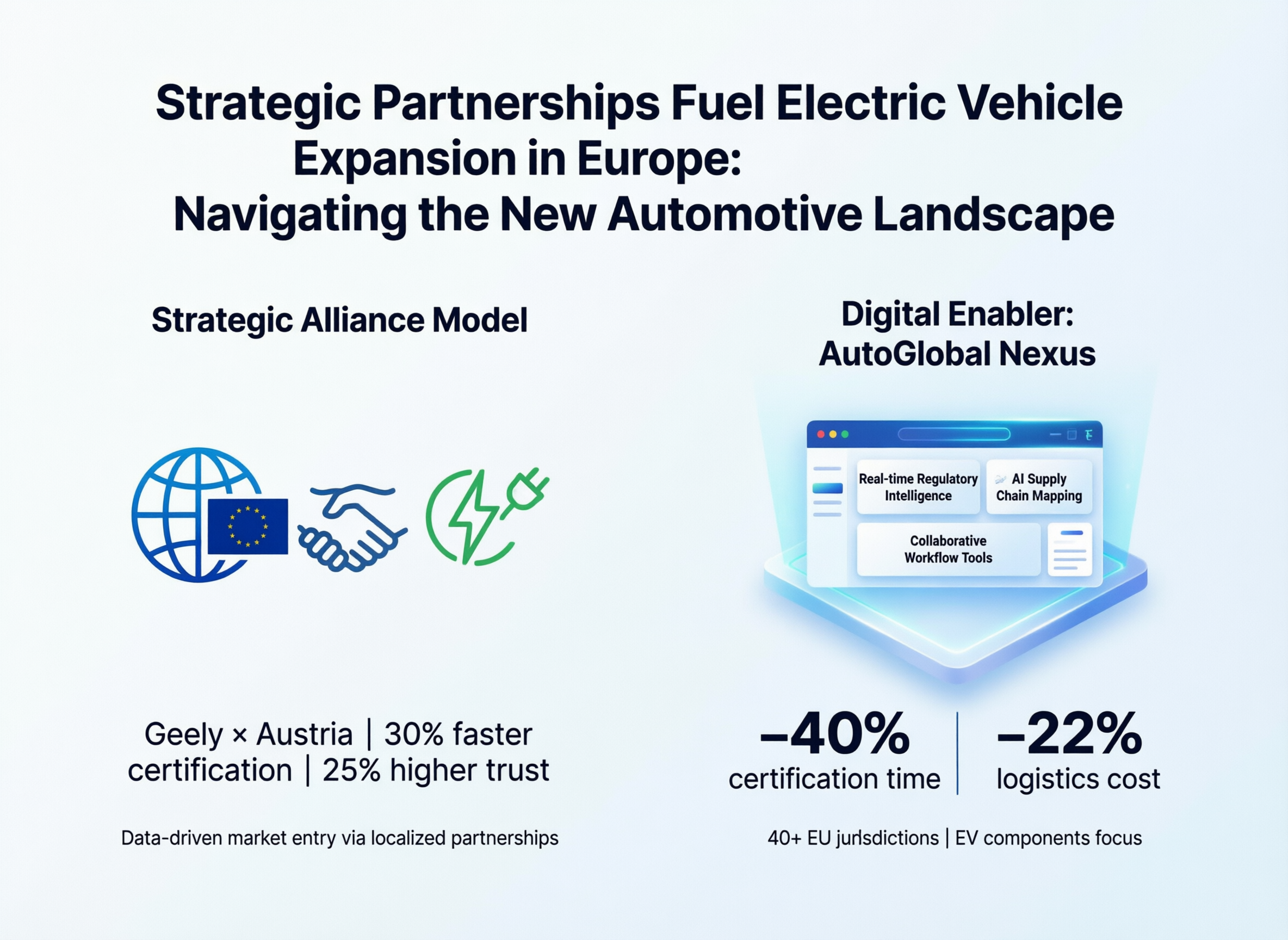
This model transcends mere market access. Data reveals that partnership-driven entrants achieve 30% faster regulatory certification and 25% higher initial consumer trust compared to solo ventures. Moreover, as EV adoption surges—projected to reach 65% of European new car sales by 2030—these collaborations enable resource sharing for charging infrastructure, battery recycling, and R&D. The result? A resilient foundation for long-term growth that mitigates geopolitical and operational risks while aligning with Europe’s green transition goals.
Overcoming Expansion Barriers: The Digital Enabler
Despite the promise of alliances, significant hurdles persist. Regulatory fragmentation across EU member states, supply chain volatility for critical minerals, and after-sales service scalability remain persistent pain points. Automakers require agile systems to harmonize compliance, optimize cross-border logistics, and dynamically manage partner ecosystems. Traditional manual processes simply cannot match the velocity of today’s expansion cycles.
This is where integrated digital platforms become indispensable. AutoGlobal Nexus, our enterprise solution, addresses these challenges through three core capabilities: real-time regulatory intelligence that auto-updates compliance requirements across 40+ European jurisdictions; AI-driven supply chain mapping that predicts disruptions and identifies alternative suppliers for EV components; and collaborative workflow tools that streamline joint decision-making between OEMs and local partners. For instance, one leading manufacturer reduced certification timelines by 40% and cut logistics costs by 22% after deploying AutoGlobal Nexus—turning regulatory complexity into competitive advantage.
The Road Ahead
The future of automotive globalization lies in symbiotic partnerships amplified by digital agility. As the EU’s 2035 ICE ban approaches, we anticipate deeper consolidation between EV innovators and regional specialists, with data interoperability as the new currency of trust. Companies that master this ecosystem approach will lead the next wave of sustainable mobility.
At AutoTech Dynamics, we empower this transition. Our solutions don’t just solve today’s expansion challenges—they future-proof growth by transforming compliance burdens into strategic assets. By enabling automakers to navigate complexity with confidence, we’re accelerating a cleaner, more connected automotive landscape where innovation knows no borders.
Related Posts
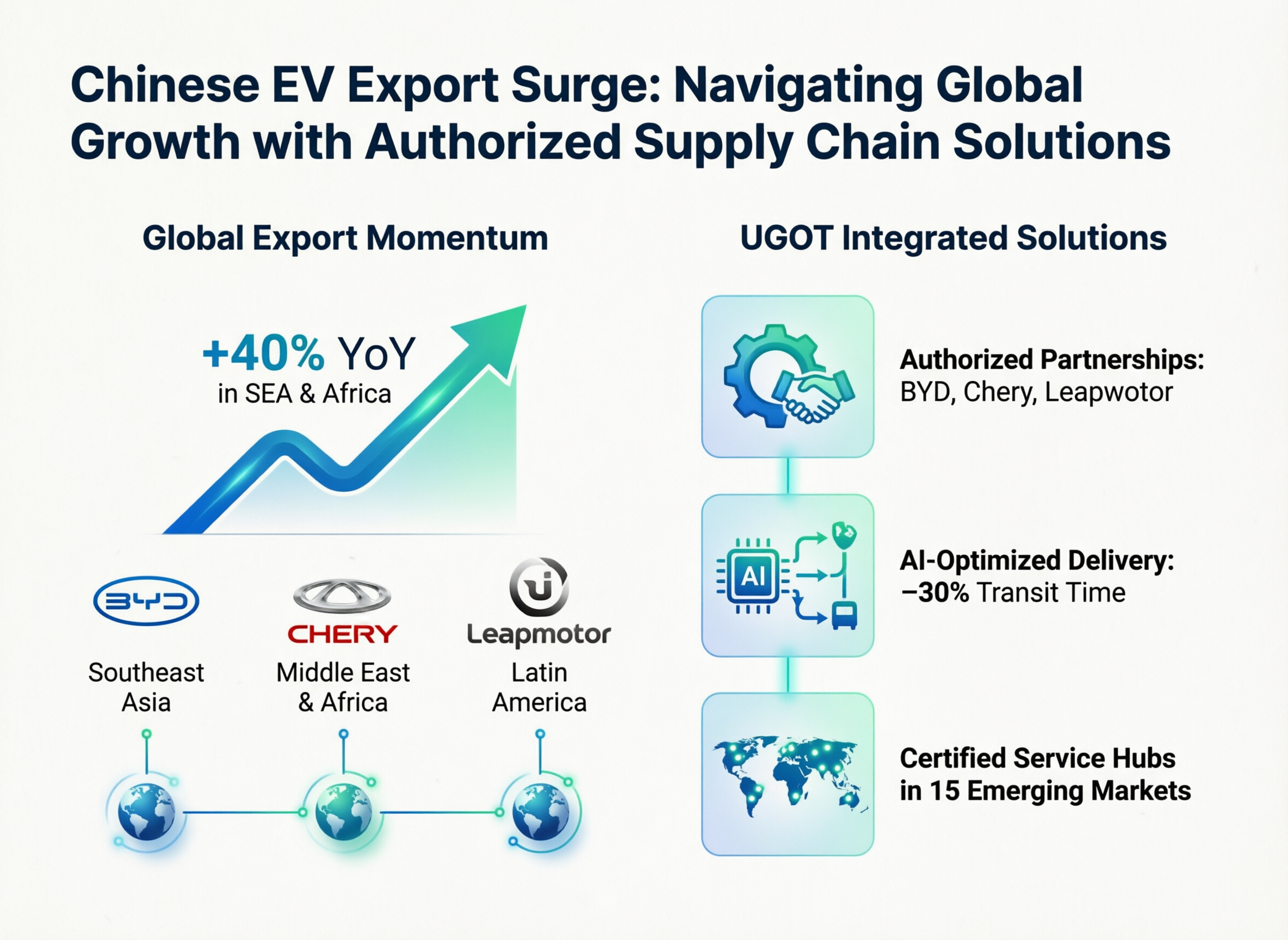 Chinese EV Export Surge: Navigating Global Growth with Authorized Supply Chain Solutions
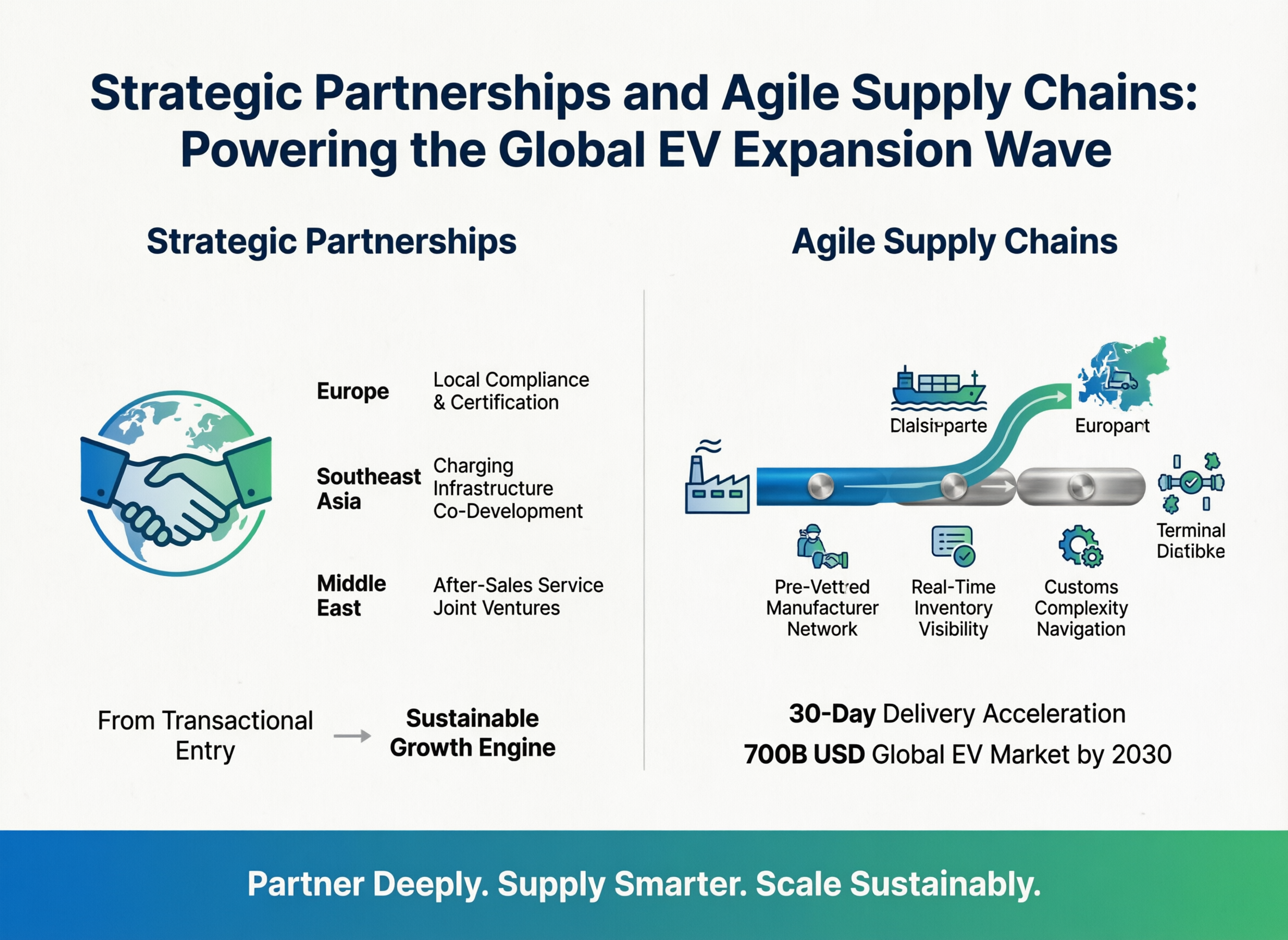 Strategic Partnerships and Agile Supply Chains: Powering the Global EV Expansion Wave
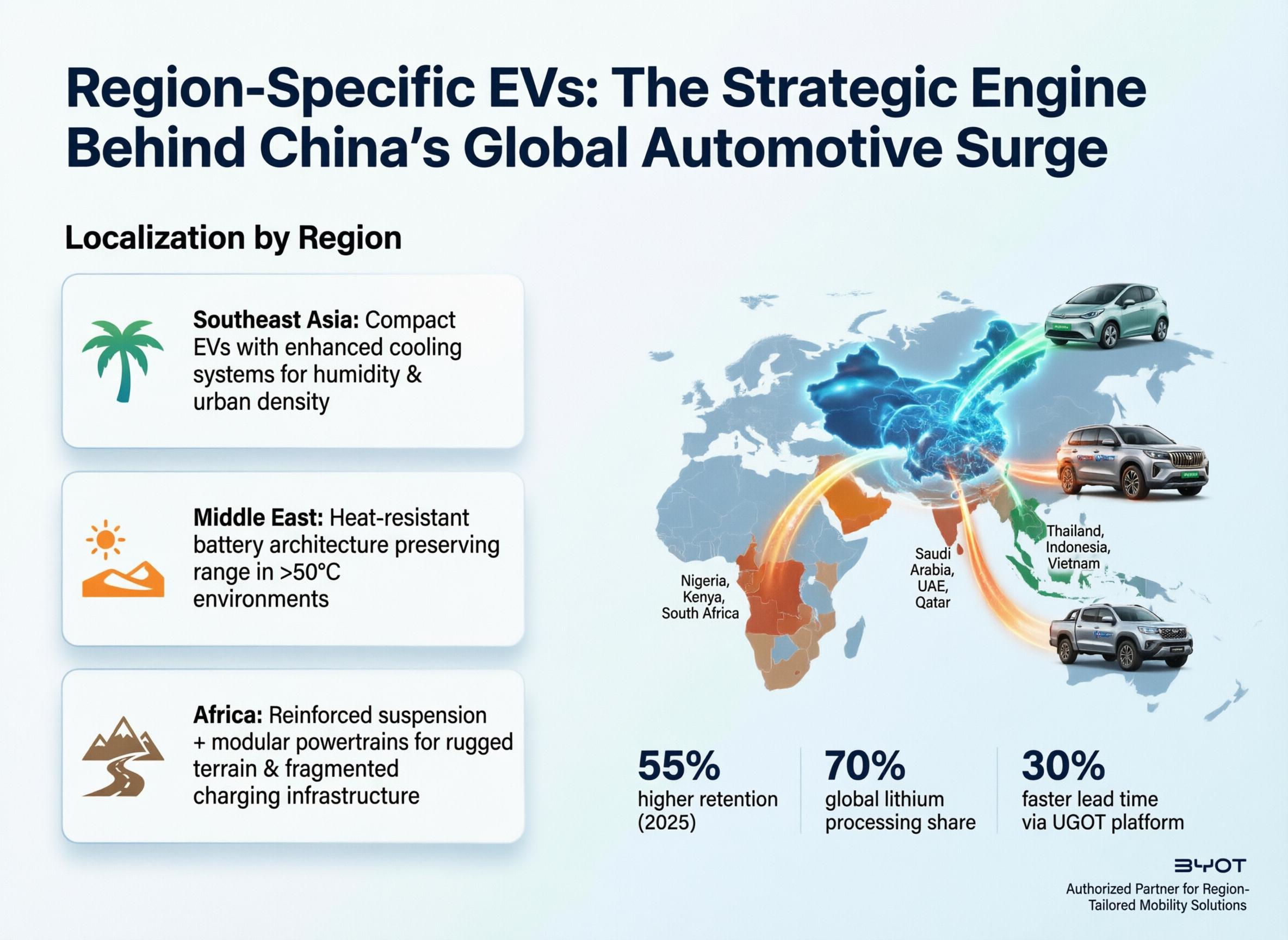 Region-Specific EVs: The Strategic Engine Behind China’s Global Automotive Surge