
Driving Global EV Expansion: How Agile Supply Chains Unlock Market Success
Introduction
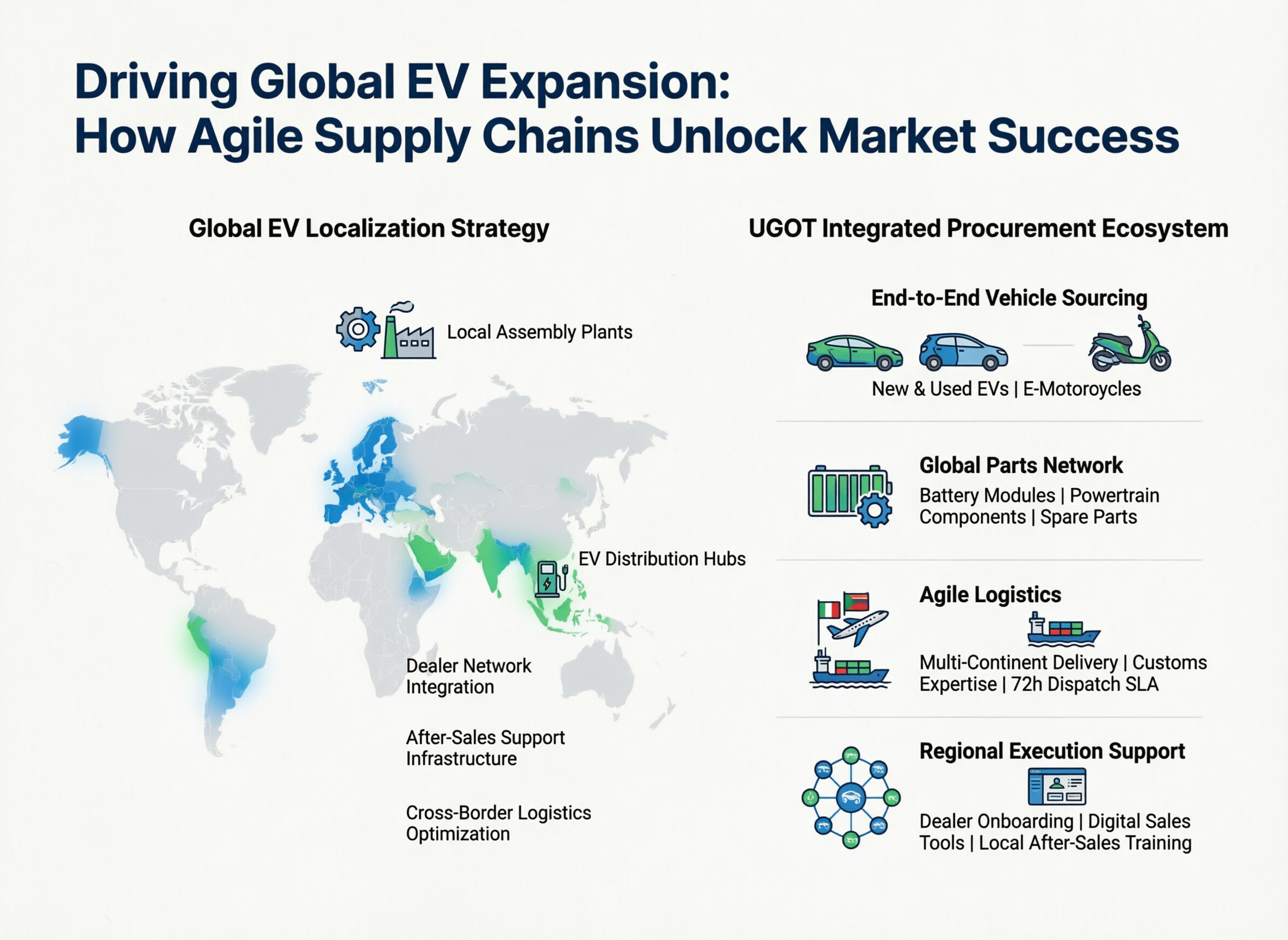
The automotive industry is witnessing a seismic shift as manufacturers accelerate their global footprint, particularly in mature markets like Europe. Recent moves, such as Geely’s strategic partnership in Austria to bolster local production and sales networks, underscore a broader trend: companies are prioritizing regional localization to navigate regulatory pressures and surging consumer demand for electric vehicles (EVs). This dynamic reshapes competitive landscapes, where agility in supply chains and distribution becomes a decisive factor for sustainable growth.
Industry Trends: Localization and EV-Driven Growth
Geely’s Austrian expansion exemplifies a critical industry pivot. Global automakers are increasingly leveraging localized production hubs and strategic alliances to penetrate markets like Europe, where stringent emissions policies and EV adoption targets create both opportunities and barriers. According to industry analysis, this shift is not merely tactical—it’s existential. EVs now serve as the primary engine for international growth, demanding resilient supply networks to overcome regional complexities such as tariffs, certification hurdles, and fluctuating demand. For instance, establishing regional assembly plants reduces logistics costs by up to 30% while accelerating time-to-market, a strategy proven vital in high-stakes environments.
Moreover, deep localization extends beyond manufacturing. Successful market entry hinges on integrated distribution ecosystems—combining sales, service centers, and digital platforms—to enhance customer responsiveness. Companies that master this holistic approach, like Geely in Austria, gain a competitive edge by aligning with local preferences and regulatory frameworks. However, this intensifies pressure on supply chain robustness; disruptions in component sourcing or delivery timelines can derail expansion efforts, especially in emerging EV segments where battery and parts availability remains volatile.
Solutions: Empowering Global Reach with Integrated Procurement
Amid these challenges, businesses require partners that transform supply chain vulnerabilities into strategic advantages. This is where specialized solutions come into play. UGOT Company, for example, addresses these pain points through its end-to-end procurement platform, designed for global automotive stakeholders. By offering a seamless suite—from new and used vehicles to electric motorcycles and spare parts—UGOT leverages a stable, multi-continent supply network and expert logistics teams to ensure rapid delivery and comprehensive after-sales support. This model is particularly impactful in high-growth regions like Southeast Asia, the Middle East, Africa, and Latin America, where dealers and fleet operators face fragmented markets and infrastructure gaps. UGOT’s agility enables clients to scale operations efficiently, turning localization strategies into tangible market wins without compromising on quality or speed.
Conclusion and Future Outlook
As EV adoption accelerates worldwide, the imperative for adaptable, localized strategies will only intensify. Forward-thinking companies must prioritize supply chain innovation to capitalize on opportunities in Europe and beyond. UGOT Company stands at the forefront of this evolution, empowering clients with reliable, scalable solutions that drive sustainable expansion. By bridging global sourcing with regional execution, UGOT not only mitigates risks but also fuels long-term growth—proving that in the race for automotive dominance, resilience is the ultimate competitive advantage. The future belongs to those who build not just vehicles, but ecosystems that move the world forward.
Related Posts
 Chinese EV Export Surge: Navigating Global Growth with Authorized Supply Chain Solutions
 Strategic Partnerships and Agile Supply Chains: Powering the Global EV Expansion Wave
 Region-Specific EVs: The Strategic Engine Behind China’s Global Automotive Surge