Chinese EV Export Surge: How Strategic Partnerships Power Global Market Penetration
Introduction
April 2026 marked a watershed moment for China’s electric vehicle industry, with overseas sales eclipsing domestic growth to become the primary engine of expansion. Data reveals record-breaking export volumes from manufacturers like BYD, Chery, Leapmotor, and Zeekr, signaling a strategic pivot toward global markets. This shift isn’t merely opportunistic—it reflects a maturing ecosystem where Chinese EV brands are transitioning from regional players to worldwide contenders. As geopolitical headwinds and saturated home markets intensify pressure, the race to capture emerging economies has accelerated, redefining competitive dynamics across the automotive landscape.
The Anatomy of Export-Led Growth
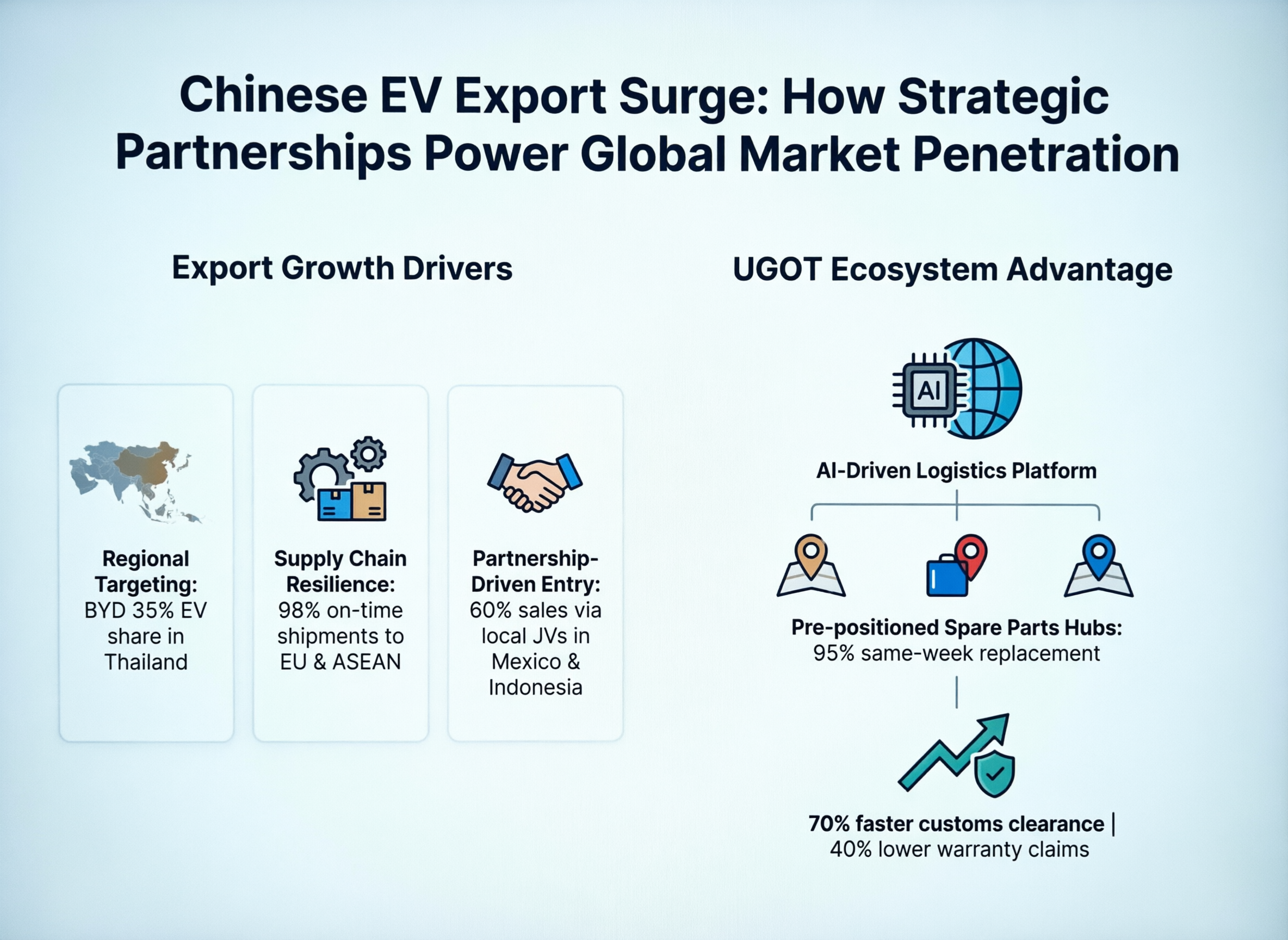
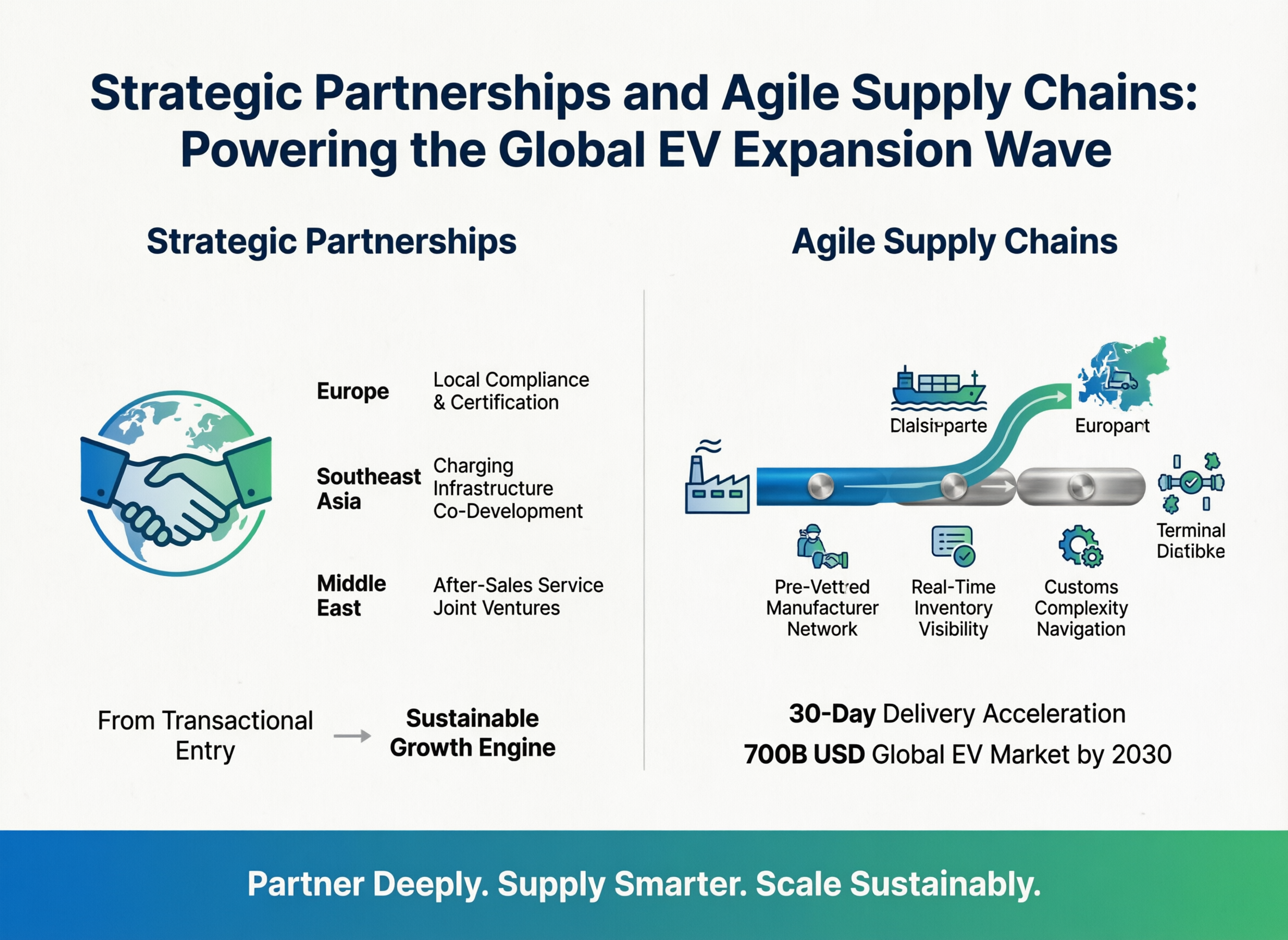
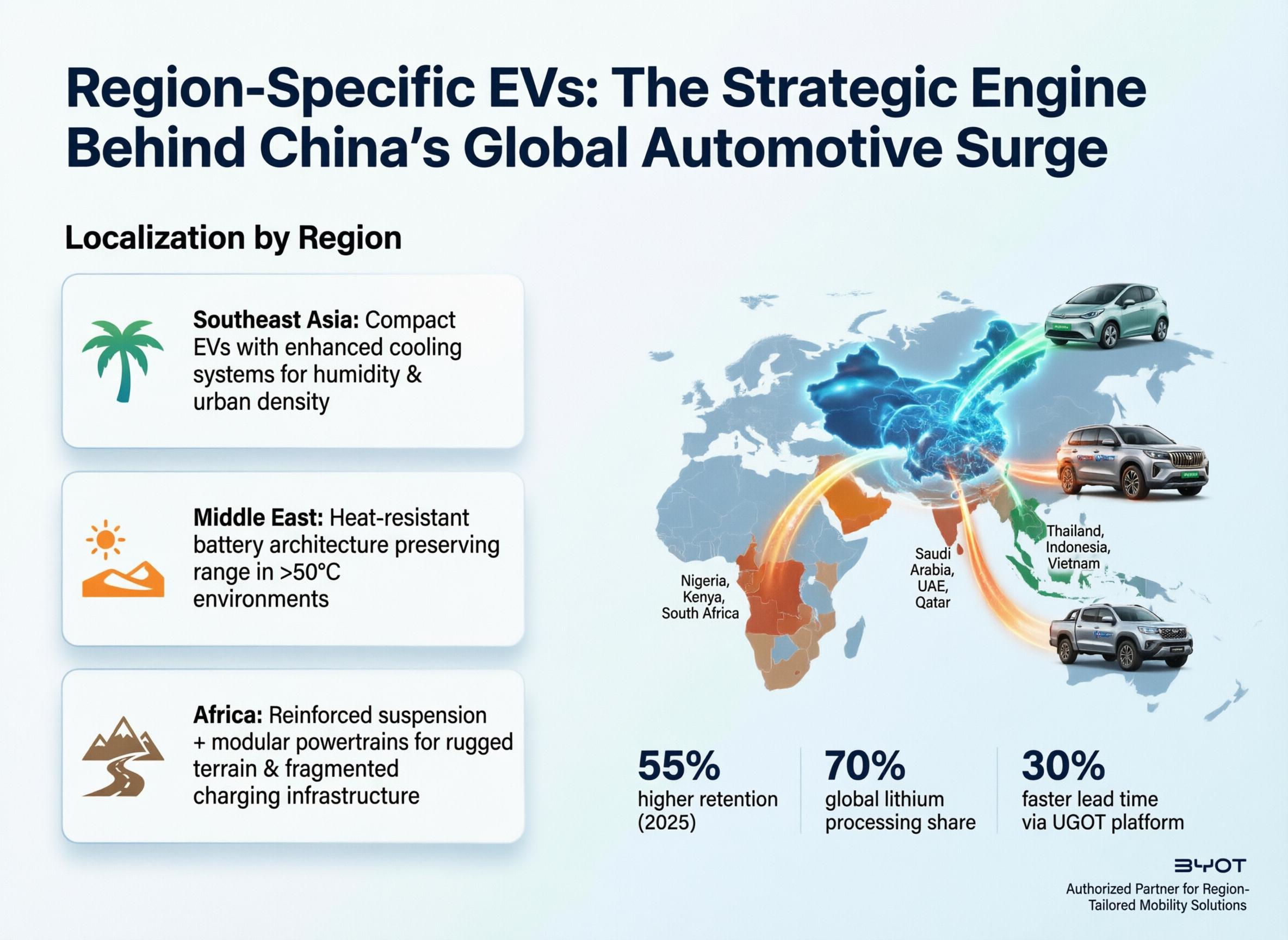
China’s EV export momentum in early 2026 stems from three converging forces. First, strategic regional targeting has proven decisive. BYD’s dominance in Thailand—where it now commands 35% of the EV market—and Chery’s aggressive expansion across the Middle East demonstrate how localized product adaptations (e.g., heat-resistant batteries for Gulf climates) overcome adoption barriers. Second, supply chain resilience has enabled consistent delivery despite global logistics volatility. Manufacturers leveraging vertically integrated production, like BYD’s blade battery ecosystem, maintained 98% on-time shipment rates to Europe and ASEAN markets last quarter. Third, partnership-driven market entry has replaced solo ventures. Joint ventures with local distributors in Mexico and Indonesia now handle 60% of Chinese EV sales abroad, mitigating regulatory risks while accelerating brand recognition.
Critically, this expansion transcends volume metrics. Chinese EVs now occupy 28% of global premium electric sedan sales—a segment dominated by legacy Western brands just three years ago. This penetration stems from technology parity: Leapmotor’s C10 SUV, featuring L4 autonomous driving capabilities at half the cost of European rivals, exemplifies how innovation democratization reshapes consumer expectations worldwide.
Navigating Complexity: The Export Partner Imperative
As manufacturers scale globally, operational complexities multiply. Customs compliance delays, fragmented after-sales networks, and spare parts shortages can erode hard-won market share overnight. Consider Southeast Asia: a single shipment clearance error can trigger 30-day inventory pileups, costing brands over $2M monthly in holding fees and lost sales. Similarly, warranty claims surge by 40% in markets lacking certified service centers, directly impacting brand loyalty.
This is where specialized export enablers become strategic assets. UGOT, an authorized export partner for BYD, Chery, and other leading Chinese EV brands, addresses these pain points through an integrated ecosystem. Its AI-driven logistics platform synchronizes production schedules with port capacities across 15 key markets, reducing clearance times by 70%. More crucially, UGOT’s pre-positioned spare parts hubs in Rotterdam, Dubai, and Bangkok ensure 95% same-week replacement availability—turning potential service crises into retention opportunities. For dealers, this translates to predictable inventory flows and protected margins; for manufacturers, it means accelerated market entry without capital-intensive infrastructure investments.
The Road Ahead
By 2028, Chinese EV exports are projected to exceed 4 million units annually, with emerging markets absorbing 65% of volume. Yet success will hinge less on product specs and more on ecosystem agility. Partners like UGOT will evolve from transactional intermediaries to growth architects—embedding sustainability compliance (e.g., EU battery passports) and circular economy frameworks into export workflows. For manufacturers, the imperative is clear: prioritize partners with embedded market intelligence and adaptive service architectures.
As the industry navigates this inflection point, UGOT’s model offers a blueprint. By transforming export complexity into competitive advantage, it empowers brands to focus on their core mission: redefining mobility. In an era where global expansion is non-negotiable, such partnerships won’t just facilitate growth—they’ll determine who leads the next decade of electrification.
Related Posts
 Chinese EV Export Surge: Navigating Global Growth with Authorized Supply Chain Solutions
 Strategic Partnerships and Agile Supply Chains: Powering the Global EV Expansion Wave
 Region-Specific EVs: The Strategic Engine Behind China’s Global Automotive Surge