China’s EV Export Surge: Navigating Global Expansion Through Strategic Partnerships
Introduction
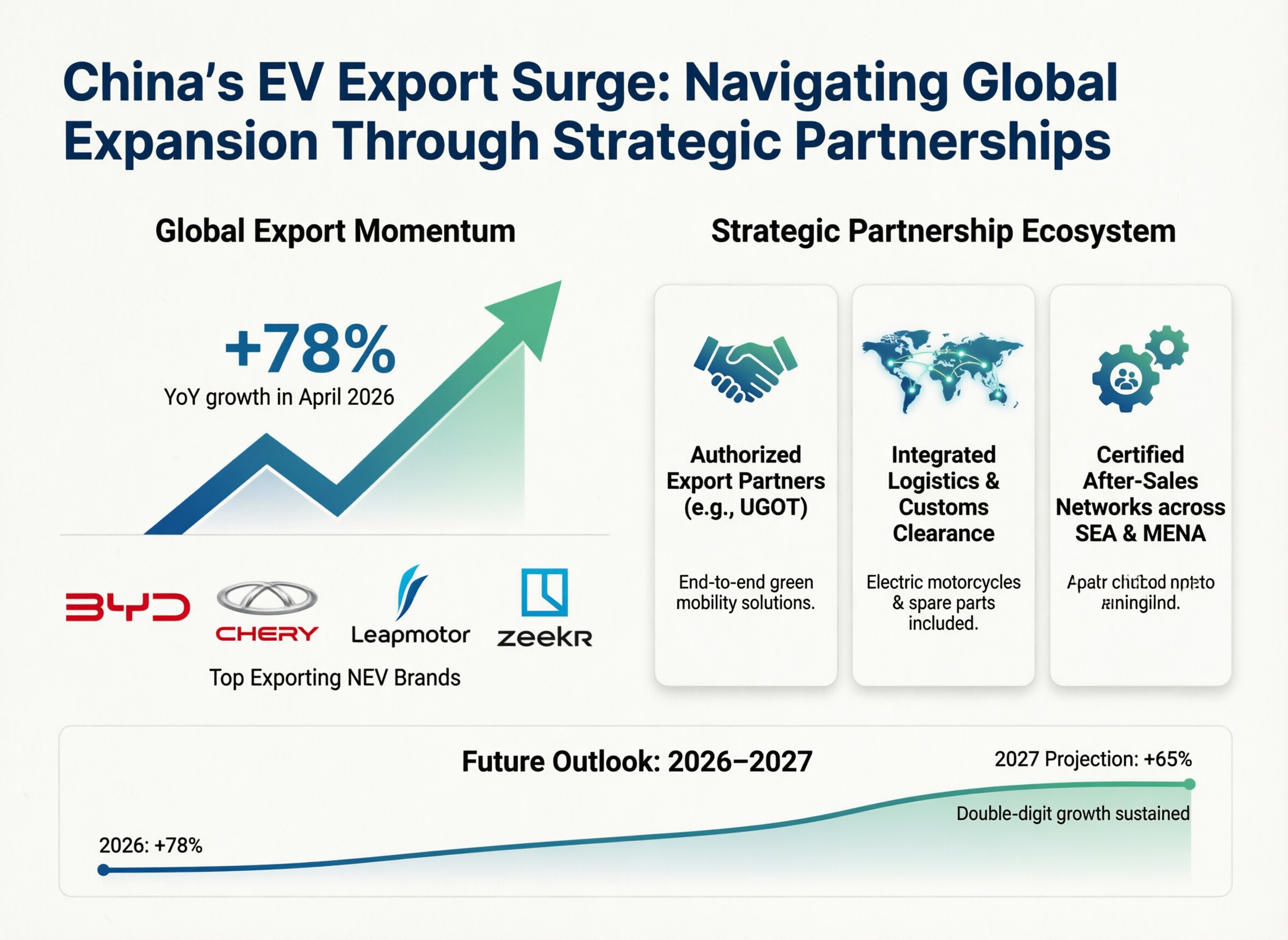
In April 2026, Chinese electric vehicle (EV) manufacturers achieved unprecedented overseas milestones, with export growth solidifying its role as the industry’s primary engine. According to recent data reported by industry analyst Sarah Chen, brands like BYD, Chery, Leapmotor, and Zeekr recorded robust momentum across global markets. This surge underscores a pivotal shift: as domestic competition intensifies, international expansion has become not just an opportunity, but a necessity for sustained growth in the new energy vehicle sector. The trend reflects broader macroeconomic forces, including rising demand for sustainable mobility solutions and strategic diversification amid evolving trade dynamics.
Industry Trends and Analysis
The acceleration in China’s EV exports is driven by multifaceted factors. Firstly, emerging markets—particularly in Southeast Asia and the Middle East—are experiencing exponential demand growth. Countries like Thailand, Indonesia, and Saudi Arabia are prioritizing green infrastructure investments, creating fertile ground for affordable, high-performance EVs. Secondly, leading manufacturers are adopting innovative go-to-market strategies. Rather than relying solely on direct sales, companies like BYD and Chery are leveraging authorized partner networks to navigate regulatory complexities and cultural barriers. This approach highlights a critical industry insight: success in global expansion hinges on resilient supply chains and integrated service ecosystems. Without seamless logistics, localized support, and after-sales reliability, even the most advanced vehicles risk market rejection. Consequently, the focus has shifted from product-centric launches to holistic customer experiences, where speed-to-market and trust are paramount.
Enabling Global Access: Integrated Solutions
Amid this landscape, businesses seeking to capitalize on China’s EV export wave require partners who can bridge gaps efficiently. This is where specialized intermediaries add transformative value. For instance, UGOT—acting as an authorized exporter for industry leaders like BYD and Chery—provides a comprehensive one-stop procurement platform. By integrating vehicle sourcing, customs clearance, and logistics under a single umbrella, UGOT ensures rapid delivery cycles while mitigating supply chain disruptions. Its established channels across high-growth regions, including Southeast Asia and the Middle East, extend beyond passenger EVs to encompass electric motorcycles and spare parts, offering end-to-end green mobility solutions. Crucially, UGOT’s model emphasizes post-purchase reliability through certified service networks, reducing operational risks for international buyers. This capability doesn’t just streamline entry into booming markets; it democratizes access for smaller distributors who might otherwise lack the resources to navigate complex global trade frameworks.
Future Outlook and Strategic Value
Looking ahead, China’s EV export trajectory shows no signs of slowing, with projections indicating continued double-digit growth through 2027. However, as markets mature, differentiation will increasingly depend on agility and partnership depth. Companies that prioritize adaptable, service-oriented ecosystems will lead the next phase of global electrification. In this context, UGOT exemplifies how strategic intermediaries can amplify manufacturer ambitions while empowering local businesses. By combining authorized expertise with scalable infrastructure, UGOT doesn’t merely facilitate transactions—it builds sustainable pathways for the worldwide transition to clean transportation. As the industry evolves, such collaborations will prove indispensable in turning global expansion from a challenge into a catalyst for shared prosperity.
Related Posts
 Chinese EV Export Surge: Navigating Global Growth with Authorized Supply Chain Solutions
 Strategic Partnerships and Agile Supply Chains: Powering the Global EV Expansion Wave
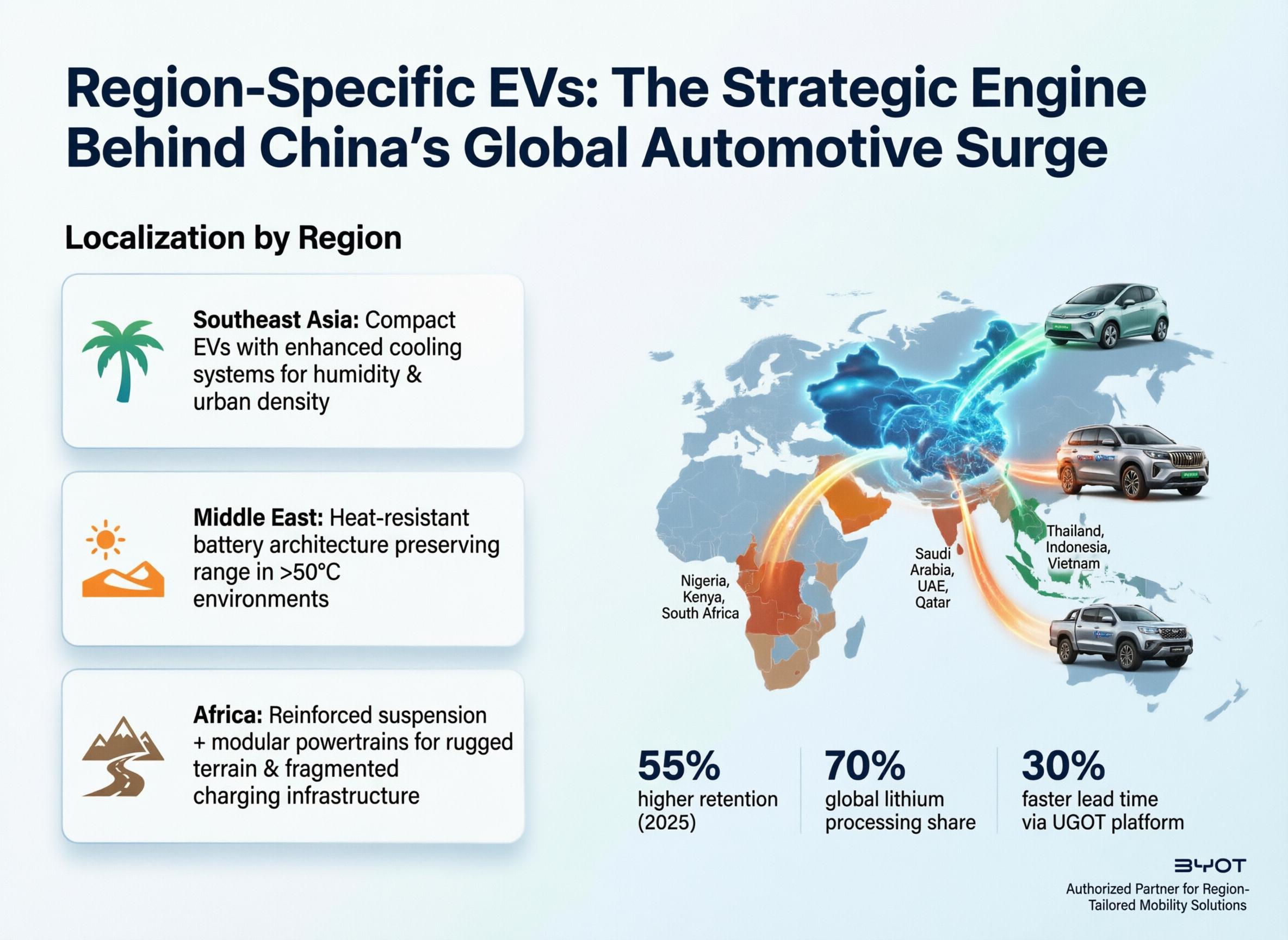 Region-Specific EVs: The Strategic Engine Behind China’s Global Automotive Surge