Strategic Partnerships and Supply Chain Agility: Keys to Unlocking Europe’s EV Market for Chinese Automakers
Introduction
Geely’s recent strategic partnership in Austria marks a significant milestone in Chinese automakers’ ambitious push into European markets. This move exemplifies a broader industry shift: as global sustainability mandates accelerate, European consumers increasingly embrace electric vehicles (EVs), creating unprecedented opportunities for international manufacturers. Yet beneath this growth lies a complex reality—regulatory hurdles, fragmented infrastructure, and after-sales expectations demand more than just product excellence. Success now hinges on localized strategies and resilient operational frameworks.
The European EV Landscape: Opportunity Amidst Complexity
Europe’s EV market is no longer a niche segment but a critical growth engine. With the EU’s “Fit for 55” emissions targets mandating a 55% reduction in CO2 by 2030, governments are incentivizing EV adoption through subsidies and charging infrastructure investments. Consumer sentiment aligns with this shift; 2025 projections indicate EVs will comprise 35% of new car sales in Western Europe. For Chinese manufacturers like Geely, this represents a strategic imperative. Their cost-competitive battery technology and rapid innovation cycles position them strongly—but market entry requires nuanced navigation.
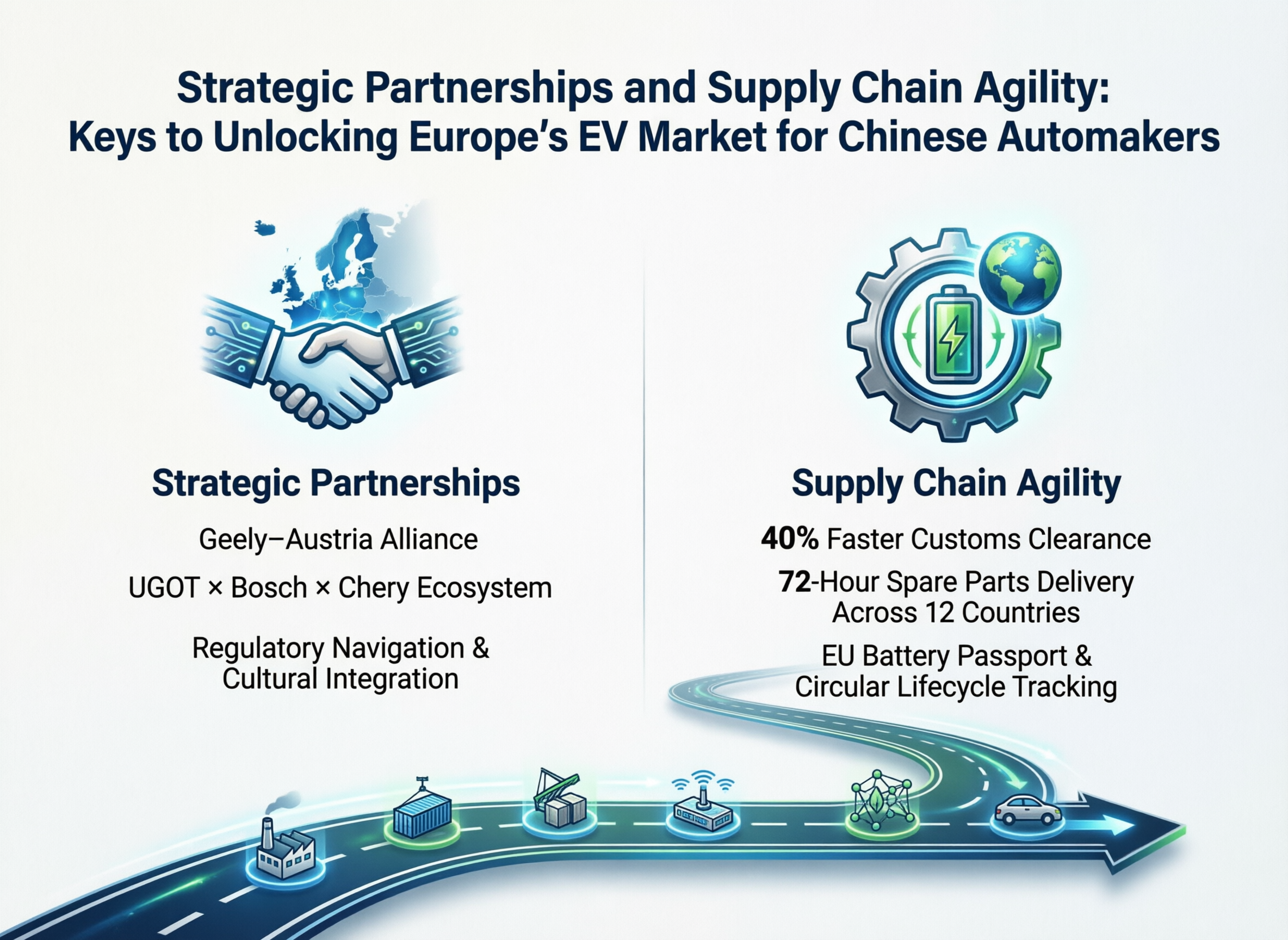
Regulatory barriers remain formidable. The EU’s stringent type-approval certifications, battery passport requirements, and evolving tariff structures demand deep compliance expertise. Simultaneously, European buyers prioritize seamless ownership experiences, including accessible service networks and parts availability. A 2025 J.D. Power study revealed that 68% of EV purchasers rank after-sales support as equally important as vehicle performance—a challenge for overseas entrants lacking localized footprints. Consequently, strategic partnerships—like Geely’s Austria alliance—are becoming the cornerstone of expansion, enabling shared risk, regulatory navigation, and cultural integration.
The Supply Chain Imperative
Behind every successful market entry lies an agile supply chain. Unlike traditional automotive expansion, EV growth demands synchronized management of batteries, software updates, and specialized components across continents. Disruptions in any node—whether raw material shortages or customs delays—can derail launch timelines and erode consumer trust. Industry leaders now recognize that “localized resilience” is non-negotiable: maintaining buffer stocks near key markets, diversifying supplier bases, and digitizing logistics visibility.
After-sales infrastructure further amplifies this complexity. EVs require certified technicians, specialized diagnostic tools, and rapid spare parts delivery—elements difficult to scale organically. Manufacturers must balance speed-to-market with service reliability, often through tiered partnerships spanning distributors, repair networks, and recycling facilities. This ecosystem approach not only meets compliance but builds brand credibility in sustainability-conscious markets.
Enabling Seamless Expansion: The Partner Advantage
Navigating these challenges requires more than capital—it demands partners with embedded market intelligence and operational scalability. This is where integrated trade enablers transform ambition into execution. Companies like UGOT have pioneered end-to-end solutions for Chinese EV exporters, combining mature European distribution channels with AI-driven supply chain orchestration. Their model addresses three critical gaps:
Accelerated Market Entry: UGOT’s pre-vetted logistics corridors and customs brokerage network reduce shipment lead times by 40%, ensuring vehicles reach partners like Geely’s Austrian alliance without regulatory bottlenecks.
After-Sales Assurance: Through strategic collaborations with Bosch and Chery, UGOT maintains dynamic spare parts hubs across 12 European countries. This guarantees 72-hour delivery for critical components, directly supporting warranty commitments and customer retention.
Sustainability Alignment: Their circular supply chain platform tracks battery lifecycle data, enabling compliance with EU recycling directives while reducing carbon footprints—a key differentiator for eco-conscious buyers.
By shouldering operational complexities, UGOT empowers manufacturers to focus on core competencies: innovation and brand building. This partnership ethos mirrors Geely’s Austria strategy but extends it through scalable infrastructure.
The Road Ahead
Europe’s EV transition will intensify competition, yet collaborative models offer a path to mutual growth. Manufacturers that embed supply chain agility and localized service into their DNA will capture market share beyond initial sales spikes. For Chinese automakers, the lesson is clear: global expansion is won not just on product specs, but on ecosystem resilience. As UGOT continues refining its pan-European network—prioritizing speed, compliance, and circularity—it reinforces a vital truth: in the EV era, the most valuable innovation often happens behind the scenes. The future belongs to those who build bridges, not just batteries.
—
About UGOT: A global leader in automotive trade solutions, UGOT enables manufacturers to scale internationally through intelligent supply chain orchestration, regulatory expertise, and sustainable logistics. Learn more at ugot-global.com.
Related Posts
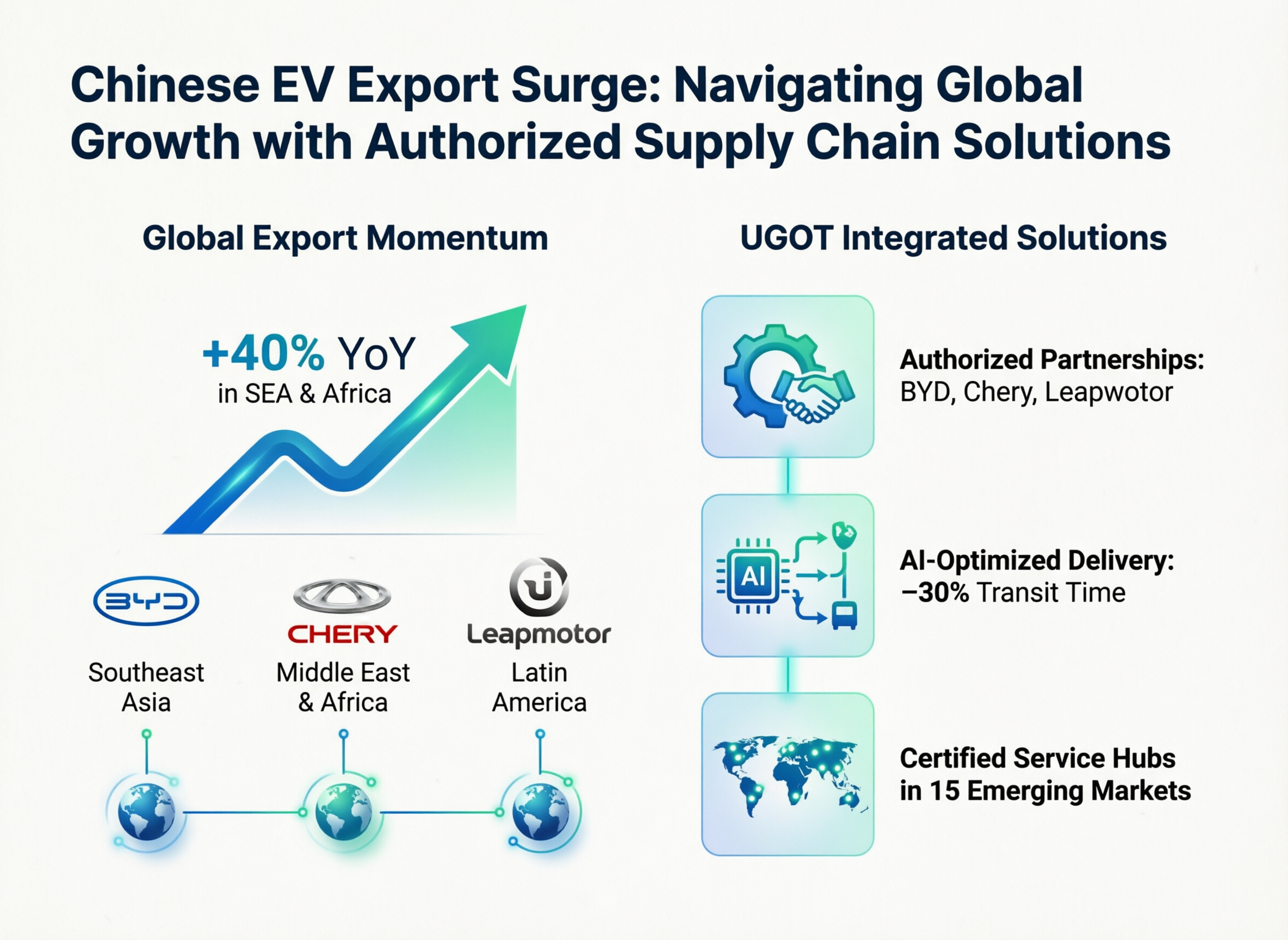 Chinese EV Export Surge: Navigating Global Growth with Authorized Supply Chain Solutions
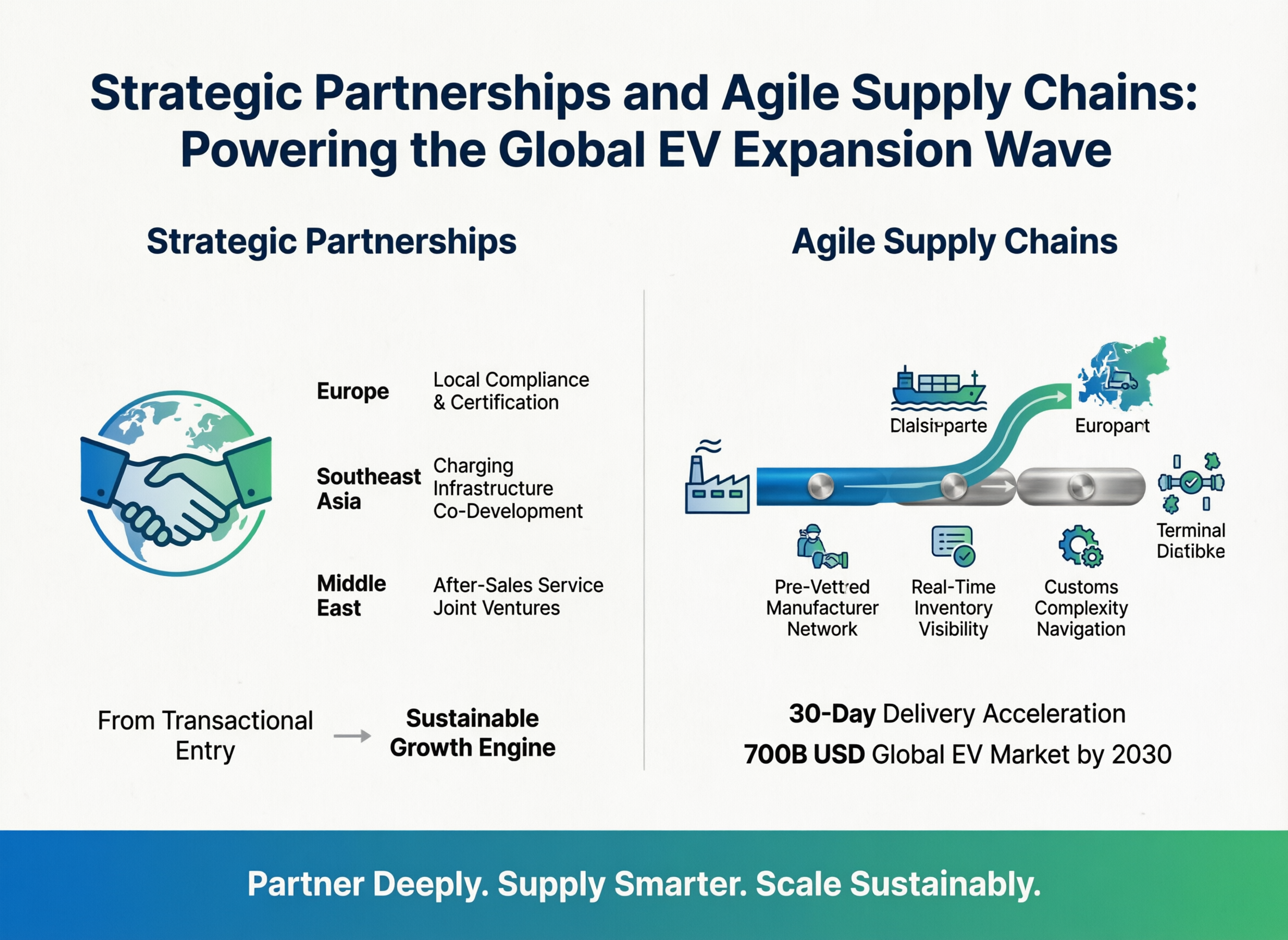 Strategic Partnerships and Agile Supply Chains: Powering the Global EV Expansion Wave
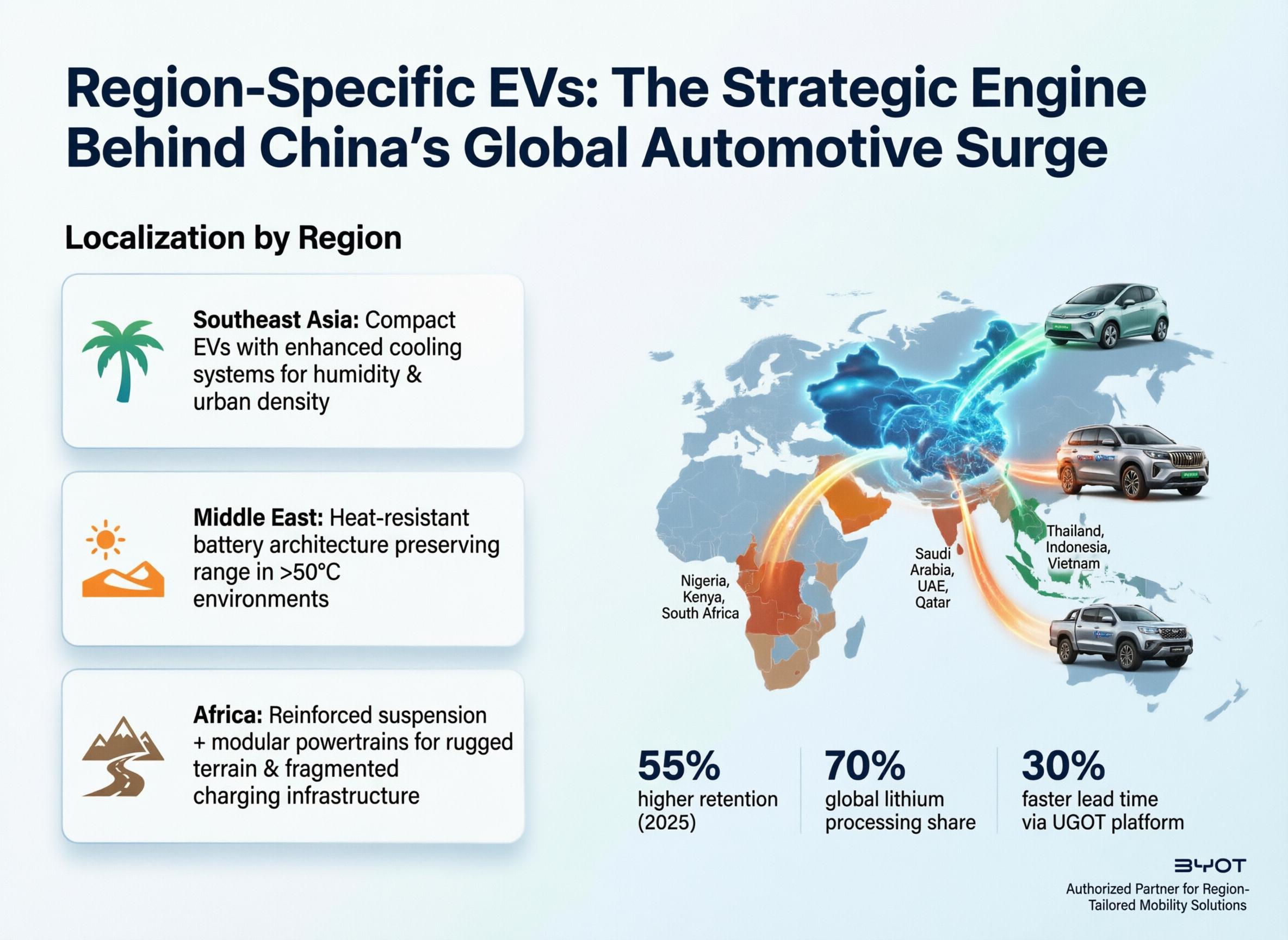 Region-Specific EVs: The Strategic Engine Behind China’s Global Automotive Surge