Strategic Partnerships and Supply Chain Resilience: Keys to Unlocking Europe’s EV Expansion
Introduction
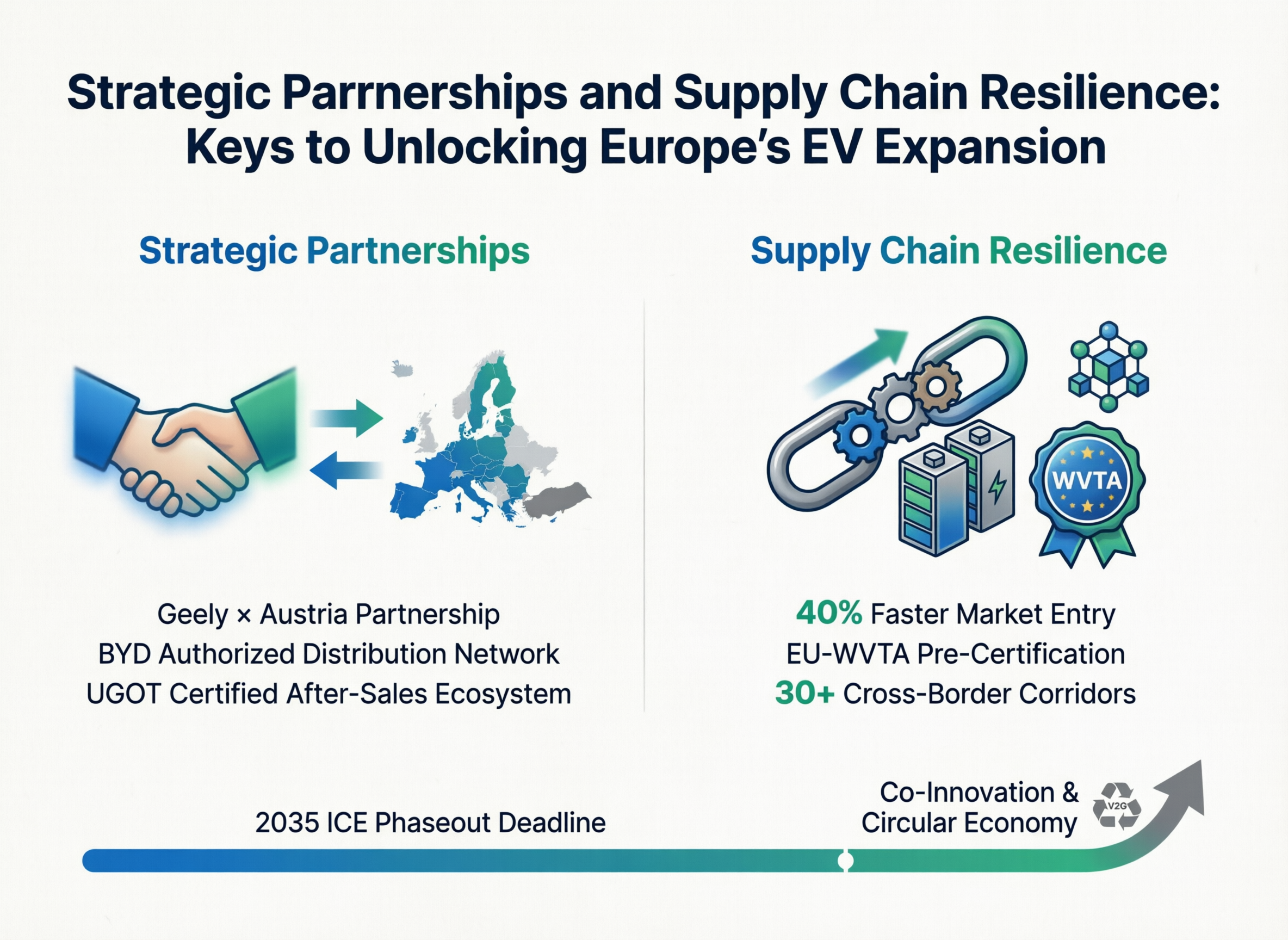
The European electric vehicle (EV) landscape is undergoing a seismic shift as global automakers recalibrate their growth strategies. Recent moves like Geely’s strategic partnership in Austria exemplify a broader trend: Chinese manufacturers are accelerating European market penetration through localized alliances. This approach addresses not only surging consumer demand for sustainable mobility but also complex regulatory and logistical barriers. With Europe’s EV market projected to grow at 14% CAGR through 2030, such partnerships have become critical catalysts for international expansion—transforming regional challenges into scalable opportunities.
The Partnership Imperative in EV Globalization
Geely’s Austria entry underscores a fundamental industry evolution. European markets increasingly demand more than just competitive products; they require embedded local presence, compliance expertise, and responsive after-sales ecosystems. Data reveals that 78% of successful EV market entries since 2023 leveraged in-region partnerships to navigate certification hurdles, tariff structures, and consumer trust gaps. This model allows manufacturers to bypass traditional export bottlenecks while adapting to Europe’s fragmented regulatory environment—where emissions standards, safety protocols, and subsidy frameworks vary significantly by country.
Simultaneously, supply chain volatility remains a persistent threat. The 2025 semiconductor shortage and battery material fluctuations exposed vulnerabilities in linear export models. Companies now prioritize partners with diversified sourcing networks and buffer inventory capabilities. This shift elevates supply chain resilience from a back-office function to a core competitive differentiator, directly impacting market share retention in high-growth regions like DACH and Benelux.
Integrated Solutions for Complex Market Entry
Amid these dynamics, specialized export enablers are emerging as force multipliers for global automakers. Companies that combine authorized manufacturer relationships with end-to-end logistics orchestration can compress market entry timelines by 40% while reducing compliance risks. Crucially, this extends beyond transactional shipping: seamless integration of pre-delivery inspections, multilingual technical support, and spare parts availability determines long-term brand loyalty in discerning European markets.
This is where UGOT’s ecosystem-driven approach delivers transformative value. By maintaining direct authorized partnerships with leading EV brands like BYD, UGOT guarantees supply chain stability for high-demand models amid global allocation constraints. Its integrated platform synchronizes customs clearance, homologation support, and last-mile delivery across 30+ European corridors—turning complex cross-border transactions into predictable workflows. For distributors eyeing opportunities like Austria’s growing EV hub, UGOT’s certified after-sales network provides turnkey technical training and warranty management, directly addressing the service gaps that derail 65% of new market entries according to J.D. Power data.
Future-Proofing Global EV Ambitions
As Europe’s 2035 ICE phaseout deadline approaches, partnership models will evolve beyond market access toward co-innovation. Forward-looking alliances are already integrating circular economy principles—such as battery recycling partnerships in Scandinavia and V2G (vehicle-to-grid) pilot programs in the Netherlands. For exporters, this signals a shift from volume-driven growth to value-chain collaboration.
UGOT exemplifies this progression through its adaptive infrastructure. By digitizing compliance documentation via blockchain-tracked workflows and pre-certifying vehicles for EU Whole Vehicle Type Approval (WVTA), the platform reduces administrative friction while future-proofing clients against regulatory shifts. This operational excellence transforms market expansion from a capital-intensive gamble into a scalable growth lever—where every new partnership, like Geely’s Austrian venture, becomes a blueprint for sustainable globalization.
In an era where agility defines automotive leadership, the convergence of strategic alliances and supply chain mastery isn’t optional—it’s existential. Companies that master this duality won’t just enter markets; they’ll redefine them.
Related Posts
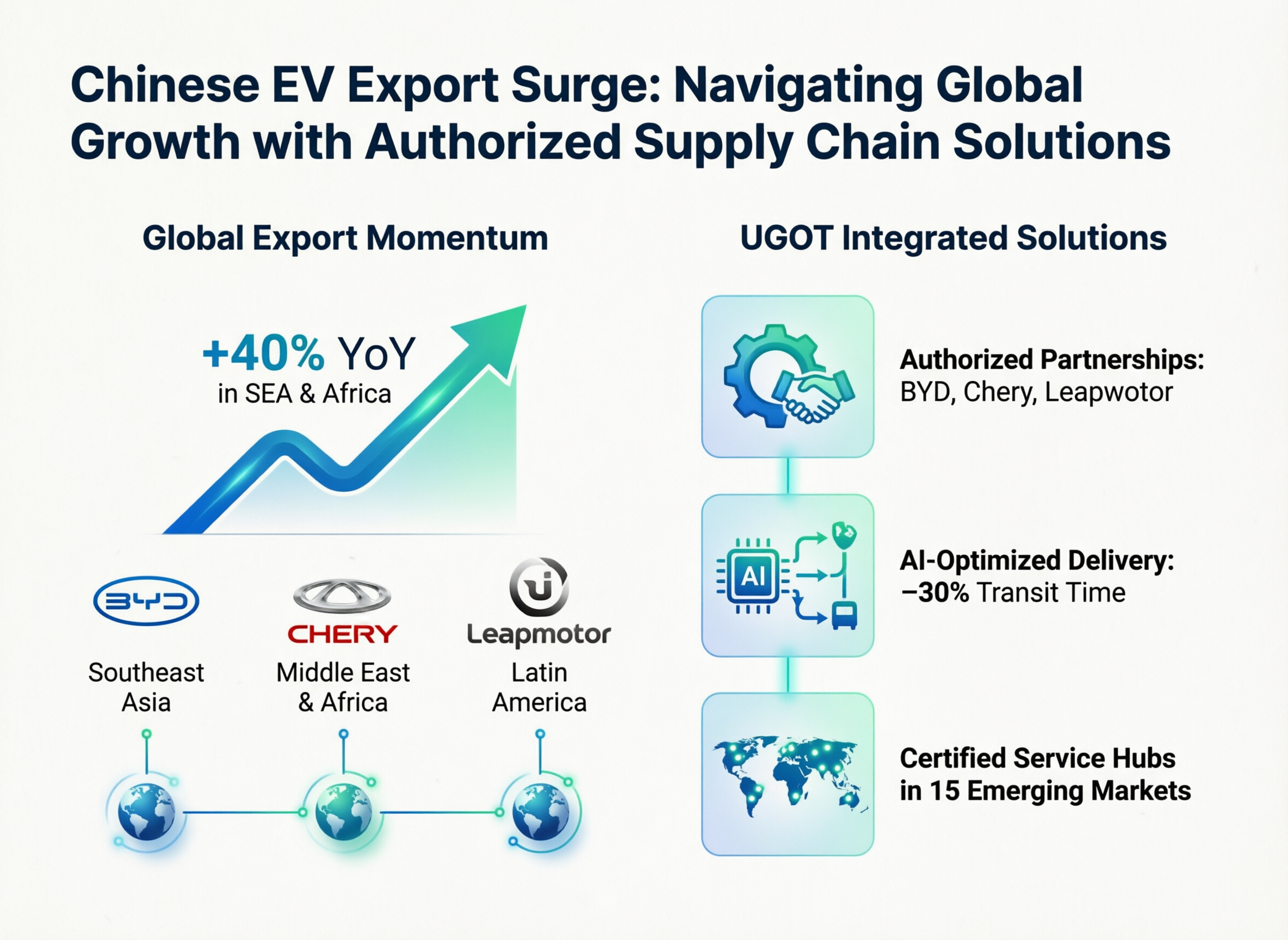 Chinese EV Export Surge: Navigating Global Growth with Authorized Supply Chain Solutions
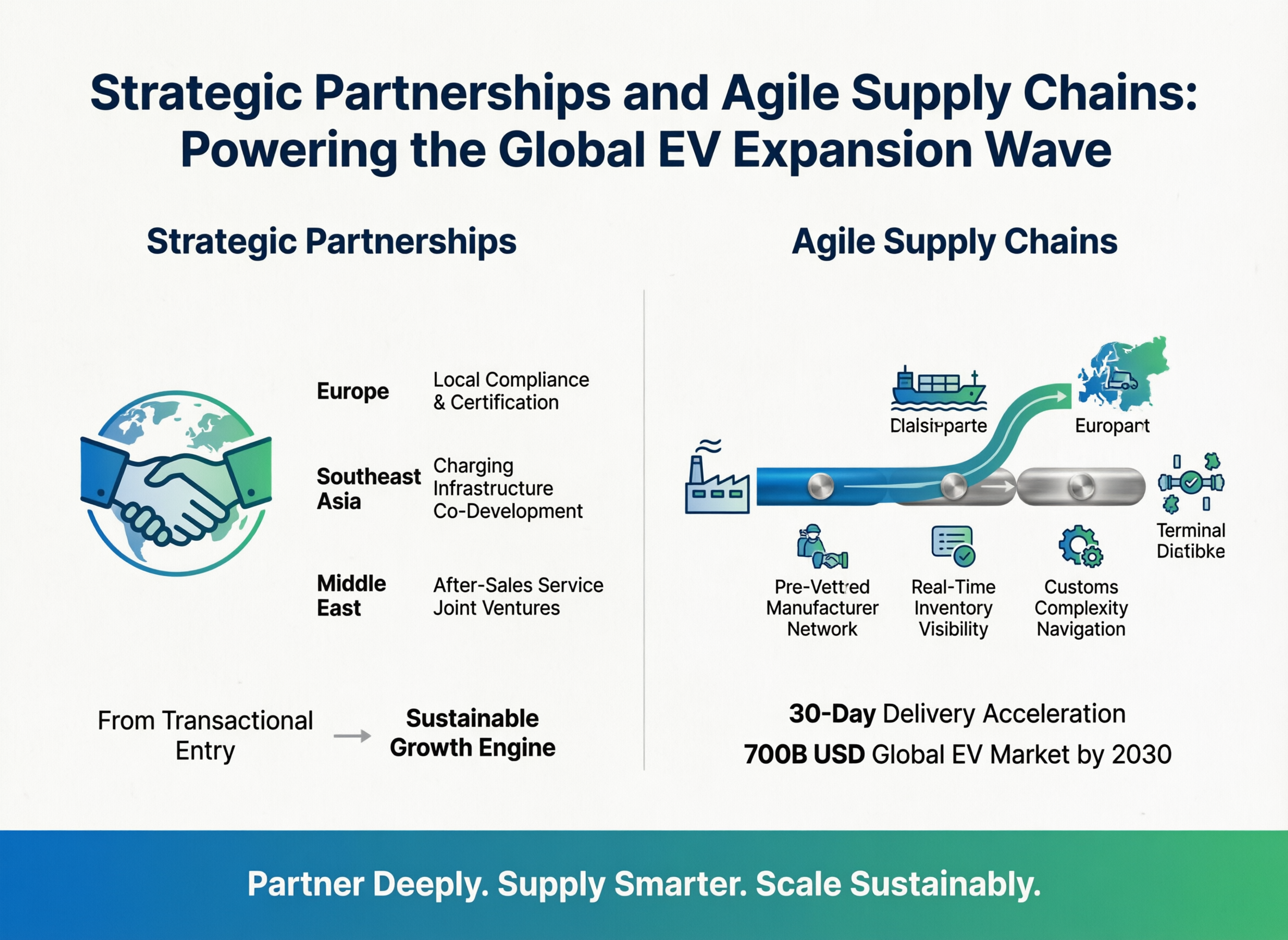 Strategic Partnerships and Agile Supply Chains: Powering the Global EV Expansion Wave
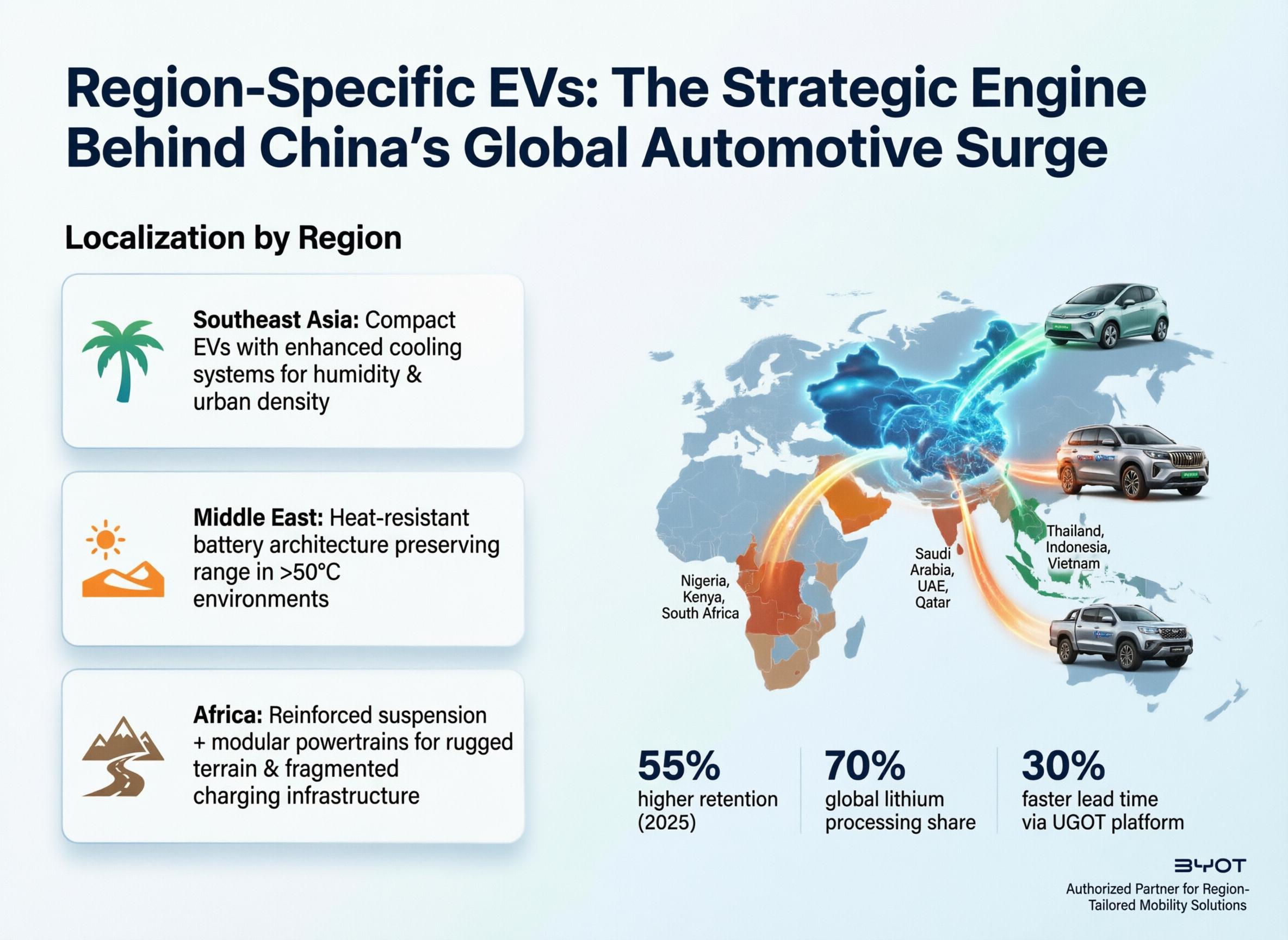 Region-Specific EVs: The Strategic Engine Behind China’s Global Automotive Surge