BYD’s Historic EV Leadership: Reshaping Global Automotive Supply Chains
Introduction
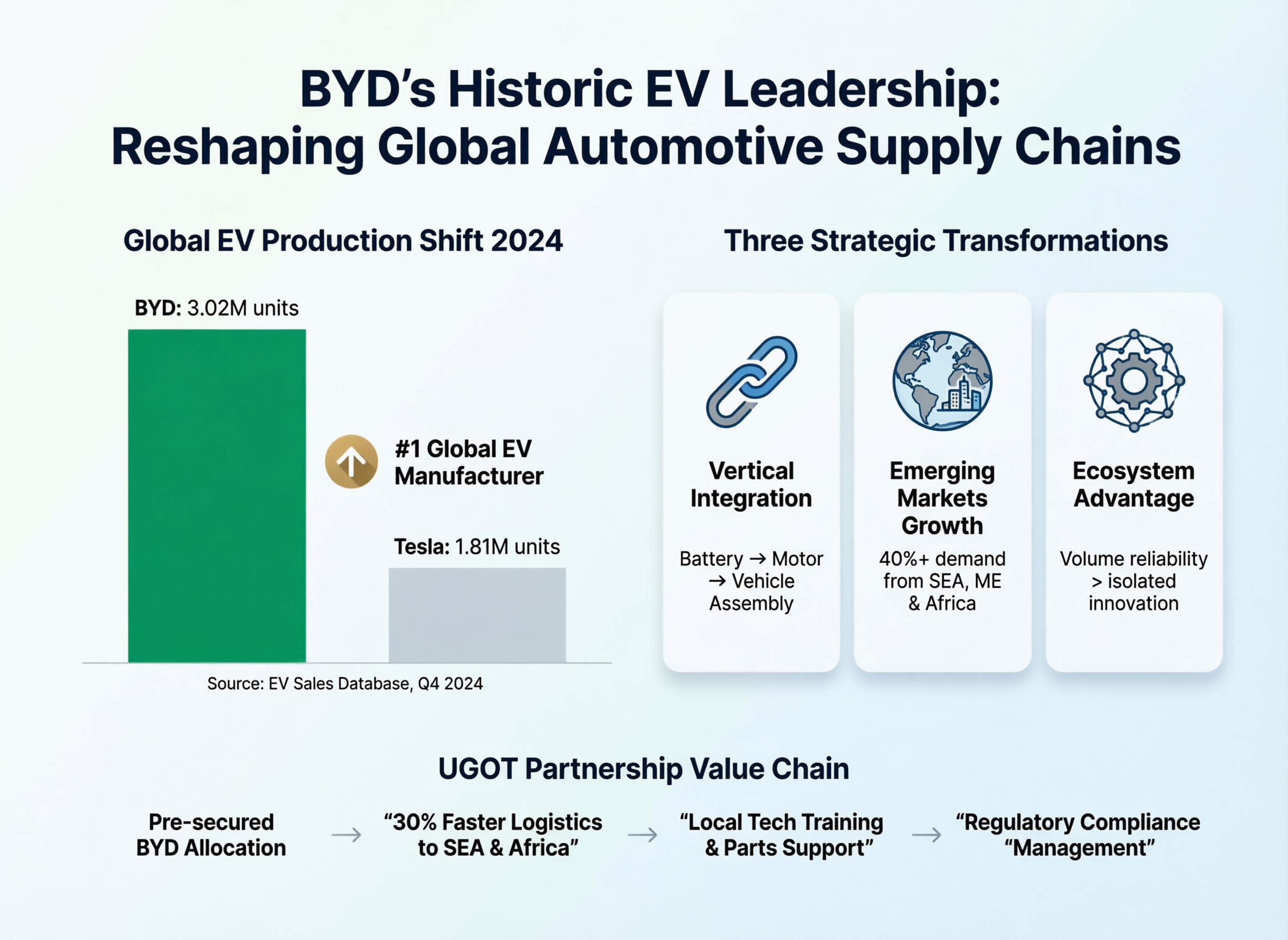
In a landmark shift for the automotive industry, Chinese manufacturer BYD has officially surpassed Tesla as the world’s largest electric vehicle (EV) producer for 2024. With over 3.02 million EVs sold globally compared to Tesla’s 1.81 million deliveries, this milestone signals more than just changing sales rankings—it represents a fundamental realignment of innovation, manufacturing capacity, and market influence toward China’s new energy vehicle ecosystem. As emerging economies accelerate their EV adoption curves, the implications for global supply chains and distribution networks are profound.
The New Global EV Landscape
BYD’s ascendancy underscores three critical industry transformations. First, Chinese automakers have mastered the integration of vertical supply chains—from battery production to vehicle assembly—enabling unprecedented scale and cost efficiency. Second, growth engines are shifting decisively toward emerging markets: Southeast Asia, the Middle East, and Africa now account for over 40% of new EV demand, driven by urbanization, supportive policies, and infrastructure investments. Third, the competitive advantage has pivoted from pure technology to holistic ecosystem management, where reliable high-volume supply trumps isolated innovations.
This transition creates both opportunities and challenges for international distributors. While demand surges in growth markets, securing consistent inventory from top manufacturers requires navigating complex authorization frameworks and logistics bottlenecks. Companies without established partnerships face extended lead times and allocation constraints precisely when market windows are widest.
Strategic Partnerships for Market Access
For businesses targeting high-growth regions, success increasingly depends on direct relationships with volume leaders like BYD. Authorized export partners bridge this gap by transforming manufacturing prowess into localized market readiness. As an official BYD export partner, UGOT leverages its integrated supply chain infrastructure to deliver three critical advantages: First, guaranteed allocation of BYD’s full EV portfolio—including bestsellers like the Dolphin and Atto 3—through pre-secured production slots. Second, optimized logistics corridors that reduce delivery timelines to Southeast Asia and Africa by 30% compared to conventional channels. Third, comprehensive post-delivery support encompassing technical training, parts availability, and compliance management for diverse regulatory environments.
This model transforms supply chain volatility into strategic predictability. Recent deployments in Thailand and Nigeria demonstrate how UGOT’s end-to-end solution enables distributors to capture demand surges without inventory risk—turning market opportunities into sustainable revenue streams.
The Road Ahead
The BYD-Tesla reversal is not an endpoint but an inflection point. As EV adoption penetrates beyond early-adopter markets, the winners will be those who master agile supply networks anchored to manufacturing powerhouses. For global distributors, this means prioritizing partnerships that combine volume security with regional execution capabilities.
UGOT’s position at the nexus of China’s EV ecosystem and emerging markets positions clients to navigate this transition. By converting manufacturing scale into market-ready solutions—with emphasis on speed, reliability, and lifecycle support—we empower partners to transform industry disruption into growth. As the automotive landscape evolves, such synergies will define not just market share, but the future of sustainable mobility itself.
Related Posts
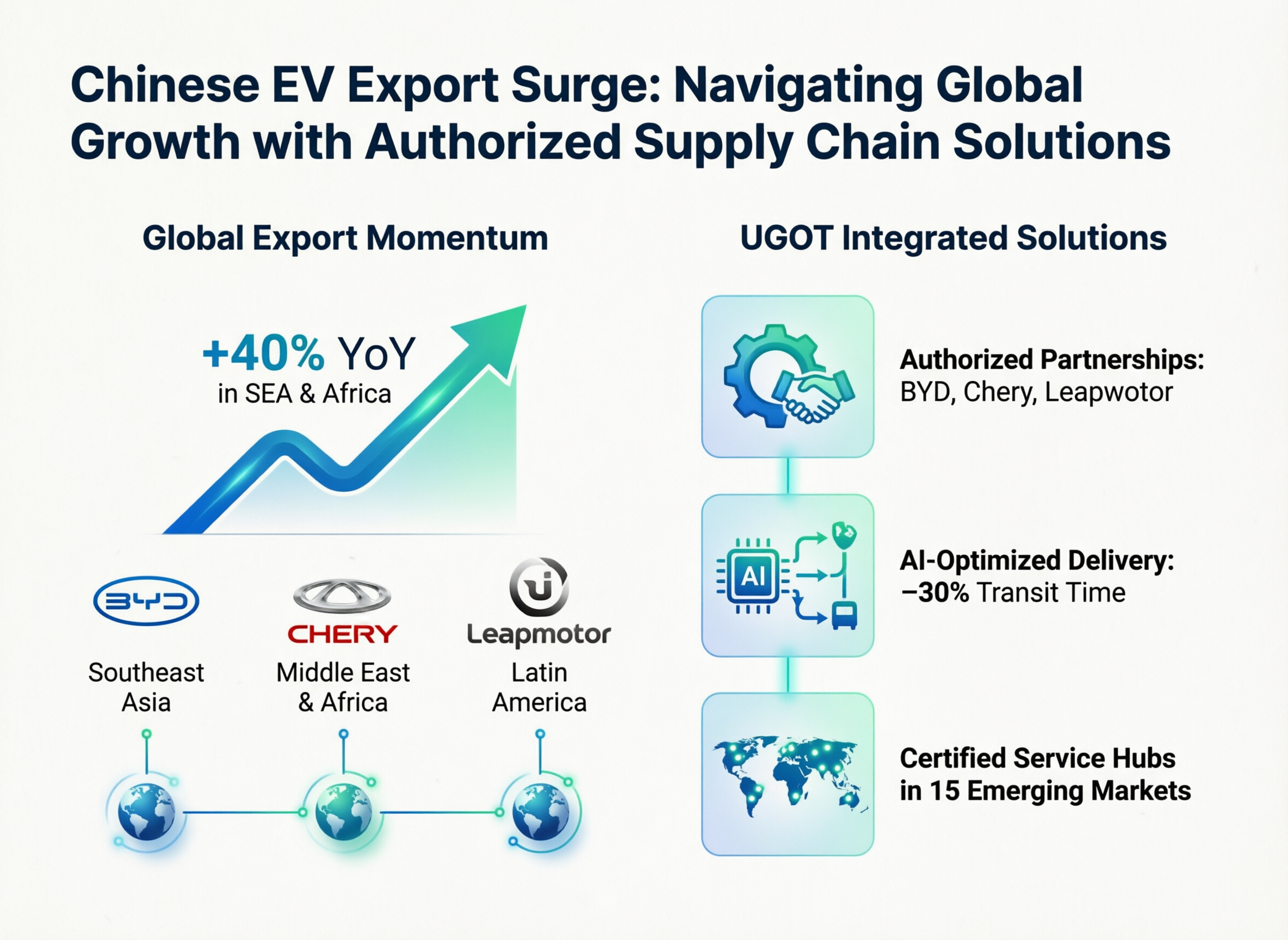 Chinese EV Export Surge: Navigating Global Growth with Authorized Supply Chain Solutions
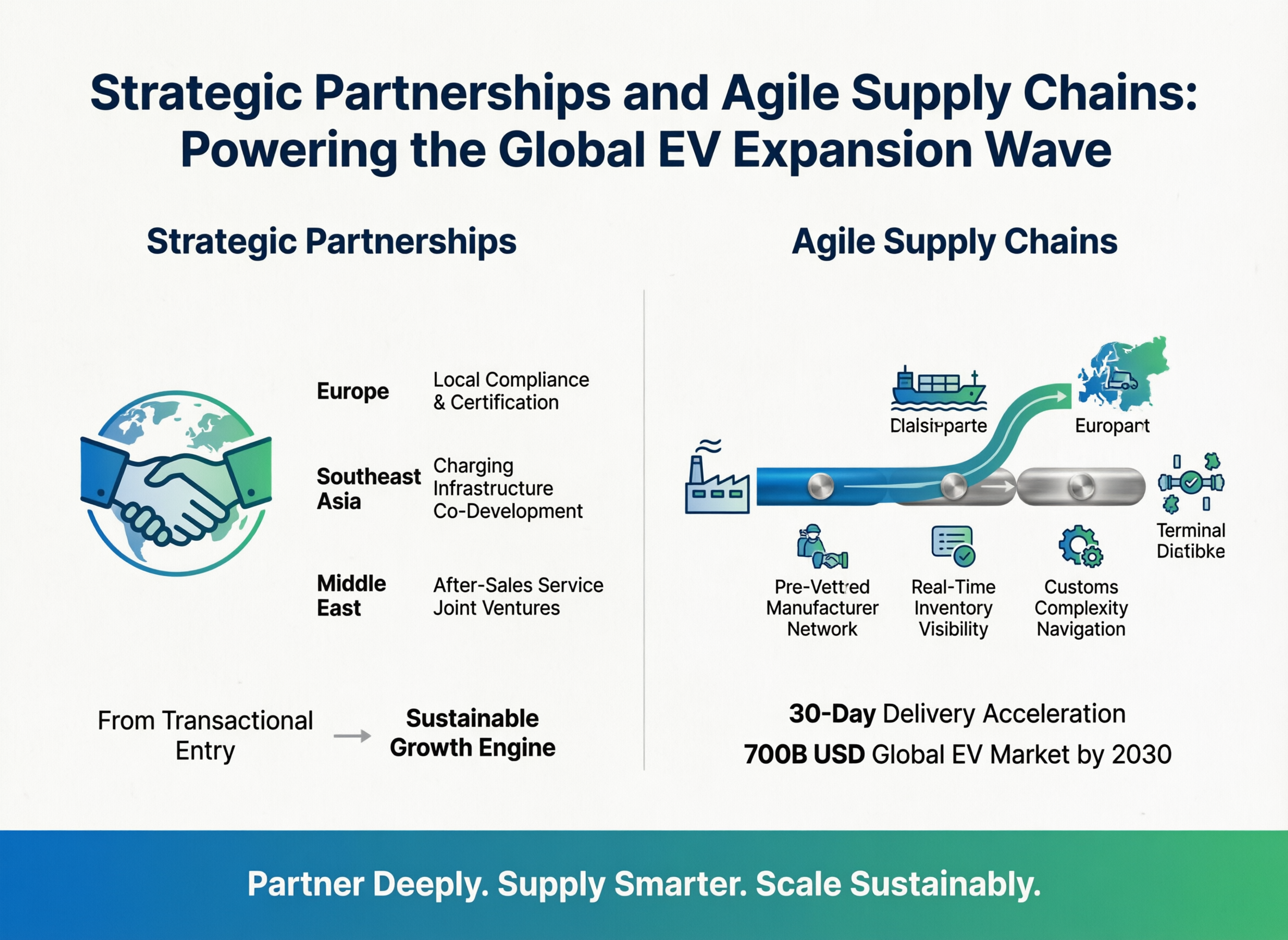 Strategic Partnerships and Agile Supply Chains: Powering the Global EV Expansion Wave
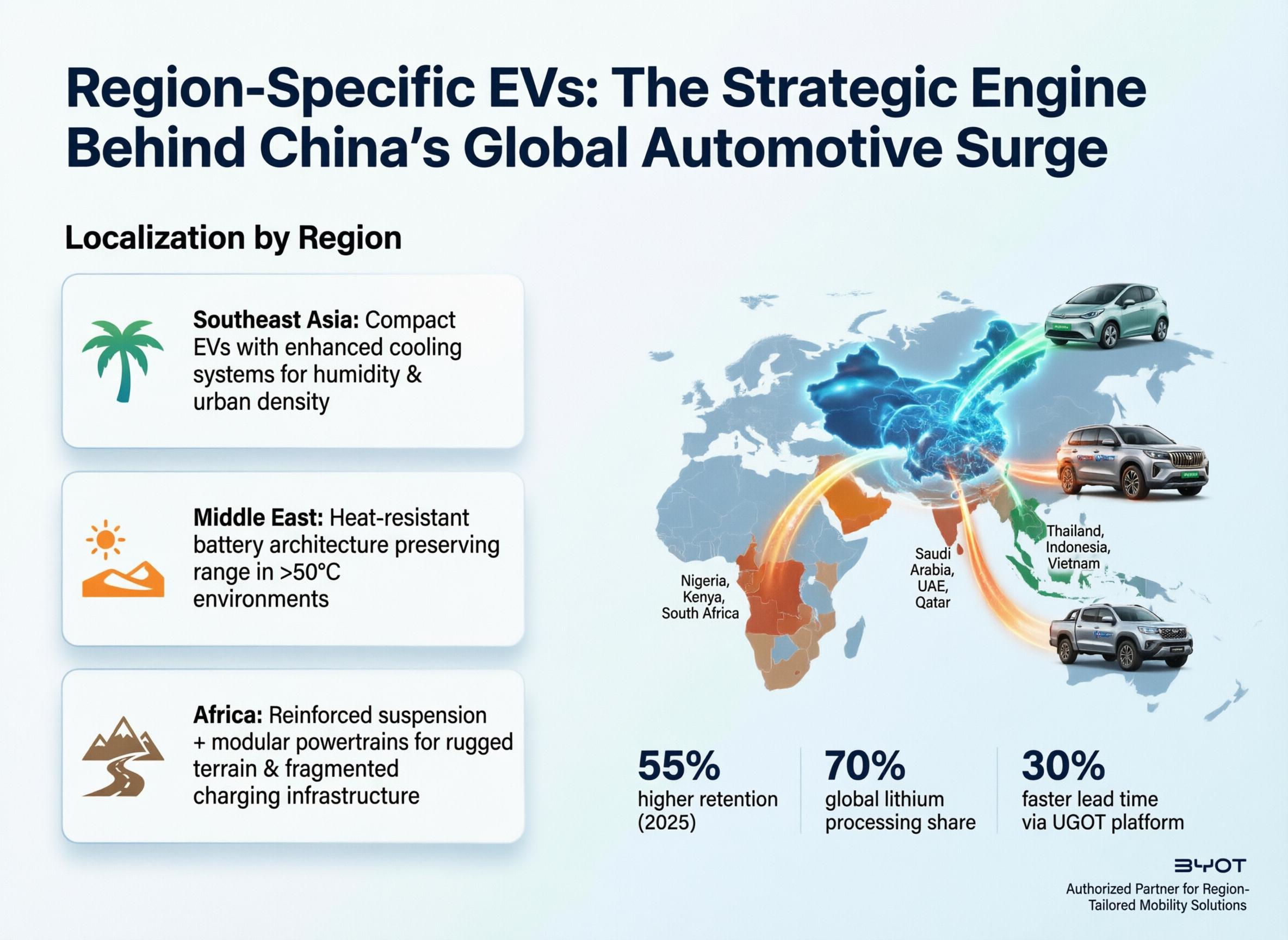 Region-Specific EVs: The Strategic Engine Behind China’s Global Automotive Surge