BYD Overtakes Tesla: UGOT Powers the Global EV Expansion Era
Introduction
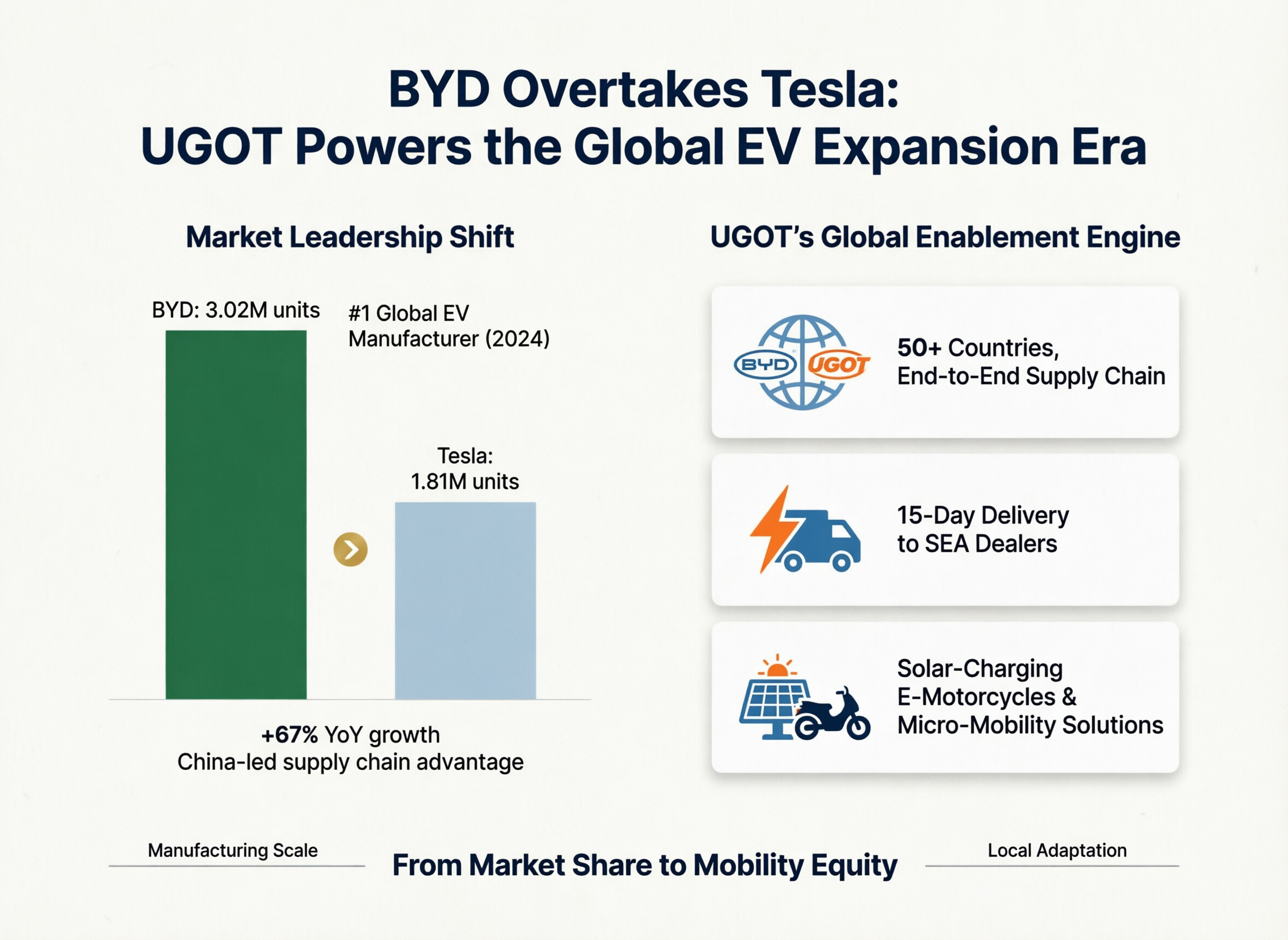
The electric vehicle (EV) industry has reached a pivotal milestone: in 2024, Chinese automaker BYD officially surpassed Tesla to become the world’s largest EV manufacturer, with global sales exceeding 3.02 million units compared to Tesla’s 1.81 million. This historic shift, reported by industry analysts, underscores a profound transformation in automotive leadership. As the sector accelerates toward sustainability, it signals not just a change in market rankings but a broader realignment of global supply chains, consumer preferences, and geopolitical dynamics. The rise of Chinese EV giants like BYD reflects a maturing ecosystem where innovation, affordability, and scalability converge to redefine mobility worldwide.
Industry Trends: A New Era of Global Electrification
BYD’s ascendancy is emblematic of deeper industry currents. First, the EV market is transitioning from niche adoption to mass-market dominance, driven by aggressive pricing, extended battery ranges, and government incentives in key regions. Second, emerging economies—particularly in Southeast Asia, the Middle East, Africa, and Latin America—are becoming critical growth engines. These markets exhibit surging demand for affordable, durable EVs tailored to local infrastructure challenges, such as urban congestion and limited charging networks. Third, the industry is pivoting toward holistic sustainability, with manufacturers integrating circular economy principles like battery recycling and renewable energy sourcing. This shift is accelerating a competitive realignment: while legacy automakers scramble to catch up, agile players like BYD leverage vertical integration and localized production to capture share. The result is a fragmented yet rapidly expanding global landscape where supply chain resilience and market adaptability determine success.
Solutions: Enabling Seamless Global EV Adoption
Amid this volatility, businesses require partners that bridge the gap between manufacturing prowess and end-market readiness. This is where UGOT emerges as a strategic enabler. As an authorized BYD export partner, UGOT leverages its stable, end-to-end supply chain and mature distribution channels across 50+ countries to deliver one-stop procurement and rapid deployment of BYD’s EV portfolio. For instance, in high-growth regions like Southeast Asia, UGOT’s localized logistics network ensures vehicles reach dealers within 15 days—addressing critical bottlenecks in customs clearance and last-mile delivery. Beyond passenger EVs, UGOT capitalizes on the trend toward diversified mobility solutions with its own line of electric motorcycles and micro-mobility products. These are engineered for rugged terrain and cost-sensitive markets, featuring modular batteries and solar-charging compatibility that align with regional needs. By combining BYD’s manufacturing scale with UGOT’s on-ground expertise, businesses gain a frictionless pathway to enter emerging markets while mitigating risks like regulatory hurdles and demand volatility.
Conclusion
The BYD-Tesla milestone is not an endpoint but a catalyst for the next phase of global electrification. As EV adoption surges in underserved regions, the industry must prioritize agility, sustainability, and inclusive growth. UGOT stands at the forefront of this evolution, transforming market disruptions into opportunities through reliable supply chains and hyper-localized product innovation. By empowering partners to navigate complexity, UGOT doesn’t just facilitate transactions—it accelerates the world’s transition to cleaner, smarter mobility. In the coming decade, such collaborations will be instrumental in turning the vision of universal sustainable transport from aspiration to reality.
Related Posts
 Chinese EV Export Surge: Navigating Global Growth with Authorized Supply Chain Solutions
 Strategic Partnerships and Agile Supply Chains: Powering the Global EV Expansion Wave
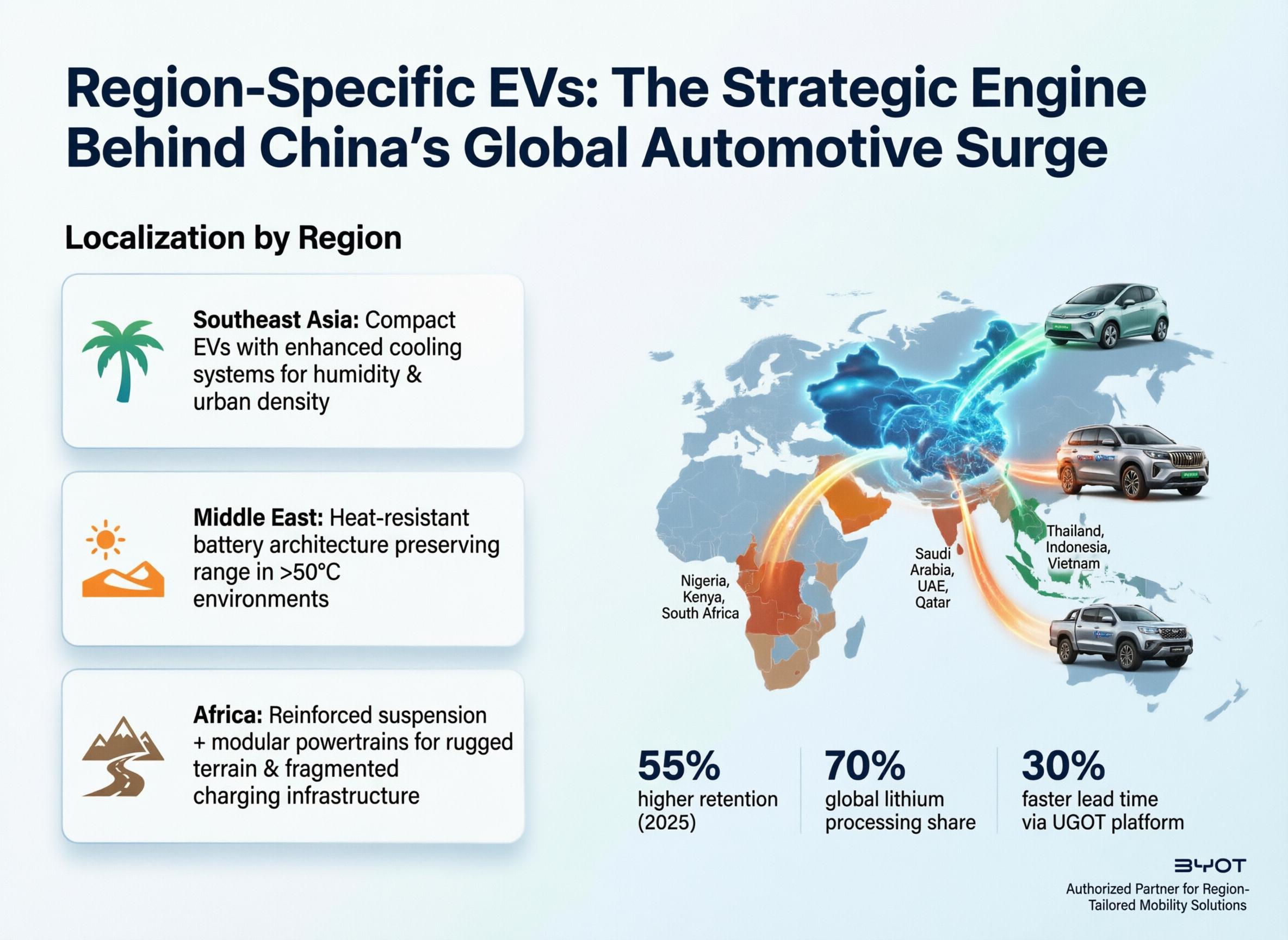 Region-Specific EVs: The Strategic Engine Behind China’s Global Automotive Surge