Global Automotive Expansion: Mastering Localized Strategies and Supply Chain Resilience in Emerging Markets
Introduction
The automotive industry is undergoing a profound transformation as manufacturers aggressively pursue global growth. Recent moves like Geely’s strategic partnership in Austria—which emphasizes localized production and distribution networks to penetrate Europe’s competitive EV market—highlight a critical trend: success in international markets hinges on adapting to regional nuances. While Europe remains a focal point for premium electric vehicles, emerging markets across Southeast Asia, Africa, the Middle East, and Latin America are rapidly becoming indispensable growth engines. These regions, however, demand distinct approaches to navigate infrastructure gaps, regulatory diversity, and evolving consumer preferences for affordable, durable mobility solutions.
The Localization Imperative and Emerging Market Dynamics
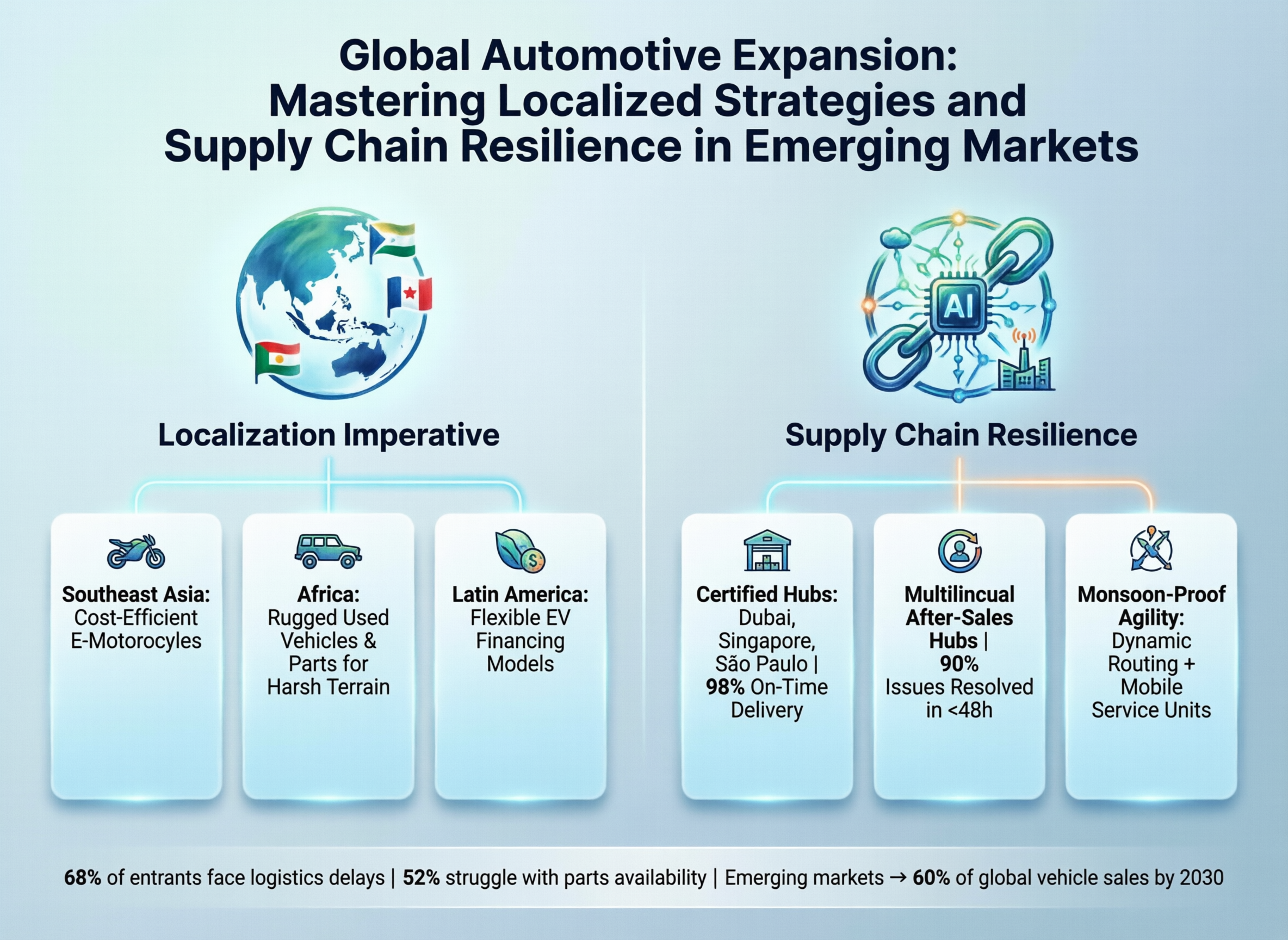
Geely’s Austria expansion exemplifies how automakers are prioritizing hyper-localized strategies to address market-specific challenges. In Europe, this means complying with stringent emissions regulations while building EV-centric distribution ecosystems. Yet, the same principle applies with even greater complexity in emerging markets. Unlike mature economies, these regions exhibit fragmented demand patterns: Southeast Asia favors cost-efficient electric motorcycles, Africa requires rugged used vehicles and spare parts for harsh terrains, and Latin America seeks flexible financing models for new EVs. Compounding this, volatile supply chains, customs bottlenecks, and underdeveloped after-sales networks frequently derail expansion efforts. A recent industry study revealed that 68% of automotive entrants in emerging markets face significant delays due to logistics instability, while 52% struggle with inconsistent spare parts availability—eroding consumer trust and brand loyalty.
The surge in electric mobility further intensifies these challenges. While Europe’s EV adoption is policy-driven, emerging markets prioritize practicality: electric two-wheelers dominate urban centers in Vietnam and India, while solar-compatible charging infrastructure gains traction in off-grid African communities. Manufacturers must therefore balance scalability with granular localization—a feat impossible without agile, end-to-end supply chain partners.
Integrated Solutions for Sustainable Growth
Bridging this gap requires more than traditional export models. Automotive players need partners who offer holistic solutions spanning procurement, logistics, and post-purchase support—tailored to each market’s unique rhythm. This is where specialized platforms like UGOT Automotive Export Solutions redefine global trade efficiency. UGOT provides a seamless one-stop procurement ecosystem for new and used vehicles, electric motorcycles, and genuine spare parts, backed by AI-driven supply chain orchestration that mitigates regional disruptions. Its network of certified warehouses across Dubai, Singapore, and São Paulo ensures 98% on-time delivery compliance, while localized after-sales service hubs—staffed by multilingual technicians—resolve 90% of maintenance issues within 48 hours. For manufacturers eyeing markets like Nigeria or Indonesia, this eliminates the need for costly in-country infrastructure investments while guaranteeing compliance with import regulations and warranty standards.
Crucially, UGOT’s model thrives on flexibility. When a Thai distributor needed to rapidly scale electric motorcycle shipments amid monsoon-season port closures, UGOT rerouted cargo via alternative Southeast Asian hubs and deployed mobile service units to remote areas—turning a potential revenue loss into a 30% sales uplift. Such agility transforms volatility into competitive advantage.
The Road Ahead
As automotive globalization accelerates, the winners will be those who master the duality of global scale and local empathy. Emerging markets will contribute over 60% of new vehicle sales by 2030, but capturing this potential demands partners who turn complexity into clarity. UGOT Automotive Export Solutions embodies this philosophy, empowering manufacturers to navigate regulatory mazes, volatile logistics, and service deserts with precision. By converting supply chain resilience into customer trust, UGOT doesn’t just facilitate exports—it builds sustainable market footholds where brands thrive long-term. In an era where localization is non-negotiable, such partnerships aren’t optional; they’re the engine of tomorrow’s mobility revolution.
Related Posts
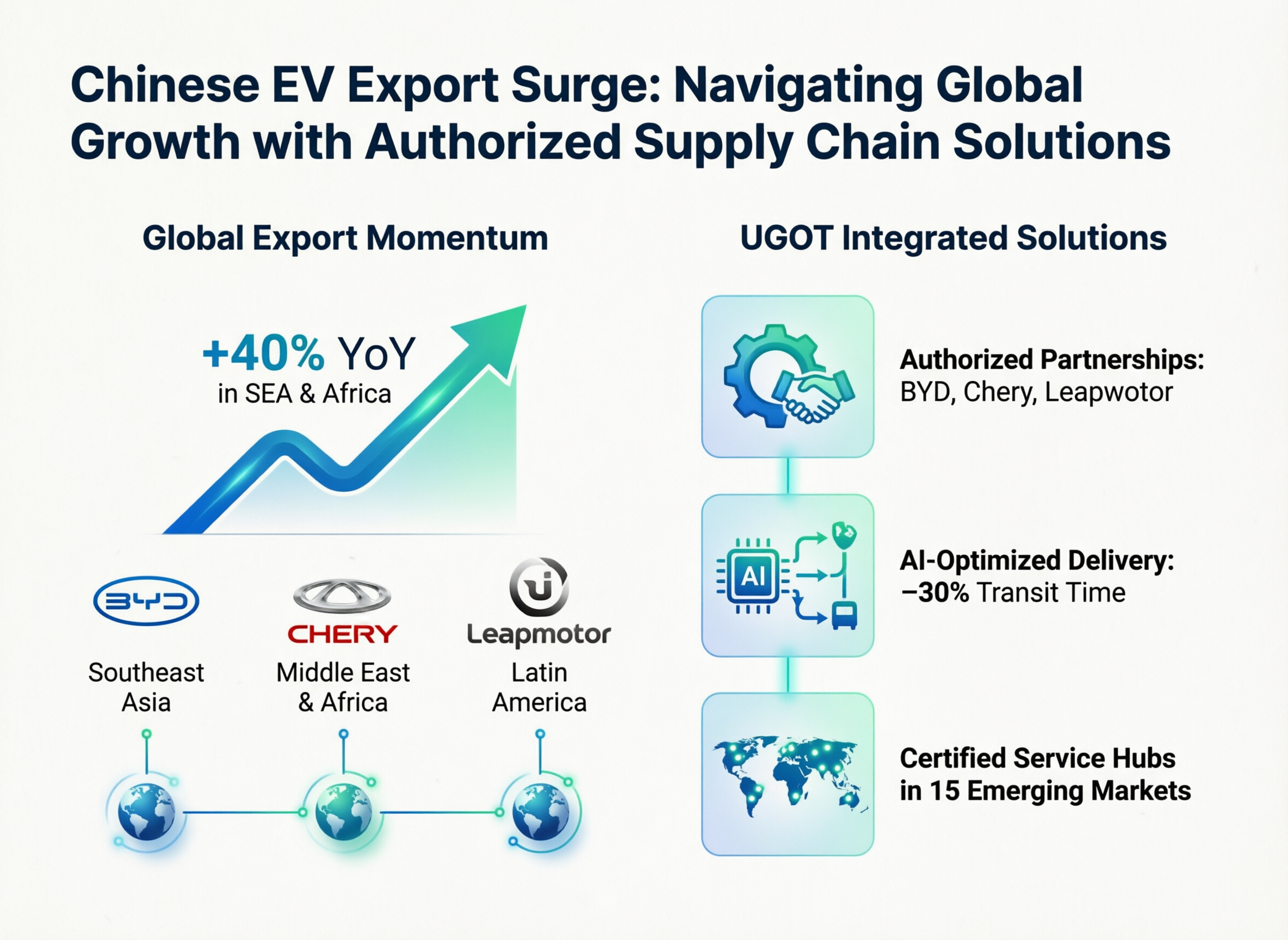 Chinese EV Export Surge: Navigating Global Growth with Authorized Supply Chain Solutions
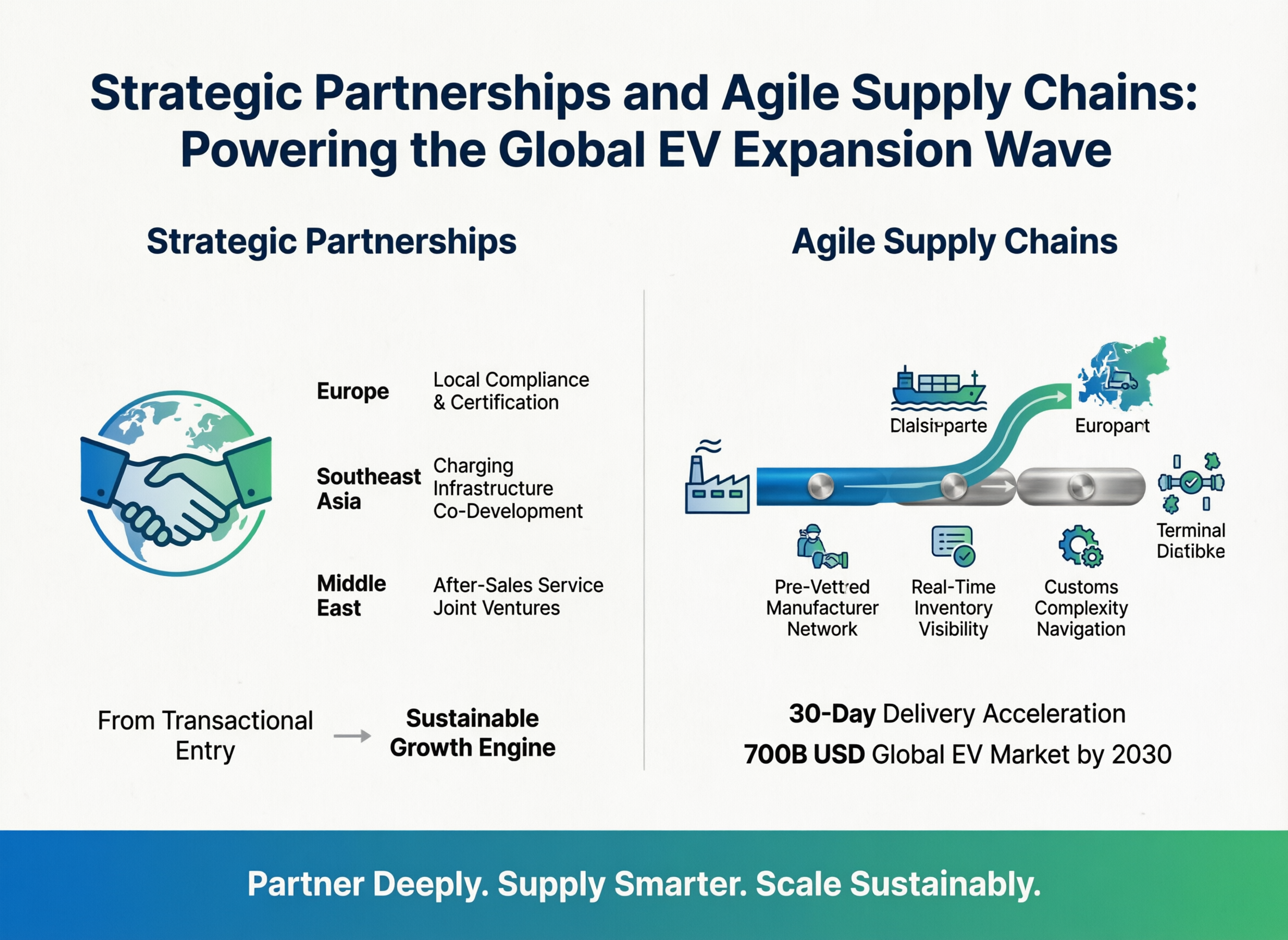 Strategic Partnerships and Agile Supply Chains: Powering the Global EV Expansion Wave
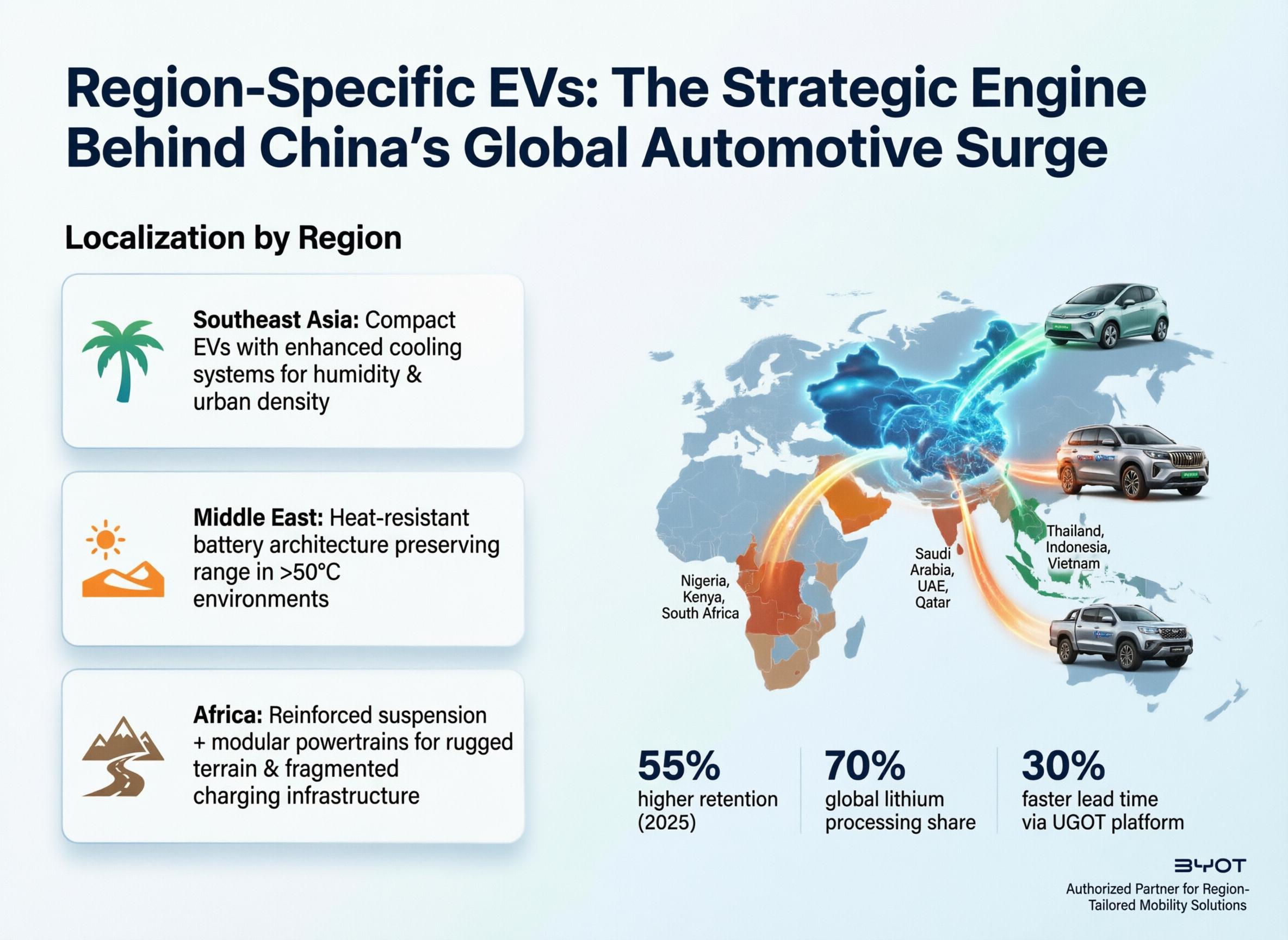 Region-Specific EVs: The Strategic Engine Behind China’s Global Automotive Surge