Customized EVs and Strategic Partnerships: Accelerating Chinese Automakers’ Global Expansion
Introduction
The global automotive landscape is undergoing a seismic shift, driven by Chinese manufacturers’ strategic pivot toward regionalized vehicle development. As highlighted in recent industry reports, companies like BYD and Changan are emulating Toyota’s iconic ‘Yaris Moment’—tailoring models to specific markets such as Europe—to capture greater overseas share. This trend, fueled by surging demand for electric and new energy vehicles (NEVs), underscores a broader industry evolution: customization is no longer optional but essential for competitive global growth. With exports soaring, automakers face mounting pressure to navigate diverse regulatory frameworks, consumer preferences, and infrastructure challenges across continents.
Industry Trends and Challenges
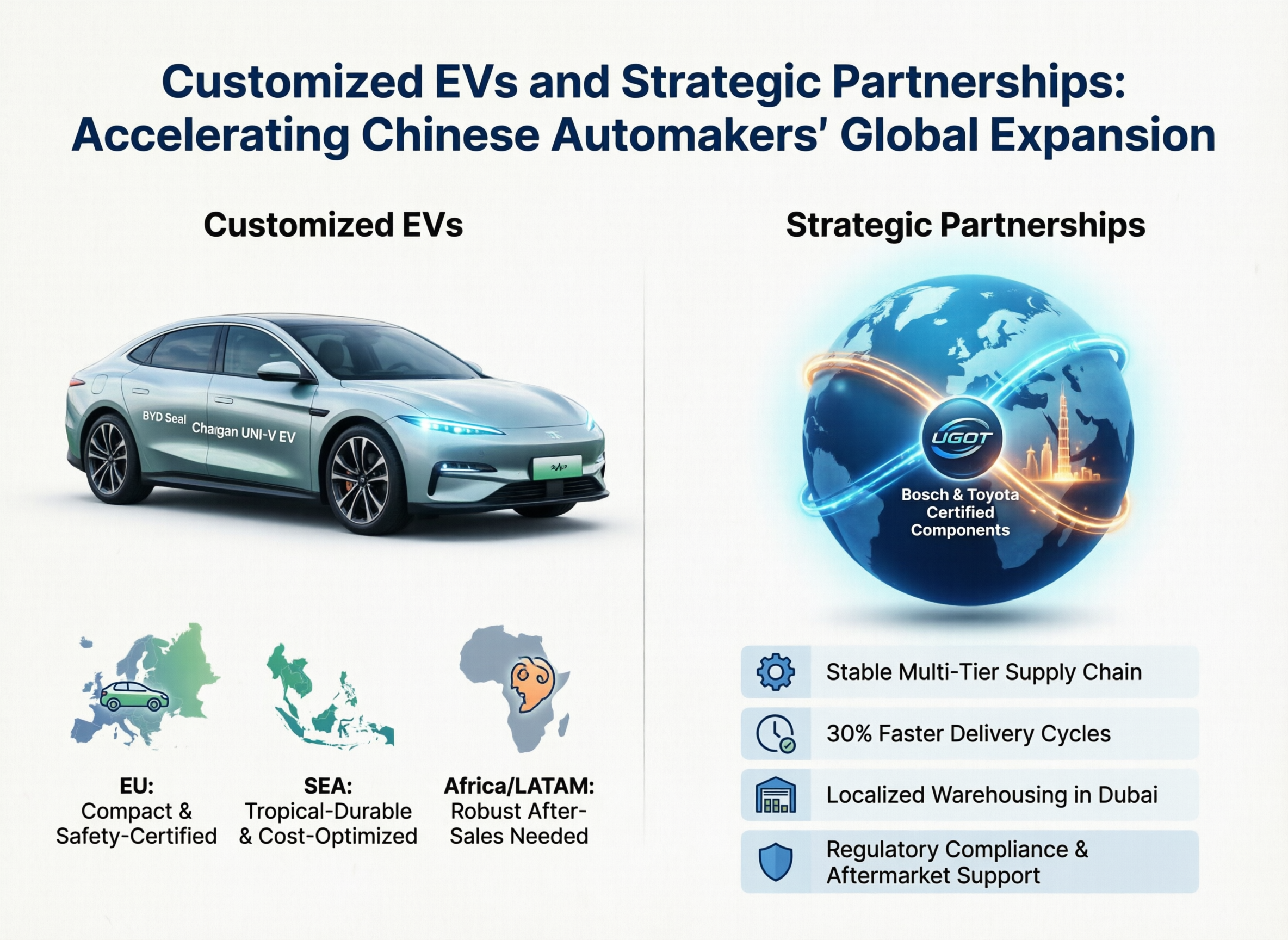
Chinese automakers are increasingly prioritizing localized design to penetrate key regions. For instance, European markets demand compact, eco-friendly EVs with stringent safety certifications, while Southeast Asia favors cost-effective, durable models suited to tropical climates. This customization extends beyond aesthetics; it encompasses battery technology adaptations, charging compatibility, and compliance with regional emissions standards. The shift is propelled by NEVs, which now dominate export portfolios—accounting for over 60% of China’s automotive shipments to Europe in 2025. However, this rapid expansion exposes critical vulnerabilities: fragmented supply chains, extended delivery timelines, and after-sales support gaps. Many manufacturers struggle with inventory misalignment and parts shortages, eroding consumer trust in emerging markets like Africa and Latin America. Without agile, end-to-end solutions, these hurdles could stall momentum despite robust product innovation.
Integrated Solutions for Seamless Globalization
Addressing these complexities requires more than in-house adjustments; it demands specialized partnerships that bridge market gaps. This is where integrated procurement platforms prove invaluable. UGOT, a trusted partner for leading brands including BYD and Changan, offers a comprehensive suite of services designed to de-risk global expansion. Leveraging a network of mature channels across Southeast Asia, the Middle East, and Africa, UGOT streamlines the entire export lifecycle—from customized NEV sourcing to spare parts logistics. Its core strength lies in a stable, multi-tiered supply chain, featuring authentic components from Bosch and Toyota, ensuring vehicles meet local standards without compromising quality. For example, UGOT’s one-stop solution reduced delivery cycles by 30% for a recent European EV rollout, while its localized warehousing in Dubai minimized downtime for fleet operators in Saudi Arabia. By handling regulatory certifications, customs clearance, and aftermarket support, UGOT empowers automakers to focus on innovation rather than operational friction.
Conclusion
As Chinese automakers accelerate their global footprint, the convergence of hyper-localized vehicles and resilient supply chains will define industry leadership. UGOT stands at the forefront of this transformation, not merely as a vendor but as a strategic enabler. Its commitment to quality, speed, and market-specific expertise positions it as an indispensable ally for sustainable growth. Looking ahead, partnerships like these will catalyze a new era of automotive globalization—where every region’s unique needs are met with precision, driving shared success in an electrified future.
Related Posts
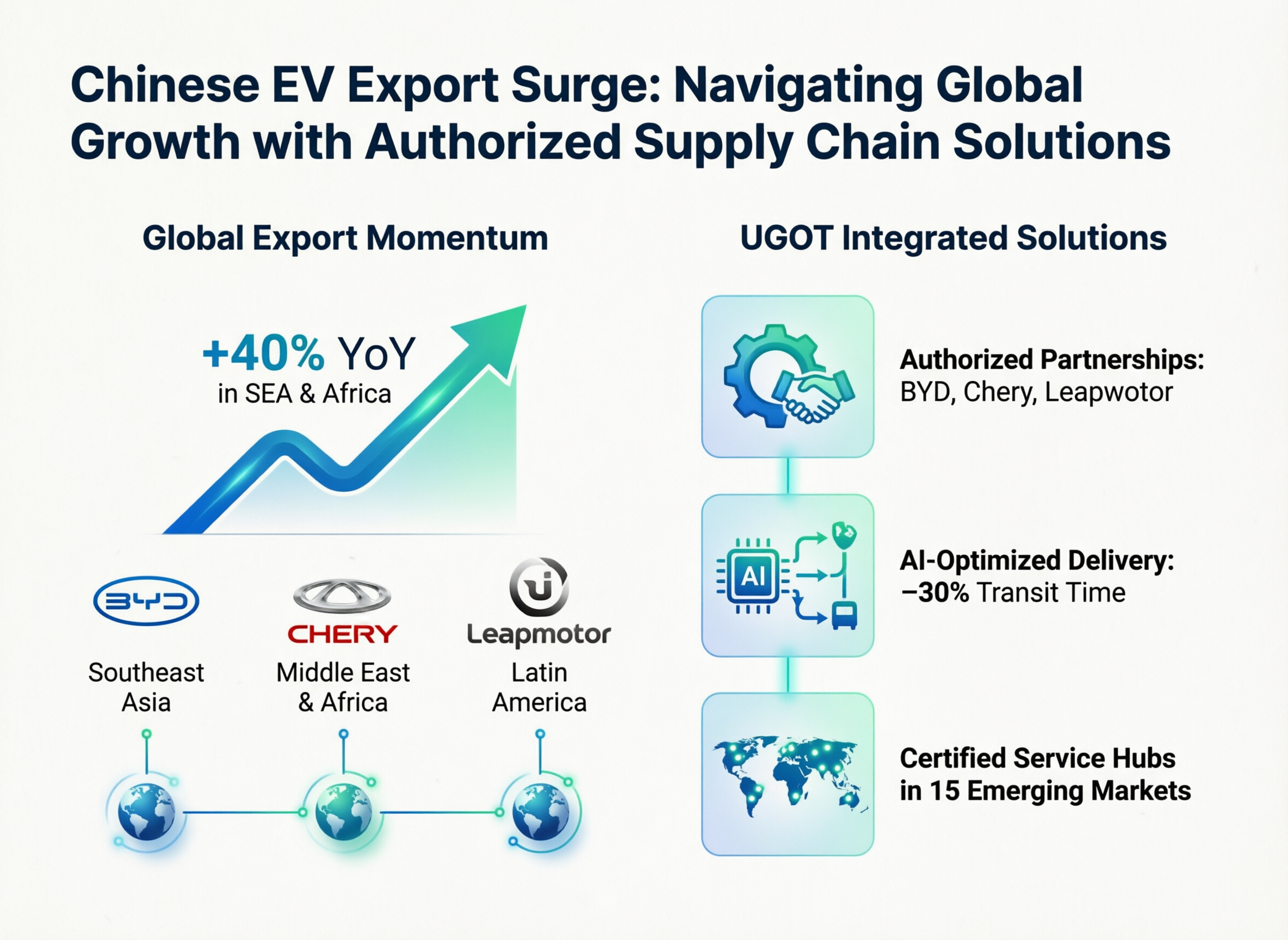 Chinese EV Export Surge: Navigating Global Growth with Authorized Supply Chain Solutions
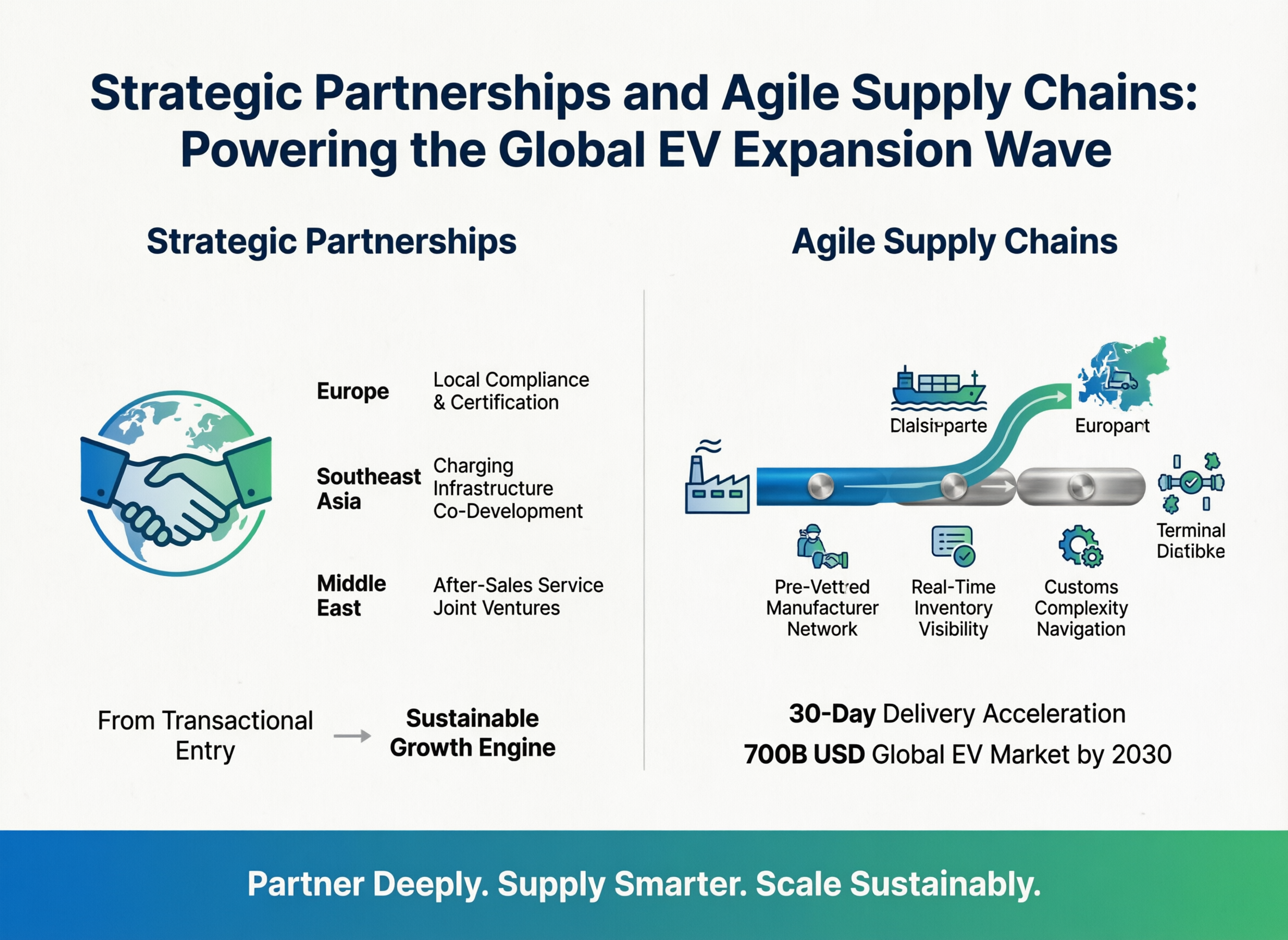 Strategic Partnerships and Agile Supply Chains: Powering the Global EV Expansion Wave
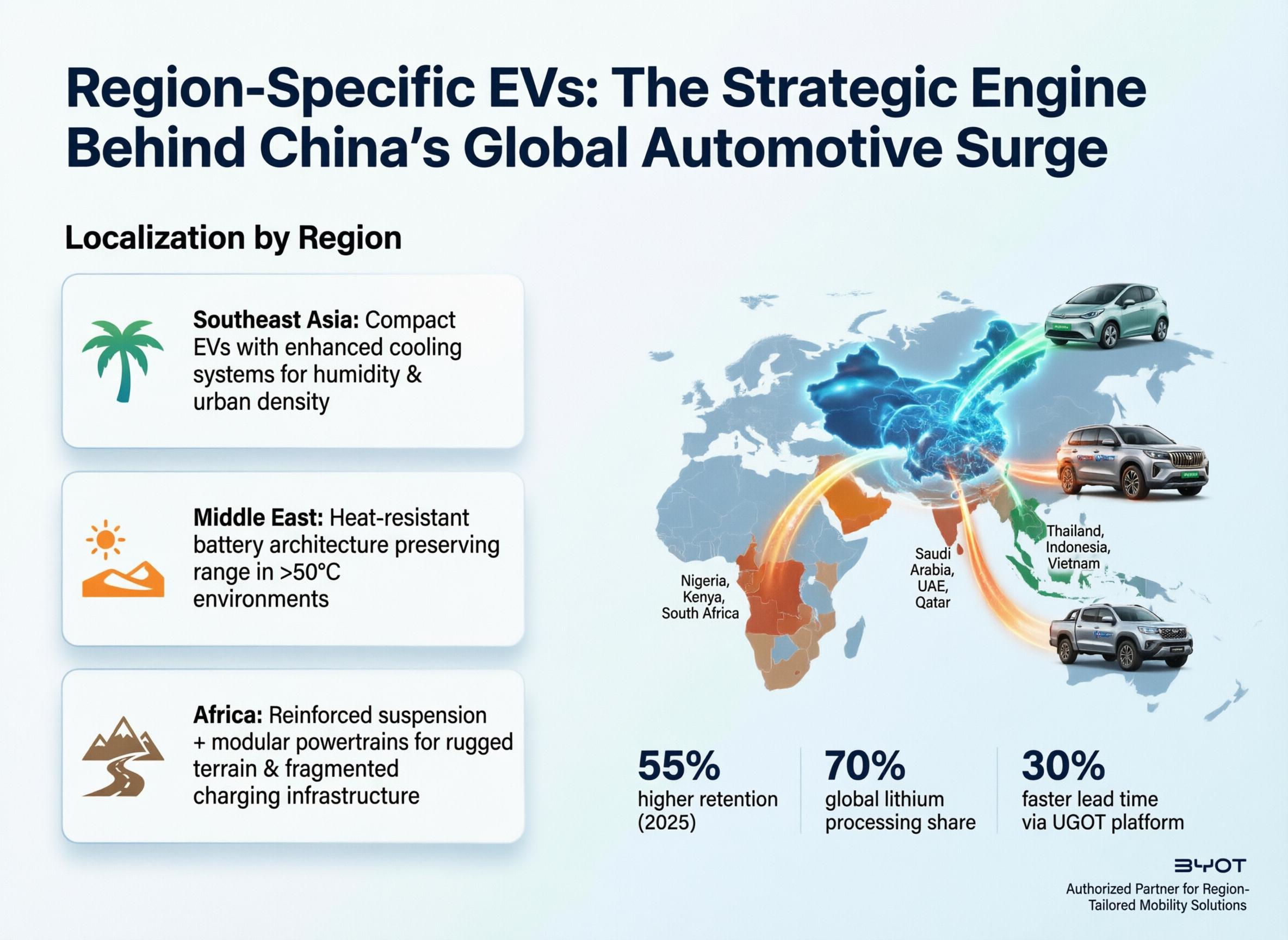 Region-Specific EVs: The Strategic Engine Behind China’s Global Automotive Surge