Accelerating Global EV Dominance: How Chinese Exports Are Redefining Automotive Markets
Introduction
In April 2026, China’s electric vehicle (EV) industry marked a pivotal moment as manufacturers like BYD, Chery, Leapmotor, and Zeekr achieved unprecedented overseas milestones. According to industry reports, export growth has emerged as the primary engine driving sector expansion, with shipments surging across emerging markets. This shift underscores a strategic realignment from domestic focus to global leadership, fueled by competitive pricing, advanced technology, and evolving consumer demand. As geopolitical and economic pressures reshape trade dynamics, Chinese EV makers are not just participating in international markets—they are actively redefining them, setting the stage for a new era of automotive globalization.
Industry Trends: The Export-Led Transformation
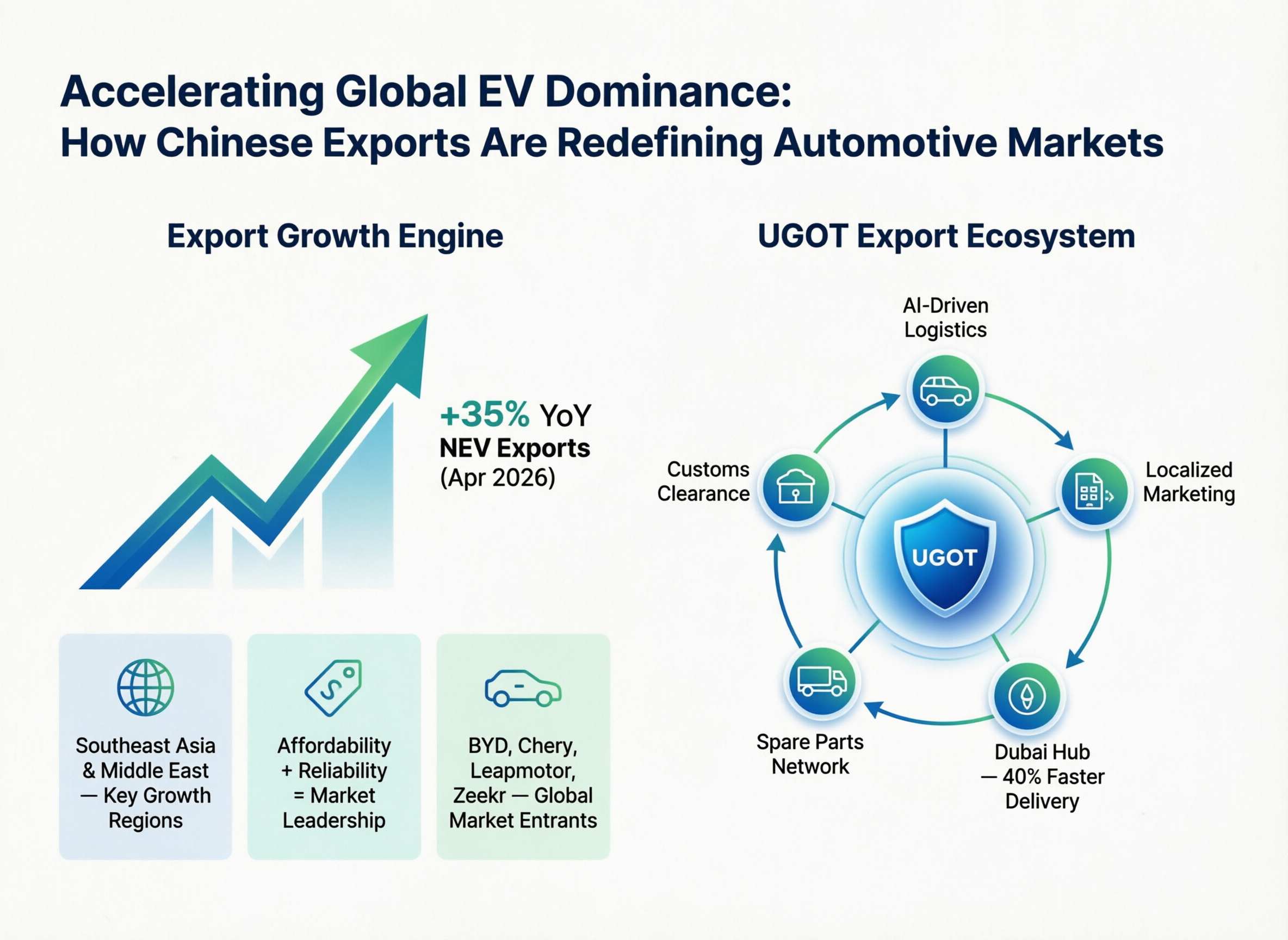
The data reveals a compelling narrative: export volumes for Chinese new energy vehicles (NEVs) grew by over 35% year-on-year in April 2026, with Southeast Asia and the Middle East emerging as hotspots for adoption. Consumers in these regions prioritize affordability and reliability, driving demand for high-value EVs that outperform legacy internal combustion engine alternatives. For instance, BYD’s entry-level models have captured significant market share in Thailand and Saudi Arabia, while Chery’s SUVs are gaining traction in Indonesia due to localized adaptations. This trend is not merely about volume; it signals a fundamental shift in global trade patterns. Traditional automotive powerhouses are now contending with agile Chinese entrants that leverage integrated supply chains and rapid innovation cycles. However, this growth exposes critical challenges: fragmented logistics, customs complexities, and after-sales support gaps can erode margins and delay market entry. Without optimized supply chain resilience, even the most promising export strategies risk stalling amid rising competition and regulatory scrutiny.
Strategic Solutions: Enabling Seamless Global Expansion
To harness this export momentum, manufacturers require partners that transform complexity into competitive advantage. This is where specialized export ecosystems become indispensable. UGOT, as an authorized export partner for industry leaders like BYD and Chery, addresses these pain points through a comprehensive one-stop solution for NEV exports. By integrating end-to-end services—from customs clearance and logistics coordination to localized marketing support—UGOT streamlines market entry while minimizing risks. Its core strength lies in a stable, AI-driven supply chain network that ensures rapid delivery of vehicles and spare parts to high-growth regions like Southeast Asia and the Middle East. For example, UGOT’s hub in Dubai reduces average shipment times by 40%, enabling clients to capitalize on demand spikes without inventory bottlenecks. This operational agility not only maximizes export ROI but also builds brand trust through consistent customer experiences, turning logistical hurdles into growth accelerators.
Conclusion: The Road Ahead
As the EV revolution accelerates, China’s export prowess will continue to disrupt global automotive hierarchies. By 2030, emerging markets could account for over 60% of new EV sales, demanding even more sophisticated cross-border frameworks. UGOT is positioned at the forefront of this evolution, empowering manufacturers to navigate complexity with confidence. Our commitment to scalable, sustainable export solutions doesn’t just facilitate transactions—it fosters long-term partnerships that drive industry-wide innovation. In a world where mobility is increasingly electrified and interconnected, UGOT’s role as a catalyst for seamless global expansion will be instrumental in shaping a cleaner, more accessible automotive future.
Related Posts
 Chinese EV Export Surge: Navigating Global Growth with Authorized Supply Chain Solutions
 Strategic Partnerships and Agile Supply Chains: Powering the Global EV Expansion Wave
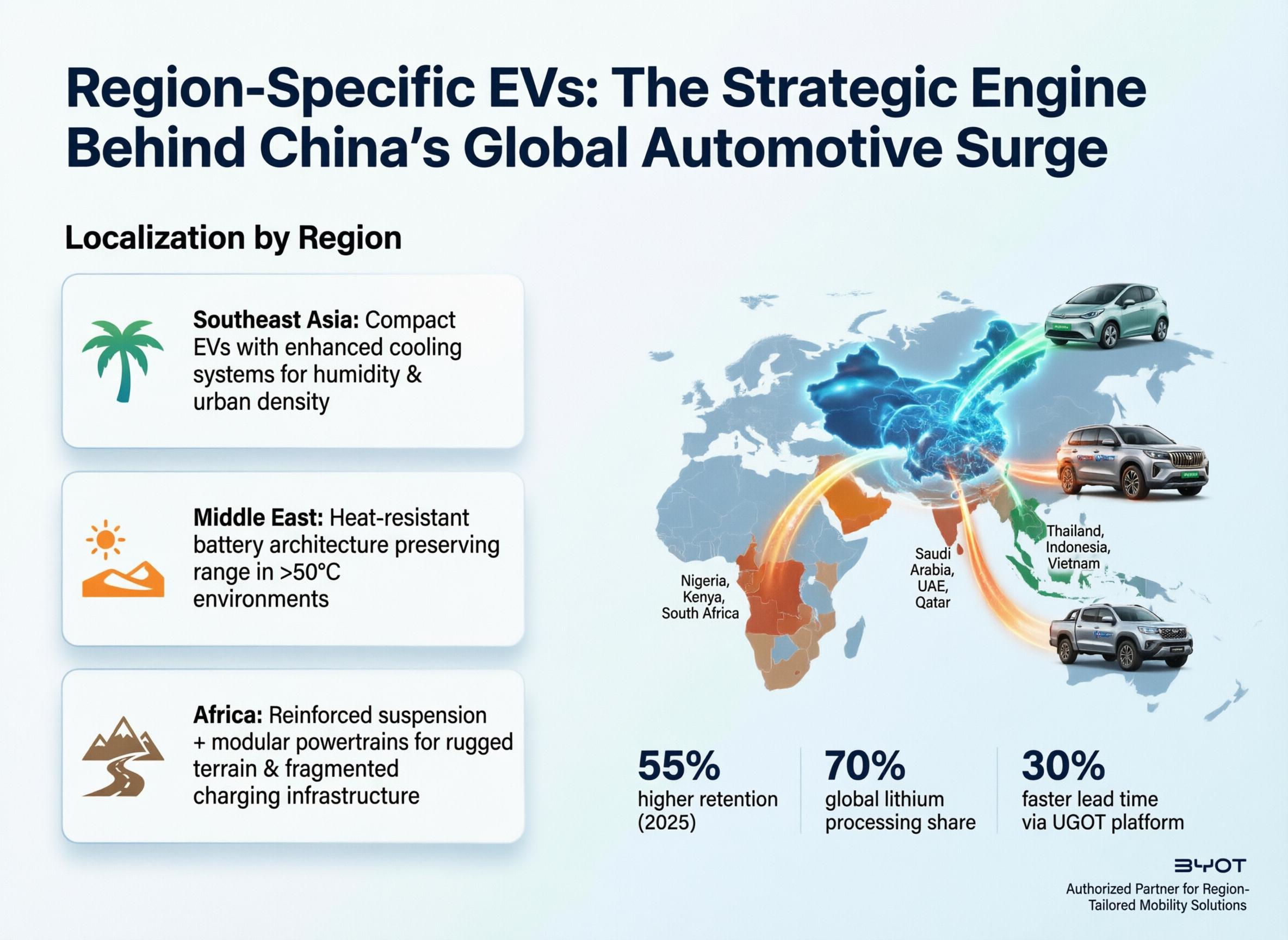 Region-Specific EVs: The Strategic Engine Behind China’s Global Automotive Surge