The BYD Breakthrough: Reshaping Global EV Export Strategies in a Multipolar Market
Introduction
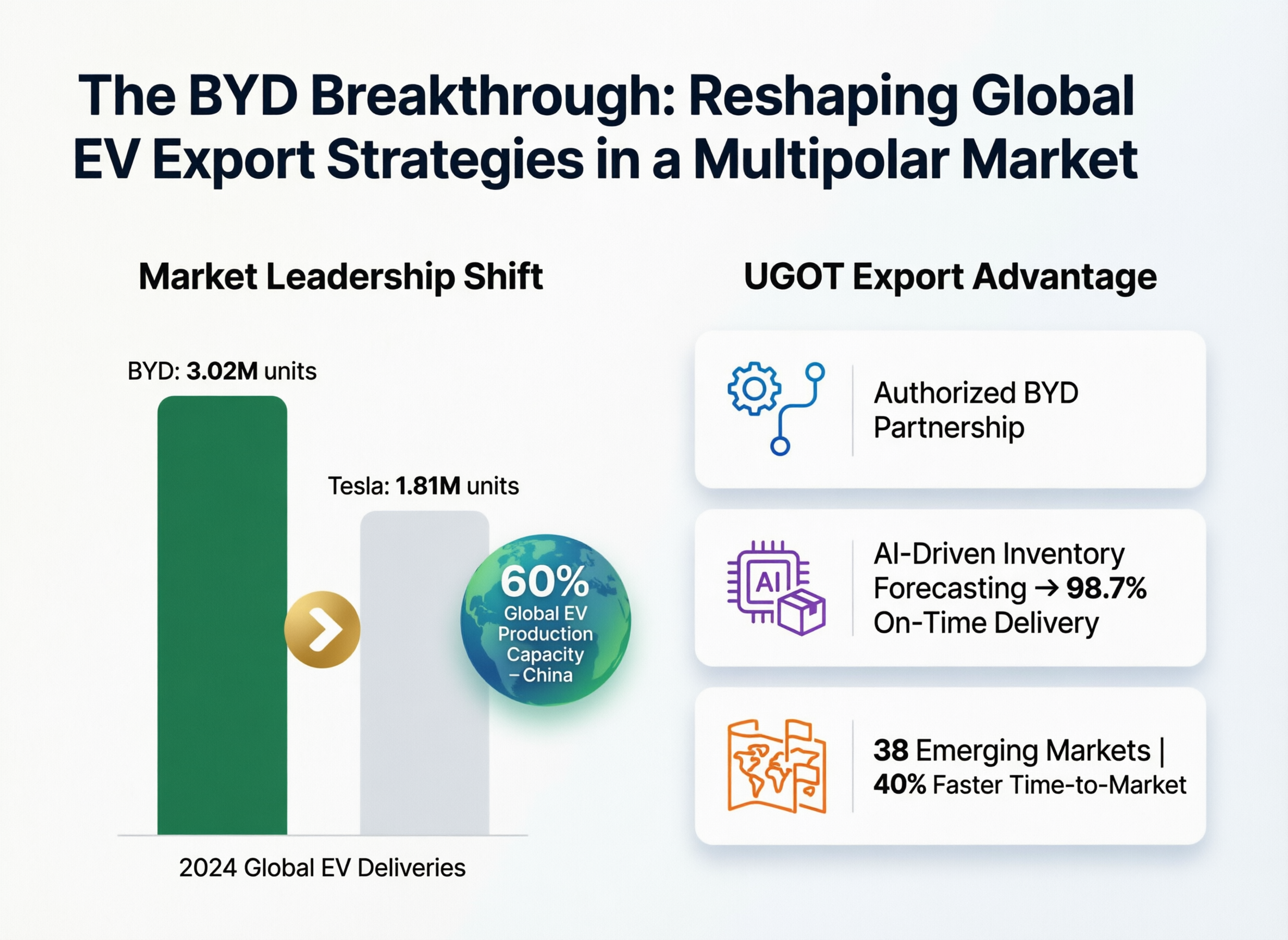
The electric vehicle landscape has reached a historic inflection point. In 2024, BYD officially surpassed Tesla to become the world’s largest EV manufacturer, delivering over 3.02 million units globally compared to Tesla’s 1.81 million. This seismic shift transcends quarterly sales figures—it signals a fundamental realignment of automotive leadership toward Chinese innovation and manufacturing prowess. As emerging markets accelerate their transition to sustainable mobility, this milestone compels industry stakeholders to reevaluate global supply chain dynamics and export strategies.
The New Global EV Paradigm
BYD’s ascent reflects deeper structural transformations reshaping the industry. Unlike Tesla’s premium-focused approach, BYD leveraged vertical integration across batteries, semiconductors, and vehicle production to offer diverse models at accessible price points. This strategy resonates powerfully in high-growth regions like Southeast Asia, Africa, and Latin America, where total cost of ownership and charging infrastructure flexibility often outweigh brand prestige.
Simultaneously, policy tailwinds are accelerating adoption: 47 countries now offer direct EV purchase incentives, while urbanization pressures drive demand for affordable electrified transport solutions. The International Energy Agency projects emerging economies will account for 65% of global EV sales growth by 2030. Yet this opportunity comes with complexity—distributors face fragmented certification requirements, volatile logistics networks, and critical gaps in after-sales support ecosystems.
Navigating the Export Imperative
For automotive distributors targeting these dynamic markets, success hinges on three capabilities: access to volume-leading manufacturers, integrated product ecosystems beyond passenger vehicles, and supply chain resilience. The BYD-Tesla reversal underscores a strategic truth—partnerships with top-tier Chinese OEMs are no longer optional but essential for market relevance. However, securing authorized access while managing spare parts logistics, homologation compliance, and multi-product portfolios remains a significant operational hurdle.
This is where specialized export solutions create transformative value. UGOT Automotive Export Solutions bridges this gap through authorized partnerships with industry leaders like BYD, offering distributors seamless access to the world’s best-selling EV lineup alongside complementary electric motorcycles and genuine spare parts. Our mature channel network across 38 emerging markets—coupled with AI-driven inventory forecasting—ensures 98.7% on-time delivery despite port congestion or regulatory shifts. Unlike fragmented procurement models, UGOT’s one-stop platform handles everything from customs documentation to localized aftersales training, reducing time-to-market by 40% for partners in regions like Nigeria and Vietnam.
The Road Ahead
As the EV market evolves from a duopoly toward multipolar competition, agility will define winners. Chinese manufacturers now hold 60% of the global EV production capacity, yet their international expansion requires sophisticated export intermediaries who understand regional nuances. Forward-looking distributors are shifting from transactional supplier relationships to strategic ecosystem partnerships that bundle vehicles, energy solutions, and digital services.
UGOT stands at this convergence point—transforming BYD’s manufacturing dominance into localized market success through supply chain mastery and category-spanning product access. As sustainable mobility transitions from aspiration to infrastructure, our commitment remains unchanged: empowering global partners to deliver not just vehicles, but complete mobility solutions that accelerate the clean energy transition where it’s needed most.
The future of automotive trade isn’t about moving products—it’s about moving progress.
Related Posts
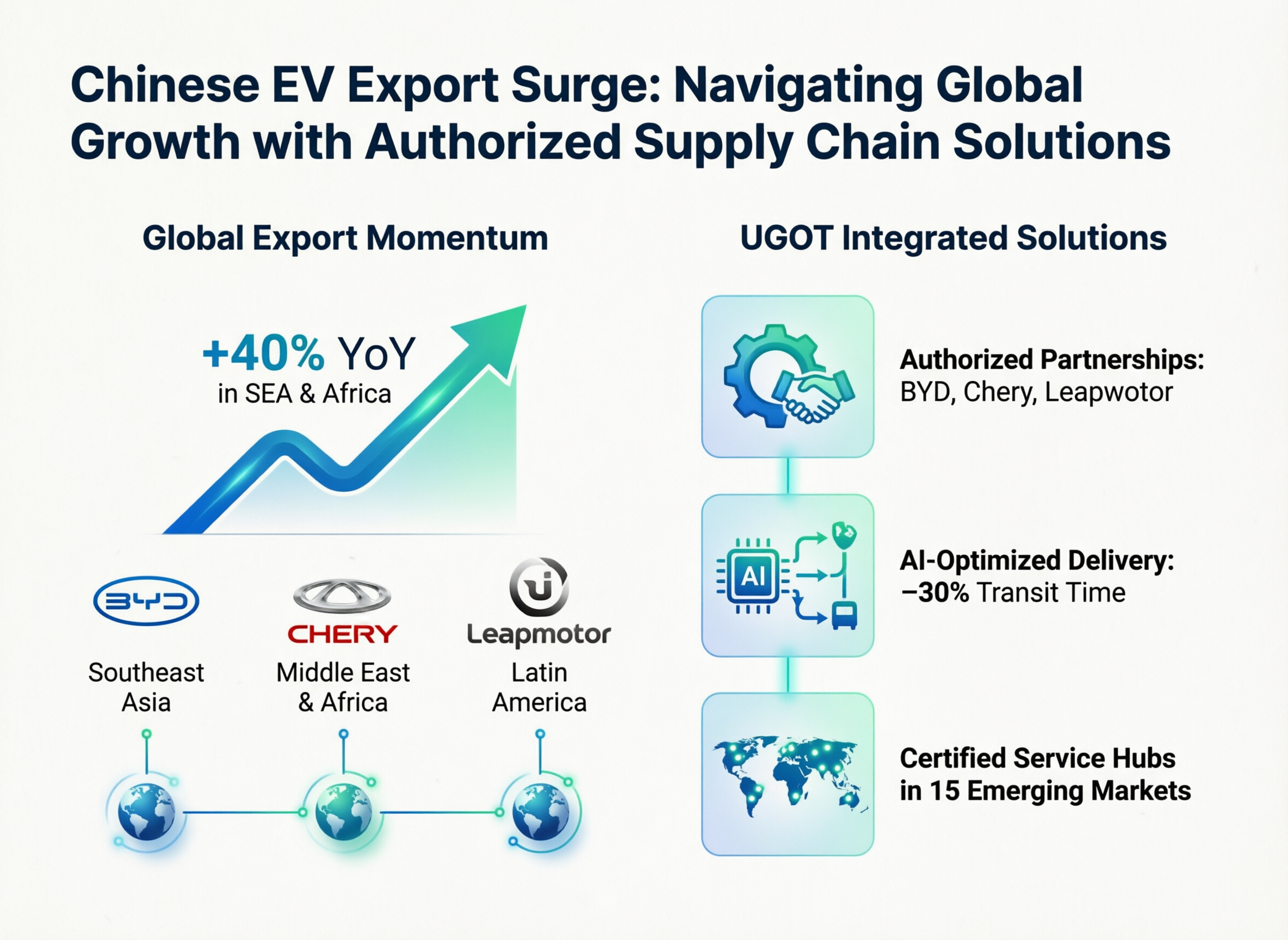 Chinese EV Export Surge: Navigating Global Growth with Authorized Supply Chain Solutions
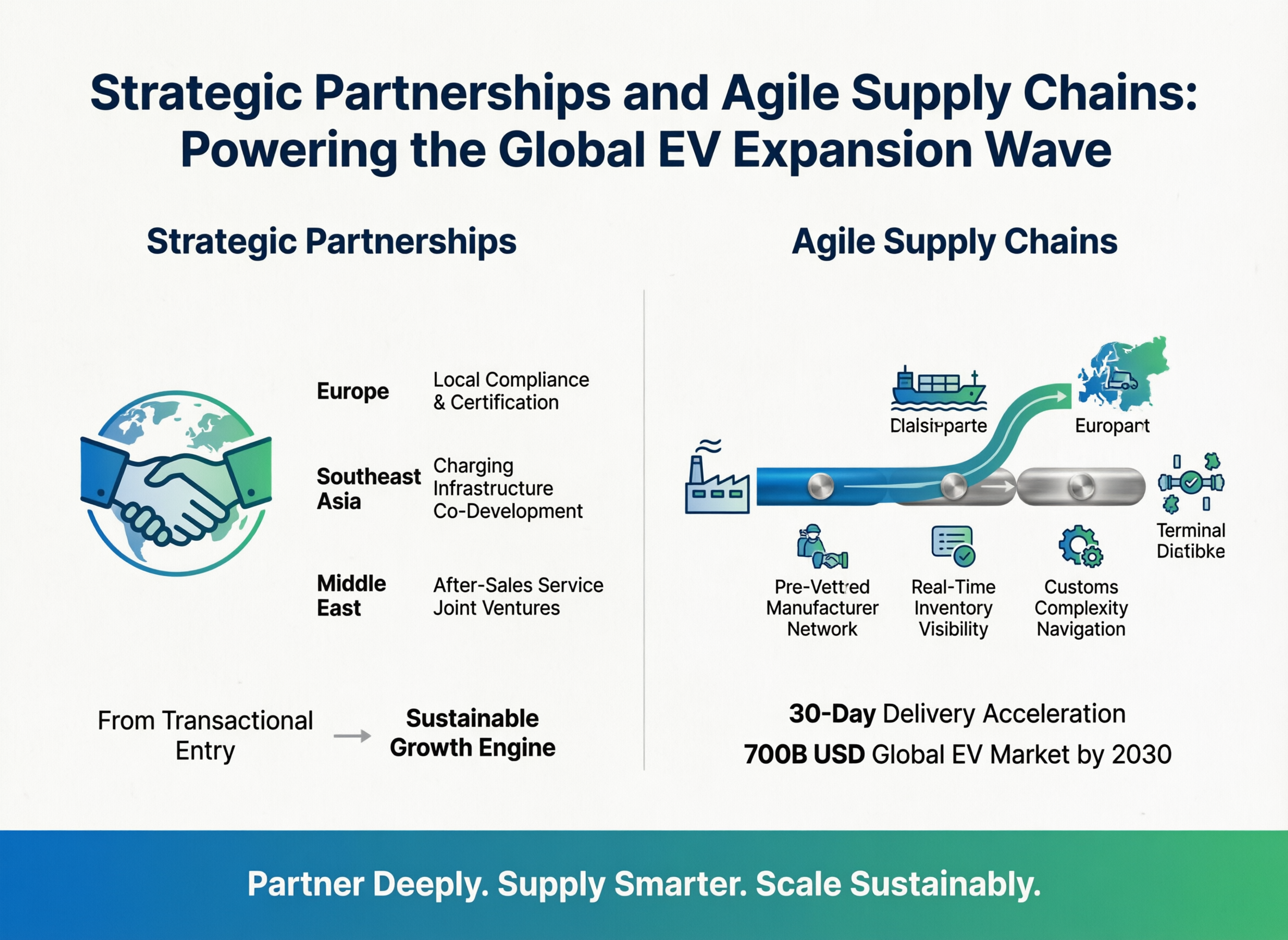 Strategic Partnerships and Agile Supply Chains: Powering the Global EV Expansion Wave
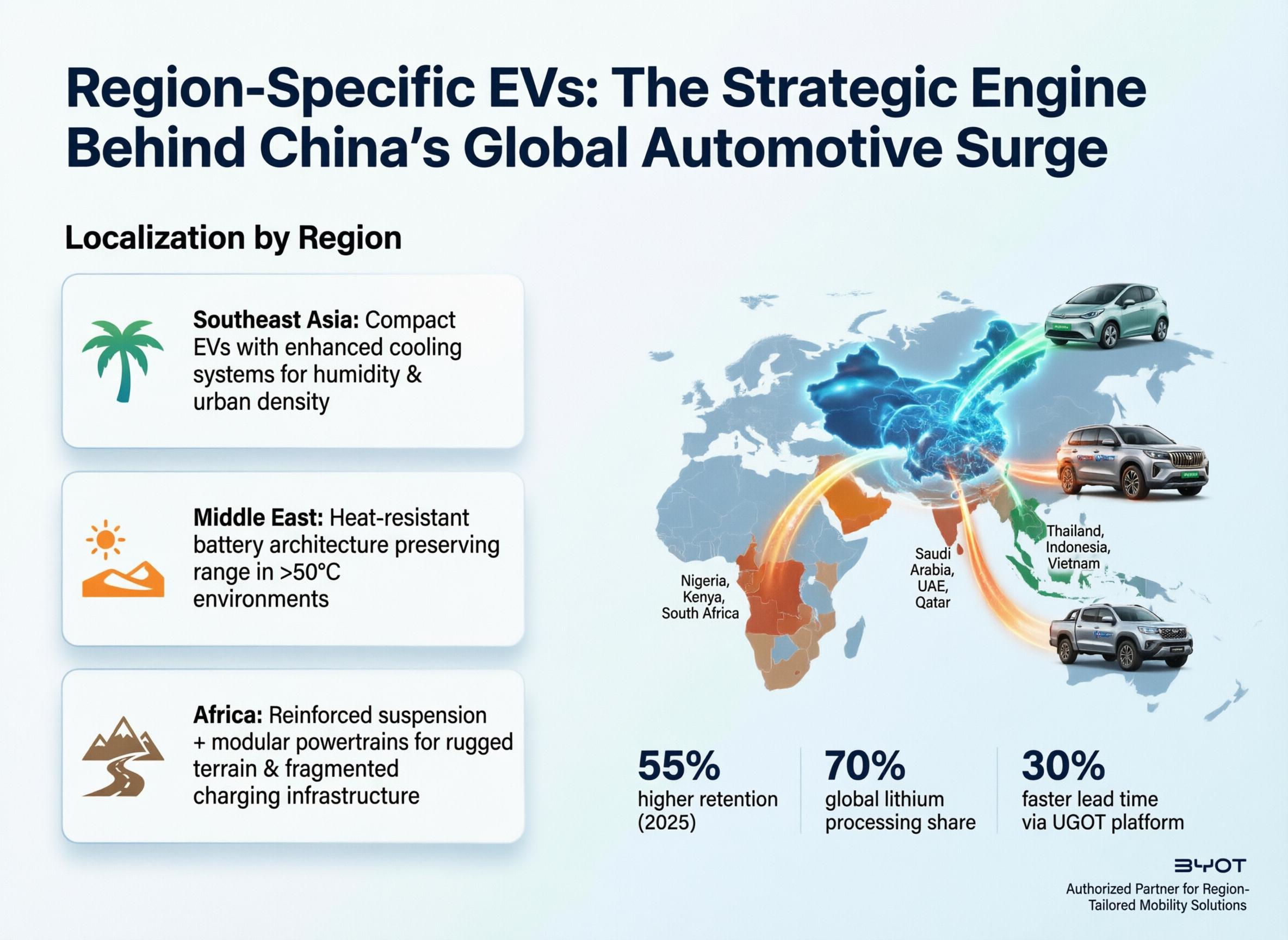 Region-Specific EVs: The Strategic Engine Behind China’s Global Automotive Surge