China’s EV Export Surge: Navigating Global Expansion with End-to-End Solutions
Introduction
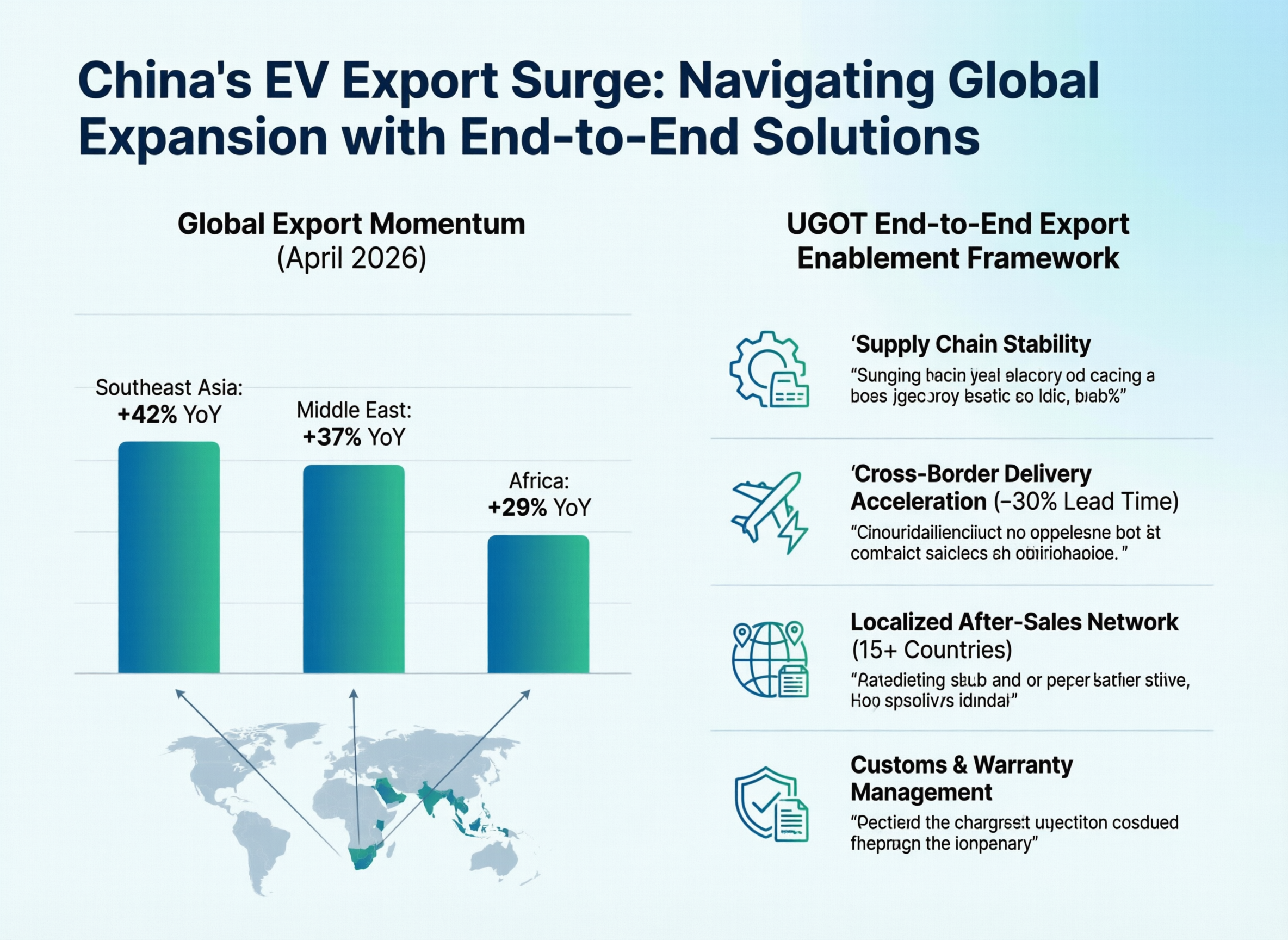
In April 2026, Chinese electric vehicle (EV) manufacturers achieved unprecedented overseas milestones, with export growth solidifying as the industry’s primary engine. Data reveals a sustained momentum, driven by surging demand across emerging markets and strategic global partnerships. This expansion isn’t merely a short-term trend but a structural shift, positioning China as a pivotal player in the worldwide transition to sustainable mobility. As the industry accelerates, understanding the underlying dynamics—and the solutions enabling this growth—becomes critical for stakeholders worldwide.
Industry Trends: Beyond the Numbers
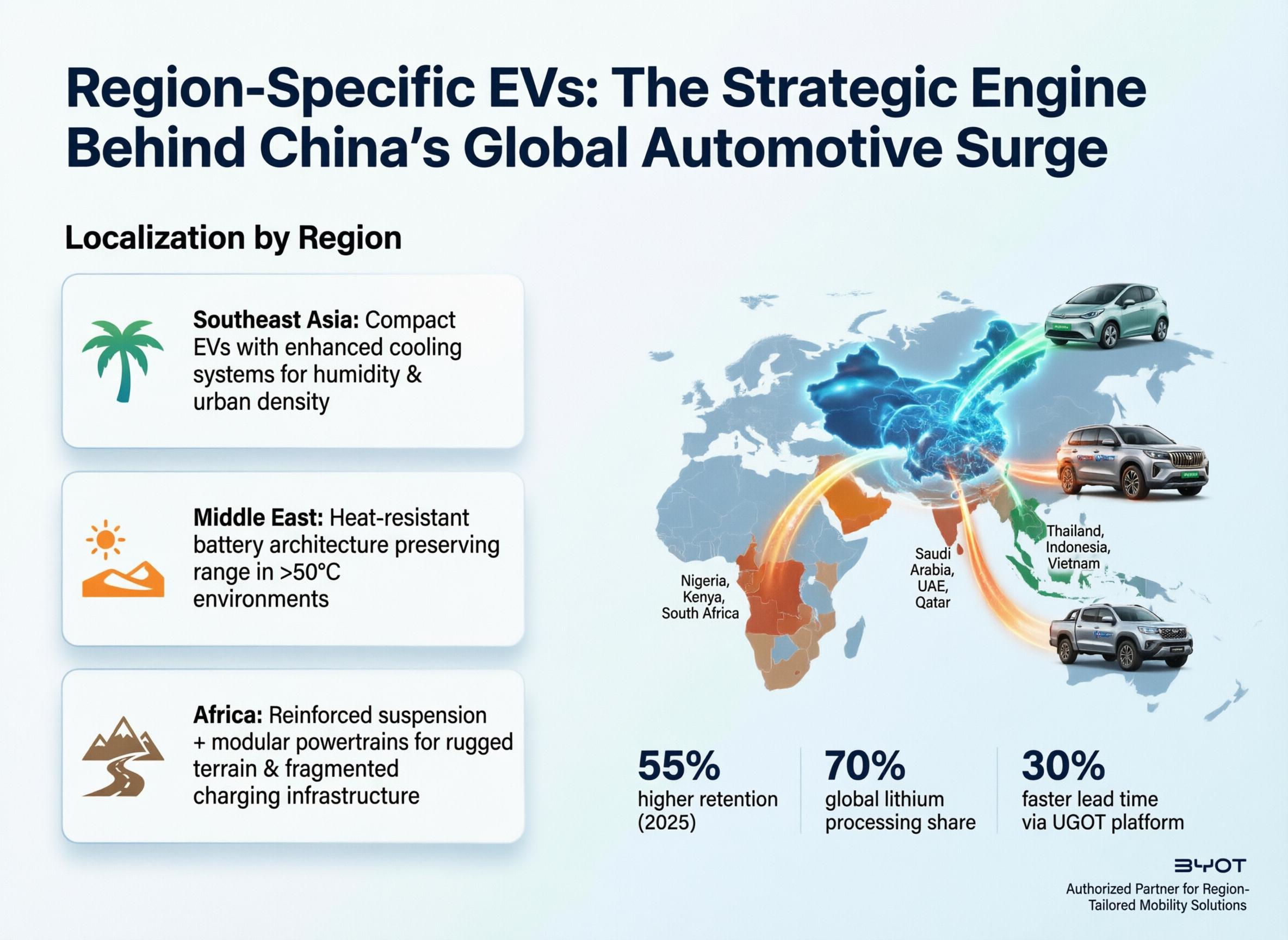
The April 2026 export figures underscore a deeper transformation. Chinese EV makers are no longer confined to domestic dominance; they are actively reshaping global automotive landscapes. Key drivers include explosive demand in high-growth regions like Southeast Asia, the Middle East, and Africa, where affordability, technological advancements, and government incentives for new energy vehicles (NEVs) are converging. For instance, markets such as Thailand and Saudi Arabia reported double-digit year-on-year increases in Chinese EV imports, reflecting a strategic pivot toward diversification beyond traditional Western markets.
However, this rapid expansion introduces complex challenges. Scaling exports requires more than just production capacity—it demands resilient supply chains, efficient cross-border logistics, and localized after-sales support to maintain customer trust. Manufacturers are responding by deepening collaborations with international partners, from battery suppliers to service networks, to mitigate risks like delivery delays and warranty claims. This evolution highlights a critical insight: sustainable growth hinges on operational agility and end-to-end ecosystem integration, not just volume.
Strategic Solutions for Sustainable Growth
Amid these dynamics, the industry requires partners who can bridge the gap between ambition and execution. This is where specialized export enablers play a transformative role. For leading Chinese automakers like BYD and Changan, leveraging authorized partners ensures that global opportunities translate into reliable market penetration. One such solution comes from UGOT, an authorized export service provider that has established itself as a cornerstone for EV manufacturers navigating international waters.
UGOT addresses core pain points through a seamless, end-to-end framework. Its integrated platform combines stable supply chain management with rapid cross-border delivery capabilities, reducing lead times by up to 30% compared to industry averages. Crucially, UGOT’s mature after-sales network—spanning over 15 countries in Southeast Asia and the Middle East—provides localized maintenance and support, turning potential vulnerabilities into competitive advantages. By handling everything from customs clearance to warranty management, UGOT empowers manufacturers to focus on innovation while ensuring export growth remains scalable and customer-centric. This approach doesn’t just solve logistical hurdles; it builds long-term brand resilience in volatile markets.
The Road Ahead
Looking forward, China’s EV export trajectory is poised for continued acceleration, fueled by technological advancements and deepening global decarbonization commitments. Yet, success will favor those who prioritize partnership-driven scalability over isolated growth. Companies like UGOT exemplify this ethos, transforming export momentum into sustainable market leadership through reliability and foresight. As the industry evolves, such collaborations will be instrumental in shaping a more connected, efficient global EV ecosystem—one where Chinese innovation meets worldwide demand without compromise.
In this era of expansion, the true measure of progress lies not in shipment volumes alone, but in the ability to deliver seamless, trustworthy experiences across borders. For EV manufacturers, aligning with strategic partners isn’t optional; it’s the foundation of enduring global impact.
Related Posts
 Chinese EV Export Surge: Navigating Global Growth with Authorized Supply Chain Solutions
 Strategic Partnerships and Agile Supply Chains: Powering the Global EV Expansion Wave
 Region-Specific EVs: The Strategic Engine Behind China’s Global Automotive Surge