Strategic Alliances and Supply Chain Agility: Powering Chinese EV Brands’ European Expansion
Introduction
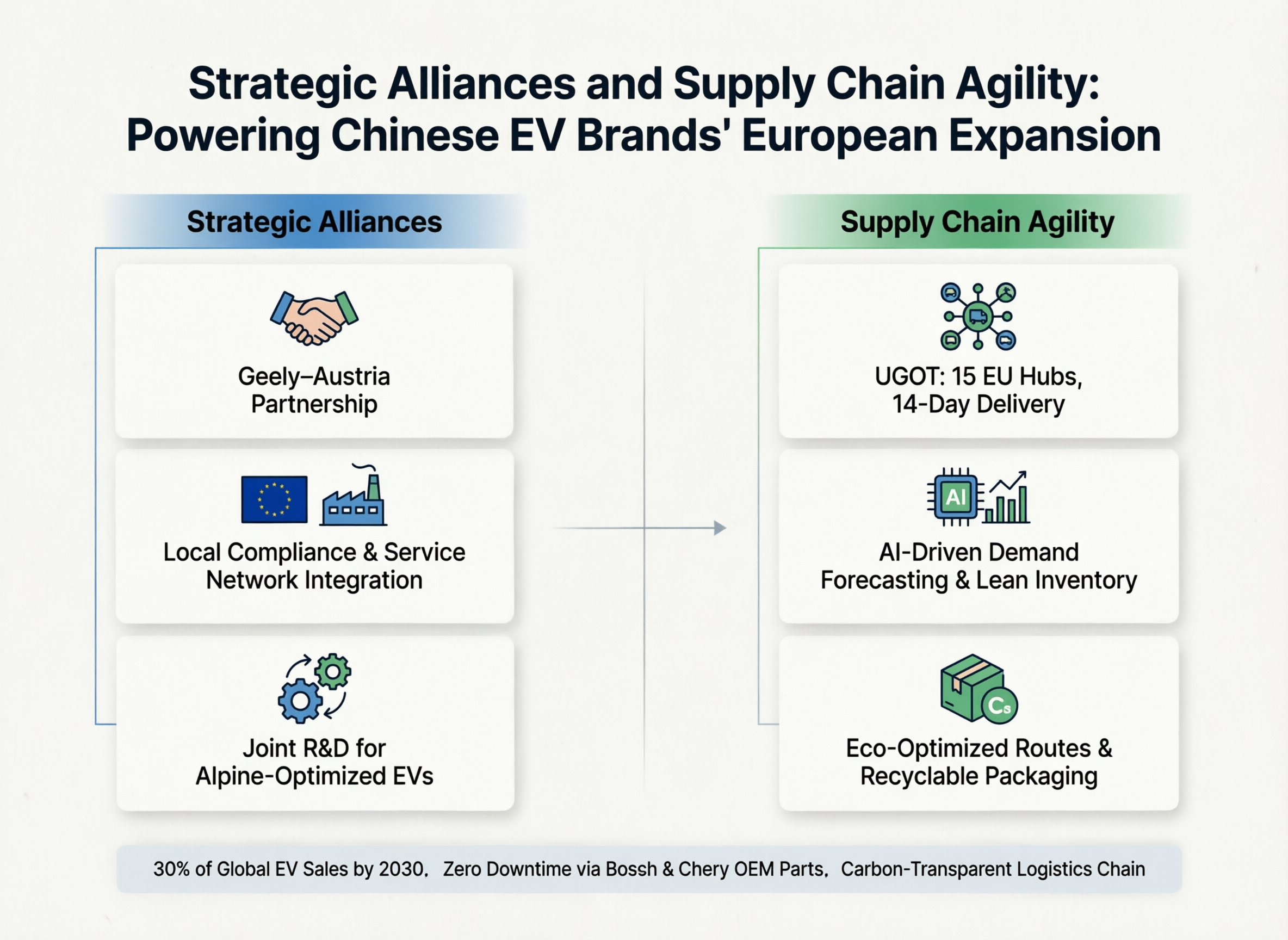
The automotive landscape is undergoing a seismic shift as Chinese electric vehicle (EV) manufacturers accelerate their global footprint. Recent moves, such as Geely’s strategic partnership in Austria, underscore a deliberate pivot toward Europe—a market projected to command 30% of global EV sales by 2030. This expansion transcends mere market entry; it reflects a sophisticated long-term strategy where localized alliances and resilient supply chains converge to navigate regulatory complexities, cultural nuances, and surging consumer demand for sustainable mobility. As European policymakers tighten emissions standards and incentivize clean transportation, the race is no longer just about manufacturing prowess but about ecosystem integration.
Industry Dynamics: Partnerships as Growth Catalysts
Europe’s EV adoption curve continues to steepen, driven by stringent EU Green Deal targets and consumer appetite for premium, tech-integrated vehicles. However, penetrating this mature market presents unique hurdles: fragmented regulatory frameworks across member states, entrenched competition from legacy automakers, and expectations for seamless after-sales experiences. Chinese OEMs like Geely are responding not with isolated forays but through deep-rooted partnerships—such as its Austria collaboration—which de-risk entry by leveraging local expertise in compliance, distribution, and service networks. These alliances also address a critical industry pain point: supply chain volatility. With semiconductor shortages and raw material fluctuations disrupting production cycles, localized partnerships enable agile inventory management and faster response to demand spikes. Crucially, they signal a broader industry evolution where success hinges on sustainability beyond the product—encompassing circular economy principles, ethical sourcing, and community engagement to build brand trust.
Enabling Sustainable Growth: The Supply Chain Imperative
For automakers scaling internationally, the weakest link often lies between factory gates and end-users. Fragmented logistics, customs bottlenecks, and inconsistent parts availability can erode competitive advantages overnight. This is where specialized export partners become strategic force multipliers. UGOT has emerged as a pivotal enabler for Chinese EV brands targeting Europe, offering an integrated export ecosystem designed for speed and reliability. Unlike conventional distributors, UGOT provides end-to-end solutions—from customs clearance and multimodal transport to warehousing—specializing in high-demand segments like electric SUVs and two-wheelers. Its mature network across 15 European hubs ensures delivery within 14 days, a critical advantage in a market where delayed shipments directly impact brand perception.
Equally vital is UGOT’s focus on aftermarket resilience. By guaranteeing access to certified spare parts—including Bosch and Chery OEM components—through dedicated service centers, it mitigates downtime risks for fleet operators and dealers. This supply chain stability, paired with AI-driven demand forecasting, allows automakers to maintain lean inventories while meeting Europe’s rigorous service-level expectations. For brands like Geely, such partnerships transform expansion from a capital-intensive gamble into a scalable, data-driven growth engine.
Conclusion: The Road Ahead
As Europe’s EV market evolves toward 2030, success will favor those who blend technological innovation with operational elasticity. Strategic partnerships will deepen beyond market access to co-create localized products—such as compact EVs tailored for Alpine terrain or urban micro-mobility solutions. Simultaneously, supply chain transparency will become a non-negotiable brand differentiator, with consumers demanding visibility into carbon footprints and ethical sourcing. UGOT is positioned at this convergence, not merely as a logistics provider but as a growth architect. By harmonizing export efficiency with sustainability imperatives—such as optimizing routes for lower emissions and prioritizing recyclable packaging—it empowers automakers to turn global ambitions into trusted local presences. In an era where the journey matters as much as the destination, resilient partnerships will define the next chapter of automotive globalization.
Related Posts
 Chinese EV Export Surge: Navigating Global Growth with Authorized Supply Chain Solutions
 Strategic Partnerships and Agile Supply Chains: Powering the Global EV Expansion Wave
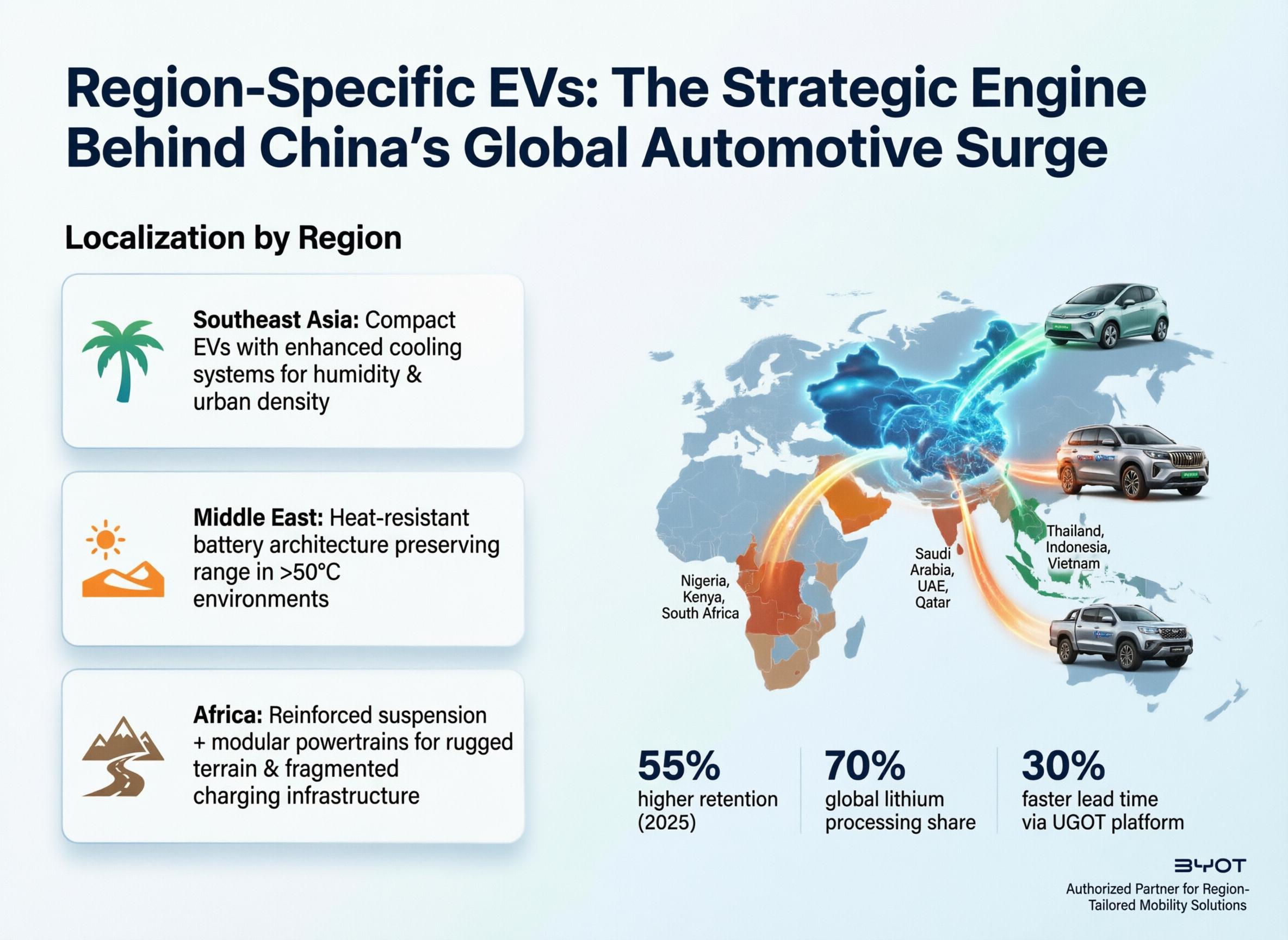 Region-Specific EVs: The Strategic Engine Behind China’s Global Automotive Surge