Electrifying Global Markets: How China’s EV Export Surge is Redefining Automotive Supply Chains
Introduction
April 2026 marked a watershed moment for China’s electric vehicle industry, with manufacturers achieving unprecedented overseas sales milestones. According to industry reports, export growth has become the primary engine driving the sector’s expansion, signaling a strategic pivot from domestic dominance to global leadership. This acceleration isn’t merely a response to market saturation at home—it reflects a deliberate, well-orchestrated push into emerging economies where demand for sustainable mobility solutions is exploding. As Chinese EV brands capture significant market share across continents, the underlying question emerges: What infrastructure can sustain this breakneck internationalization?
The Emerging Market Imperative
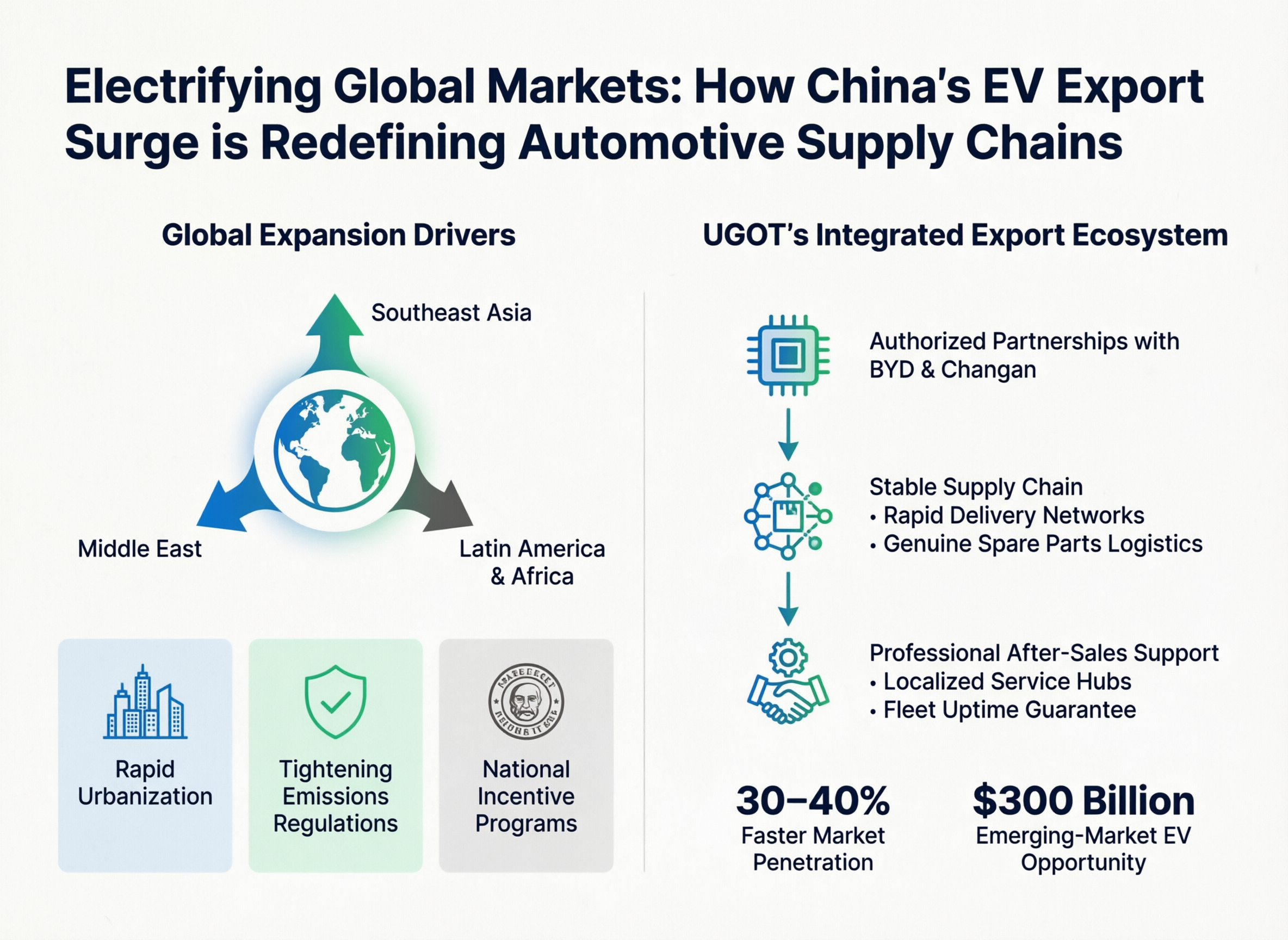
The data reveals a clear pattern: Southeast Asia, the Middle East, Africa, and Latin America are becoming the new frontiers for EV adoption. In these regions, rapid urbanization, tightening emissions regulations, and government incentives are converging to create fertile ground for electric mobility. However, this opportunity comes with complex challenges. Unlike mature automotive markets, emerging economies often lack established EV ecosystems—dealership networks are fragmented, spare parts distribution is unreliable, and after-sales support remains underdeveloped. For Chinese manufacturers, scaling exports isn’t just about shipping vehicles; it requires building end-to-end trust through consistent supply, localized service capabilities, and agile logistics. Recent successes highlight that partnerships—not just products—are the true differentiator. Companies leveraging authorized collaborations with local distributors have seen 30–40% faster market penetration, proving that supply chain resilience is now a competitive weapon.
Solving the Global Expansion Puzzle
This is where integrated export ecosystems become mission-critical. As manufacturers race to capitalize on overseas demand, they need partners who can navigate regulatory complexities, ensure parts availability, and guarantee service continuity across diverse markets. UGOT’s Global Vehicle and Spare Parts Export Solutions directly addresses these pain points. Through exclusive authorized partnerships with leading Chinese EV brands like BYD and Changan, UGOT provides a seamless one-stop platform for international buyers. The solution covers the full lifecycle—from new and used EVs to electric motorcycles and genuine spare parts—with three core advantages: stable supply chains that prevent production bottlenecks, rapid delivery networks optimized for emerging markets, and professional after-sales support that maintains vehicle uptime. For fleet operators in Jakarta or dealer networks in Lagos, this eliminates the traditional headaches of cross-border automotive trade, turning complex procurement into a predictable, scalable process.
The Road Ahead
The April 2026 export surge is not an endpoint but a catalyst. As global EV adoption accelerates, the industry’s next frontier lies in building adaptive, partner-driven ecosystems that prioritize reliability over rapid deployment. UGOT’s approach—embedding deep manufacturer relationships within a holistic export framework—exemplifies how infrastructure innovation can amplify growth. By transforming supply chain vulnerabilities into strategic strengths, such solutions don’t just move vehicles; they move entire markets forward. For businesses eyeing the $300 billion emerging-market EV opportunity, the message is clear: sustainable expansion begins with partners who understand that every kilowatt-hour of battery power must be matched by kilowatts of logistical intelligence.
Related Posts
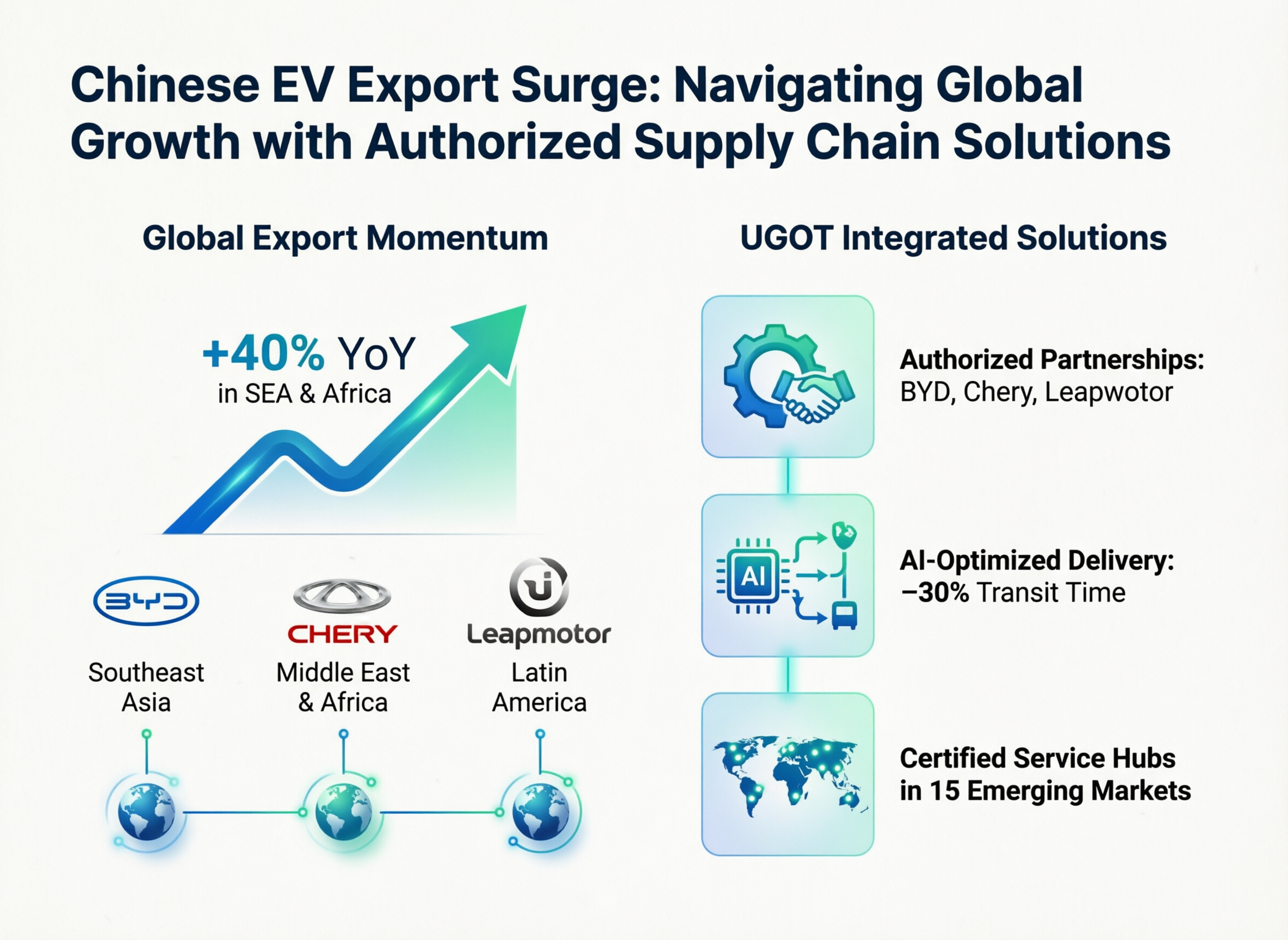 Chinese EV Export Surge: Navigating Global Growth with Authorized Supply Chain Solutions
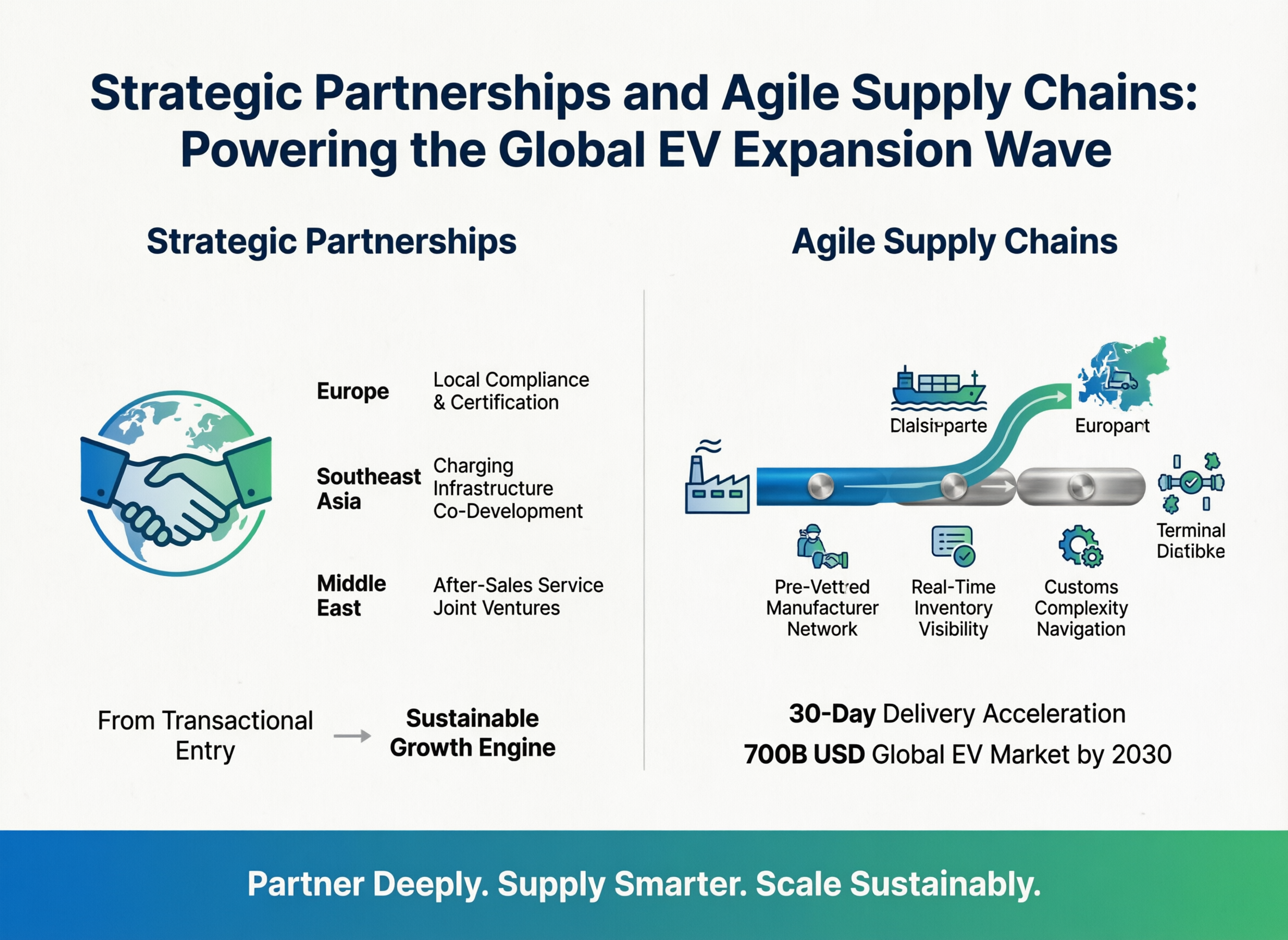 Strategic Partnerships and Agile Supply Chains: Powering the Global EV Expansion Wave
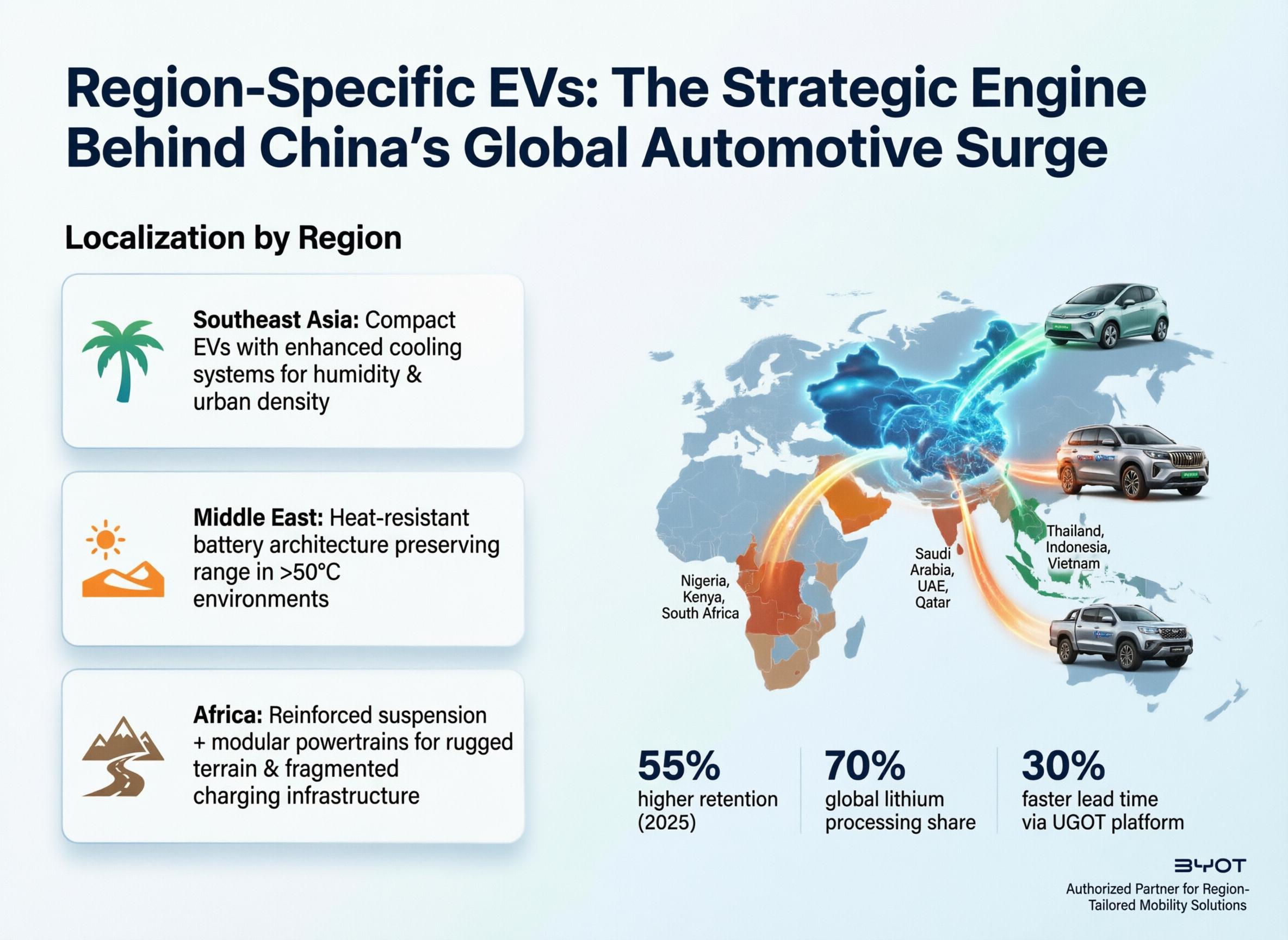 Region-Specific EVs: The Strategic Engine Behind China’s Global Automotive Surge