
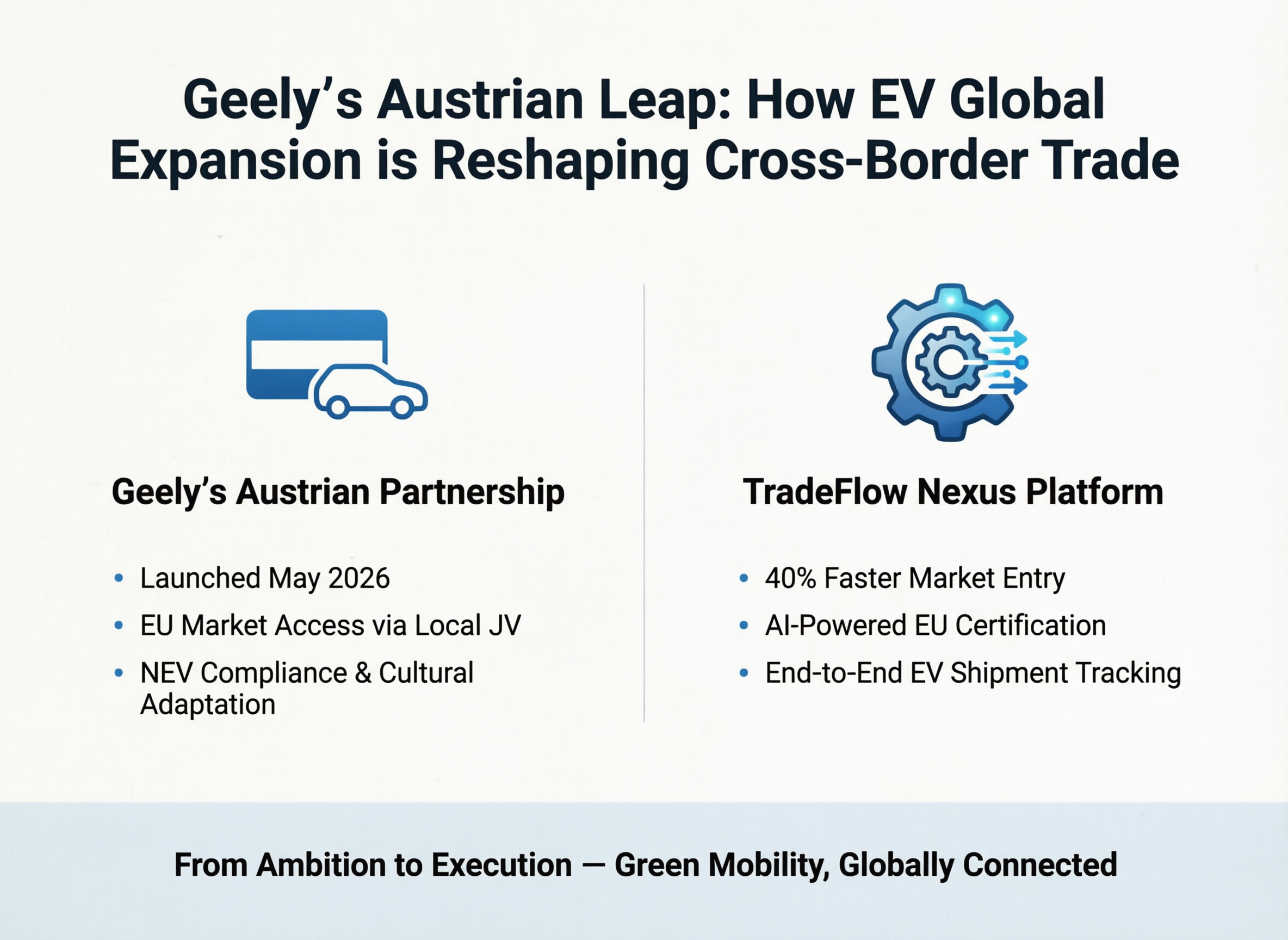
Geely’s Austrian Leap: How EV Global Expansion is Reshaping Cross-Border Trade
Introduction
The automotive industry is witnessing a seismic shift as Chinese manufacturers accelerate their global footprint, exemplified by Geely’s recent strategic partnership in Austria. Announced in May 2026, this move underscores a broader trend: automakers are leveraging localized collaborations to penetrate European markets, with electric vehicles (EVs) and new energy vehicles (NEVs) at the forefront. As Europe’s demand for sustainable mobility surges, such expansions are not merely about market share—they signal a fundamental realignment of global trade dynamics toward greener, more integrated supply chains. This evolution presents both opportunities and complexities for enterprises navigating international growth.
Industry Trends: The EV-Driven Global Pivot
Geely’s Austrian venture is a microcosm of a larger transformation. European consumers and regulators are increasingly prioritizing low-emission transportation, driving EV adoption rates to unprecedented heights. According to industry analyses, this demand is catalyzing a green transition in automotive trade, where partnerships—like Geely’s—are critical for overcoming cultural and regulatory barriers. Localized alliances enable manufacturers to tailor products to regional preferences while sharing infrastructure costs, thus accelerating market entry. However, this strategy also exposes vulnerabilities: fragmented supply chains, compliance hurdles across diverse jurisdictions, and logistical inefficiencies can erode margins and delay launches. For instance, navigating Austria’s stringent emissions standards or EU customs protocols requires specialized expertise that many expanding firms lack. The lesson is clear—successful global expansion hinges not just on product innovation but on robust, adaptive operational frameworks that turn ambition into execution.
Navigating Complexity: The Role of Integrated Export Solutions
Amid these challenges, the need for seamless cross-border infrastructure has never been more acute. Companies venturing into markets like Europe often grapple with siloed processes—from customs clearance to last-mile delivery—that inflate costs and risks. This is where integrated export platforms become indispensable. At our organization, we’ve developed TradeFlow Nexus, a comprehensive solution designed to streamline global market entry. Unlike traditional services, TradeFlow Nexus unifies logistics coordination, regulatory compliance, and digital payment systems into a single interface, reducing setup time by up to 40% and cutting operational overhead. For automotive players, this means real-time tracking of EV shipments, automated certification for EU sustainability standards, and AI-driven risk forecasting—all tailored to sectors like NEVs. By transforming complexity into clarity, TradeFlow Nexus empowers businesses to replicate Geely’s success without the trial-and-error burden, turning expansion from a gamble into a scalable strategy.
Conclusion: The Road Ahead
As EV adoption reshapes global trade corridors, the future belongs to enterprises that embrace agility and sustainability. Geely’s Austrian partnership is not an endpoint but a blueprint—a testament to how strategic localization, coupled with intelligent infrastructure, can unlock growth. At our core, we believe that democratizing access to world-class export tools is key to this evolution. TradeFlow Nexus embodies this vision, enabling manufacturers to focus on innovation while we handle the intricacies of global commerce. Together, we’re not just facilitating transactions; we’re building a more connected, resilient automotive ecosystem where green mobility thrives across borders.
Related Posts
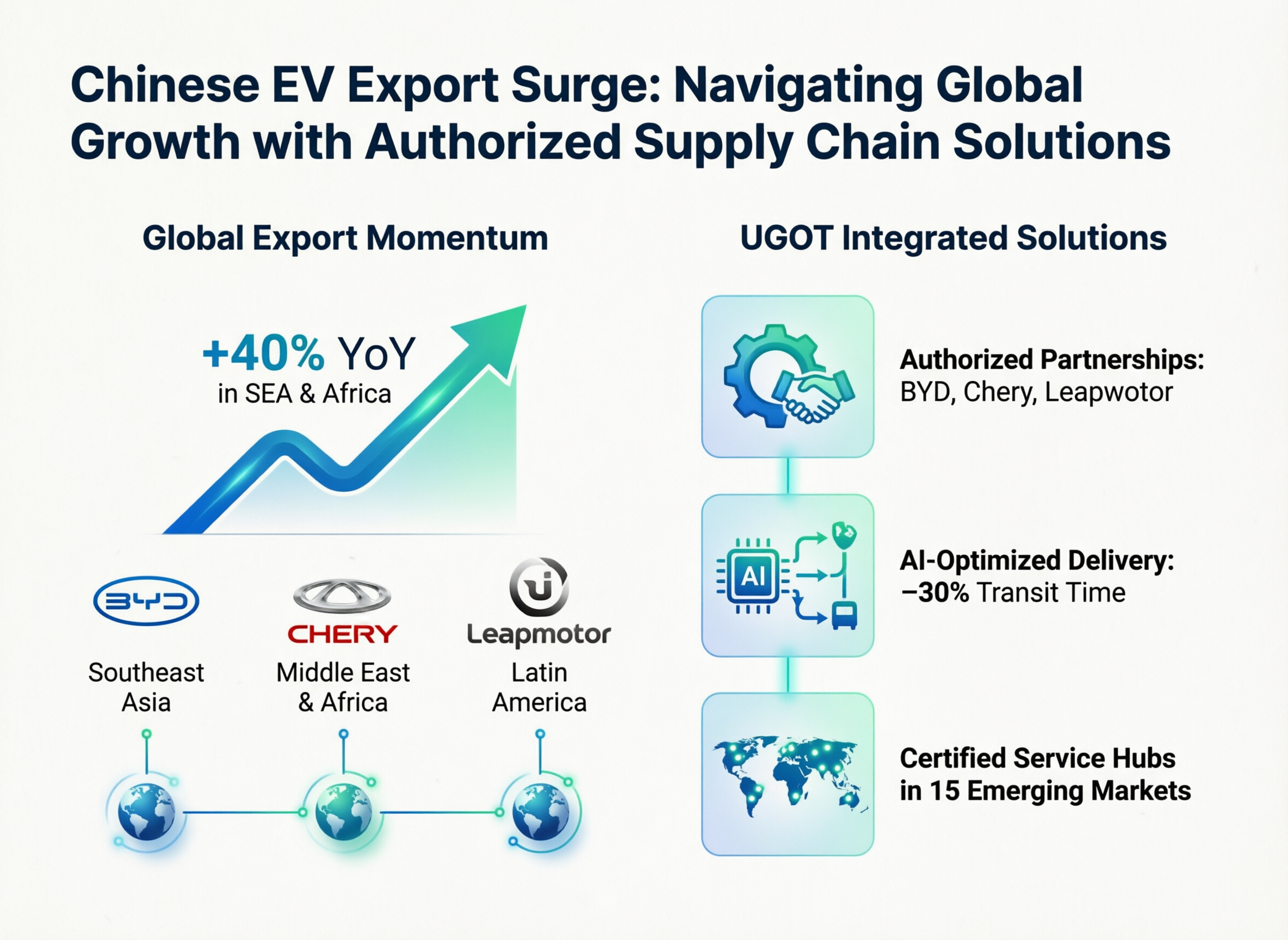 Chinese EV Export Surge: Navigating Global Growth with Authorized Supply Chain Solutions
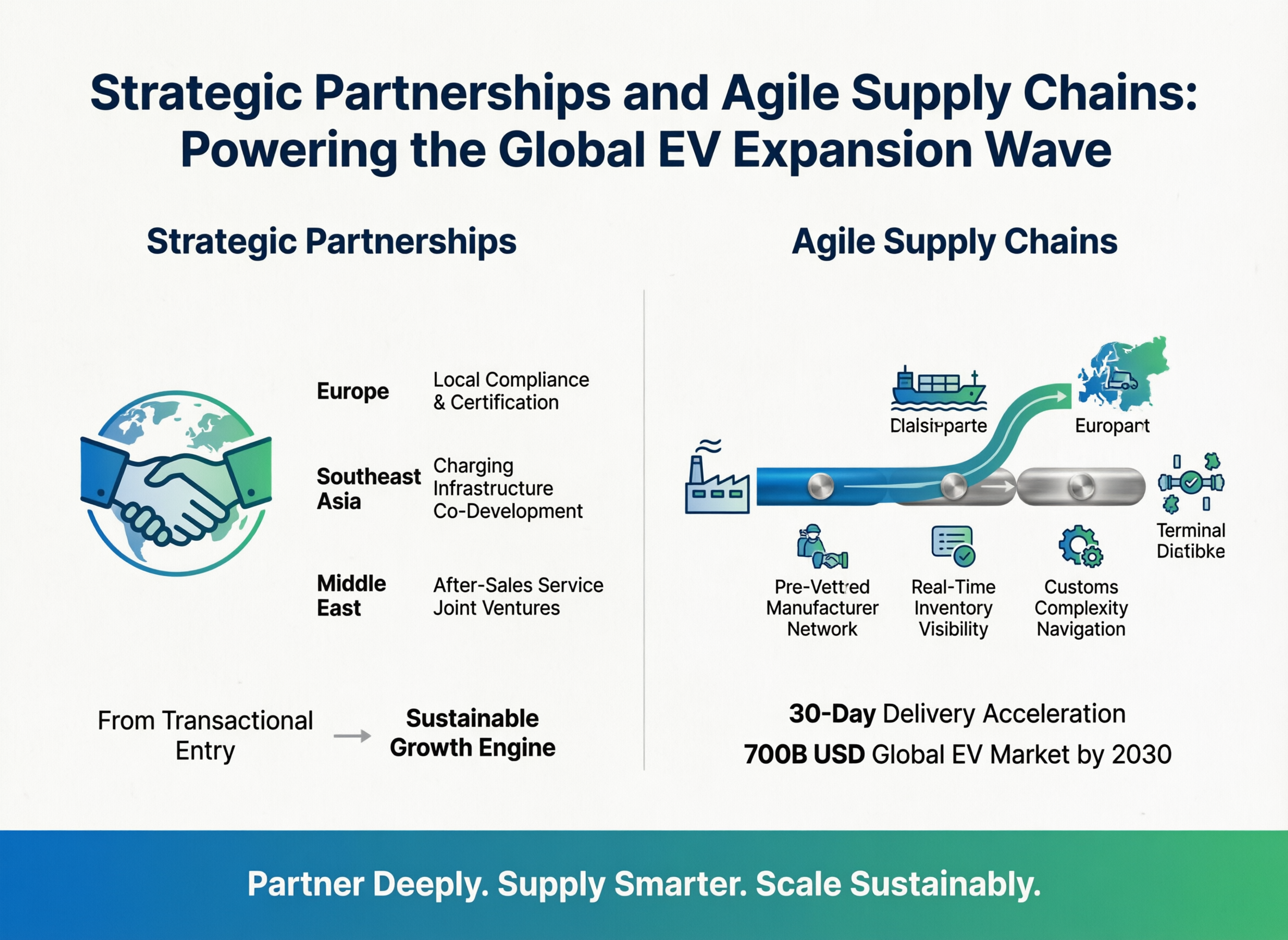 Strategic Partnerships and Agile Supply Chains: Powering the Global EV Expansion Wave
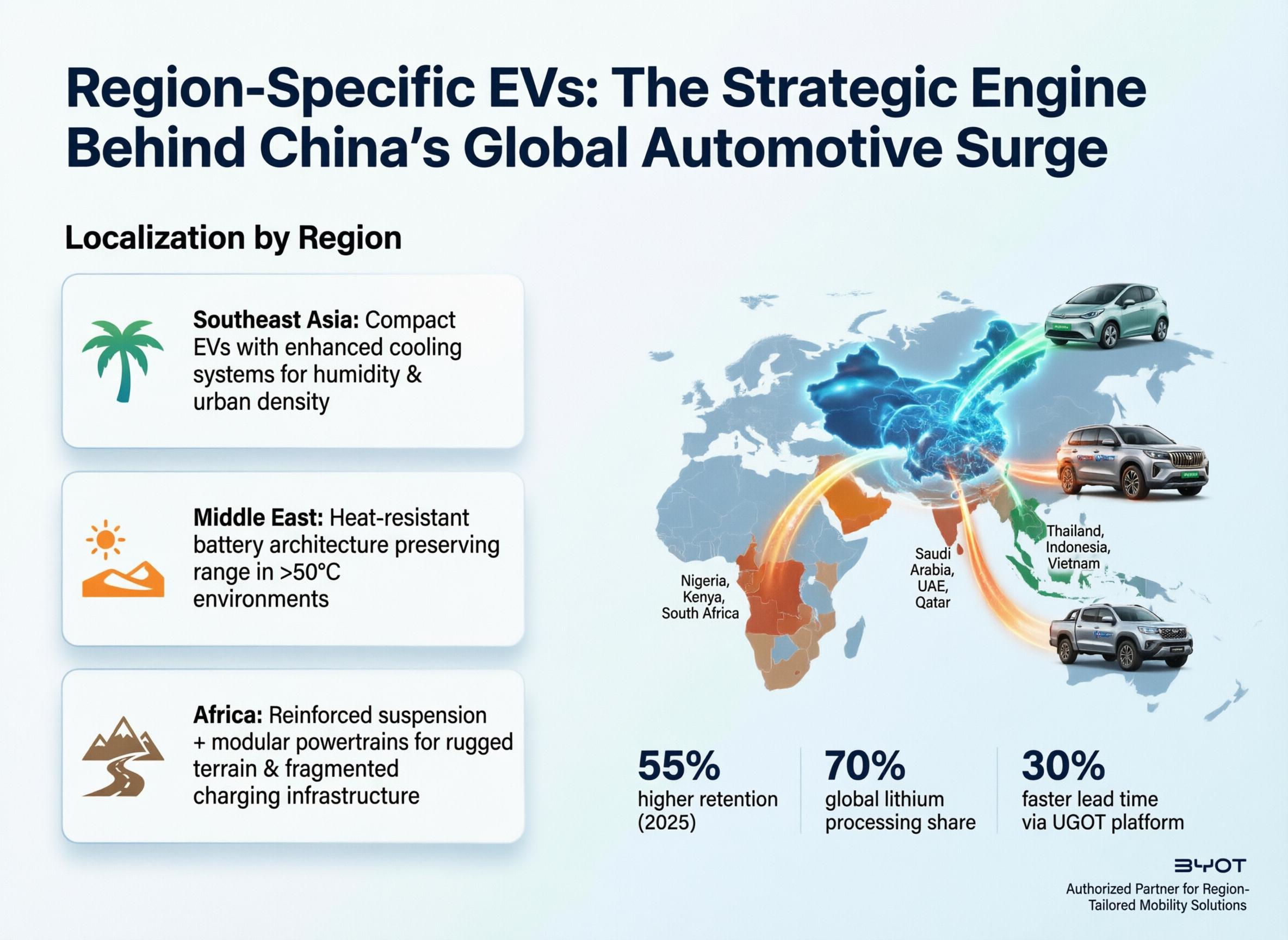 Region-Specific EVs: The Strategic Engine Behind China’s Global Automotive Surge