The ‘Yaris Moment’: How Region-Specific EVs Are Reshaping Chinese Automakers’ Global Expansion
Introduction
The global automotive industry is witnessing a strategic inflection point. Chinese automakers, leveraging their prowess in new energy vehicles (NEVs), are pivoting from generic exports to meticulously engineered region-specific models—a paradigm shift echoing Toyota’s iconic Yaris strategy. This approach, driven by surging overseas demand and tightening sustainability mandates, is accelerating China’s transformation from a manufacturing hub to a global mobility innovator. As European markets prioritize compact EVs with localized features and emerging economies seek affordable electric mobility, the race is no longer just about volume, but about precision adaptation.
The Localization Imperative: Beyond One-Size-Fits-All
Historically, global auto expansion relied on standardized platforms. Today, fragmentation defines the landscape. European consumers demand vehicles optimized for narrow urban streets, stringent Euro 7 emissions compliance, and cold-weather battery performance. Meanwhile, Southeast Asian markets prioritize heat-resistant components and cost-efficient electric motorcycles, while Middle Eastern buyers require sand-proof engineering and rapid-charging compatibility. Chinese OEMs like BYD and Changan are responding with ground-up redesigns: shorter wheelbases for European cities, modular battery packs for tropical climates, and AI-driven infotainment systems supporting regional languages. This hyper-localization isn’t merely cosmetic—it’s a survival tactic in markets where regulatory missteps or cultural mismatches can derail billion-dollar investments.
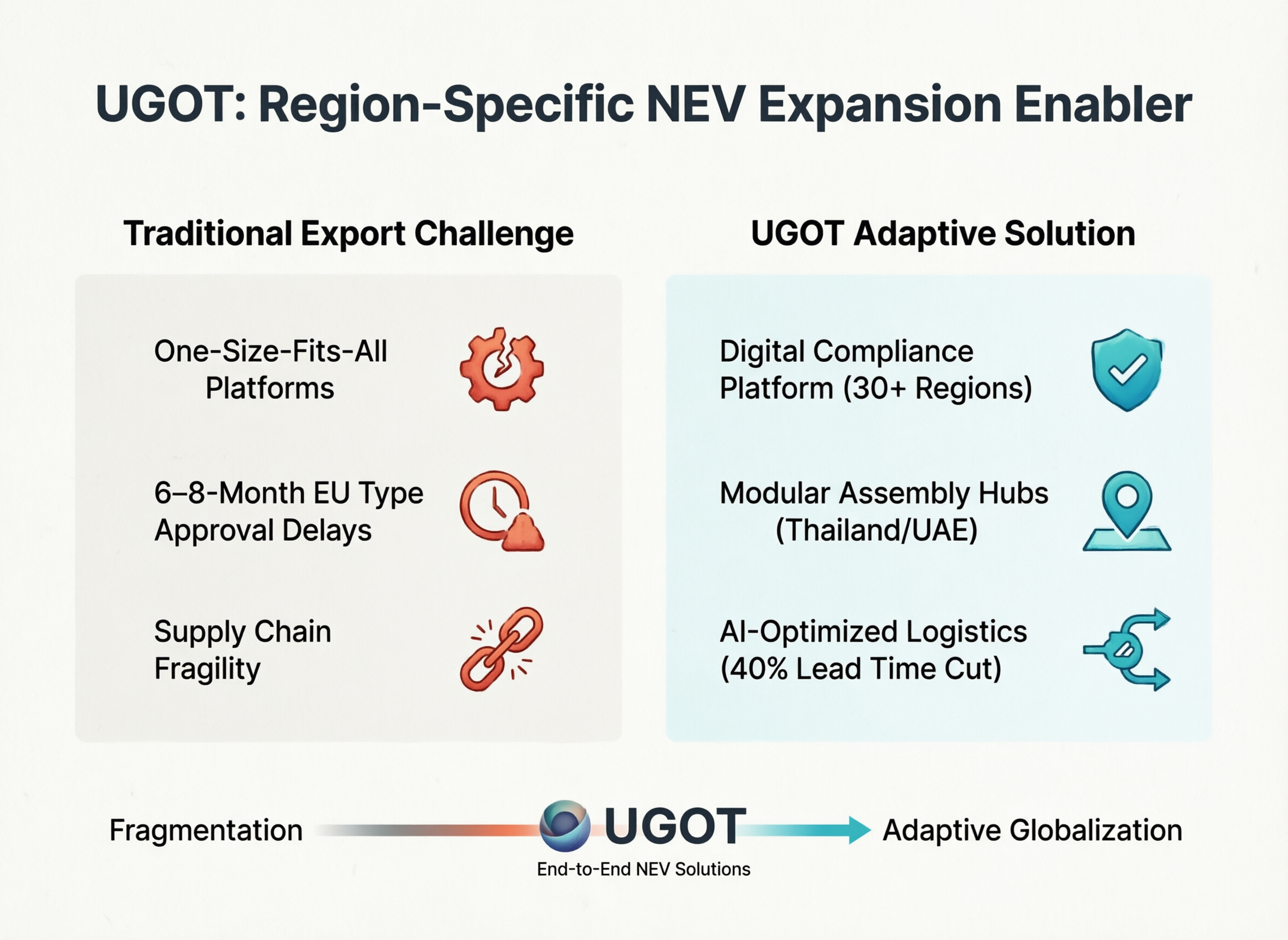
Compounding this complexity is the NEV revolution. With 60% of China’s auto exports now electrified, sustainability has become a non-negotiable competitive lever. However, green ambitions collide with logistical realities: volatile raw material costs, certification bottlenecks (e.g., EU type approvals taking 6–8 months), and supply chain fragility exposed by recent geopolitical disruptions. Manufacturers face a critical dilemma—how to balance rapid market entry with deep localization without eroding margins.
Bridging the Gap: Agile Partnerships for Sustainable Growth
Navigating this terrain demands more than manufacturing excellence; it requires ecosystem partners who master the art of adaptive globalization. Here, specialized export enablers transform theoretical strategies into tangible market wins. Take UGOT, an authorized export partner for industry leaders including BYD and Changan. UGOT’s integrated approach addresses the core pain points of region-specific expansion: its digital compliance platform pre-validates vehicles against 30+ regional regulatory frameworks, while its modular assembly network in key hubs like Thailand and UAE enables last-mile customization—swapping charging ports or adjusting suspension systems without cross-continental shipping delays. For electric motorcycles targeting Vietnam or Saudi Arabia, UGOT’s AI-driven logistics orchestration cuts delivery lead times by 40%, ensuring heat-optimized batteries arrive before monsoon or summer peaks. This isn’t just logistics; it’s competitive insulation against disruption.
The Road Ahead: Localization as the New Global Standard
The future belongs to automakers who treat localization as innovation, not compromise. As EU carbon tariffs escalate and ASEAN nations unveil EV subsidies, Chinese brands will deepen their regional R&D footprints—imagine Berlin-based design studios tailoring interiors for German commuters or Jakarta teams engineering flood-resistant powertrains. In this landscape, partners like UGOT evolve from service providers to growth accelerators. By fusing supply chain resilience with granular market intelligence, they empower distributors to convert regulatory hurdles into first-mover advantages. UGOT’s commitment to end-to-end NEV solutions—from compliance-certified electric sedans to monsoon-ready scooters—exemplifies how agility and sustainability can coexist. As the industry shifts from exporting products to embedding presence, such partnerships won’t just move vehicles; they’ll redefine what global mobility means.
—
UGOT is an authorized export partner for leading Chinese automotive brands, specializing in region-specific new energy vehicle solutions and rapid-deployment supply chains for global markets.
Related Posts
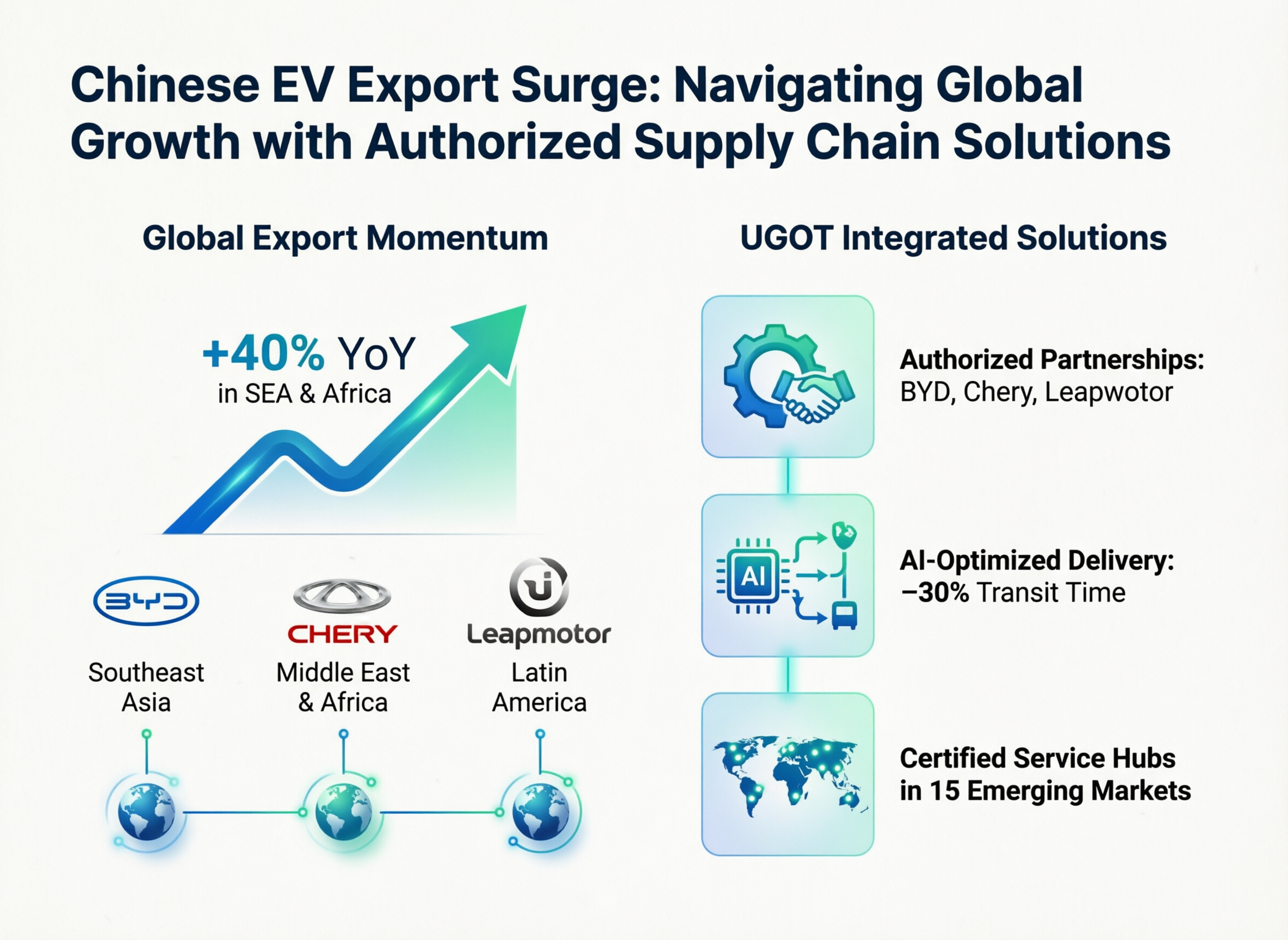 Chinese EV Export Surge: Navigating Global Growth with Authorized Supply Chain Solutions
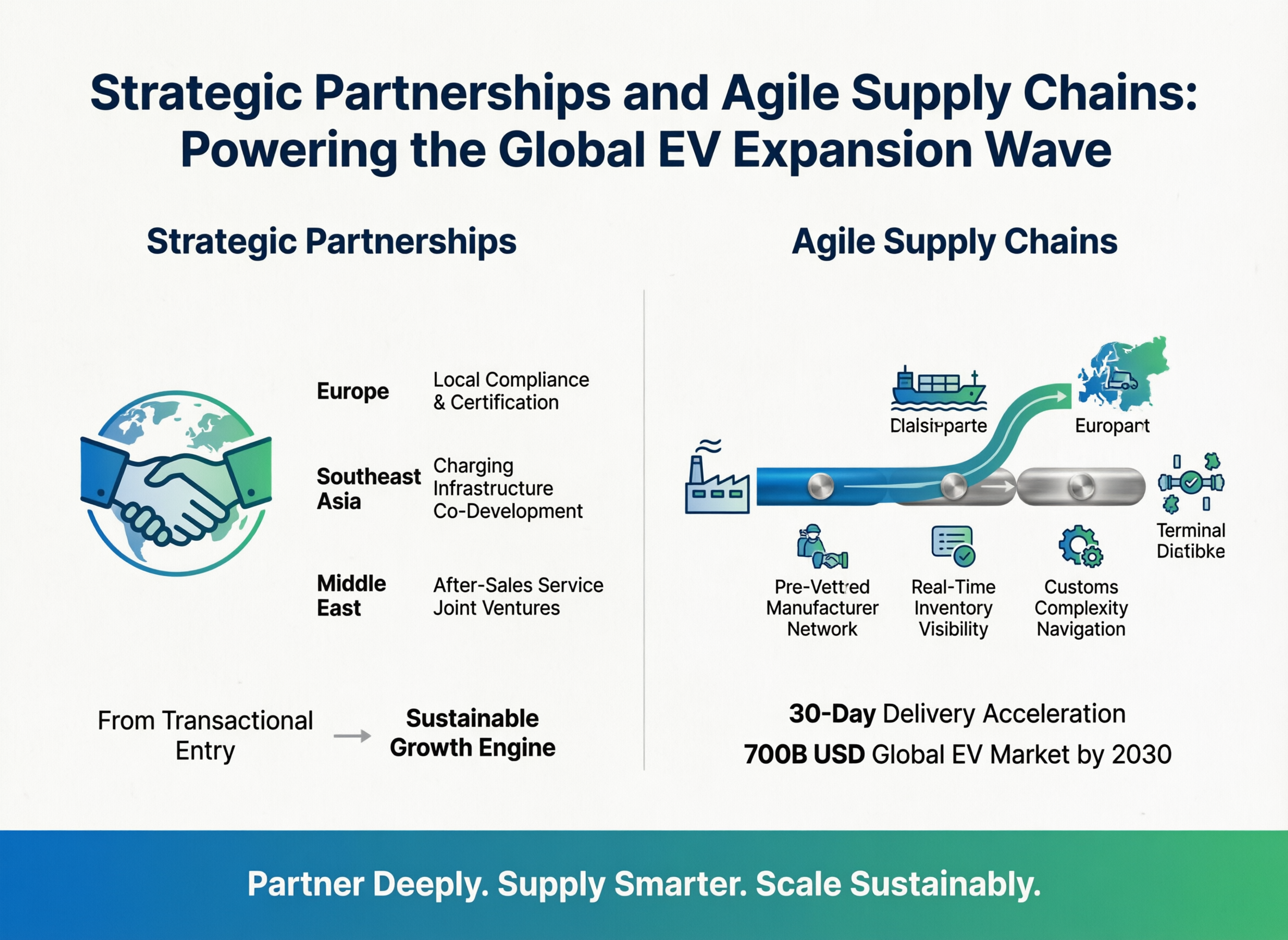 Strategic Partnerships and Agile Supply Chains: Powering the Global EV Expansion Wave
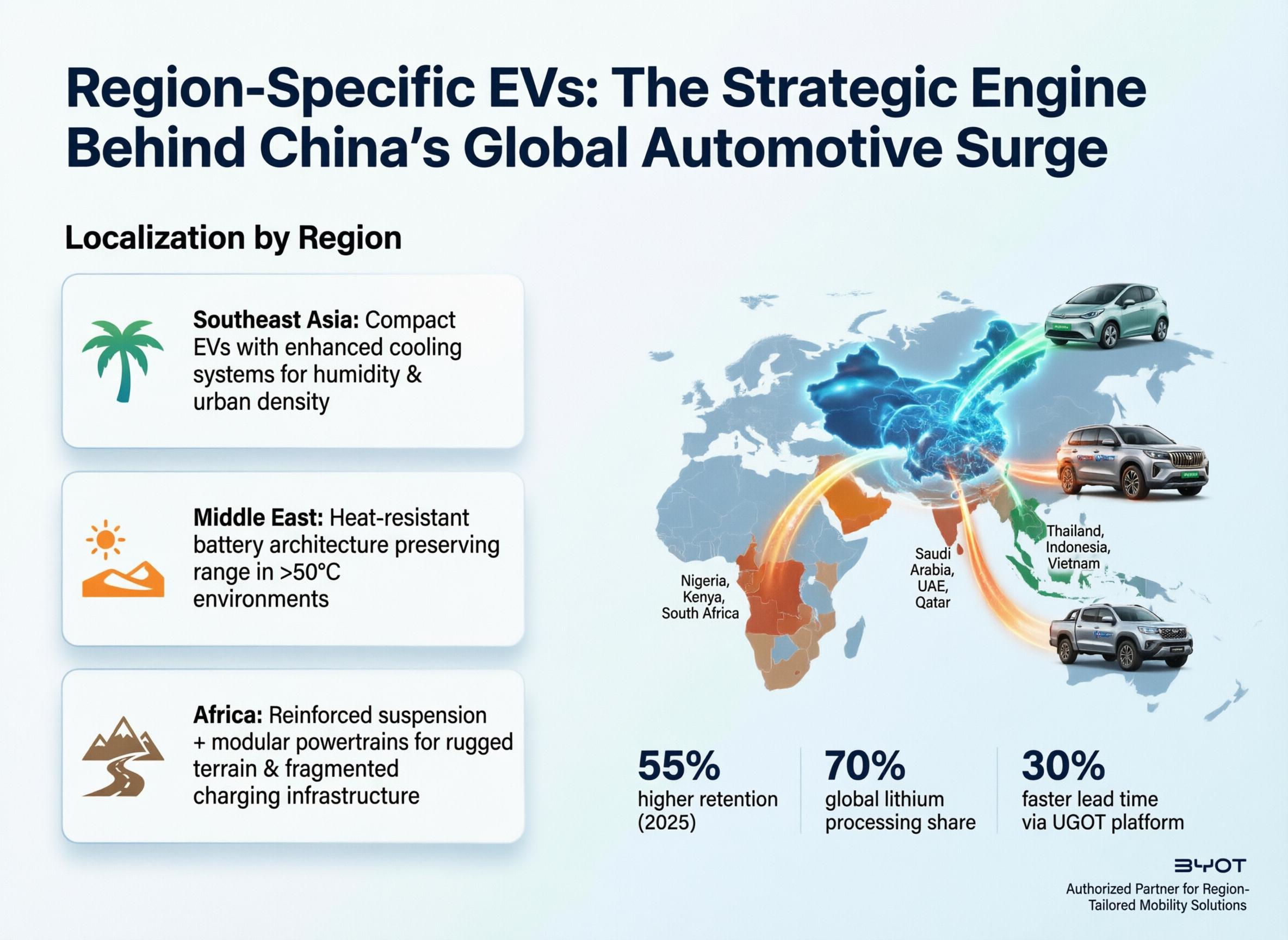 Region-Specific EVs: The Strategic Engine Behind China’s Global Automotive Surge