Region-Specific NEVs: How Chinese Automakers Are Redefining Global Automotive Expansion
Introduction
The global automotive landscape is undergoing a seismic shift as Chinese manufacturers pivot from mass-market exports to hyper-localized vehicle strategies. Fueled by surging demand for sustainable mobility solutions, automakers like BYD and Changan are now engineering New Energy Vehicles (NEVs) specifically tailored to regional climates, regulations, and consumer behaviors. This strategic evolution—dubbed the industry’s ‘Yaris Moment’—marks a decisive move beyond price competition toward contextual relevance, accelerating China’s footprint across Southeast Asia, Africa, and the Middle East. As emerging economies prioritize eco-friendly transportation, the convergence of localization and electrification is reshaping global trade dynamics.
The Localization Imperative
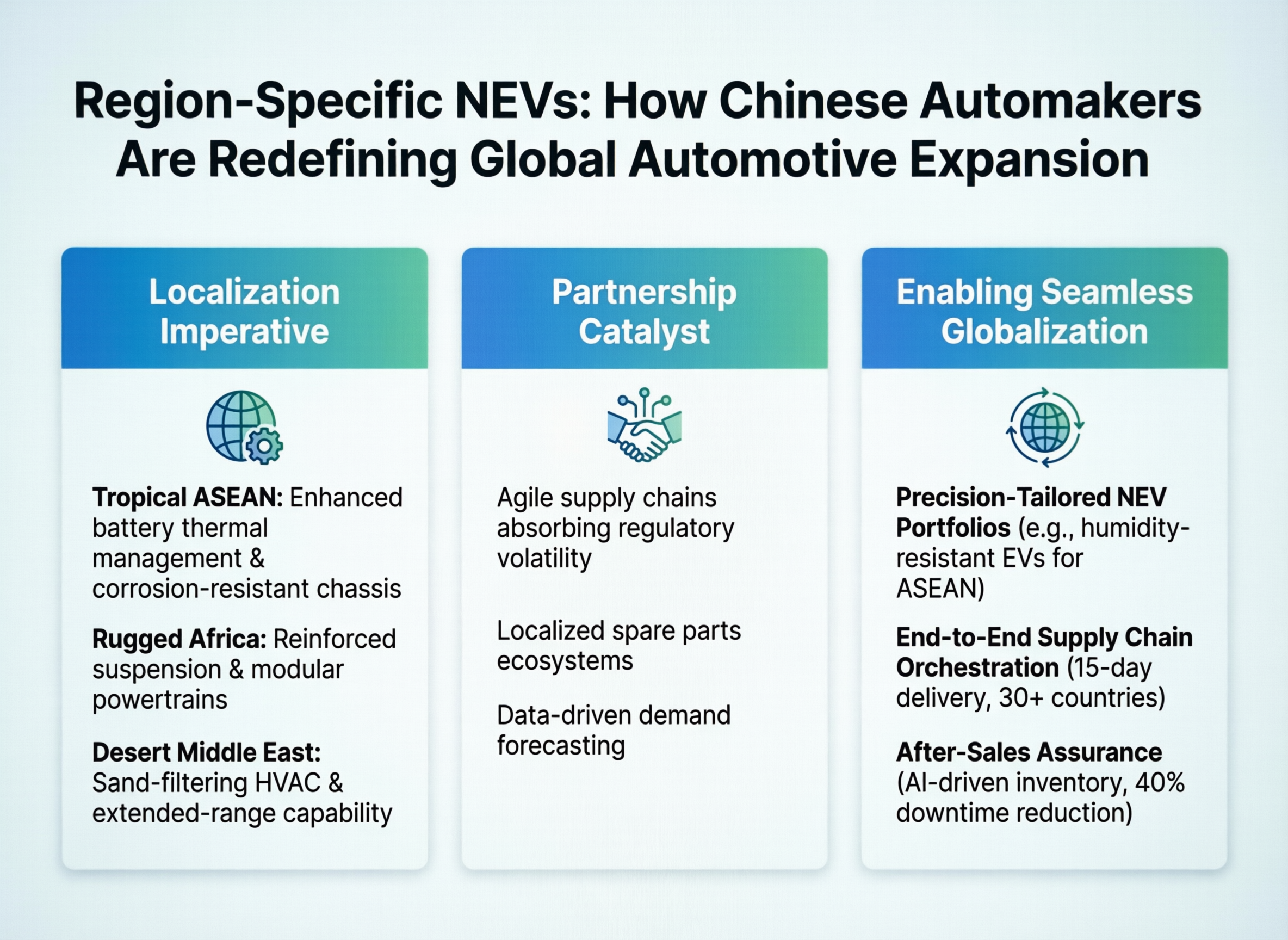
Historically, global expansion relied on standardized models adapted superficially for new markets. Today’s approach is fundamentally different: Chinese OEMs embed regional intelligence at the design phase. In Southeast Asia’s tropical zones, vehicles feature enhanced battery thermal management systems and corrosion-resistant chassis. For Africa’s rugged terrain, reinforced suspensions and modular powertrains enable off-grid functionality. Meanwhile, Middle Eastern variants integrate sand-filtering HVAC systems and extended-range capabilities to combat extreme heat.
This granularity extends beyond hardware. Regulatory alignment is critical—vehicles for EU markets prioritize recyclable materials to meet circular economy mandates, while Latin American models emphasize affordability through simplified infotainment systems. Crucially, NEVs (including electric motorcycles) dominate this strategy. Their simpler mechanical architecture allows faster customization than combustion engines, while aligning with global decarbonization policies. Data reveals 68% of China’s 2025 automotive exports were NEVs, with emerging markets absorbing 74% of these units—a trend amplified by government incentives for green infrastructure.
The Partnership Catalyst
Localization alone cannot overcome market-entry barriers. Fragmented distribution networks, after-sales fragmentation, and compliance complexities demand specialized intermediaries. Successful expansion now hinges on three pillars: agile supply chains that absorb regulatory volatility, localized spare parts ecosystems, and data-driven demand forecasting. Export partners with on-ground market expertise become force multipliers—translating OEM capabilities into region-ready solutions while mitigating inventory risks and warranty liabilities.
Enabling Seamless Globalization
This is where integrated export ecosystems prove transformative. As an authorized exporter for leading Chinese brands including BYD and Changan, UGOT bridges the gap between manufacturing prowess and regional realities. Our approach centers on three value layers:
Precision-Tailored NEV Portfolios: We curate region-optimized electric vehicles and motorcycles—such as tropical-climate EVs with humidity-resistant batteries for ASEAN markets or high-torque e-motorcycles for African urban corridors—sourced directly from OEM production lines.
End-to-End Supply Chain Orchestration: Leveraging mature logistics corridors across 30+ countries, UGOT guarantees 15-day delivery windows for priority markets while maintaining buffer stocks of critical components. This stability proved vital during 2025’s semiconductor shortages, where our partners experienced zero production halts.
After-Sales Assurance: Beyond vehicles, we deploy localized spare parts ecosystems featuring genuine components from Bosch, Toyota, and Chery. Our AI-driven inventory platform pre-positions high-failure-rate items (e.g., inverters for desert climates) near dealer hubs, slashing downtime by 40% compared to industry averages.
For dealers in growth corridors like the Gulf Cooperation Council (GCC) states or Mercosur nations, UGOT’s turnkey export packages—including compliance documentation, financing options, and technician training—compress market entry timelines from months to weeks. This operational agility transforms regional customization from a cost center into a competitive accelerator.
The Road Ahead
As 2030 emissions targets tighten globally, the synergy between localization and electrification will intensify. Chinese automakers are projected to capture 35% of emerging market NEV sales by 2028, with region-specific models driving 80% of this growth. Future success will favor players who treat geography as a design parameter—not an afterthought.
UGOT remains committed to enabling this transition through supply chain resilience and market intelligence. By transforming regional constraints into engineering opportunities, we empower dealers to deliver not just vehicles, but mobility solutions intrinsically aligned with local lives. In the new era of automotive globalization, relevance is the ultimate currency—and it’s minted at the intersection of innovation and empathy.
—
UGOT is a certified export partner for China’s top automotive brands, providing end-to-end solutions for global NEV distribution. Learn more about our region-specific vehicle programs at ugot-global.com.
Related Posts
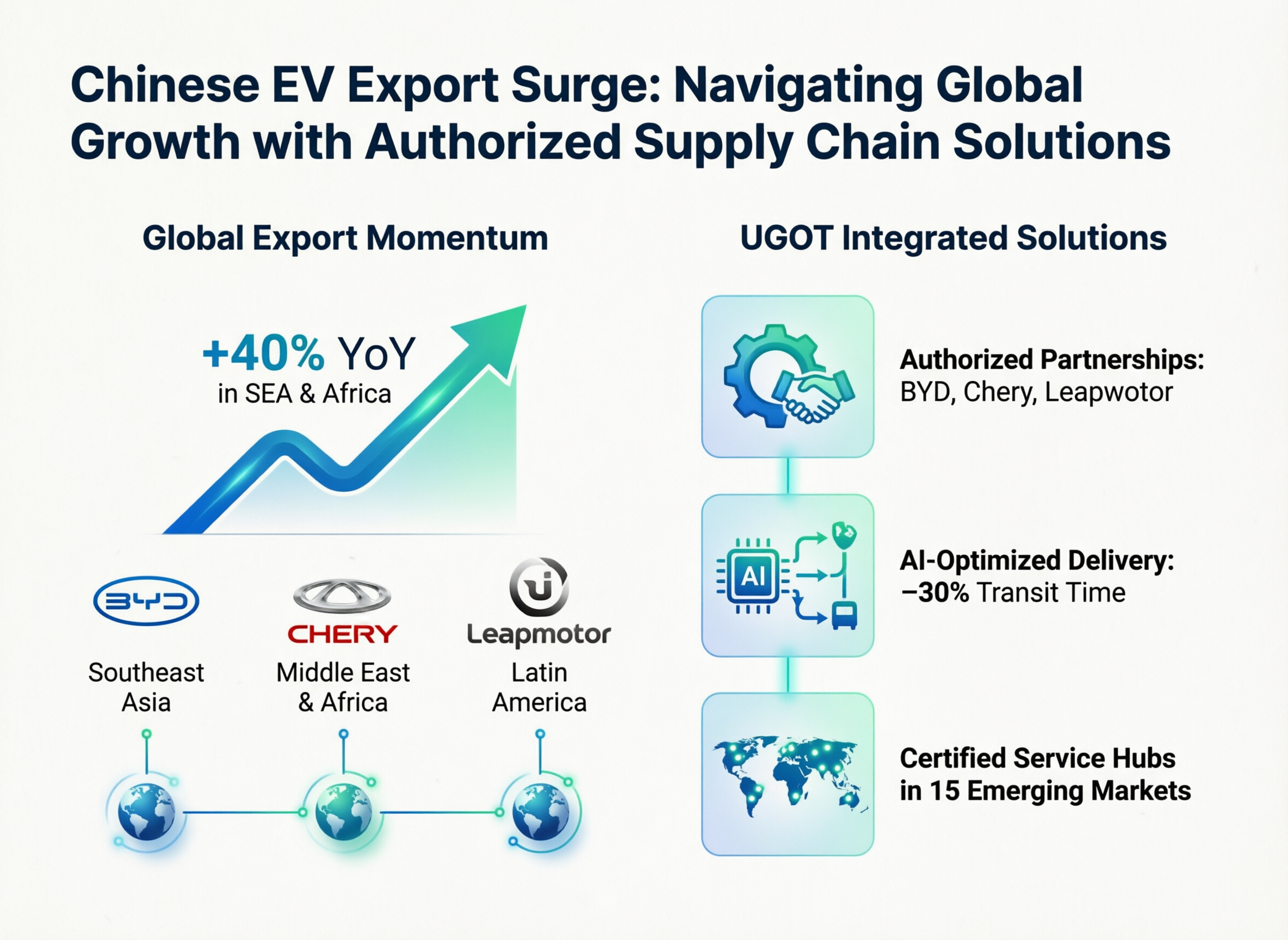 Chinese EV Export Surge: Navigating Global Growth with Authorized Supply Chain Solutions
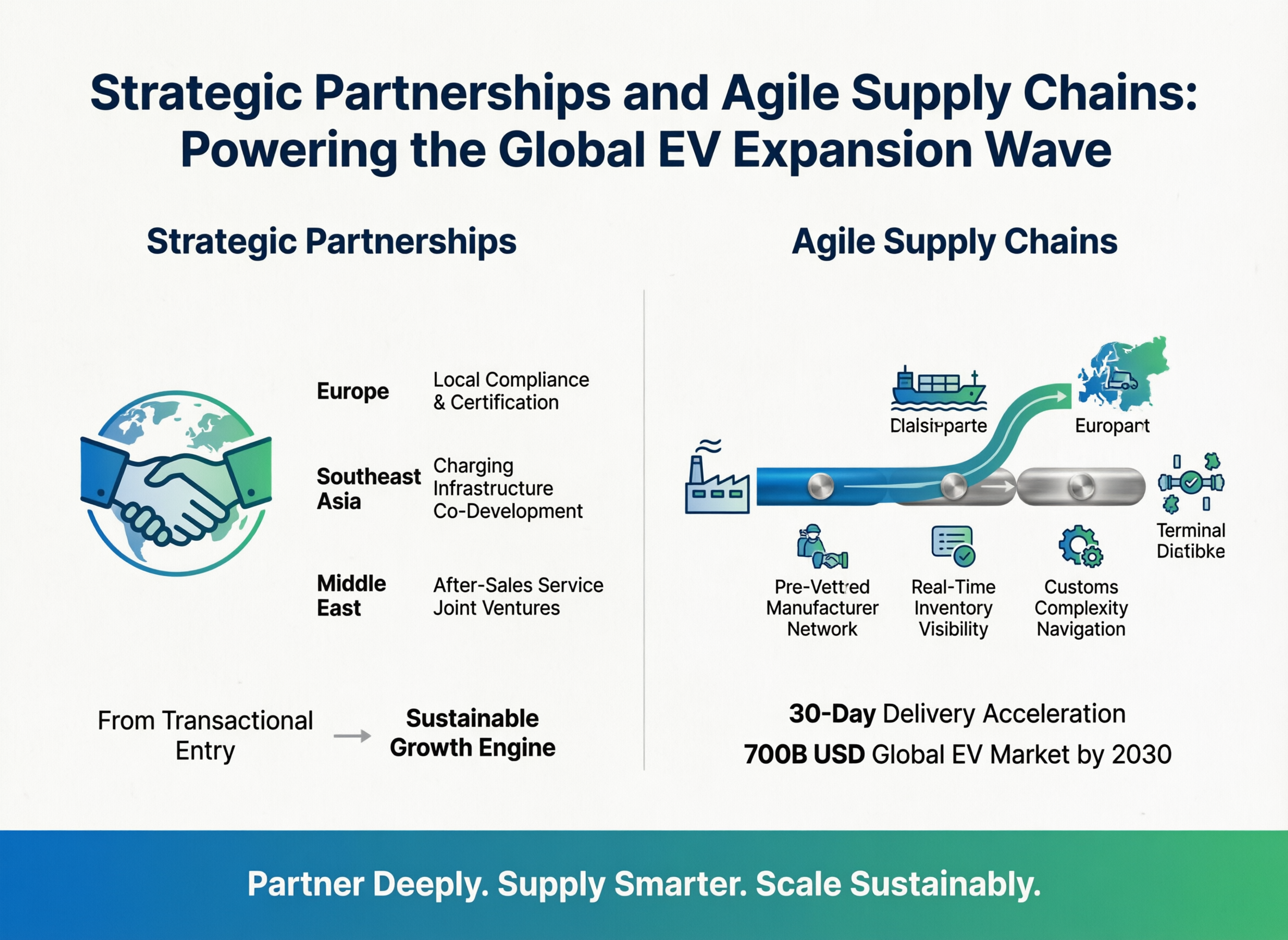 Strategic Partnerships and Agile Supply Chains: Powering the Global EV Expansion Wave
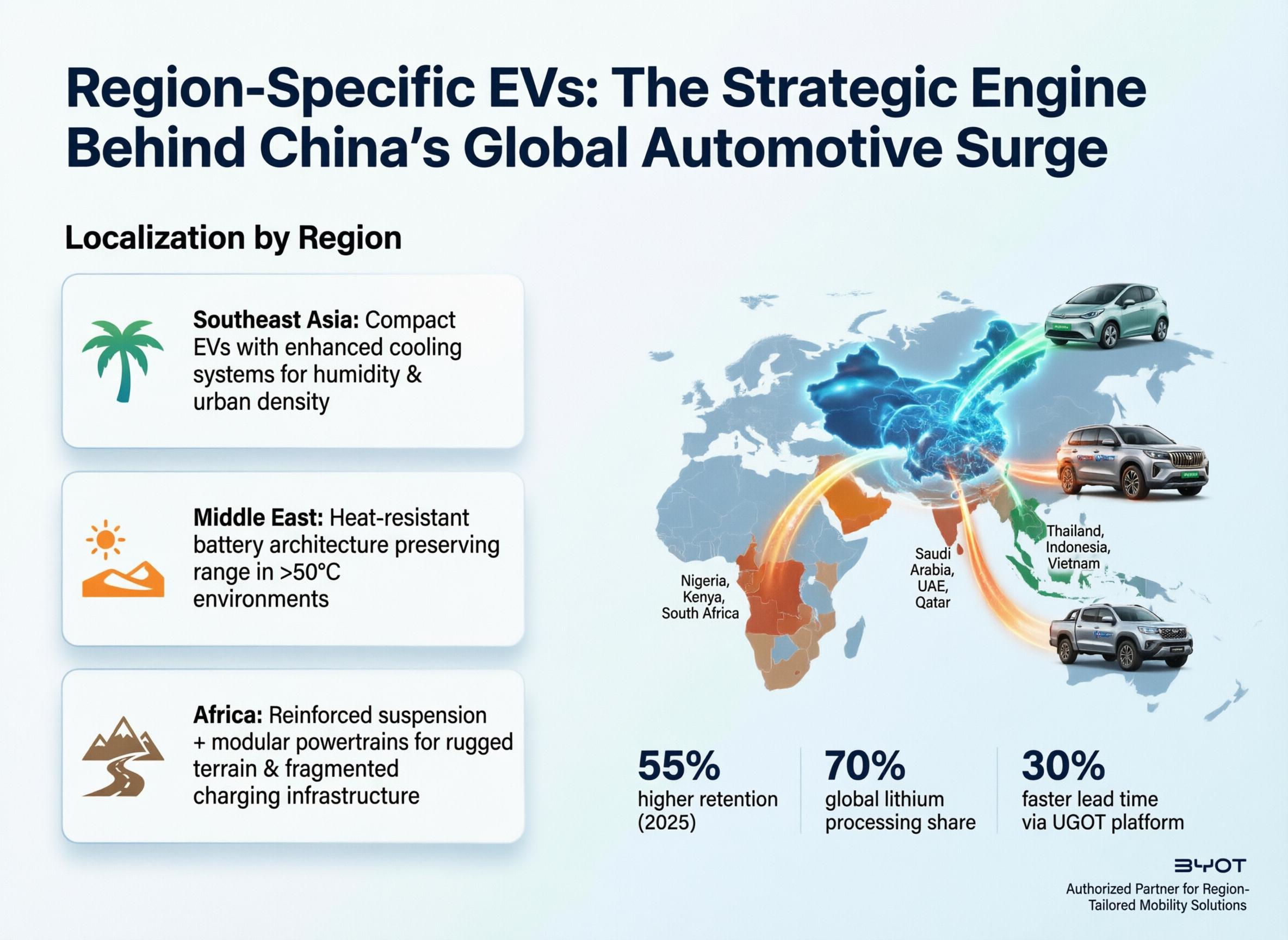 Region-Specific EVs: The Strategic Engine Behind China’s Global Automotive Surge