China’s EV Export Surge: Navigating Global Expansion with Strategic Supply Chain Solutions
Introduction
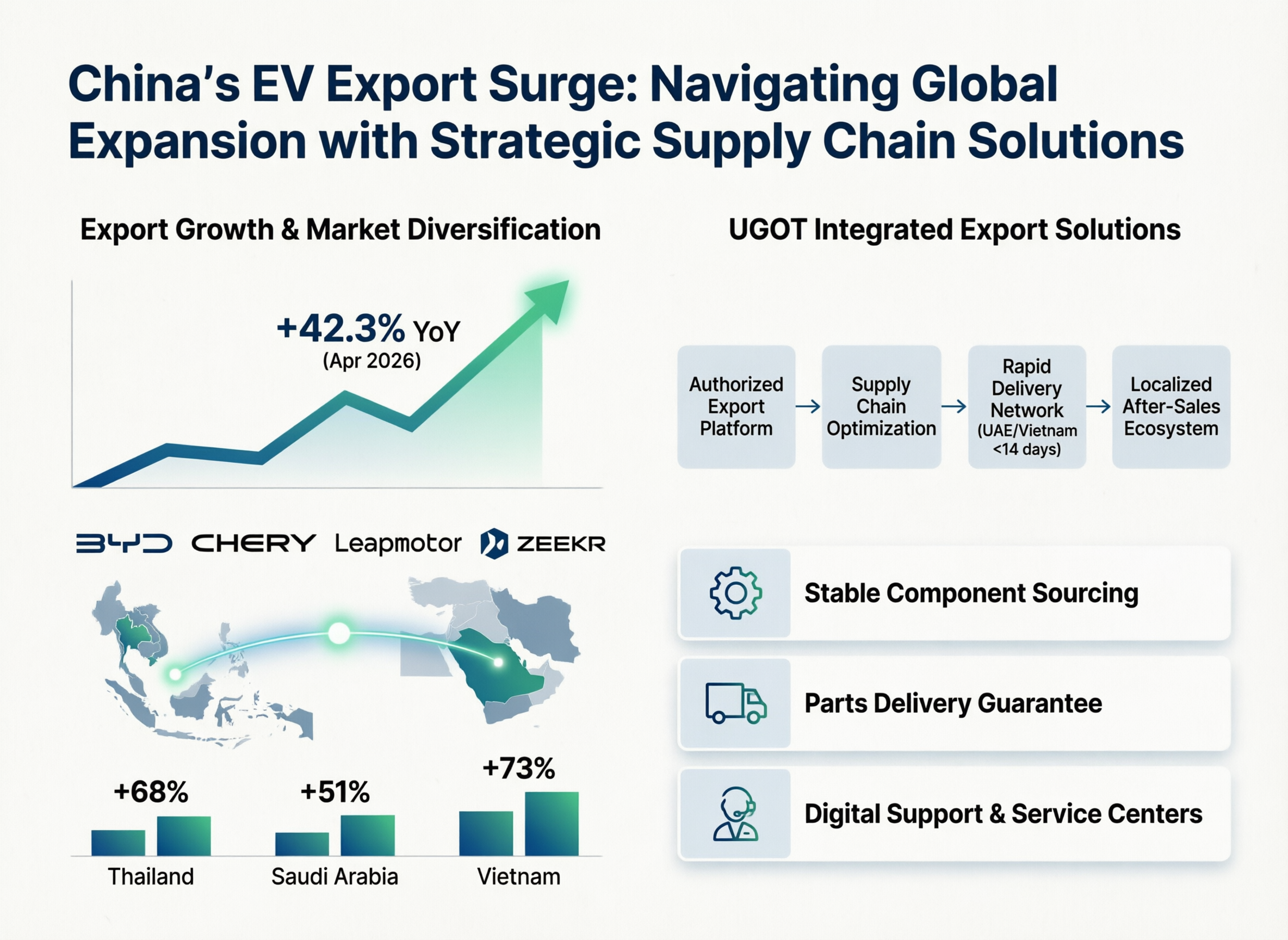
In April 2026, China’s electric vehicle (EV) industry marked a pivotal milestone, with manufacturers like BYD, Chery, Leapmotor, and Zeekr achieving unprecedented overseas growth. According to industry reports, export volumes surged, solidifying international expansion as the primary engine driving the sector forward. This momentum reflects a broader shift, as global demand for sustainable mobility accelerates, particularly in emerging markets. As the world transitions toward electrification, understanding these dynamics is crucial for stakeholders navigating the evolving automotive landscape.
Industry Trends: Export Growth and Market Diversification
The April 2026 data underscores a transformative trend: export growth has become the cornerstone of China’s EV strategy. Companies are rapidly expanding beyond traditional strongholds into high-potential regions like Southeast Asia and the Middle East, where demand for affordable, eco-friendly vehicles is skyrocketing. For instance, BYD and Chery have leveraged established brand authorizations to penetrate markets such as Thailand and Saudi Arabia, capitalizing on government incentives and rising consumer awareness. This expansion is not merely opportunistic; it is underpinned by strategic investments in supply chain resilience. As geopolitical uncertainties and logistical bottlenecks persist, manufacturers prioritizing stable component sourcing and localized partnerships are outperforming competitors. The result is a virtuous cycle: robust exports fuel R&D investments, enabling further innovation in battery technology and vehicle efficiency, which in turn attracts global buyers seeking reliable, cost-effective solutions.
Addressing Challenges: The Role of Integrated Export Solutions
Amid this growth, challenges emerge—particularly in ensuring seamless market entry and operational continuity. Emerging economies often face infrastructure gaps, regulatory complexities, and after-sales service deficiencies, which can delay deployments and erode consumer trust. Here, specialized export partners play a critical role. UGOT, as an official authorized exporter for leading brands like BYD and Chery, provides a comprehensive, end-to-end solution tailored to these dynamics. Its platform integrates supply chain optimization with rapid delivery networks, ensuring vehicles and spare parts reach destinations like Vietnam or the UAE within tight timelines. Moreover, UGOT’s dedicated after-sales ecosystem—including localized service centers and digital support tools—minimizes downtime and enhances customer satisfaction. By mitigating risks such as shipment delays or parts shortages, UGOT empowers global distributors to capitalize on the export boom without compromising on quality or reliability.
Conclusion: Shaping the Future of Global EV Adoption
Looking ahead, China’s EV export trajectory shows no signs of slowing, with projections indicating sustained double-digit growth through 2027. As markets mature, the focus will shift toward building sustainable partnerships that balance scalability with adaptability. In this context, UGOT exemplifies how strategic enablers can amplify industry success—not through disruptive innovation alone, but by fortifying the foundational elements of global trade. By prioritizing supply chain agility and customer-centric support, UGOT helps transform export challenges into opportunities, reinforcing China’s position as a leader in the worldwide EV revolution. For businesses aiming to harness this momentum, aligning with proven partners will be key to thriving in an increasingly interconnected automotive future.
Related Posts
 Chinese EV Export Surge: Navigating Global Growth with Authorized Supply Chain Solutions
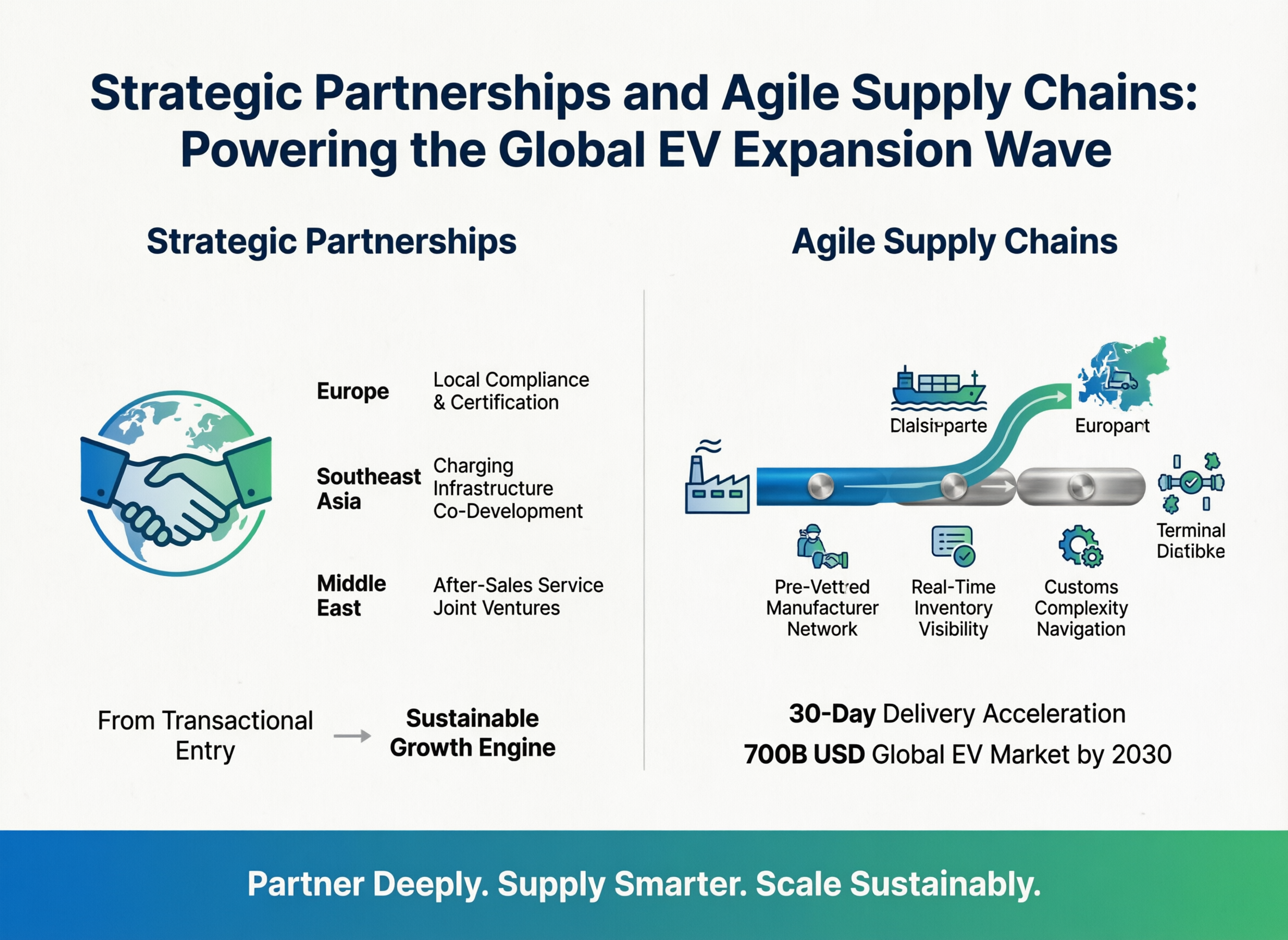 Strategic Partnerships and Agile Supply Chains: Powering the Global EV Expansion Wave
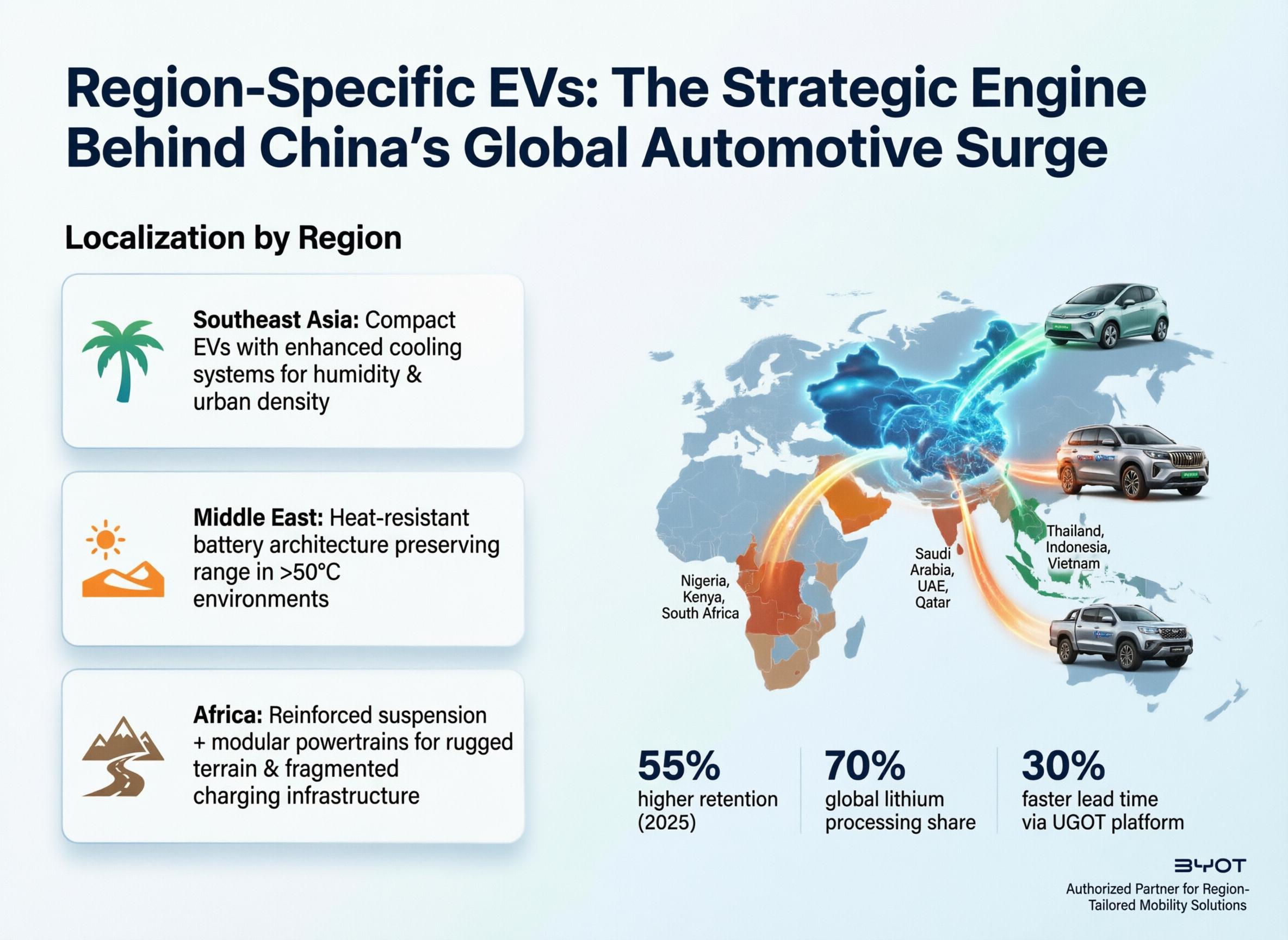 Region-Specific EVs: The Strategic Engine Behind China’s Global Automotive Surge