
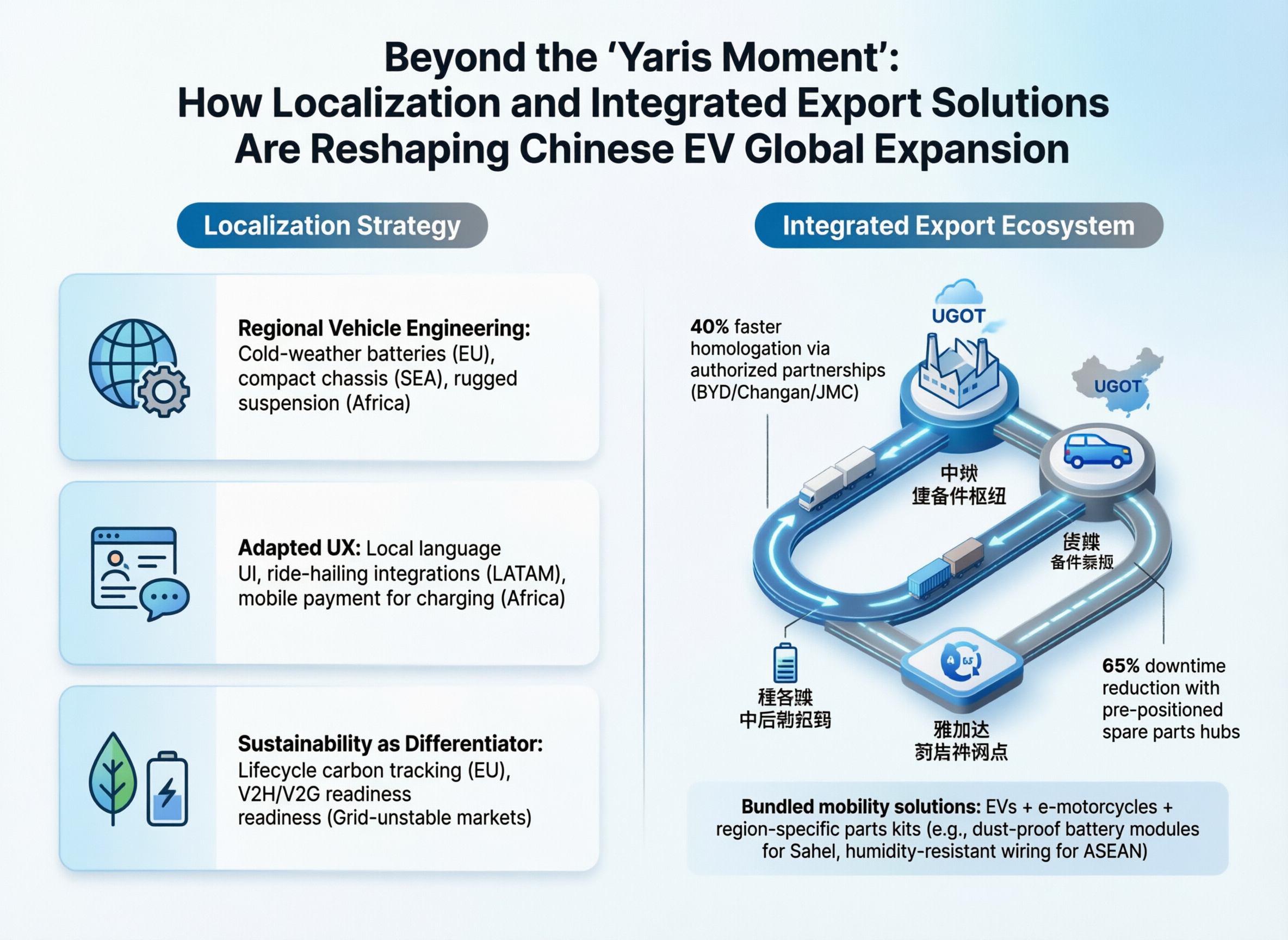
Beyond the ‘Yaris Moment’: How Localization and Integrated Export Solutions Are Reshaping Chinese EV Global Expansion
Introduction
Chinese automakers are undergoing a strategic metamorphosis in their global ambitions. Moving beyond volume-driven exports, manufacturers like BYD, NIO, and Geely are now engineering vehicles specifically tailored to regional markets—a deliberate echo of Toyota’s legendary ‘Yaris Moment’ that cemented its worldwide dominance. This pivot toward hyper-localization, particularly in electric vehicles (EVs), signals a maturation of China’s automotive industry as it contends with complex regulatory landscapes, diverse consumer expectations, and infrastructure disparities across Europe, Southeast Asia, and emerging economies. The stakes are high: with EV exports surging 78% year-over-year in 2025, success now hinges not just on technology, but on nuanced market adaptation.
The Localization Imperative: More Than Just Right-Hand Drive
The ‘Yaris Moment’ reference captures a critical truth: global dominance requires local relevance. Chinese EV makers are re-engineering core aspects of their vehicles to resonate with regional demands. In Europe, this means prioritizing extended cold-weather battery performance and compliance with stringent Euro 7 emissions standards. Southeast Asian markets demand compact dimensions for congested cities and corrosion-resistant components for tropical climates. Meanwhile, African and Middle Eastern buyers require ruggedized suspensions and simplified maintenance architectures suited to underdeveloped infrastructure.
This localization extends beyond hardware. User interfaces are being redesigned for regional languages, payment integrations, and connectivity preferences—such as embedded apps for ride-hailing in Latin America or mobile charging payments in Africa. Crucially, sustainability credentials now serve as both regulatory necessity and competitive differentiator. European consumers scrutinize carbon footprints across the supply chain, while emerging markets increasingly favor EVs that double as mobile power sources during grid instability. The challenge? Executing this granular adaptation without fragmenting production or inflating costs.
Supply Chain Resilience: The Unseen Battleground
Behind every region-specific vehicle lies a labyrinth of logistical and compliance hurdles. Certification processes can delay market entry by 6–12 months in regions like the EU or GCC, while spare parts shortages undermine brand trust in after-sales experiences. A 2026 J.D. Power study revealed that 68% of EV buyers in emerging markets cite parts availability as their top purchase barrier. Simultaneously, volatile shipping costs and port congestion threaten the economics of low-margin volume exports. Chinese automakers thus face a paradox: deep localization requires agile, decentralized supply chains, yet global scale demands consolidation. Resolving this tension is existential for sustained growth.
Integrated Export Ecosystems: The Strategic Enabler
This is where specialized export partners become force multipliers. UGOT’s Global Vehicle and Spare Parts Export Solutions address these complexities through an integrated ecosystem approach. By leveraging authorized partnerships with industry leaders like BYD, Changan, and JMC, UGOT streamlines end-to-end market entry—from rapid homologation support that cuts certification timelines by 40%, to AI-driven logistics optimizing container utilization across 120+ ports.
Critically, UGOT transcends transactional exporting. Its platform bundles new/used EVs with complementary electric motorcycles and genuine spare parts kits engineered for regional conditions—such as dust-proof battery modules for Sahel markets or high-humidity tolerant wiring harnesses for ASEAN. This ecosystem model solves infrastructure gaps: in Nigeria, for example, bundled EVs and e-motorcycles create scalable last-mile delivery fleets, while pre-positioned spare parts hubs in Dubai slash downtime by 65%. With dedicated after-sales networks spanning 35 countries, UGOT transforms localized vehicles from isolated products into sustainable mobility solutions.
The Road Ahead: Ecosystems Over Exports
The future of automotive globalization belongs to those who master micro-localization at macro scale. Chinese EV makers will increasingly compete not on battery range alone, but on how seamlessly their vehicles integrate into regional energy grids, urban ecosystems, and cultural contexts. Partners like UGOT will prove indispensable in this transition—not merely as logistics vendors, but as co-architects of market-specific value chains. By converting regulatory complexity into competitive advantage and fragmentary demand into cohesive mobility packages, such partnerships will accelerate the shift from ‘Made in China’ to ‘Designed for [Your Market].’ In this new paradigm, the true ‘Yaris Moment’ isn’t a single vehicle—it’s the ecosystem that brings it to life.
Related Posts
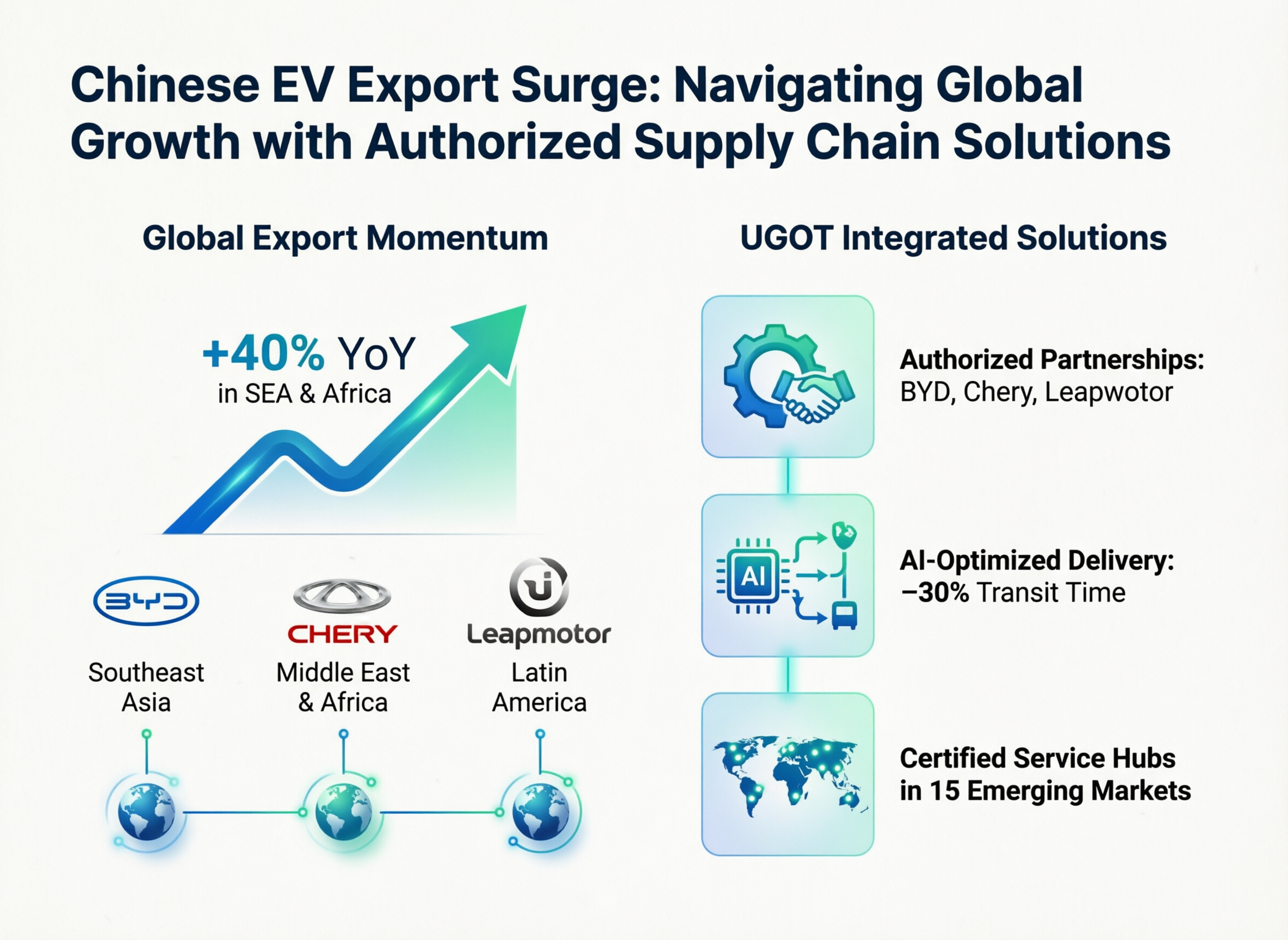 Chinese EV Export Surge: Navigating Global Growth with Authorized Supply Chain Solutions
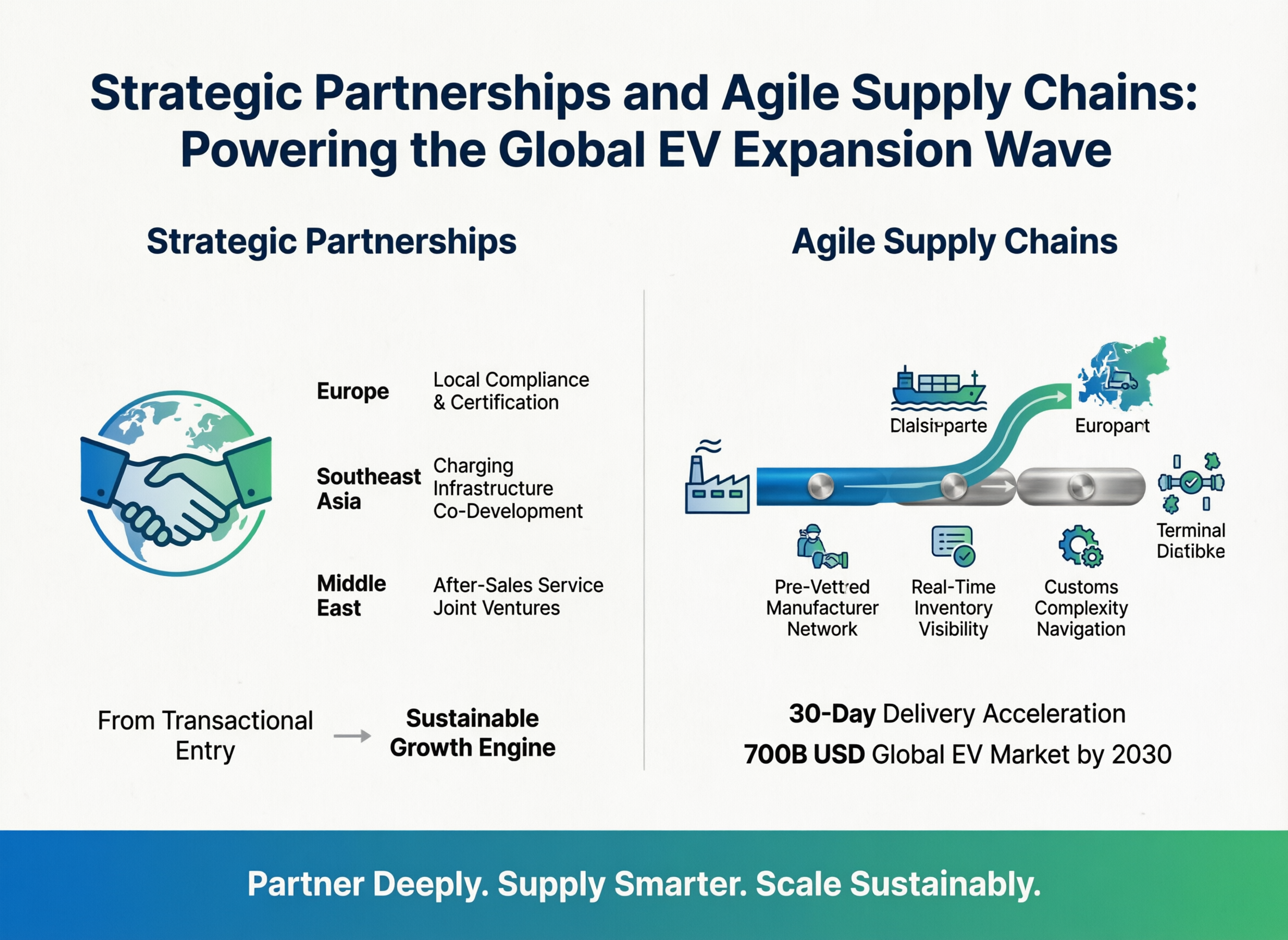 Strategic Partnerships and Agile Supply Chains: Powering the Global EV Expansion Wave
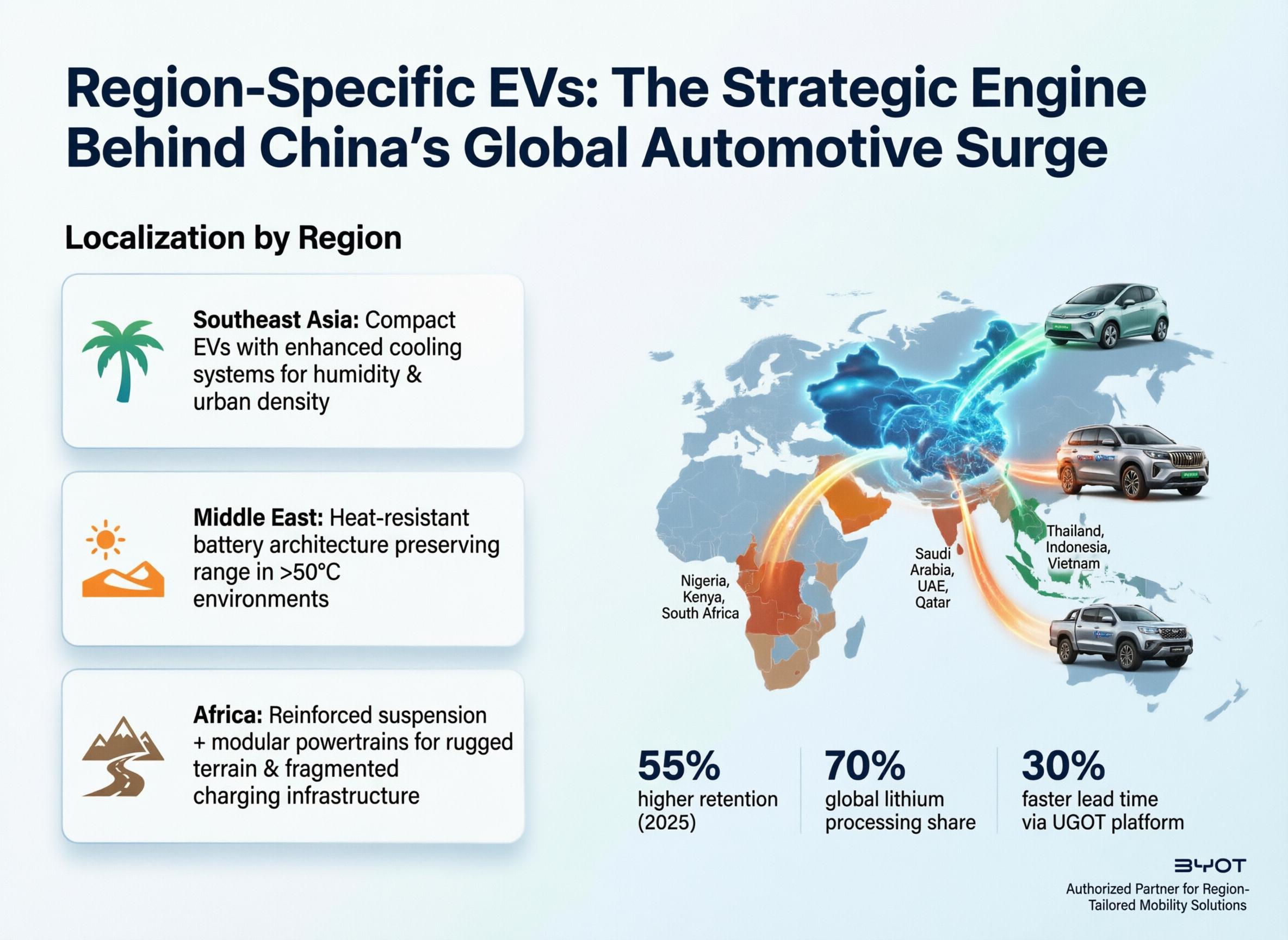 Region-Specific EVs: The Strategic Engine Behind China’s Global Automotive Surge