
Local for Global: How Strategic Partnerships and Agile Sourcing Are Redefining Automotive Expansion
Introduction
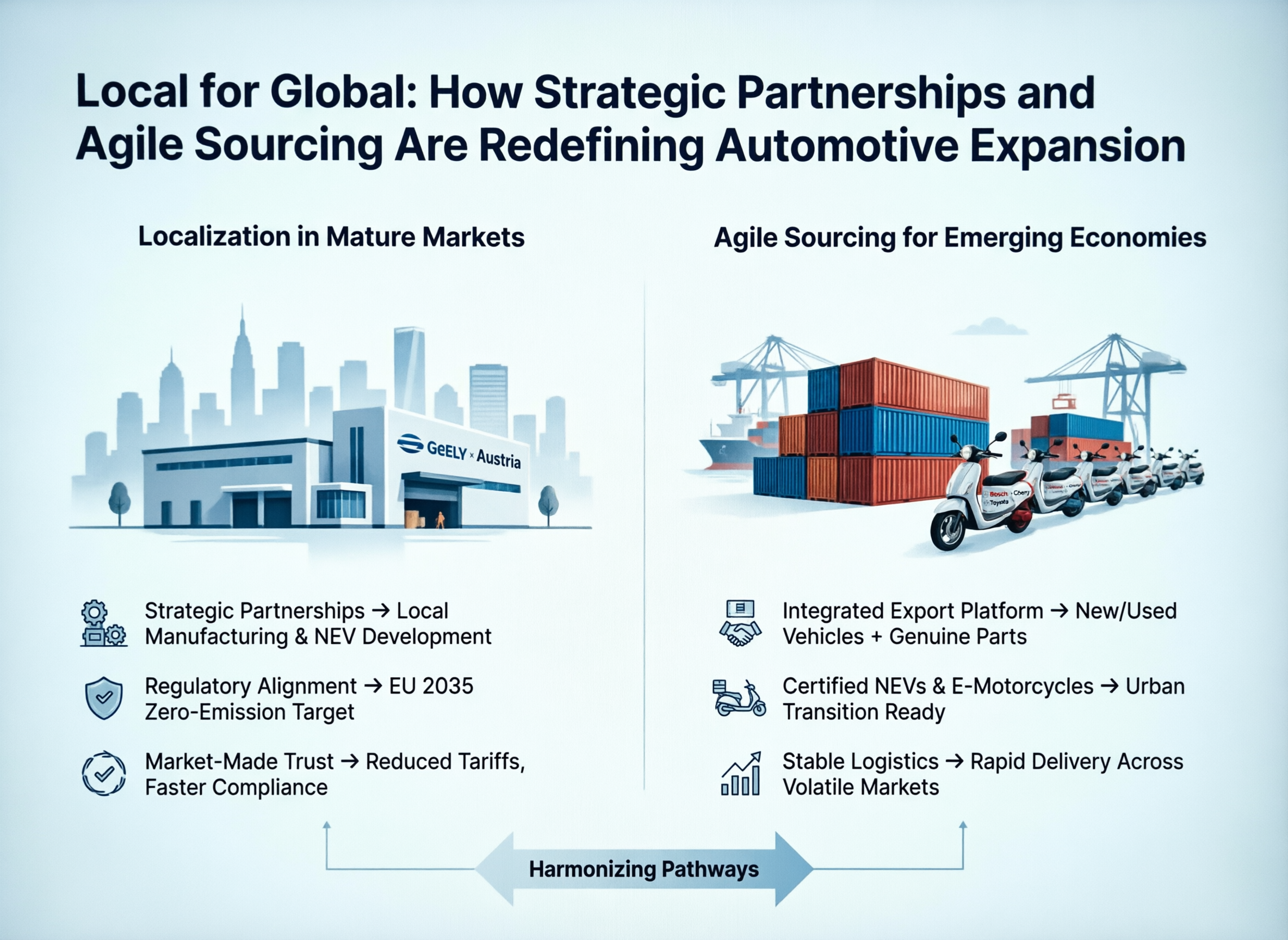
The automotive industry is navigating a transformative era of global expansion, where success hinges on balancing regional customization with worldwide scalability. Recent moves, such as Geely’s strategic partnership in Austria to establish localized manufacturing and market-specific vehicle development for Europe, exemplify a broader shift. Automakers are increasingly prioritizing on-the-ground production and tailored product strategies to penetrate mature markets, driven by regulatory pressures, consumer preferences, and the urgent push toward sustainable mobility. Yet, while established players focus on regional integration in continents like Europe, businesses in emerging economies face parallel challenges in accessing reliable vehicles and parts. This dual reality underscores a critical industry evolution—one demanding both localized presence and agile global supply chains.
The Localization Imperative in Mature Markets
Geely’s Austrian venture highlights a strategic blueprint now adopted industry-wide: embedding operations within target regions to navigate complex landscapes. In Europe, stringent emissions regulations, safety standards, and consumer demand for New Energy Vehicles (NEVs) necessitate more than imported solutions. Localized manufacturing reduces tariffs, accelerates compliance, and fosters trust through “market-made” products. Partnerships amplify this effect—joint ventures with regional entities provide access to technical expertise, established distribution networks, and cultural insights, turning regulatory hurdles into competitive advantages.
NEVs are central to this strategy. As the EU targets 100% zero-emission car sales by 2035, automakers are channeling investments into region-specific battery technologies, charging infrastructure, and vehicle designs. However, localization isn’t exclusive to Europe. Similar models are emerging in North America and Southeast Asia, proving that global growth now requires hyperlocal execution. This approach, while effective for mature economies, reveals a contrasting need in high-growth emerging markets: streamlined access to diverse vehicle portfolios and genuine parts.
Bridging the Gap for Emerging Economies
While Europe focuses on building local ecosystems, regions like Southeast Asia, the Middle East, Africa, and South America grapple with fragmented supply chains. Distributors and fleet operators here face inconsistent inventory, counterfeit spare parts, and delays in procuring everything from fuel-efficient sedans to electric motorcycles. These markets demand flexibility—cost-effective new and used vehicles, certified NEVs for urban transitions, and authentic components that withstand harsh operating conditions. The gap between localized production in developed regions and sourcing challenges in emerging ones creates a unique opportunity for integrated export solutions.
Integrated Sourcing: Powering Mobility Across Diverse Markets
Addressing these disparities requires end-to-end procurement frameworks that prioritize reliability and speed. This is where specialized export platforms deliver transformative value. Solutions like Global Vehicle and Parts Export Solutions offer a unified approach, sourcing new and used vehicles—including SUVs, sedans, fuel-based models, and NEVs—alongside genuine spare parts from trusted brands such as Bosch, Toyota, and Chery. By leveraging stable supply chains and optimized logistics, these platforms ensure rapid delivery and consistent inventory, even in volatile markets. Professional after-sales support further extends product lifecycles, reducing downtime for commercial fleets and dealerships.
For businesses in emerging economies, this model eliminates traditional pain points: unpredictable lead times, quality inconsistencies, and logistical bottlenecks. It also accelerates sustainable transitions by providing certified electric motorcycles and NEVs alongside conventional options, enabling pragmatic adoption where infrastructure is evolving. In essence, while localization anchors growth in mature markets, agile global sourcing fuels expansion where demand outpaces local production capacity.
The Road Ahead
The automotive landscape will continue bifurcating: mature markets will deepen localization through partnerships, while emerging regions will rely on efficient global networks for vehicle and parts accessibility. Success lies in harmonizing these pathways. Providers that combine regional expertise with scalable export infrastructure will lead this evolution, turning supply chain resilience into a strategic asset. As the industry advances toward electrification and circular economies, the ability to deliver end-to-end reliability—whether through Austrian assembly lines or Southeast Asian spare parts depots—will define tomorrow’s mobility leaders. By enabling seamless access to quality vehicles and components worldwide, we don’t just move products; we drive inclusive, sustainable growth for every market.
Related Posts
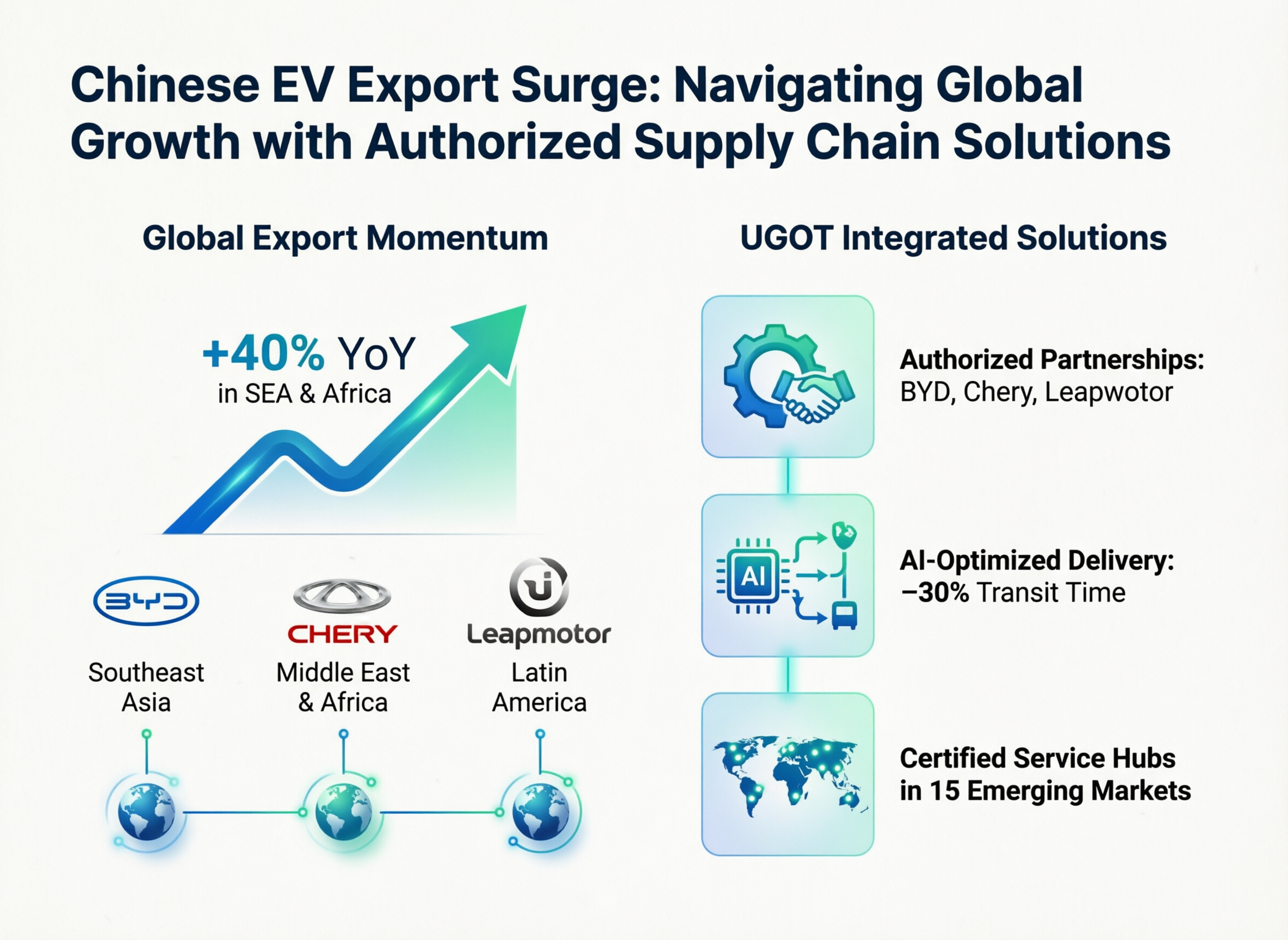 Chinese EV Export Surge: Navigating Global Growth with Authorized Supply Chain Solutions
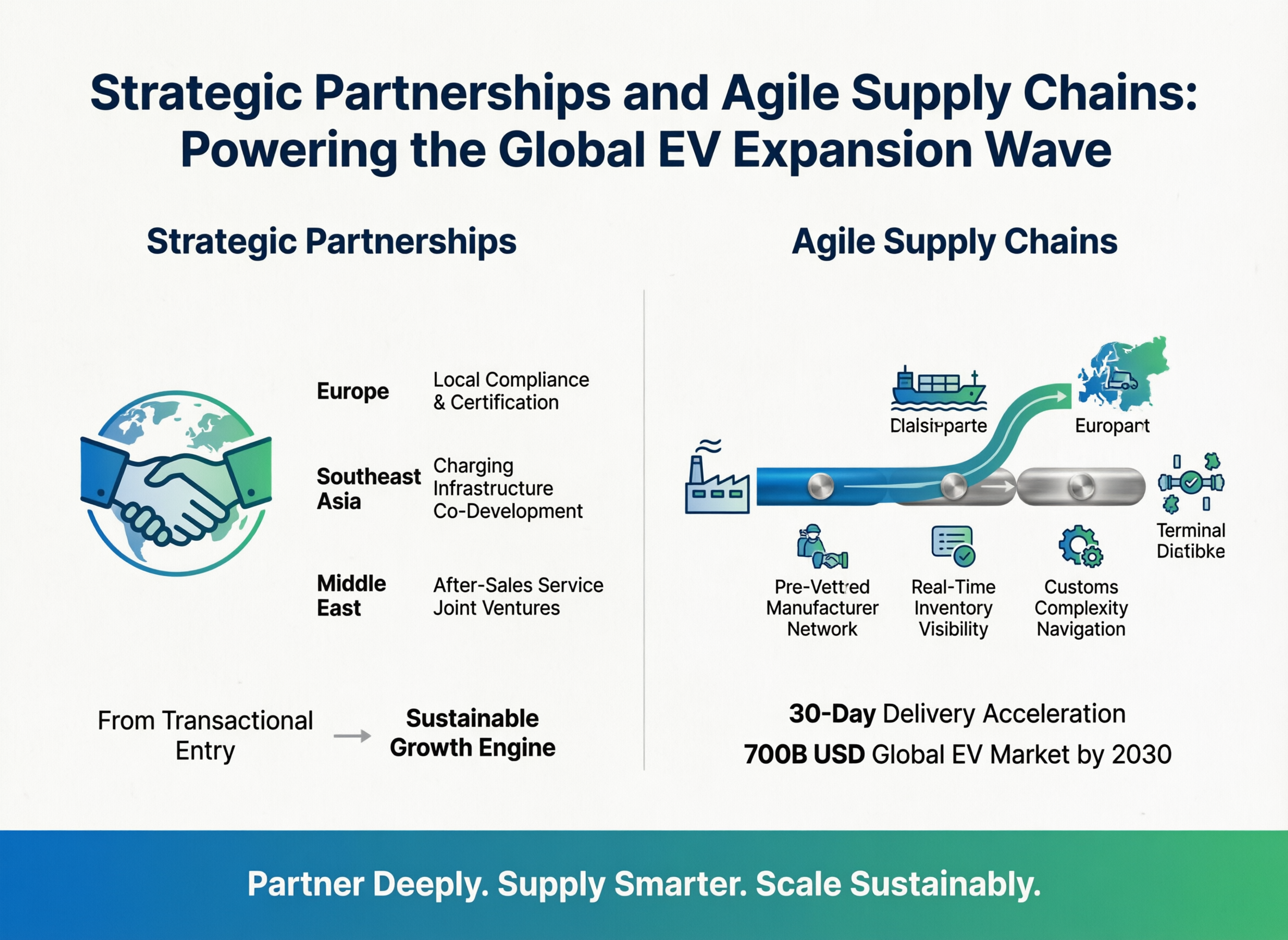 Strategic Partnerships and Agile Supply Chains: Powering the Global EV Expansion Wave
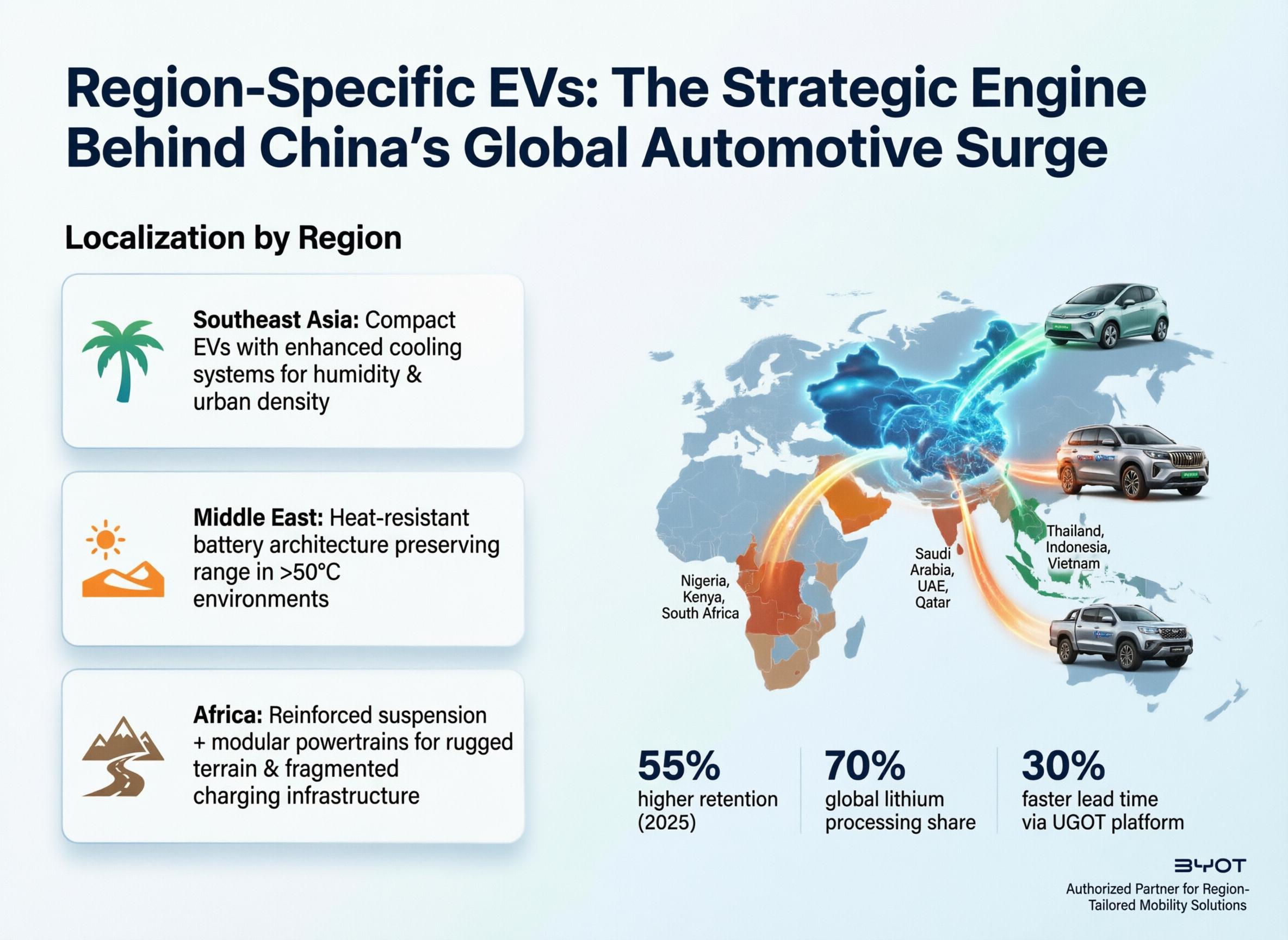 Region-Specific EVs: The Strategic Engine Behind China’s Global Automotive Surge