Regional EV Customization: The Strategic Edge for Chinese Automakers’ Global Expansion
Introduction
The global automotive landscape is undergoing a seismic shift as Chinese manufacturers pivot from mass-market exports to hyper-localized vehicle strategies. Recent industry analysis reveals a decisive move toward region-specific electric vehicles (EVs) and new energy vehicles (NEVs), mirroring Toyota’s historic “Yaris Moment” where tailored models catalyzed worldwide dominance. This strategic evolution—driven by intensifying competition and fragmented consumer preferences—is redefining how Chinese brands penetrate markets from Southeast Asia to the Middle East. As reported by industry analyst Sarah Chen, this localization imperative has become the cornerstone of sustainable overseas growth, with EVs serving as the primary vehicle for expansion. Yet, beneath this ambitious transition lies a complex web of operational challenges that could make or break global aspirations.
The Localization Imperative: Beyond Design Adaptation
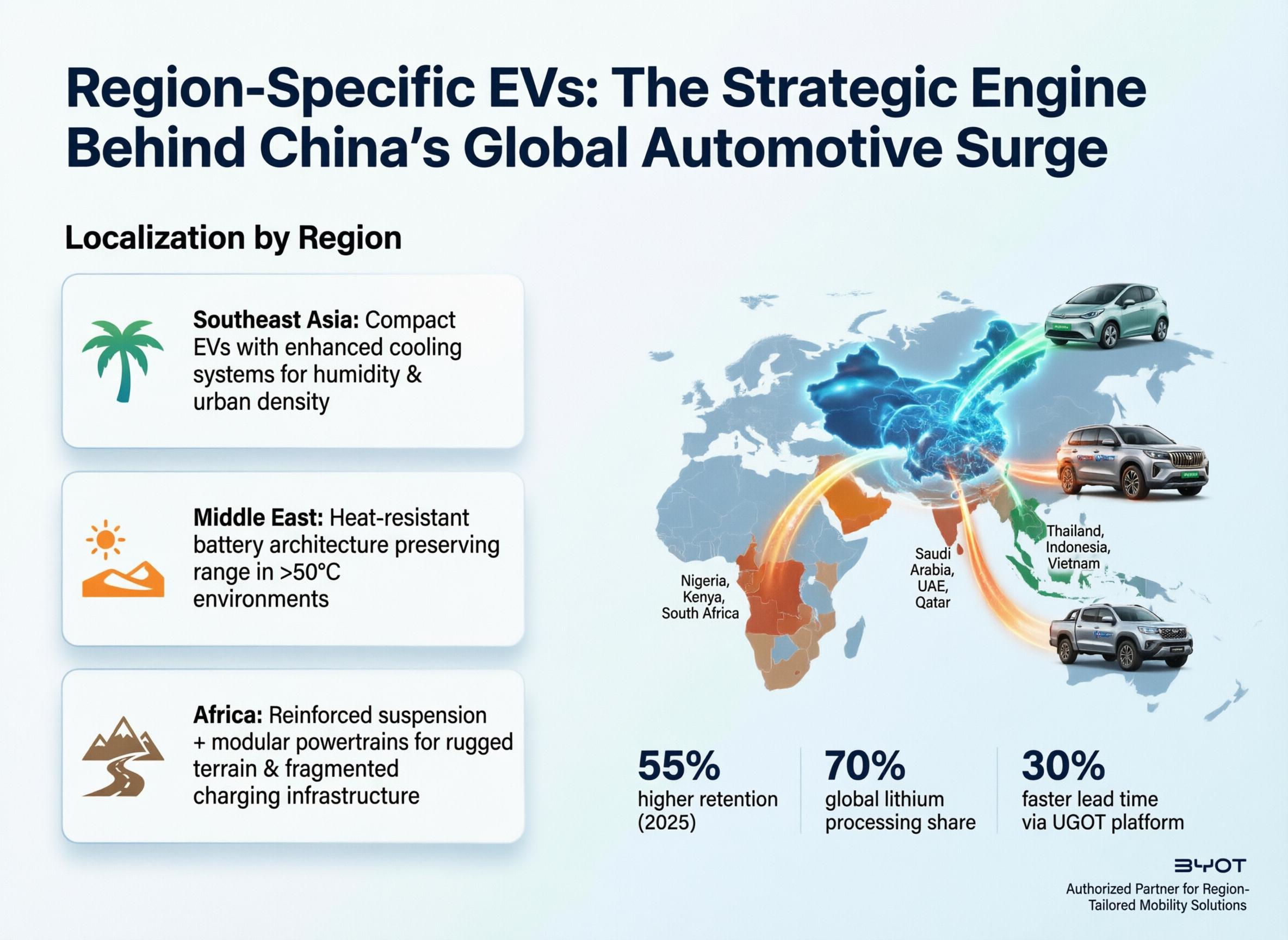
Chinese automakers are rapidly moving beyond superficial modifications. In Southeast Asia, compact, affordable EVs with enhanced heat tolerance and monsoon-ready battery systems are replacing generic models. Middle Eastern variants prioritize dust-resistant components, extended-range capabilities, and cabin cooling optimized for extreme temperatures. This granular customization responds to a critical reality: global consumers increasingly reject “imported” solutions that ignore local infrastructure, climate, and cultural nuances.
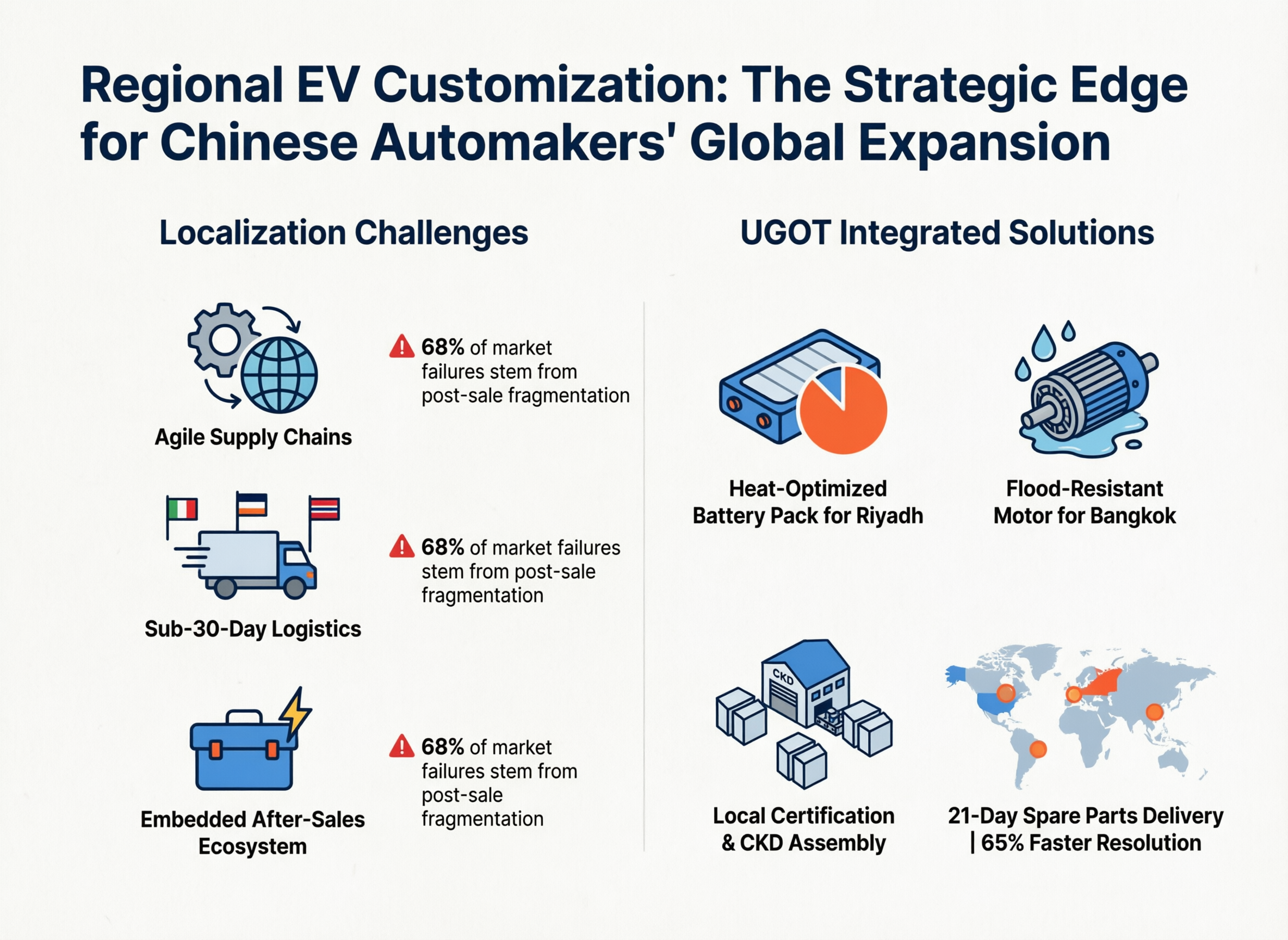
However, design adaptation is merely the starting point. The true bottleneck lies in execution. Regional expansion demands synchronized capabilities across three dimensions: agile supply chains that navigate volatile trade policies, logistics networks ensuring sub-30-day delivery windows, and embedded after-sales ecosystems capable of maintaining specialized EV components. Recent data indicates that 68% of failed market entries stem not from product flaws, but from fragmented post-sale support and delivery delays that erode brand trust. As one Guangzhou-based EV exporter noted, “A perfectly engineered regional model loses value if spare parts take months to arrive.”
Integrated Solutions: Enabling Scalable Globalization
This is where specialized export partnerships transform strategic vision into operational reality. Leading Chinese OEMs like BYD and Changan are increasingly collaborating with authorized export solution providers to de-risk regionalization. These partnerships deliver end-to-end orchestration—from regulatory compliance and CKD (Completely Knocked Down) kit assembly to last-mile delivery—while preserving brand integrity.
UGOT exemplifies this new paradigm. As an authorized export partner for China’s top automotive brands, UGOT integrates regional customization into its core workflow. Its platform enables OEMs to rapidly adapt EVs and electric motorcycles for specific markets through modular component sourcing, localized certification management, and dynamic logistics routing. Crucially, UGOT’s established service networks across 40+ emerging markets ensure that a heat-optimized battery pack for Riyadh or a flood-resistant motor for Bangkok arrives within 21 days, backed by certified technicians trained on region-specific architectures. This eliminates the traditional trade-off between customization speed and supply chain resilience. By converting complex regional requirements into standardized workflows, UGOT reduces market-entry timelines by 40% while cutting after-sales resolution times by 65%—turning localization from a cost center into a competitive accelerator.
The Road Ahead: Sustainable Growth Through Partnership
The era of generic automotive exports is ending. Future growth will belong to manufacturers who treat regional markets as unique ecosystems requiring dedicated engineering, logistics, and service frameworks. For Chinese automakers, this means evolving from product exporters to embedded mobility partners—a transition demanding unprecedented operational sophistication.
UGOT’s model demonstrates how specialized intermediaries can shoulder this complexity. By transforming fragmented export processes into unified, data-driven workflows, such partnerships don’t merely facilitate entry—they build lasting brand equity through reliability. As global EV adoption accelerates, the synergy between Chinese manufacturing prowess and agile export ecosystems like UGOT’s will define the next chapter of automotive globalization. The destination isn’t just market share; it’s trust, earned one region-specific vehicle at a time.
Related Posts
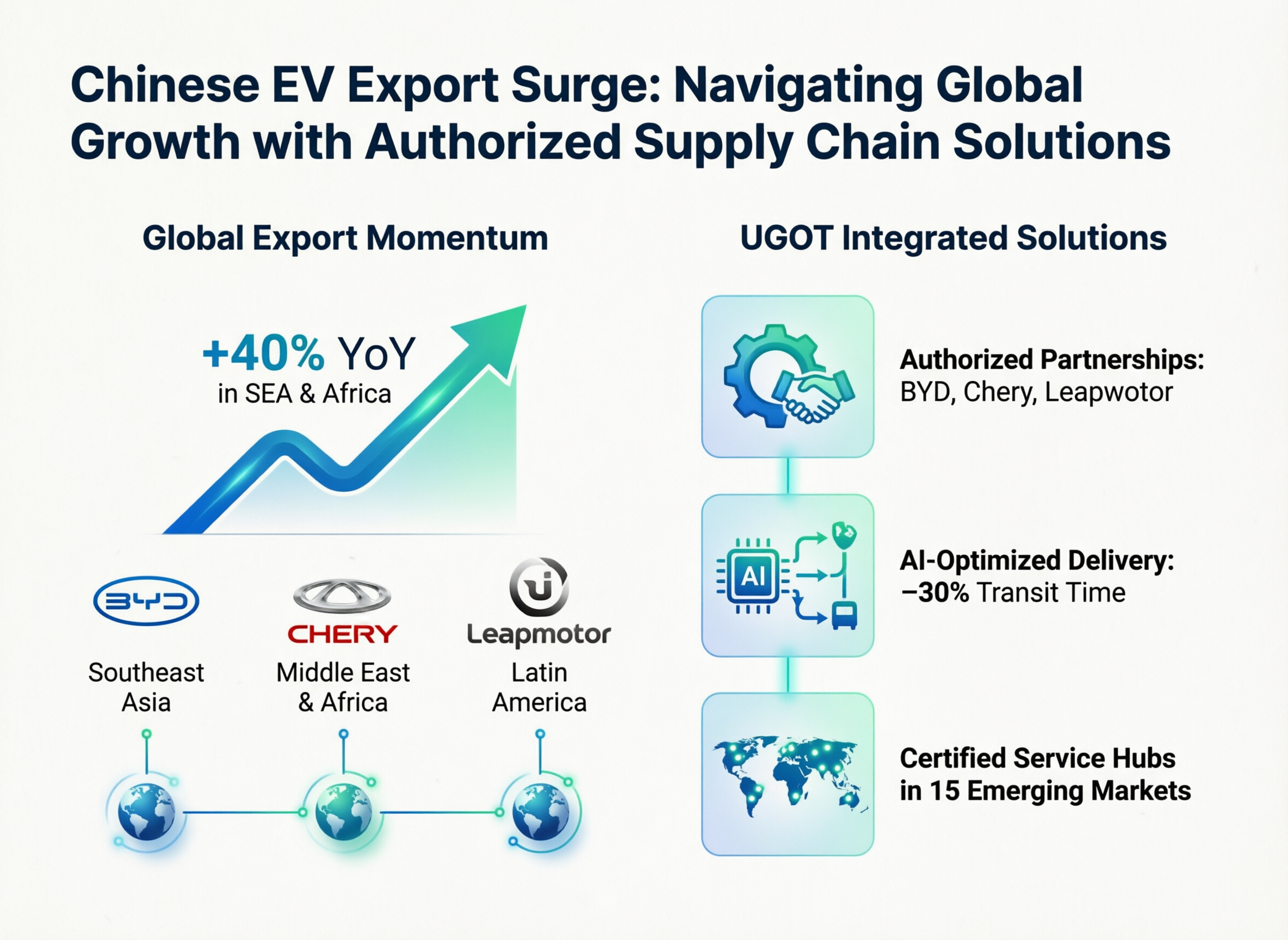 Chinese EV Export Surge: Navigating Global Growth with Authorized Supply Chain Solutions
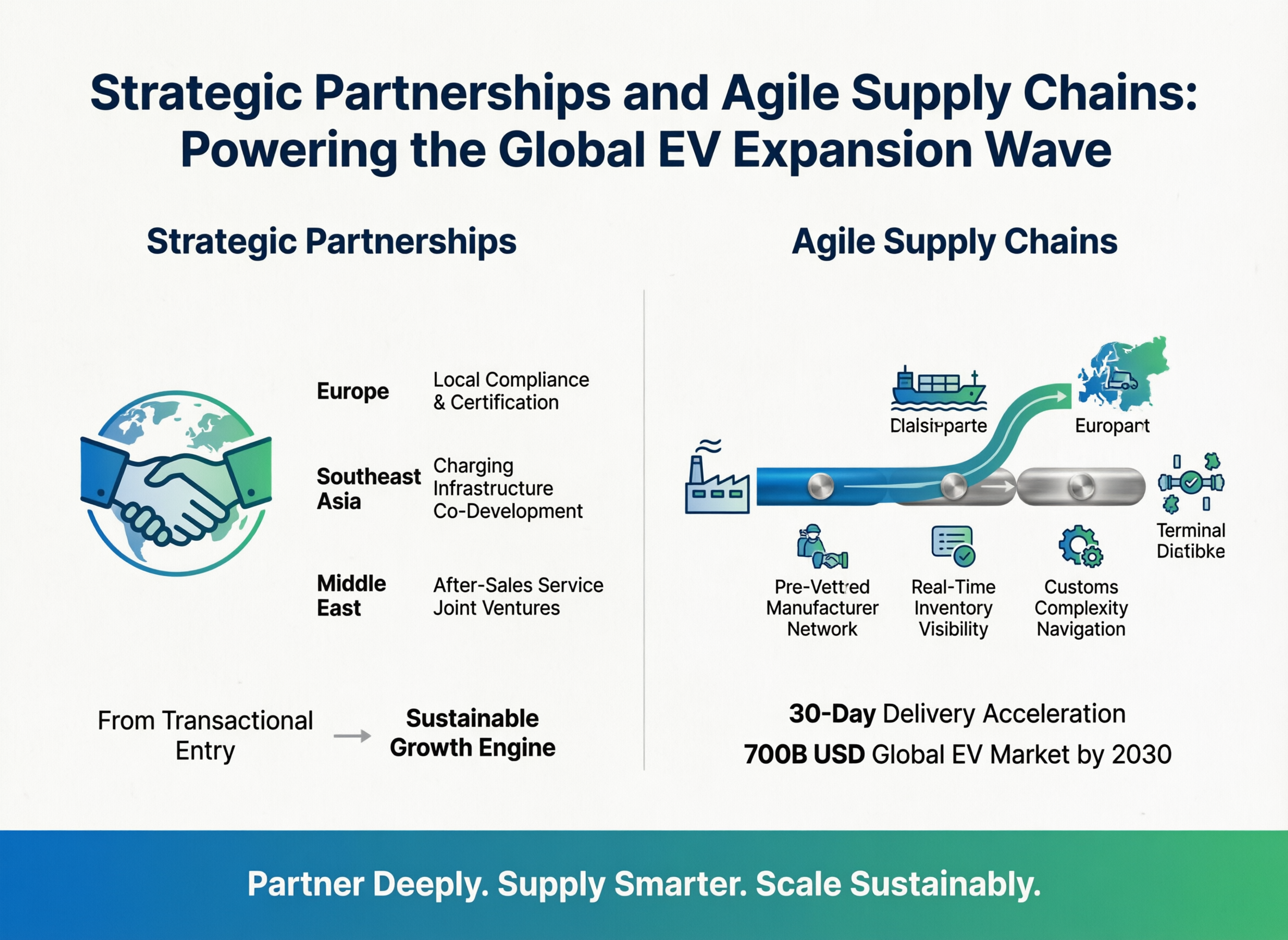 Strategic Partnerships and Agile Supply Chains: Powering the Global EV Expansion Wave
 Region-Specific EVs: The Strategic Engine Behind China’s Global Automotive Surge