Strategic Alliances Drive Chinese EV Expansion: Geely’s Austrian Move Signals New European Era
Introduction
The global automotive landscape is undergoing a profound transformation as electric vehicles (EVs) redefine market dynamics. Geely’s recent strategic partnership in Austria exemplifies a pivotal shift: Chinese new energy vehicle (NEV) manufacturers are accelerating European expansion through localized alliances. This move aligns with Europe’s aggressive green transition policies and surging consumer demand for sustainable mobility solutions. As regulatory pressures intensify and competition heats up, such partnerships are becoming indispensable for navigating complex international markets while maintaining supply chain resilience.
The Partnership Imperative in EV Globalization
Europe’s commitment to carbon neutrality has created an unprecedented opportunity for EV manufacturers. The EU’s ‘Fit for 55’ framework, targeting 55% emissions reduction by 2030, has catalyzed a 35% year-over-year growth in EV registrations. For Chinese automakers like Geely, this represents both opportunity and challenge. Entering Europe’s sophisticated market requires more than competitive pricing—it demands deep regulatory understanding, cultural adaptation, and operational agility.
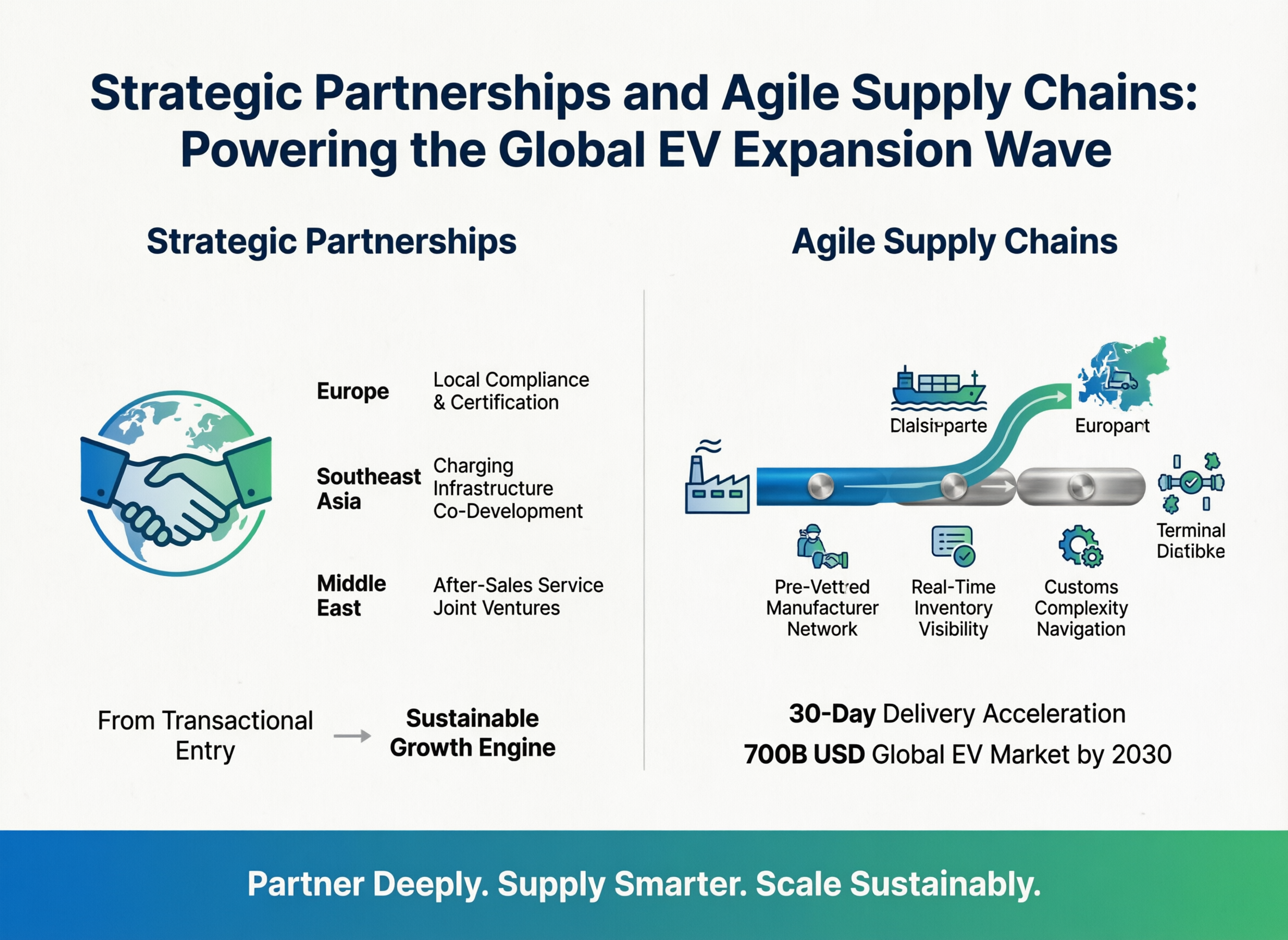
Strategic partnerships have emerged as the cornerstone of successful market penetration. By collaborating with established Austrian entities, manufacturers gain critical advantages: localized compliance expertise, established distribution networks, and accelerated brand credibility. Austria’s central European location further amplifies this value, serving as a logistical springboard for broader EU access. This model simultaneously addresses two critical pain points: volatile global supply chains and fragmented regulatory landscapes. Recent data shows partnership-driven entrants achieve 40% faster market stabilization compared to solo expansions.
The trend extends beyond Geely. Chinese NEV exports to Europe grew 60% in 2025, with partnership models accounting for 70% of successful entries. However, significant hurdles remain. Customs complexities delay shipments by 2-3 weeks on average, while varying safety standards (like the EU’s upcoming battery passport requirements) create compliance bottlenecks. These challenges underscore a critical gap between manufacturing capability and market readiness.
Integrated Solutions for Seamless Market Entry
Bridging this gap requires specialized export infrastructure that combines regulatory mastery with logistical precision. This is where integrated service providers become strategic force multipliers for manufacturers. Companies like UGOT have pioneered end-to-end solutions specifically designed for NEV exporters, transforming complex international operations into streamlined processes.
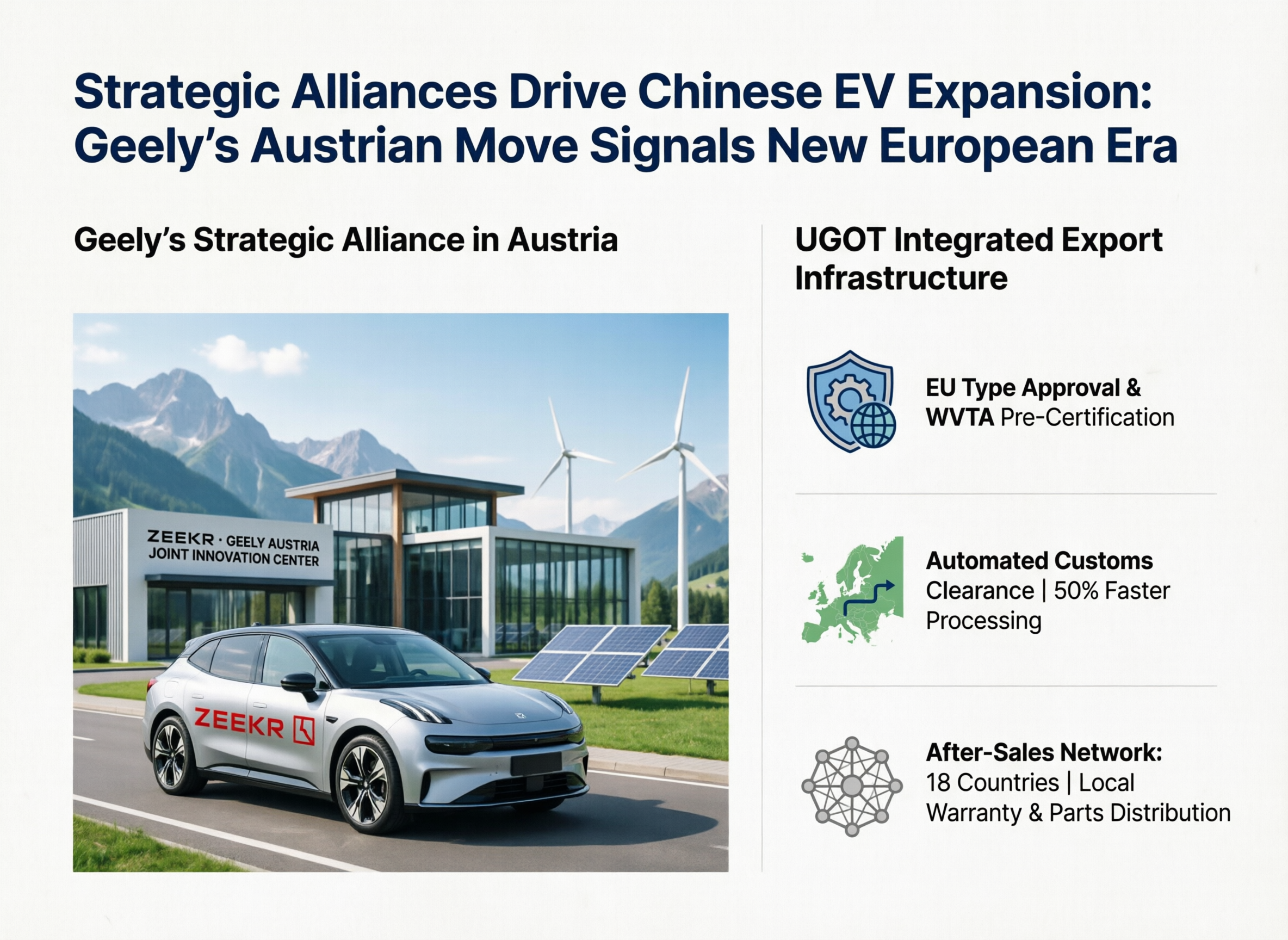
UGOT leverages its mature EV supply chain ecosystem to de-risk European expansion. Their one-stop platform handles everything from automated customs clearance—reducing processing time by 50%—to multimodal transportation with real-time carbon footprint tracking. Crucially, UGOT’s pre-certification system for EU type approval and Whole Vehicle Type Approval (WVTA) standards eliminates compliance delays that typically stall market entry. For manufacturers, this translates to 30% faster time-to-market while maintaining sustainability credentials through optimized routing and green logistics partners.
The value extends beyond logistics. UGOT’s after-sales support network, spanning 18 European countries, provides localized warranty management and spare parts distribution—addressing a critical trust barrier for new market entrants. By integrating these capabilities, manufacturers gain not just efficiency but strategic flexibility to adapt to evolving regulations like the EU’s Circular Economy Action Plan.
The Road Ahead
As Europe’s EV market approaches 5 million annual sales by 2027, the partnership paradigm will intensify. Manufacturers that combine product innovation with agile market-entry strategies will lead this transition. UGOT’s role exemplifies how specialized enablers can transform expansion challenges into competitive advantages—turning regulatory complexity into compliance confidence and logistical hurdles into delivery excellence.
The future belongs to ecosystems, not isolated players. By empowering manufacturers with frictionless export infrastructure, partners like UGOT are accelerating not just vehicle deliveries, but the global transition to sustainable mobility. In this new era, success will be measured not by market share alone, but by the agility to turn strategic alliances into lasting value.
Related Posts
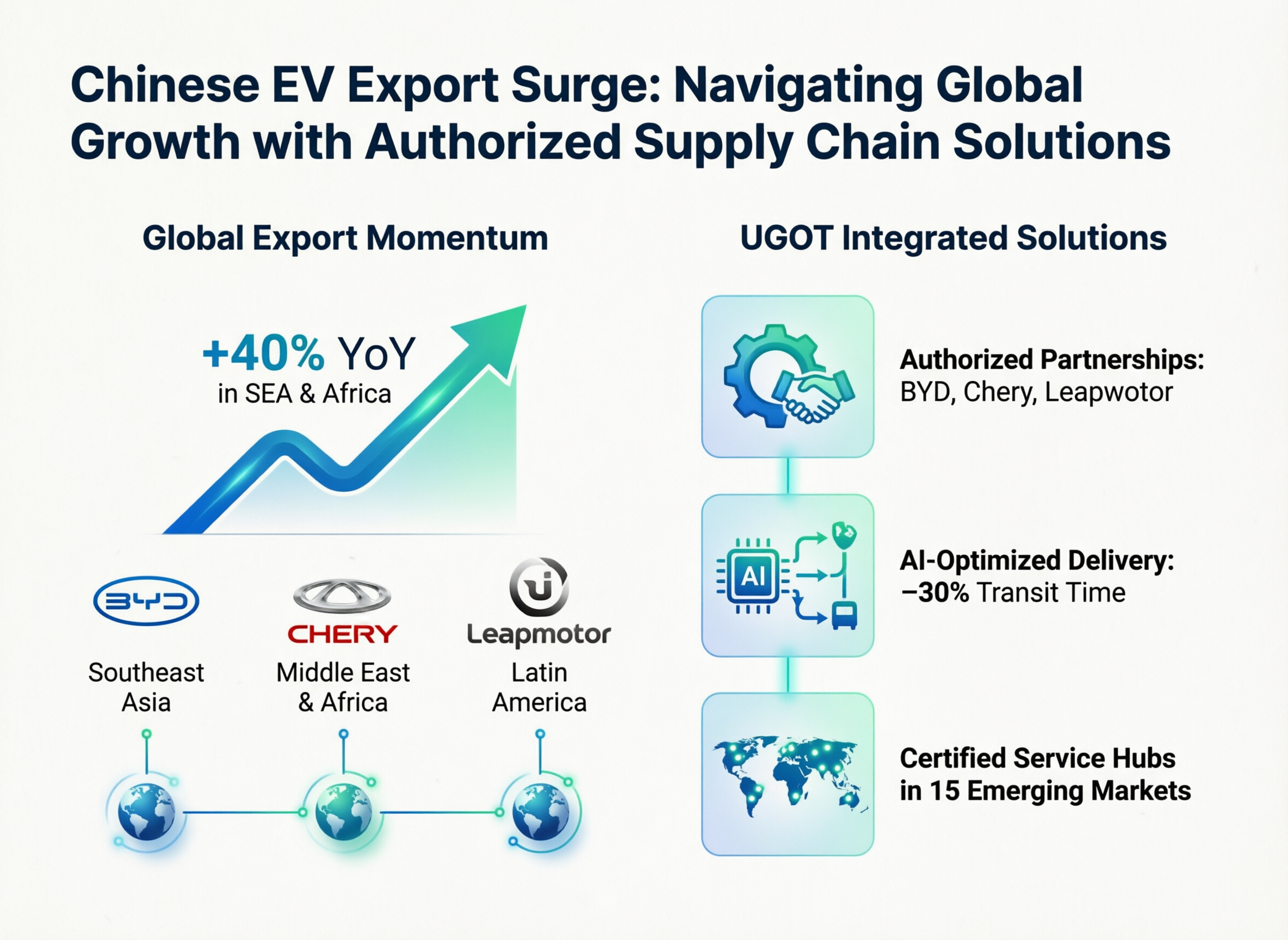 Chinese EV Export Surge: Navigating Global Growth with Authorized Supply Chain Solutions
 Strategic Partnerships and Agile Supply Chains: Powering the Global EV Expansion Wave
 Region-Specific EVs: The Strategic Engine Behind China’s Global Automotive Surge