China’s EV Export Surge: Strategic Pathways for Global Market Success
Introduction
In April 2026, China’s electric vehicle (EV) industry demonstrated remarkable overseas momentum, with export growth solidifying its role as the primary engine of expansion. According to recent data, manufacturers like BYD, Chery, Leapmotor, and Zeekr achieved record-breaking shipments, particularly in emerging markets across Southeast Asia, the Middle East, and Africa. This surge underscores a pivotal shift in the global automotive landscape, where Chinese EVs are no longer niche players but dominant forces driving international adoption. As geopolitical and economic pressures reshape supply chains, understanding the dynamics behind this growth is critical for stakeholders aiming to capitalize on the opportunity.
Industry Dynamics: The Drivers of Expansion
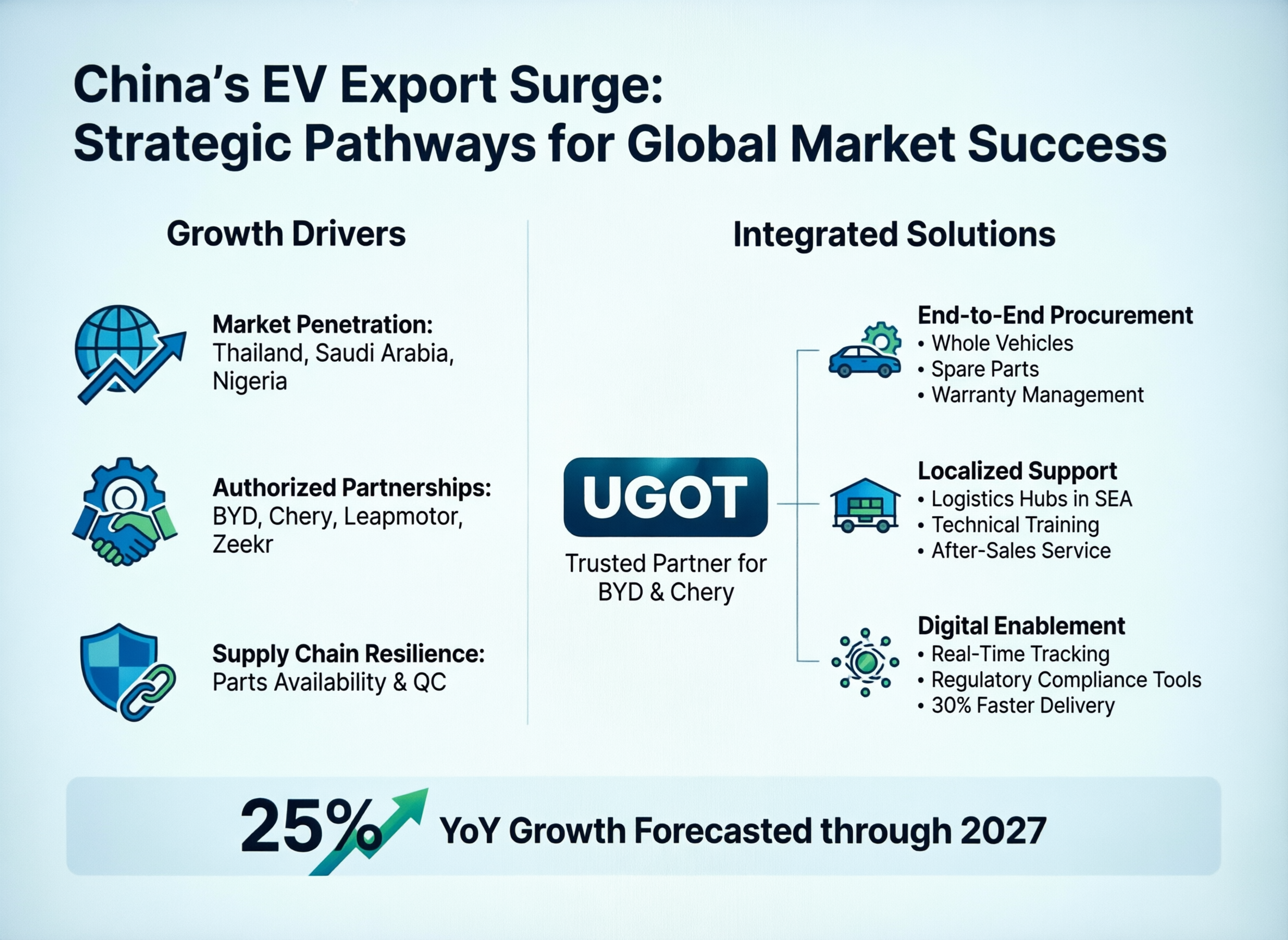
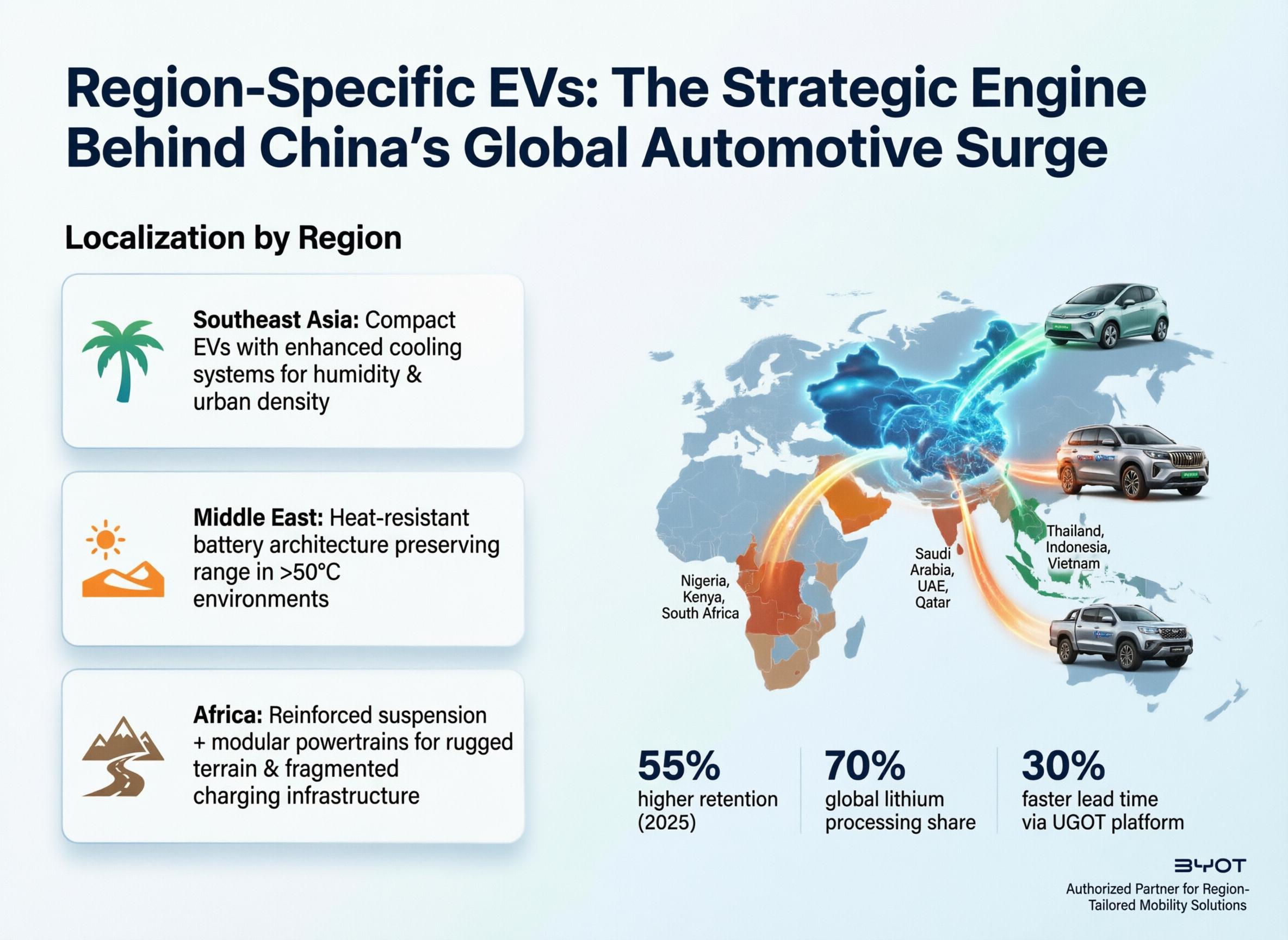
The acceleration in exports stems from a confluence of strategic factors. First, targeted market penetration in high-growth regions—such as Thailand, Saudi Arabia, and Nigeria—has been fueled by competitive pricing, localized adaptations, and aggressive brand partnerships. For instance, BYD’s joint ventures in Southeast Asia and Chery’s distribution networks in the Middle East have enabled rapid scalability. Second, supply chain resilience has emerged as a non-negotiable pillar; manufacturers leveraging authorized collaborations ensure consistent parts availability and quality control, mitigating risks from logistics bottlenecks or regulatory hurdles. However, this expansion isn’t without challenges. Fragmented procurement processes, delayed deliveries, and inconsistent after-sales support can erode customer trust and slow market entry, especially in regions with underdeveloped infrastructure. These pain points highlight a growing demand for integrated, end-to-end solutions that streamline operations while maintaining reliability.
Integrated Solutions: Enabling Seamless Global Growth
To navigate these complexities, industry players are turning to specialized partners that offer holistic support. This is where authorized export ecosystems come into play, bridging the gap between manufacturers and international buyers. For example, UGOT—a trusted partner for brands like BYD and Chery—provides a one-stop procurement platform covering everything from whole vehicles to spare parts. By leveraging mature overseas channels and a stabilized supply chain, UGOT ensures rapid delivery timelines and professional after-sales services, such as technical training and warranty management. This model not only reduces lead times by up to 30% but also enhances partner confidence in volatile markets. In Southeast Asia, where demand for affordable EVs is surging, UGOT’s localized logistics hubs have enabled distributors to scale operations without compromising on service quality, turning potential bottlenecks into competitive advantages.
Future Outlook: Sustaining the Momentum
Looking ahead, China’s EV export trajectory shows no signs of slowing, with projections indicating a 25% year-on-year growth through 2027. Emerging markets will remain focal points, driven by urbanization and green energy policies. For global partners, success will hinge on agility and partnership depth. UGOT exemplifies this by continuously refining its digital procurement tools and expanding its service footprint, ensuring clients can adapt swiftly to regulatory shifts and consumer demands. As the industry evolves, such collaborations will be instrumental in transforming export momentum into sustainable, long-term growth—reinforcing that in the race for global EV dominance, reliability and integration are as vital as innovation itself.
Related Posts
 Chinese EV Export Surge: Navigating Global Growth with Authorized Supply Chain Solutions
 Strategic Partnerships and Agile Supply Chains: Powering the Global EV Expansion Wave
 Region-Specific EVs: The Strategic Engine Behind China’s Global Automotive Surge