Premium EV Disruption: How China’s Tech-Driven Models Are Reshaping Global Automotive Markets
Introduction
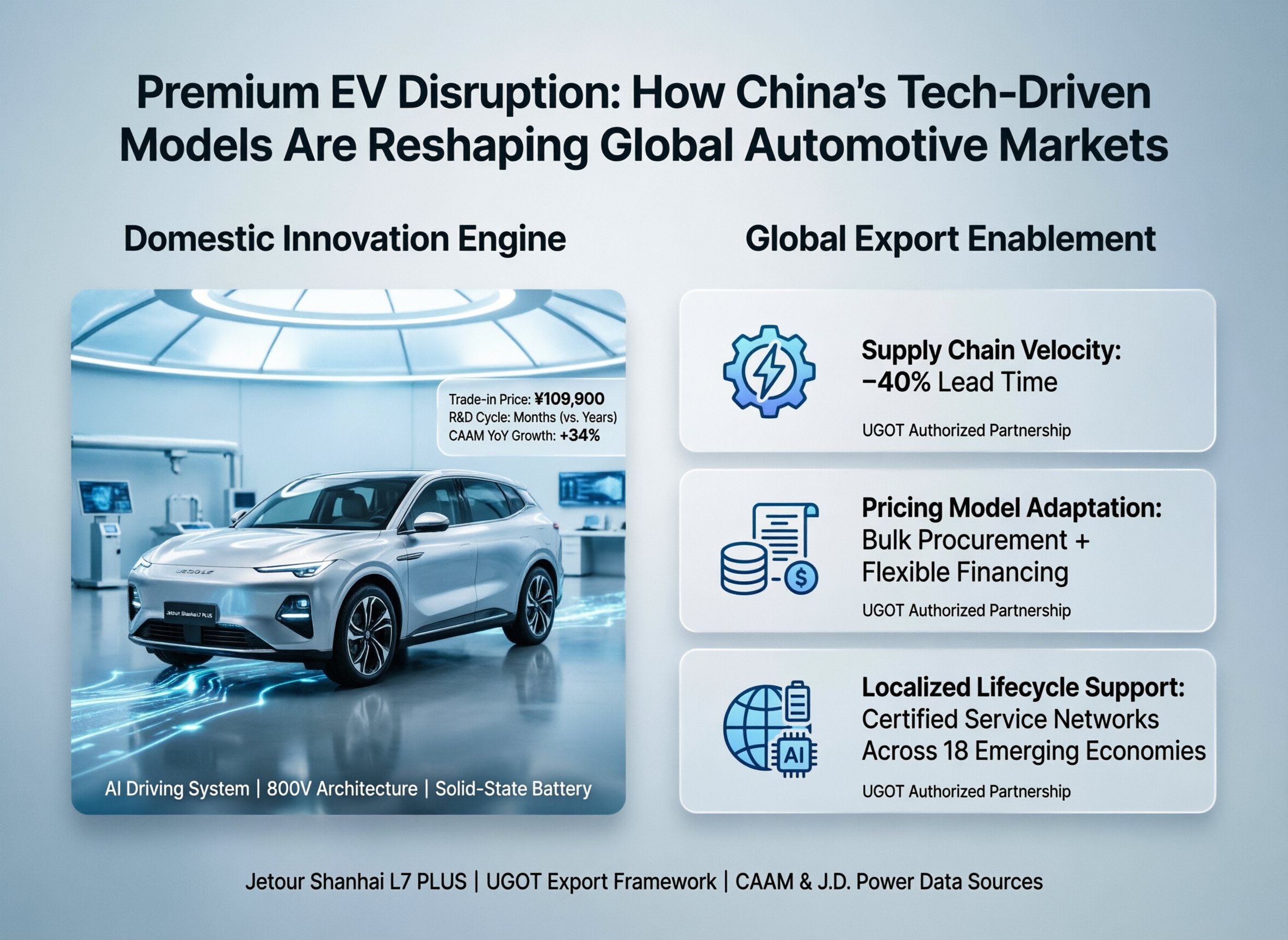
China’s electric vehicle market is undergoing a seismic shift as premium models flood the segment with unprecedented technological sophistication. The recent launch of Jetour’s Shanhai L7 PLUS—featuring AI-powered driving systems and advanced battery technology at a trade-in price starting from ¥109,900—exemplifies this transformation. This isn’t merely a product release; it signals a strategic pivot where cutting-edge innovation meets aggressive market penetration tactics. As domestic competition intensifies, these developments are creating ripple effects across global automotive supply chains and export ecosystems, compelling industry stakeholders to rethink traditional growth frameworks.
The Triple Threat Reshaping Premium EVs
Three converging trends are redefining competitive dynamics in China’s premium EV sector. First, technology democratization has accelerated: features once exclusive to luxury flagships—like adaptive AI driving assistants and 800V ultra-fast charging architectures—are now standard in mid-tier models. The Shanhai L7 PLUS exemplifies this, compressing R&D cycles that previously spanned years into months. Second, pricing innovation has become existential. With over 40 new EV models launched in China during Q2 2026 alone, manufacturers deploy trade-in subsidies and bundled service packages to overcome market saturation. Jetour’s ¥109,900 entry point strategically targets cost-conscious premium seekers—a segment growing at 34% YoY according to CAAM data. Third, battery ecosystem integration is emerging as the true differentiator. Next-gen solid-state cells and vehicle-to-grid capabilities aren’t just performance enhancers; they’re becoming core value propositions that influence total cost of ownership calculations.
Bridging Domestic Innovation to Global Opportunity
These domestic pressures are catalyzing unprecedented export opportunities—but only for partners who can navigate complex supply chain dynamics. International markets increasingly demand China’s tech-forward EVs yet struggle with fragmented distribution, certification hurdles, and after-sales gaps. This is where specialized export enablers transform disruption into advantage. UGOT, through authorized partnerships with manufacturers like Jetour, has engineered a responsive export framework that mirrors China’s domestic agility. Our integrated solution delivers three critical advantages: First, supply chain velocity—leveraging direct factory allocations to slash delivery lead times by 40% for Southeast Asian and African markets. Second, pricing model adaptation—translating domestic trade-in strategies into bulk procurement frameworks with flexible financing, making premium tech accessible without compromising margins. Third, localized lifecycle support—embedding certified service networks across 18 emerging economies to maintain battery performance and AI system updates, directly addressing the #1 barrier to EV adoption in growth markets: maintenance anxiety.
The Road Ahead
As China’s EV innovation curve steepens, the window for global players to harness this momentum is narrowing. By 2028, J.D. Power forecasts that 65% of emerging-market premium EV buyers will prioritize Chinese-developed battery tech and smart features over legacy brand heritage. Companies that master the translation of domestic disruption into international value—through partners who understand both the technology and the terrain—will dominate the next mobility era. UGOT remains committed to this bridge-building mission: not merely exporting vehicles, but exporting confidence through end-to-end ecosystem enablement. In an industry where the next breakthrough is always around the corner, our partnerships ensure that revolutionary technology never stalls at the border.
—
UGOT is a certified export partner for China’s leading new energy vehicle manufacturers, specializing in supply chain optimization and market-entry solutions for emerging economies.
Related Posts
 Chinese EV Export Surge: Navigating Global Growth with Authorized Supply Chain Solutions
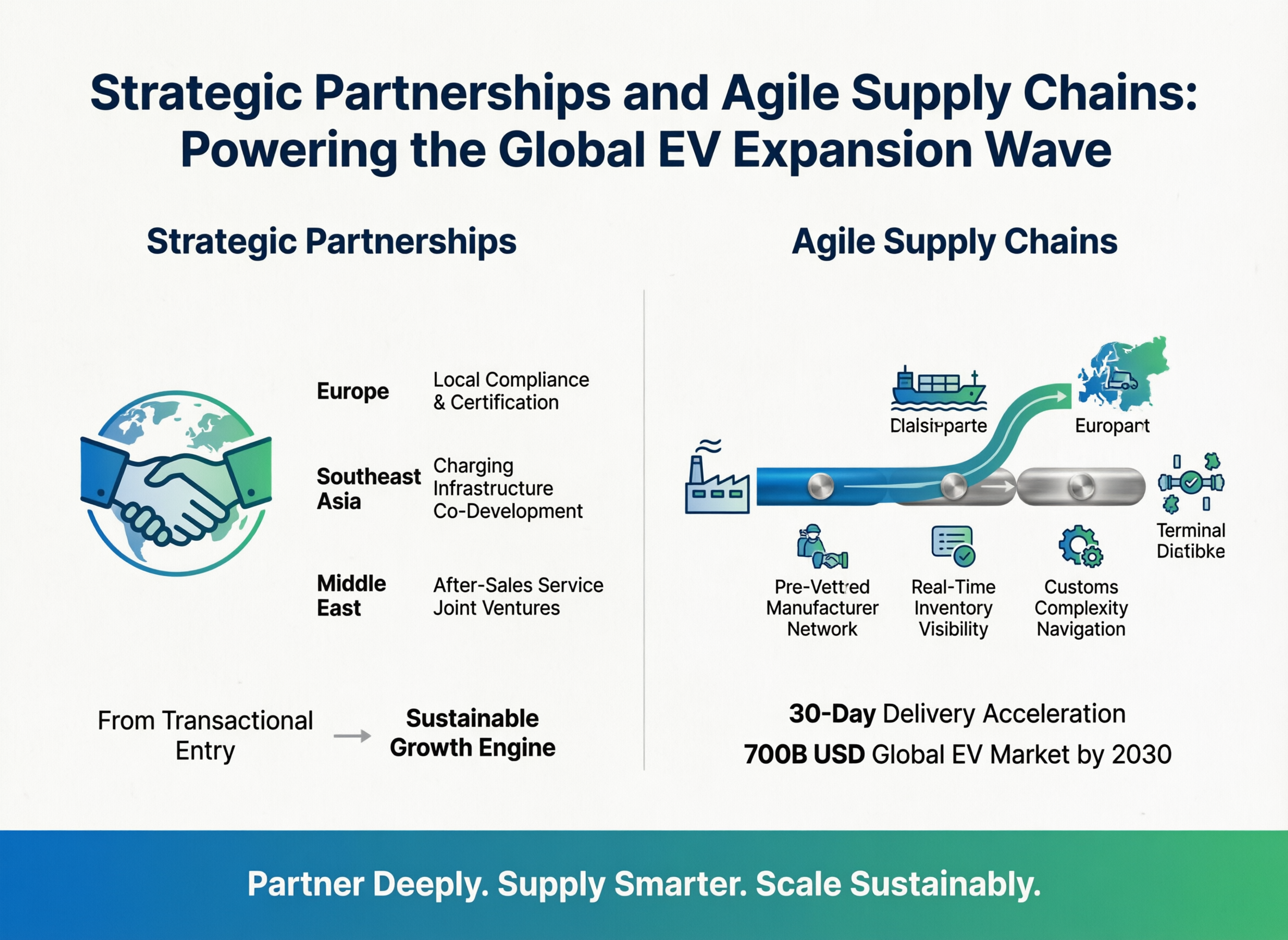 Strategic Partnerships and Agile Supply Chains: Powering the Global EV Expansion Wave
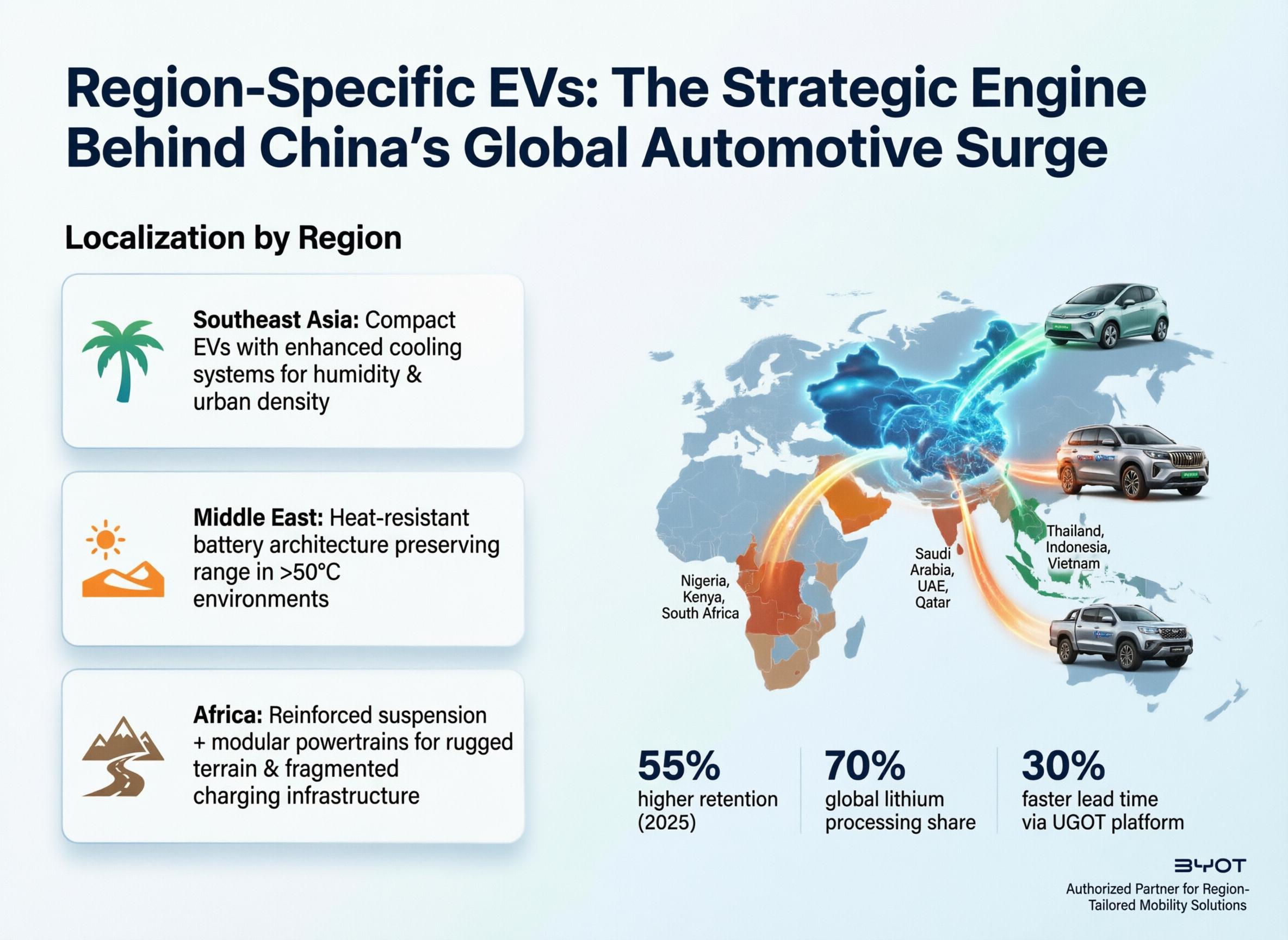 Region-Specific EVs: The Strategic Engine Behind China’s Global Automotive Surge